

What Exactly Is GSM? Why Does a Higher Number Mean Thicker Paper?
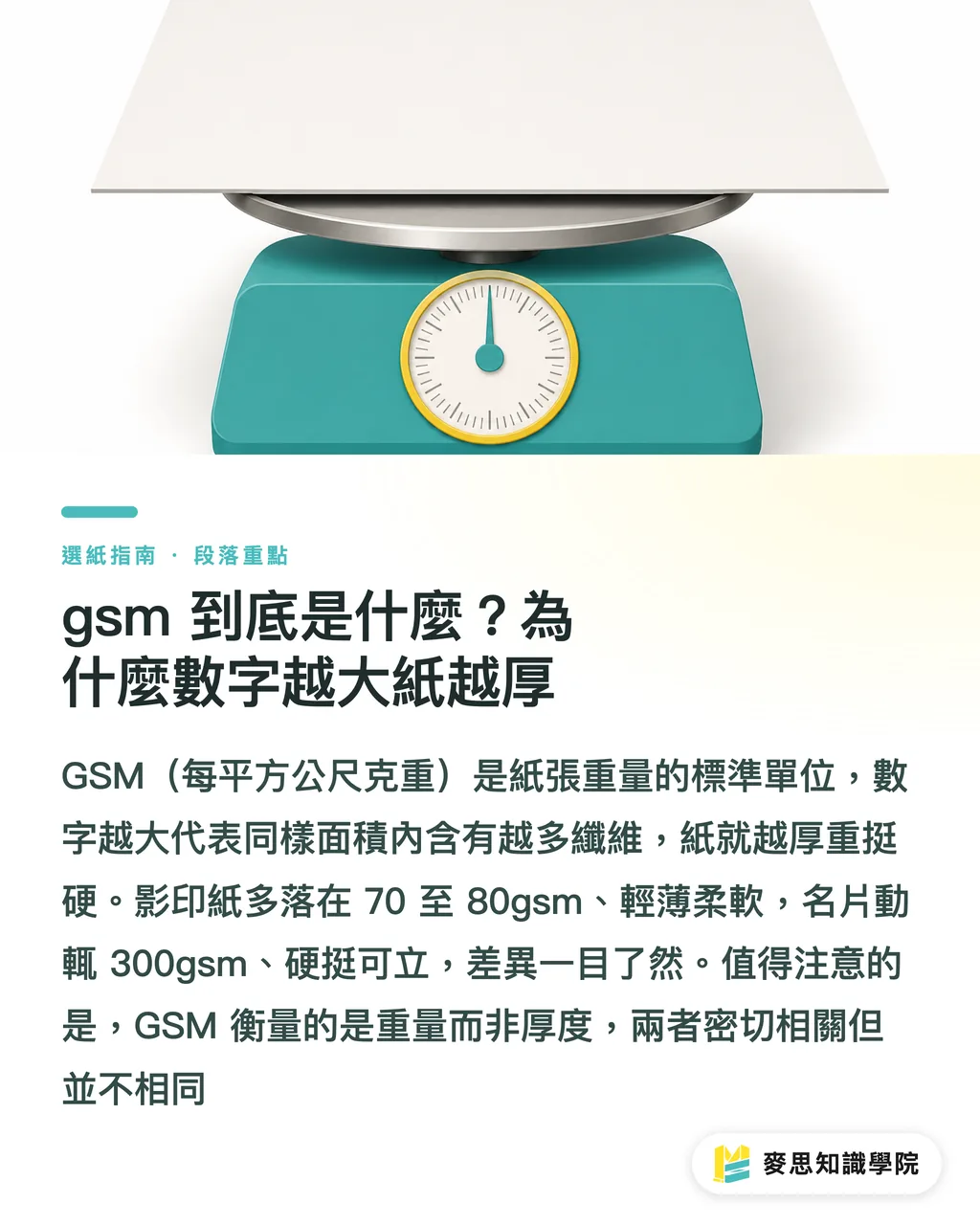
GSM stands for grams per square meter, a unit written as g/m²
In plain terms: take a sheet of paper measuring one meter by one meter, weigh it in grams, and that number is its gsm
So 250gsm means the paper weighs 250 grams per square meter
A higher number means more fiber packed into the same area, the paper is naturally thicker, stiffer, and heavier in your hand
That's why people tend to equate gsm with thickness
Copy paper typically falls between 70 and 80gsm, thin, light, and floppy
Business cards often run at 300gsm, stiff enough to stand on edge. The difference is obvious
There's one detail that often gets overlooked, though
GSM measures weight, not thickness
Same GSM, Different Thickness, Why?
This is the most common trap clients fall into
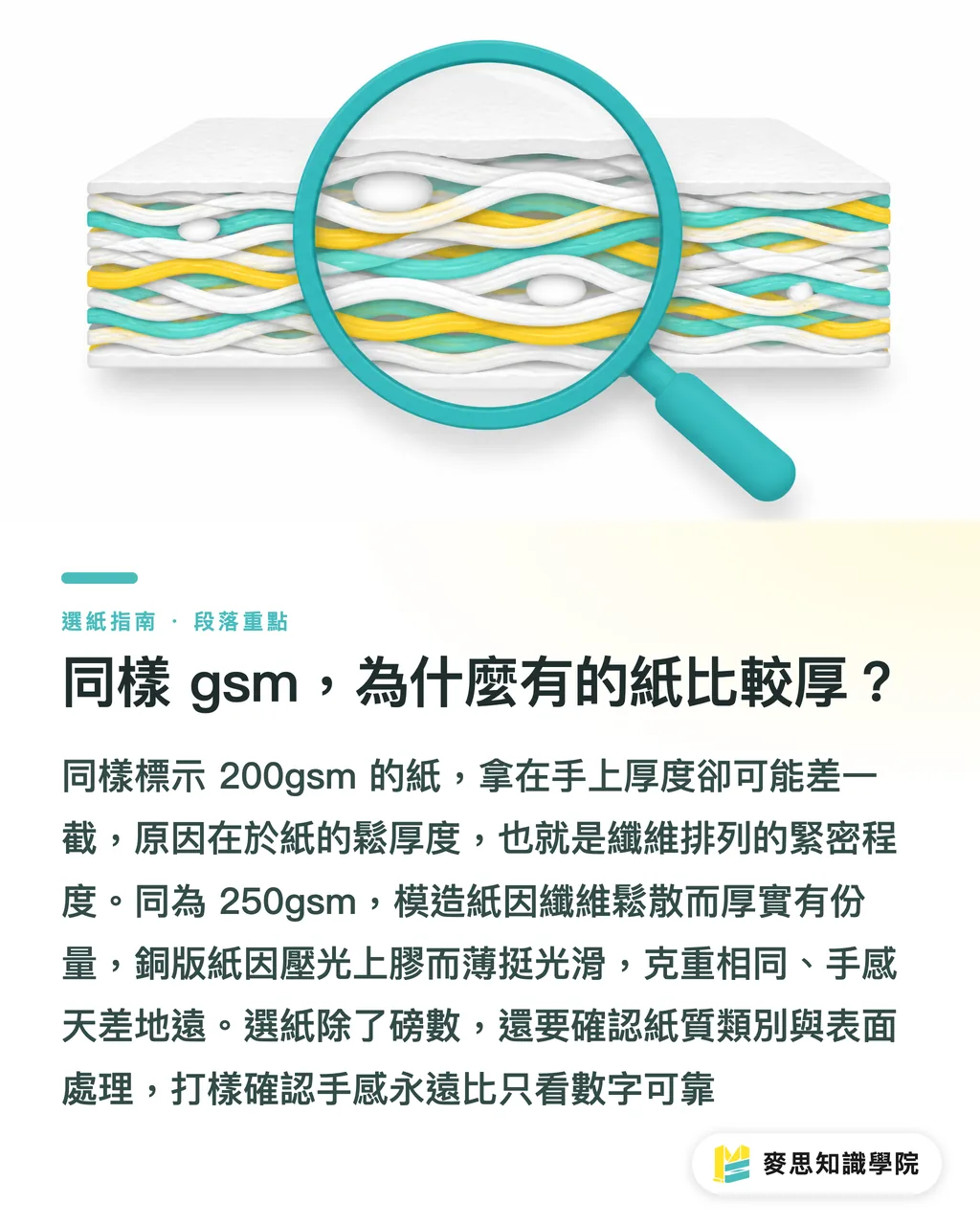
Two sheets both labeled 200gsm can feel noticeably different in thickness, and that's completely normal
The key factor is fiber density, known in the trade as bulk or paper structure
At the same weight, loosely packed fibers with more air gaps produce a thicker, fluffier sheet
Tightly packed and compressed fibers result in a thinner, smoother, more even surface
Here's a real example from the shop floor
At the same 250gsm, uncoated paper (such as woodfree/offset paper) feels thick and slightly textured
Coated art paper (coated stock), with its calendered and coated surface, feels thinner and denser at the same weight, with a glossy sheen
So specifying a single number is never enough when choosing paper
What you actually need to align on is three things:
・Weight (gsm): sets the baseline for feel and cost
・Paper type: coated art, uncoated, laid finish, specialty fine paper, etc. — determines feel and thickness tendency
・Surface treatment: gloss lamination, matte lamination, PP coating, these further change the tactile feel and durability
Saying 'I want 300gsm' without specifying paper type is only half the story
Running a proof to confirm the feel is always safer than going by numbers alone
How Many GSM for Business Cards, Flyers, and Posters? The Logic Behind the Numbers
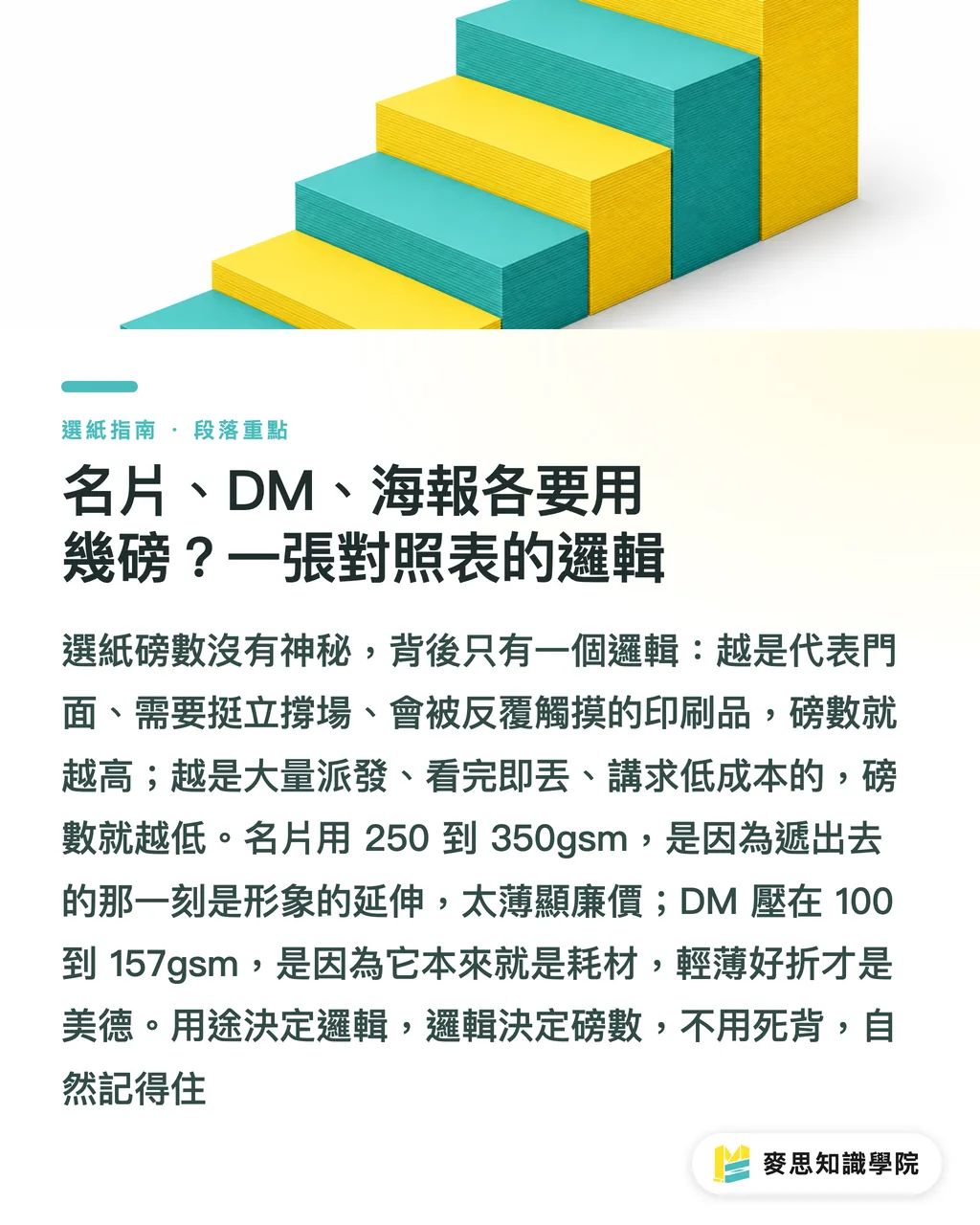
Rather than memorizing numbers, it's more useful to understand why each use case lands in a particular range
The following are industry-standard ranges developed over years of practice, each one has a reason behind it:
・Business cards: 250 to 350gsm. Cards need to be stiff enough to hand over without flopping, too thin feels cheap. This is your first impression; go thicker
・DM/Flyers: 100 to 157gsm. These are high-volume, disposable pieces, the priority is lightweight, easy folding, and low per-unit cost. Going heavier wastes money and makes folding awkward
・Posters: 120 to 200gsm. They need to lie flat on a wall without curling, too thin tears and wrinkles when applied, too thick is hard to roll up for transport. This range hits the sweet spot
・Catalogs: cover 200 to 300gsm for presence and durability, interior pages 100 to 157gsm to keep total weight and cost in check, the classic split-spec approach
・Packaging boxes: 300 to 400gsm and up. Boxes need to bear weight and protect contents, stiffness and structural strength are non-negotiable
See the pattern?
Anything that gets handled repeatedly, needs to stand upright, or represents your brand, go heavier
Anything printed in bulk, discarded after reading, or meant to fold cleanly, go lighter
Where Does the Wrong GSM Come Back to Bite You?
GSM doesn't just affect feel, it ripples through cost and logistics in ways many people never factor in
Stiffness and feel are the most obvious
A business card at 157gsm flops like a flyer, clients will notice the moment they pick it up
But printing a DM at 300gsm doesn't just make folding ugly, it doubles the paper cost per sheet. On a 10,000-piece run, that difference is substantial
Where it really hurts is mailing weight
Heavier paper means heavier mail, and higher postage
For a mailing of 3,000 DM pieces, the difference between 157gsm and 100gsm adds up to a meaningful weight gap, and postage goes straight to your budget
That's why gsm deserves careful attention when mailing at volume
Then there's the folding issue
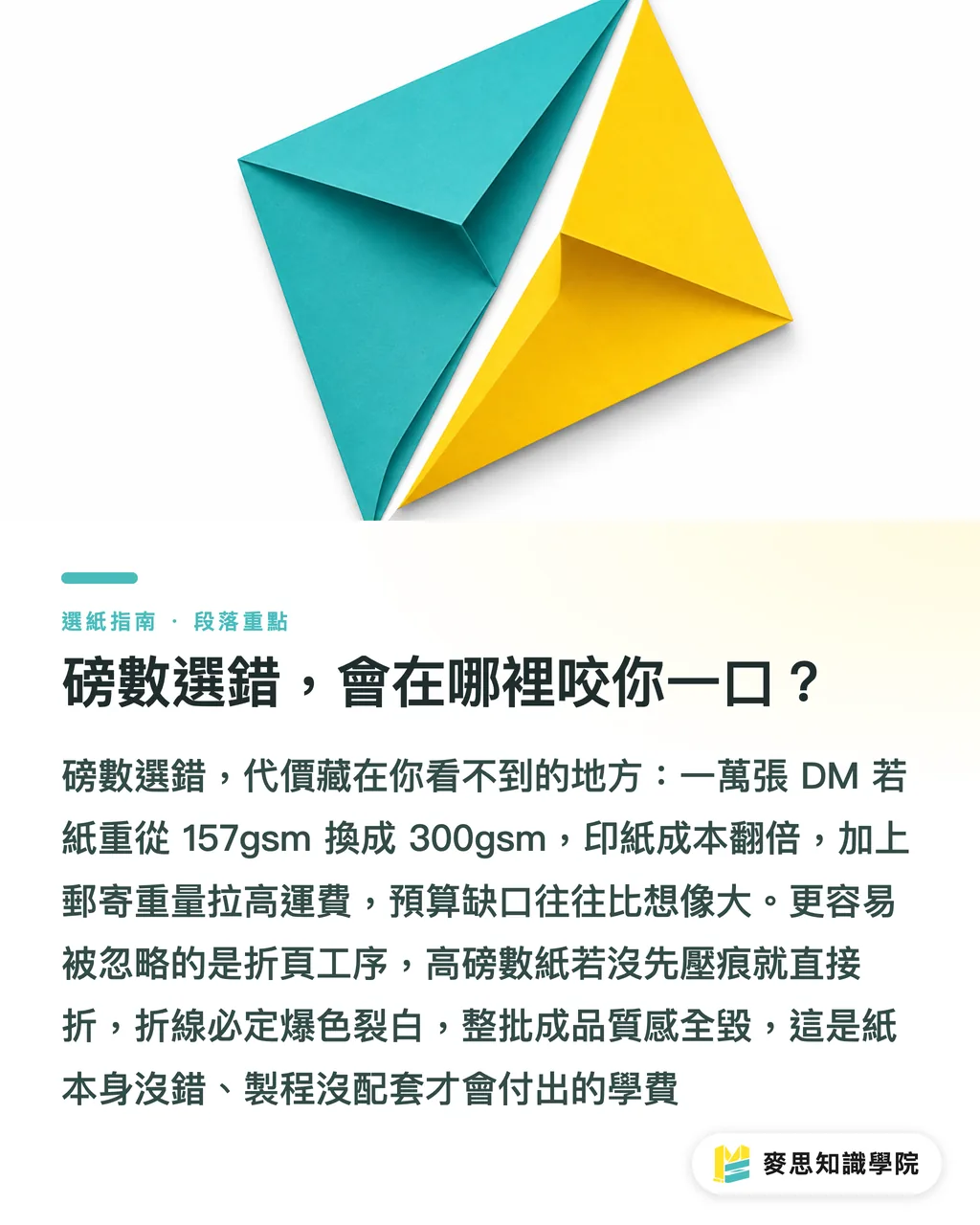
High-gsm paper folded without creasing first will crack at the fold line, the ink chips and you get a white crack showing through
A 300gsm catalog cover folded in half without scoring will show a white crack along the fold, and that one line destroys the quality impression of the entire piece
That's not a paper problem, it's a process problem
How to Work Backward from Use Case to GSM
When I discuss paper selection with clients, I never start by asking 'how many gsm do you want?'
I ask four questions first, and the gsm range surfaces on its own:
・Will it be folded? If yes, scoring is essential, the higher the gsm, the more critical it becomes, otherwise it cracks
・Does it need to be stiff? Things that stand or support (business cards, hang tags, boxes) go heavier; things that should be flexible and pliable (DMs, interior pages) go lighter
・Will it be mailed? For bulk mailings, every gsm adds to postage, go as light as the use case allows
・What's the budget? GSM multiplies directly into paper cost, at high volumes, this line is the most sensitive
Answer those four questions and the gsm range narrows itself
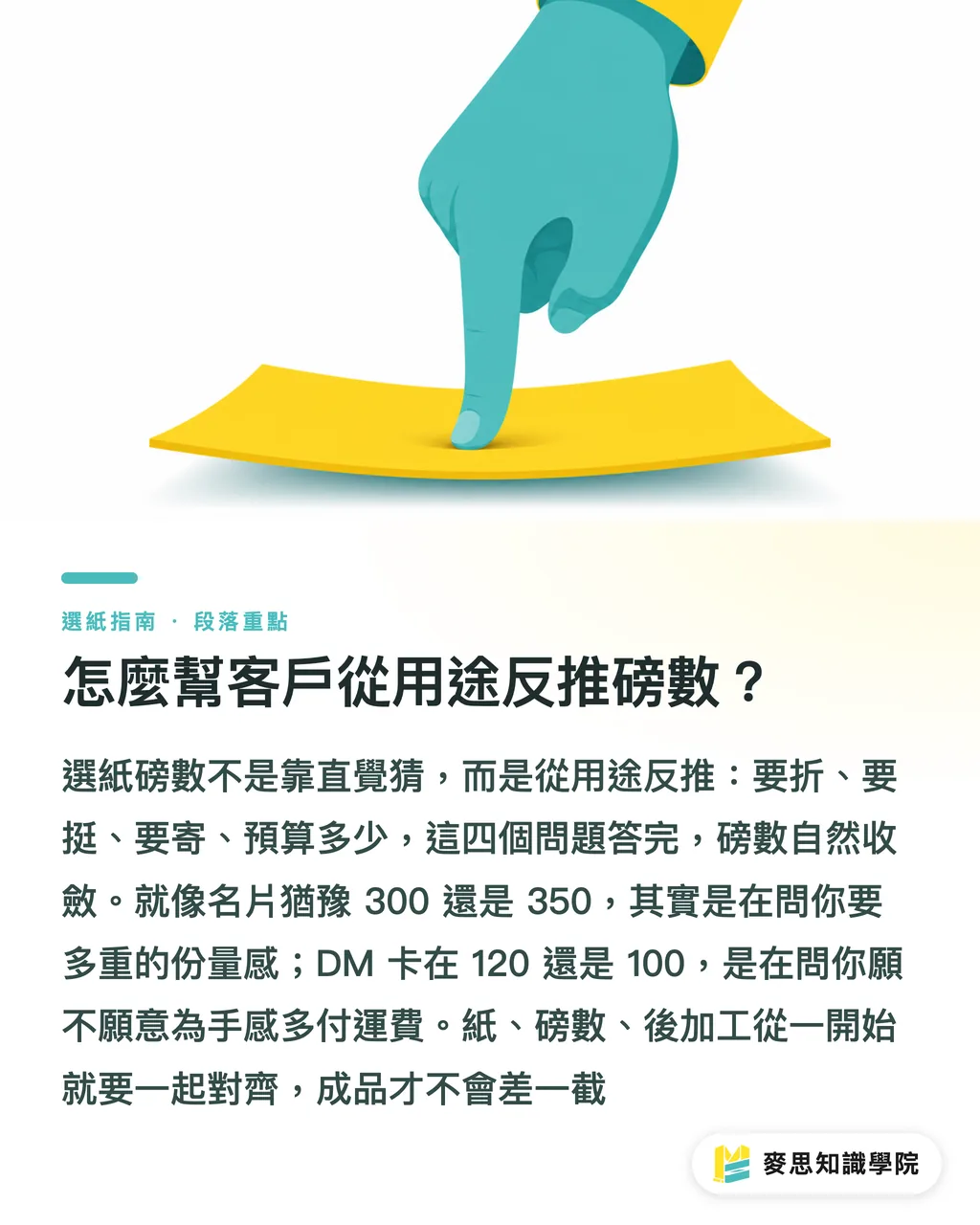
Torn between 300 and 350 for a business card? The only real difference is how substantial you want it to feel
Deciding between 120 and 100 for a DM? It comes down to whether the slightly better feel is worth the extra postage
Paper selection is fundamentally a balance between use case, feel, and cost
And the balance point always starts with being clear about what the printed piece is actually for
That's why at MINDS, when we take on a project, we lay out the use case, production process, and mailing requirements together from the start, paper, gsm, and finishing need to be aligned early so the final product doesn't fall short
Key Takeaways
・GSM measures weight per square meter, a higher number means thicker and stiffer, but it measures weight, not thickness
・The same gsm can feel different depending on paper type, always specify both gsm and paper type together, and run a proof when in doubt
・Business cards 250 to 350; DM 100 to 157; posters 120 to 200 — the logic is: the stiffer and more representative the piece, the higher the gsm
・GSM affects mailing weight, for bulk DM mailings, every gram is postage, so go as light as you can
・Before choosing gsm, ask four things: will it fold, does it need to be stiff, will it be mailed, and what's the budget, answer those and the range reveals itself
Going Deeper
The real pain in paper selection isn't usually 'not knowing the gsm' — it's that nobody has helped you link the use case, production process, and shipping costs into one calculation
For designers, the next step is practical: when writing specs, don't just list the gsm, include paper type, surface treatment, and whether scoring is required. It eliminates a round of back-and-forth proofing
For print buyers, factoring mailing weight into paper decisions often saves more money than choosing cheaper paper, on a large DM campaign, the postage savings are usually more noticeable
If you have AI tools available, the most valuable application isn't having them choose your paper, it's having them run the numbers: generate a comparison of paper costs at different gsm levels, finishing fees, and postage brackets all at once. Keep the judgment calls for humans; hand the calculations to the machine
Real end-to-end integration isn't a marketing slogan, it's having someone scan for all these pitfalls before you place your order
FAQ
- Is gsm the same as thickness?
- Not exactly. GSM measures weight per square meter, not thickness. At the same gsm, loosely arranged fibers produce a thicker sheet while tightly packed fibers produce a thinner one, so always specify both gsm and paper type for an accurate result
- What gsm should a business card be to avoid feeling too flimsy?
- Business cards commonly use 250 to 350gsm, this range is stiff enough, has a solid feel when handed over, and doesn't come across as cheap. If you're worried about limpness, go 300gsm or above
- What gsm should a DM flyer be?
- DMs and flyers commonly use 100 to 157gsm. They are high-volume, disposable pieces where lightweight, easy folding, and low per-unit cost matter most, going heavier just wastes money and makes folding awkward
- What happens if a poster is printed on paper that's too light?
- A poster that's too light tears easily, wrinkles when applied to a wall, and curls at the edges. The 120 to 200gsm range is the most balanced, it lies flat and is still easy to roll up for transport
- Does a higher gsm mean better quality?
- No. GSM needs to match the use case. Business cards need a high gsm for stiffness, but using a high gsm for a DM only increases cost and postage, choosing the right gsm for the job is what counts, not going as high as possible
Related articles


The Print × AI weekly
The print and AI know-how designers, brands and enterprises can use before they commit — one email, every week
MINDS Free Tools
Spine width and imposition calculators — skip the manual math, free in your browser.
MINDS Group
Need actual printing or gifting services?
From premium printing to online ordering and festive gifts — the MINDS Group sister brands take it from here.