
Overview
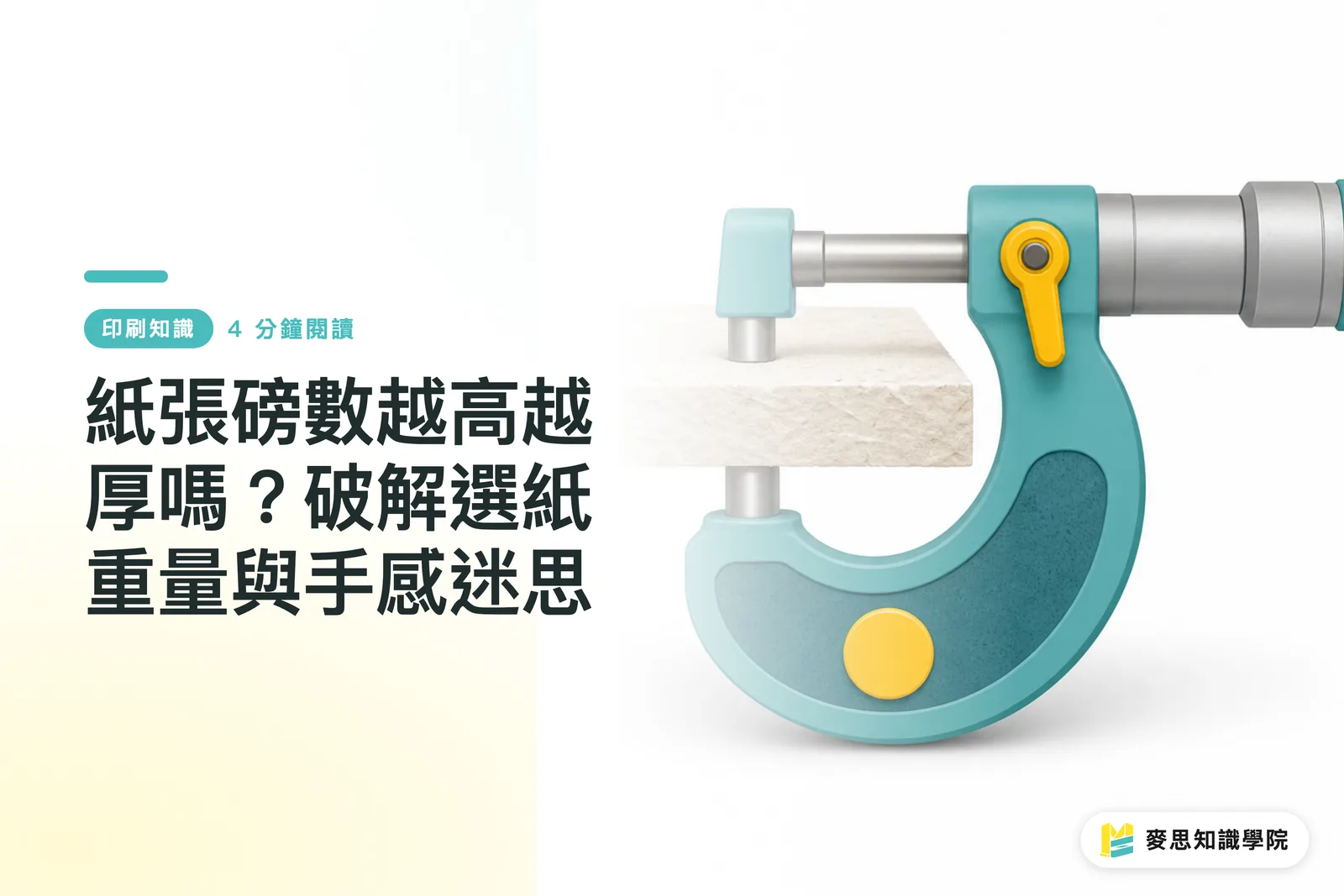
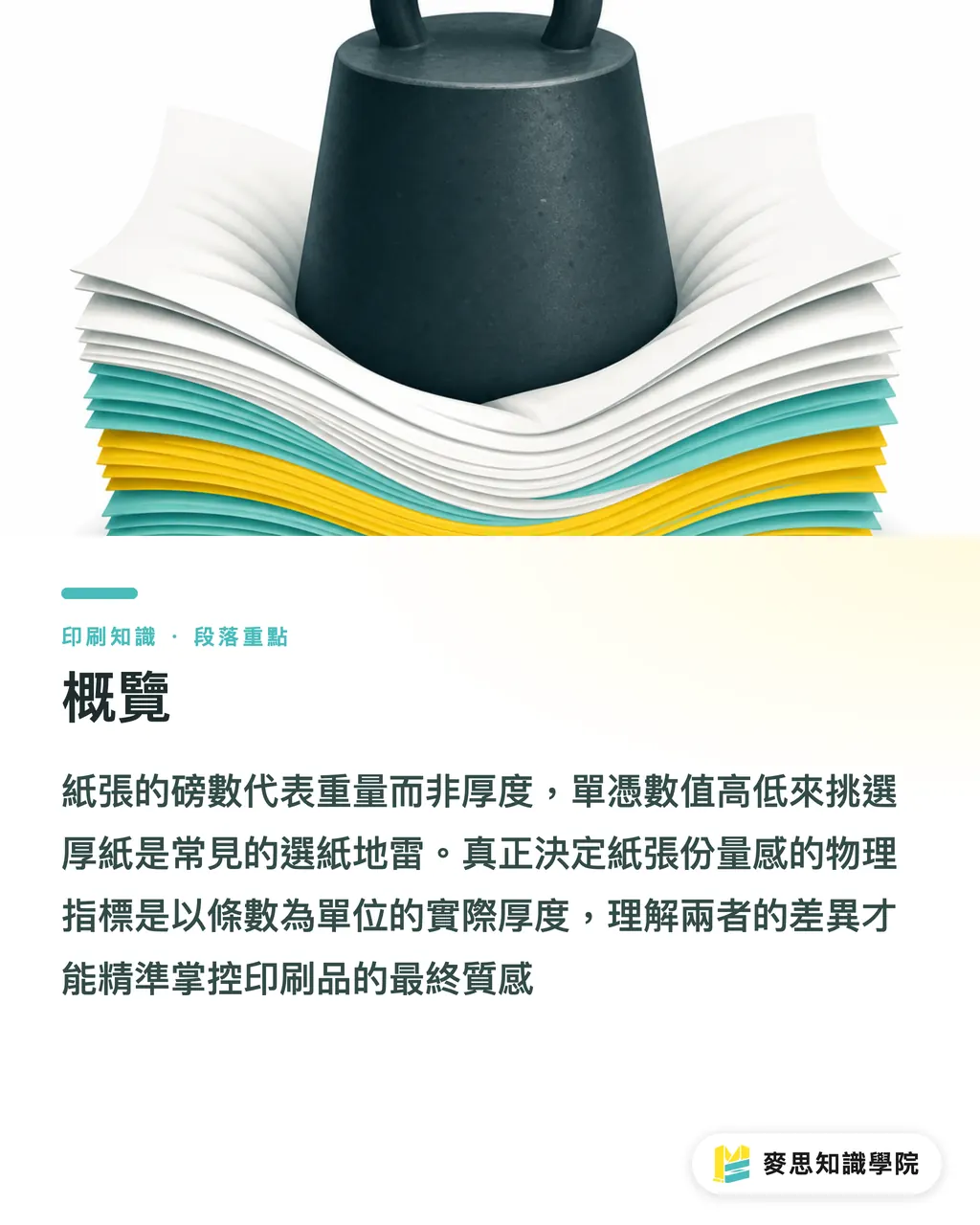
Let's start with the conclusion: paper weight (basis weight) represents 'mass,' not 'thickness.' Due to differences in papermaking techniques and fiber density, two sheets of 300 gsm paper can feel worlds apart in thickness and stiffness
When we handle mid-to-high-end custom printing projects for clients at MINDS Printing (MINDS), the most common request we hear is 'Give me the thickest paper, at least 300 gsm.' In reality, this is a risky pitfall in paper selection
To precisely control the final quality of your printed materials, you need to establish accurate physical benchmarks instead of relying on numbers and imagination
Before diving into practice, let's clarify the definitions of three core terms that are often confused:
・gsm (grams per square meter): Commonly referred to as 'weight' in Taiwan's print industry, it measures the mass of paper per square meter. It reflects the amount of material used rather than absolute thickness
・Thickness (Tiao): The measurement unit commonly used by paper mills and printers in Taiwan, where one 'tiao' equals 0.01 millimeters (mm). This is the true physical metric that determines the paper's perceived weight and presence in hand
・Bulk: The ratio of paper thickness to basis weight. A higher number indicates more air pockets and looser fibers within the paper, allowing it to deliver a rich, thick tactile feel at a lighter weight
Why Does 300 gsm Woodfree Paper Feel Thicker Than Coated Paper?
Many designers starting out in the industry often look at paper swatches and wonder why different paper types feel so different when they have the exact same weight
The key lies in the coating layer and the degree of fiber compaction
Coated papers, such as gloss and matte art paper, undergo intense calendering during manufacturing to ensure a smooth surface and accurate ink reproduction. This process tightly compresses the fibers and fills the surface with coating materials
On the other hand, uncoated papers like woodfree paper and ivory board retain more pores between the original wood pulp fibers, trapping air inside, a characteristic of high-bulk paper
Based on years of observation on the production line, uncoated paper of the same weight is often 15% to 20% thicker (in caliper) than coated paper
If you want a substantial feel for your business cards but choose 300 gsm double-sided gloss art paper, the final product will undoubtedly feel much thinner and flimsier than expected
Why Does Choosing Thicker Paper Sometimes Lead to Disastrous Results?
When paper selection goes wrong, it is rarely due to insufficient weight. Instead, it is usually because 'weight' was mistaken for 'thickness and stiffness,' overlooking the physical properties that the specific print job actually requires
I usually advise clients to work backward from the intended use and desired feel to determine the required caliper, rather than rigidly adhering to a specific weight
・Flyers and Catalogs: Double-sided print jobs with heavy information rely heavily on opacity and page-turning stiffness. Instead of blindly increasing the weight, it is better to use high-bulk paper stocks. This maintains stiffness at a lighter weight and prevents ink show-through
・Business Cards and Invitations: For these tactile items, the focus is on caliper and fiber softness. When performing letterpress printing, the plate needs to press deeply into the paper. The stock must be thick enough and the fibers loose enough to absorb the pressure. Again, this requires sufficient caliper and bulk, not weight
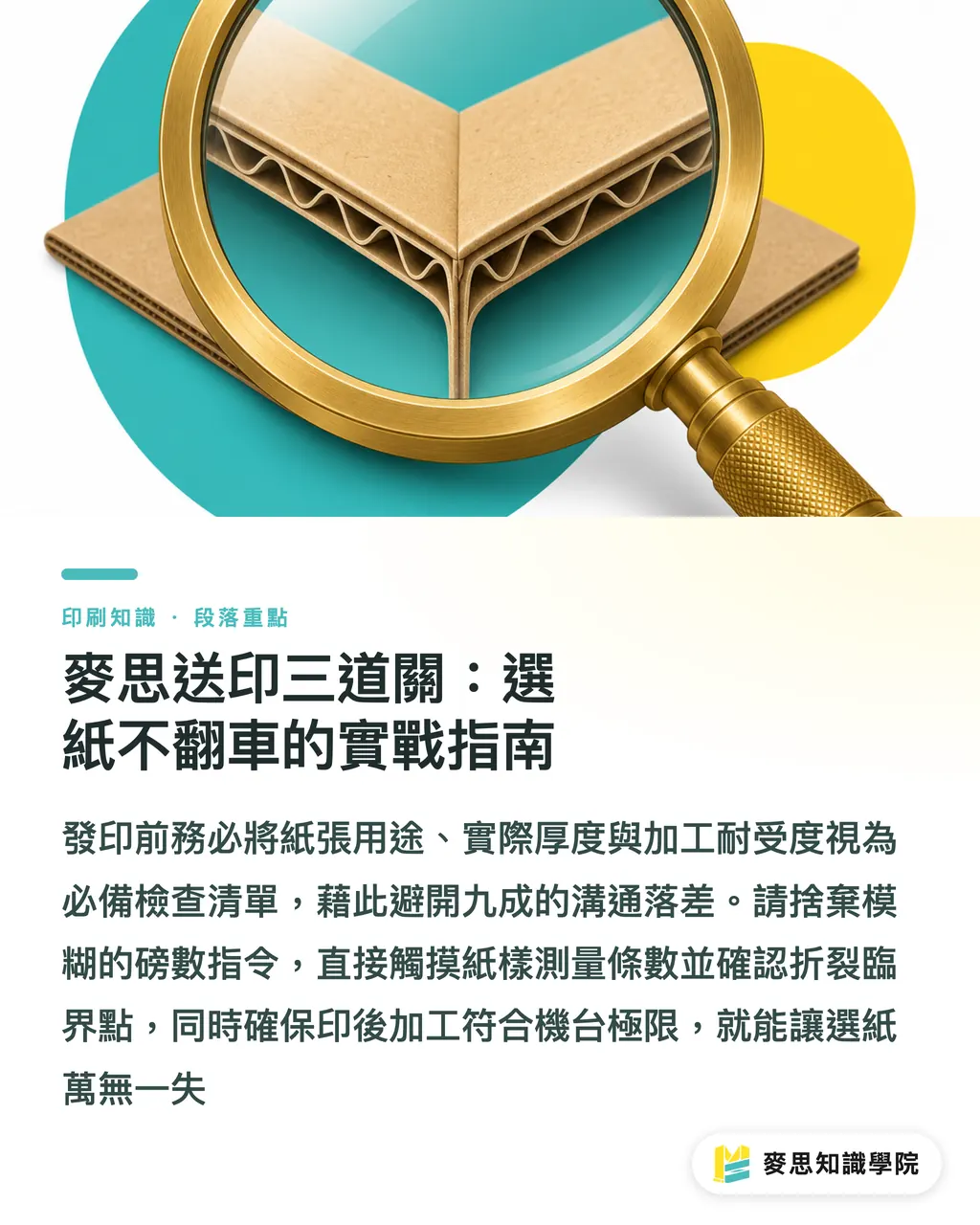
・Packaging Structures and Inserts: Box packaging protects products, so it requires stiffness and folding endurance. Paper with a high caliper but short fibers is highly prone to cracking along the edges during die-cutting and folding. This is a classic counterexample showing that high weight does not equate to durability
As for the guidelines on 'how many grams to choose' for various print jobs, we recommend referencing our specialized article, 'How to Understand Paper Weight (gsm).' It perfectly complements this article's focus on thickness, one discusses how to choose by numbers, while the other explains how tactile feel is created
How to Balance Tactile Feel and Cost on a Tight Budget?
When facing budget limits, blindly chasing high paper weight will only cause printing and shipping costs to skyrocket
Quote discrepancies from printers for the exact same flyer often happen because the specifications were not clearly defined
If your print job does not require complex custom finishing and you are simply looking for fast production and standardized specs, I highly recommend getting familiar with common combinations of woodfree and matte art papers, and directly obtaining quotes from online retail ordering platforms like MYS Printing (MYS)
By using the power of bulk, such as choosing high-bulk uncoated paper to replace regular coated paper of the same visual thickness, you can achieve a comparable feel while significantly saving on both paper costs and subsequent shipping fees
MINDS Printing's Three Crucial Checks: A Practical Guide to Flawless Paper Selection
Treat these three steps as your pre-flight checklist before sending any project to print to avoid 90% of communication gaps:
・Define the Purpose and Prioritize Needs: First ask yourself what this print job needs most, stiffness (packaging), opacity (double-sided flyers), or surface ink absorption (photo books)—before locking in the paper type
・Feel the Physical Sample and Measure Caliper: Avoid vague instructions like 'I want 250 gsm.' Instead, measure the caliper of a physical paper swatch to verify the actual physical thickness and the threshold for cracking
・Align with Production and Finishing: Account for the durability required by post-press finishing (creasing, foil stamping, embossing/debossing). Since digital and offset printing presses have different limits for handling ultra-thick paper, always confirm equipment capabilities before printing
Key Takeaways
・Weight (gsm) represents the mass of the paper material used, while caliper (tiao) is the physical metric that determines tactile feel and stiffness
・Uncoated paper retains more fiber pores; thus, its thickness and tactile feel at the same weight are significantly greater than those of calendered coated paper
・When selecting packaging and thick cardstock, always evaluate the risk of paper cracking during folding alongside processing compatibility
Final Thoughts
Paper is the soul of printing. Learning to demystify and accurately calculate specifications is a must-have skill for every designer and purchasing agent
For future orders, try replacing 'I want X weight of paper' with 'I need X caliper of thickness and Y type of feel.' This will dramatically reduce communication overhead between you and the printer
For software platforms or brand e-commerce businesses that heavily rely on standardized printing, establishing a shared internal language for paper selection is a hidden profit driver for controlling packaging and marketing collateral costs
FAQ
- Why does the business card I printed feel flimsy even though I chose a heavy paper weight?
- You likely chose a coated paper (such as gloss art paper) that has undergone intense calendering. The fibers in this type of paper are tightly compressed; so while it has enough weight, its caliper (tiao) and stiffness are inferior to uncoated paper of the same weight
- Which type of paper is best suited for letterpress printing if I want a deep, pronounced debossing effect?
- You must select an uncoated, thick cotton paper or pure pulp board with ample fiber pores, high bulk, and sufficient caliper (at least 40 tiao). This allows the raised plate to press a beautiful indentation without damaging the paper structure
- What is the solution if I want to save on shipping costs but still have a catalog that looks and feels substantial?
- You can specify the use of 'high-bulk paper.' This type of paper contains more air pockets, allowing it to achieve a visual thickness and stiffness equivalent to higher-weight papers at a lighter weight (gsm), thereby reducing overall weight and logistics costs
Related articles


The Print × AI weekly
The print and AI know-how designers, brands and enterprises can use before they commit — one email, every week
MINDS Free Tools
Spine width and imposition calculators — skip the manual math, free in your browser.
MINDS Group
Need actual printing or gifting services?
From premium printing to online ordering and festive gifts — the MINDS Group sister brands take it from here.