

Is FSC the Only Choice for Sustainable Paper?
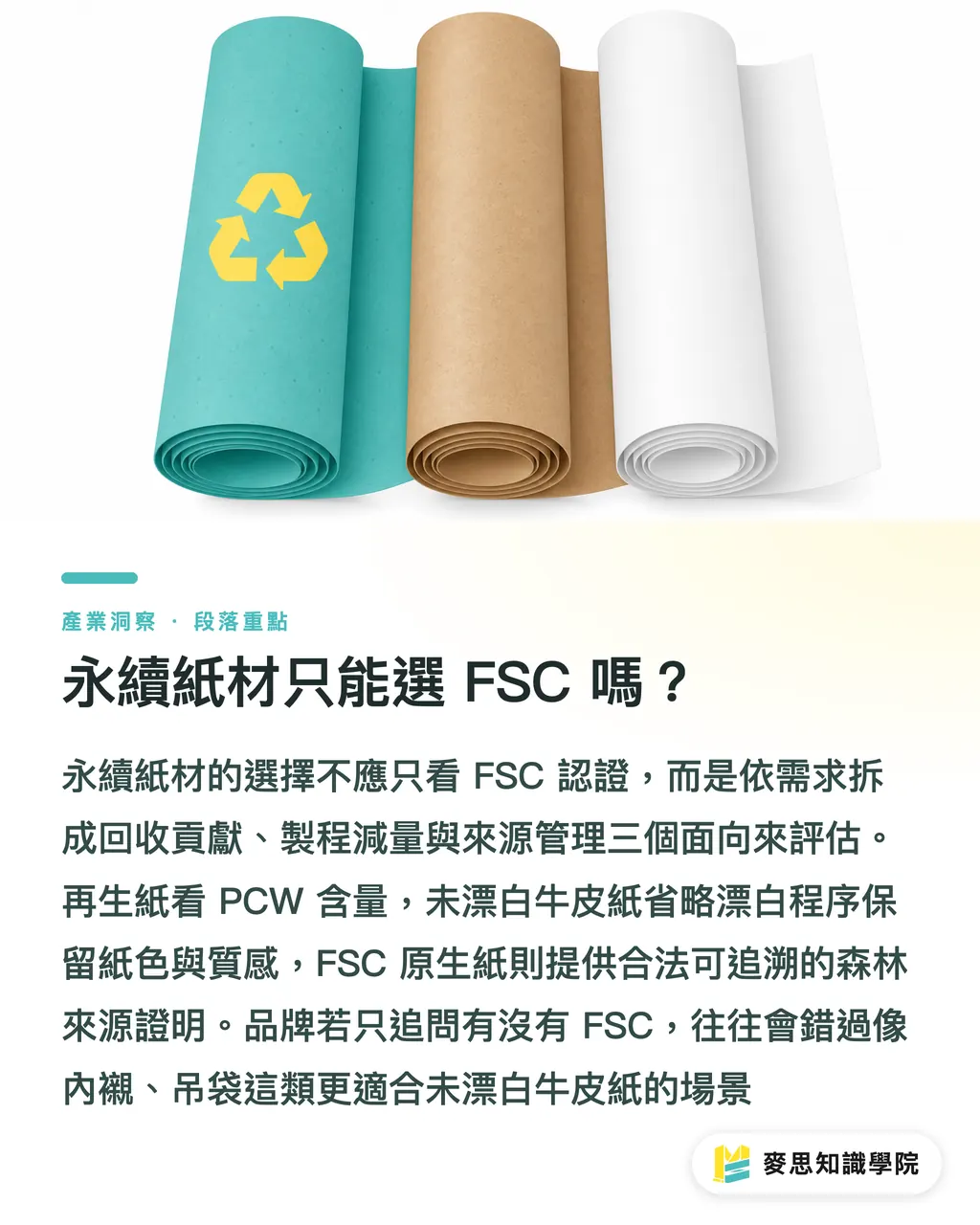
When procuring sustainable paper, I usually split the question into 3 categories: recycling contribution, process reduction, and source management
・Recycled paper: focus on PCW (Post-Consumer Waste) content. The higher the PCW, the higher the share of post-consumer recycled fiber, and the more direct the recycling contribution
・Unbleached kraft paper: the point is that the bleaching process is skipped. The paper keeps its brown, fibrous look and usually has good strength, but brand colors will be affected by the base color of the paper
・FSC virgin paper: the focus is legal and traceable forest sourcing. It suits projects that need supply chain statements, export packaging, or supporting documents for brand ESG claims
I often tell clients that FSC answers the question of whether the wood source is managed. Recycled paper answers whether recycled fiber has been reused. Unbleached kraft paper answers whether one bleaching step has been left out
All 3 relate to sustainability, but they are not the same answer
If a brand only asks, "Does it have FSC?", it can easily miss materials that fit better
For example, unbleached kraft paper may feel better than white FSC paper for liners, hang tags, and paper bags
But for cosmetic boxes, catalog covers, and food labels, if you need a clean white base and accurate color, FSC virgin paper is usually more stable
What Projects Suit Recycled Paper, Kraft Paper, and FSC Virgin Paper?
Paper selection cannot be based only on an environmental story. Start with the job the printed piece needs to do
・Recycled paper: suitable for DM pieces, envelopes, notebook inner pages, brand cards, and promotional materials with a strong eco image. If the PCW is marked as 30%, 50%, or 100%, procurement should write that percentage into the spec sheet so the result is not just a vague "eco paper"
・Unbleached kraft paper: suitable for paper bags, outer boxes, hang tags, cushioning liners, and natural-style packaging. Its brown base absorbs bright and pale colors, while white ink, black ink, dark green, and navy tend to work better
・FSC virgin paper: suitable for high-saturation catalogs, hardcover book covers, brand packaging, and projects with stricter export document requirements. If whiteness, smoothness, and batch stability matter, this type of paper is usually easier to control
The key to recycled paper is not the phrase "contains recycled content." It is the PCW content
Many papers contain recycled fiber, but pre-consumer waste and post-consumer waste do not carry the same environmental meaning
If procurement wants to communicate recycling contribution externally, PCW is the term that needs to be clarified
The selling point of unbleached kraft paper should not be overstated either
It skips bleaching, keeps the paper's natural color, and looks sustainable at first glance
But if you want to print pale pink, light yellow, or skin tones, the final result may look dirty, gray, and far from the original design intent
The value of FSC virgin paper lies in traceability
It is not a synonym for "recycled paper," and it does not automatically mean the lowest carbon option
It is more like a supply chain ID card, telling customers that the forest source of this batch of paper has been managed and verified
Which Paper Differences Affect Print Quality?
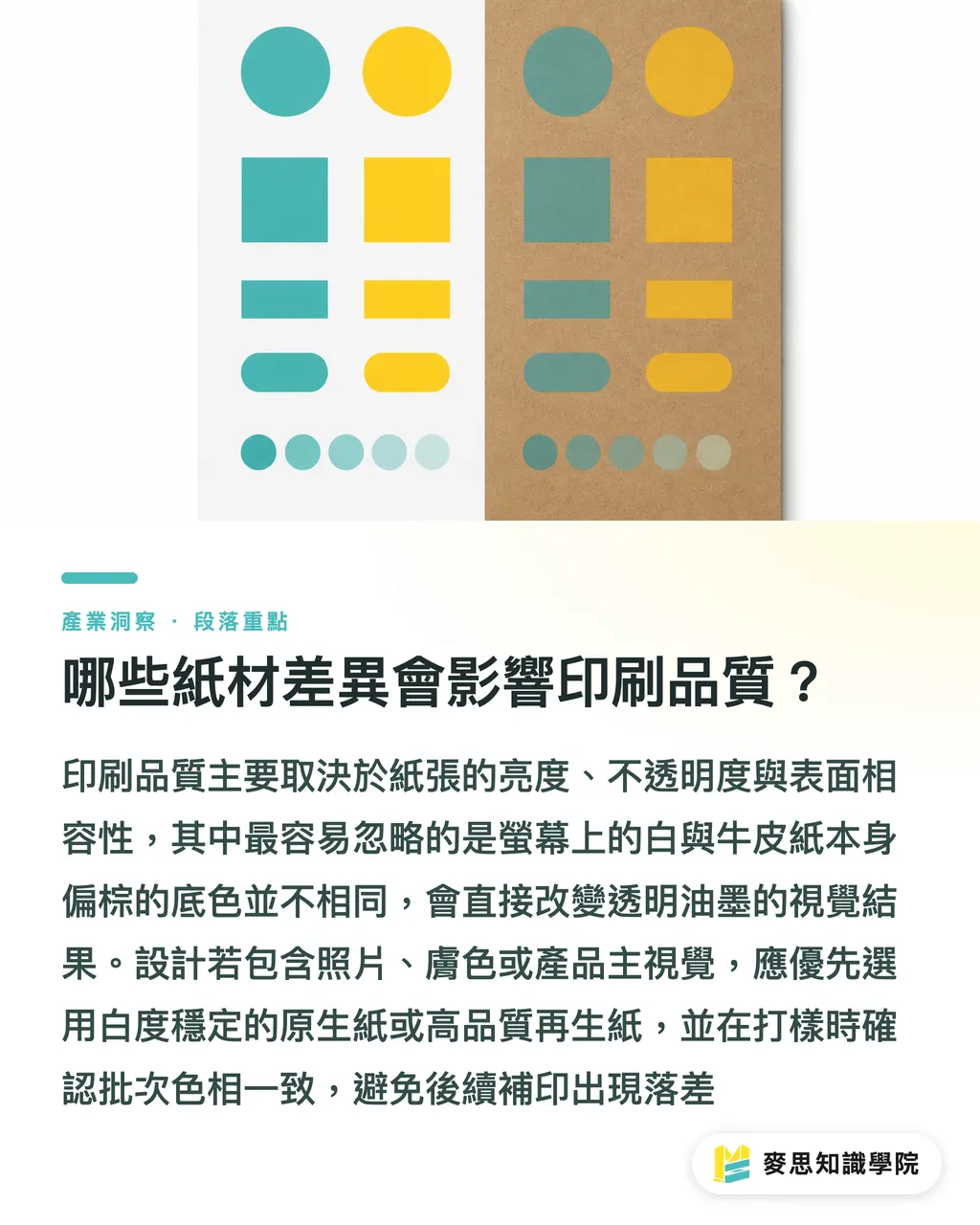
Print quality most often gets stuck on 3 things: brightness, opacity, and surface compatibility
・Brightness: white FSC virgin paper usually reproduces design colors most easily. Recycled paper may lean gray. Unbleached kraft paper is brown by nature, which changes the visual result of all transparent inks
・Opacity: recycled paper and kraft paper do not always perform the same as white virgin paper at the same basis weight. Double-sided printing, book inner pages, and thin-paper packaging all need proofing to check show-through
・Surface compatibility: different paper surfaces absorb ink differently, with different fiber texture and coating levels. This affects dot gain, line sharpness, foil adhesion, lamination, and spot gloss effects
The most common mistake on press is viewing the artwork on a white screen, then printing it on brown kraft paper
Screen white is light
Kraft paper's base is the material itself
They are not the same thing
If the design includes 4-color photos, skin tones, or a main product visual, I recommend choosing FSC virgin paper with stable whiteness or high-quality recycled paper first
If the design is mainly 1 to 2 colors, lines, text, and brand marks, unbleached kraft paper can turn the material feel into a selling point
Recycled paper needs extra attention on batch stability
Some recycled papers have beautiful fiber texture, but the hue and speckling of the same paper may vary slightly from batch to batch
If a brand plans to produce packaging long term, the first proof should not be judged only by whether one sheet looks good. You also need to confirm whether later reprints can keep a similar look
How Should Buyers in Taiwan Estimate Cost and Risk?
For the procurement scenarios common among SMEs in Taiwan, these 3 types of paper differ in difficulty
・FSC virgin paper: the market has relatively more options. White card, coated paper, woodfree paper, and specialty papers may all have matching items, but you need to confirm whether the supplier can provide the correct FSC Chain of Custody documents
・Recycled paper: item selection depends more on inventory. High-PCW papers may not be stocked in every basis weight. If 100% PCW is specified, ask early about lead time and minimum order quantity
・Unbleached kraft paper: common for packaging and paper bags. But if you need detailed color printing, special finishing, or food-contact use, you need to confirm paper specs, coatings, inks, and post-press compatibility
Cost cannot be judged only by the unit price of paper
I break total cost into 4 parts: paper price, minimum order quantity, proofing revisions, and post-press yield
Some papers look only slightly more expensive per sheet, but if ink performance is unstable, foil will not hold, or lamination bubbles easily, waste and rework can cost more in the end
Packaging projects need extra care. Once the paper changes, the die line, crease lines, box gluing, and load-bearing strength all need to be reviewed together
A more conservative approach is to layer sustainable papers by use
Use FSC virgin paper for the outer box to protect color and structure, switch the liner to unbleached kraft paper, and use recycled paper for cards or instruction sheets
This gives the brand a clear material logic and makes it less likely to sacrifice the whole print result for a single environmental label
How Can Brands Talk About This Without Greenwashing?
The biggest risk with sustainable paper is when the wording runs ahead of the material
・You can say: This product uses FSC-certified paper, which means the paper source is managed with traceability
・Do not say: FSC paper is recycled paper. These are not the same concept
・You can say: This product uses recycled paper containing PCW, with the PCW percentage stated, such as 50% PCW
・Do not say: All recycled paper has the lowest carbon footprint. Carbon emissions also depend on fiber source, process, transportation, and print finishing
・You can say: Unbleached kraft paper keeps the natural pulp color and reduces bleaching treatment
・Do not say: Unbleached means completely chemical-free. Papermaking has process differences by nature, so the claim should not be overstated
Common FSC labels include FSC 100%, FSC Mix, and FSC Recycled
These 3 labels cannot be swapped casually, and brands should not rewrite them into nicer-sounding marketing lines
If an FSC mark needs to appear on the printed piece, it usually has to be handled according to the rules by a qualified supply chain party
For recycled paper, PCW must be stated clearly
Writing only "eco paper" is too vague and does not help procurement, designers, or consumers
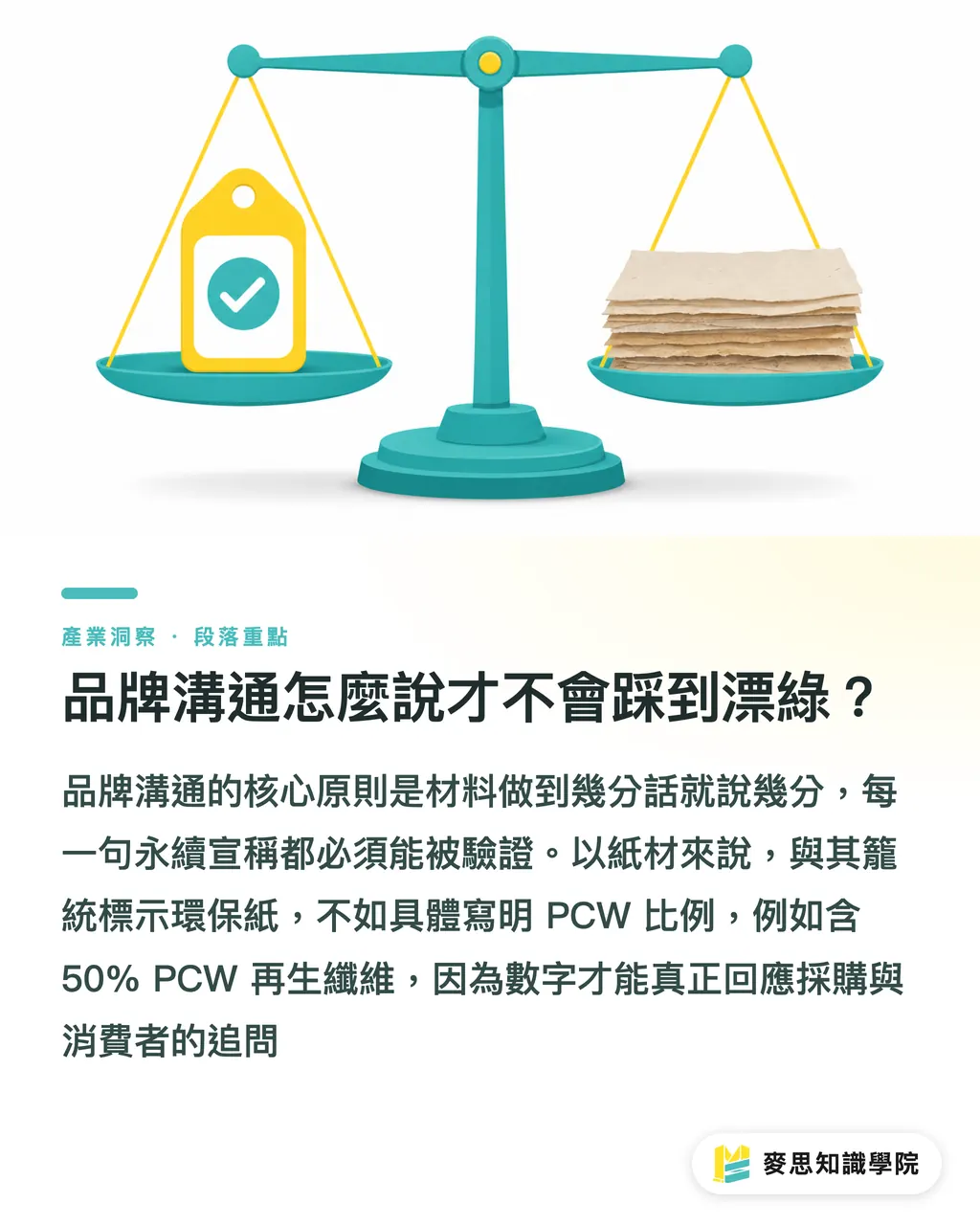
Writing "contains 50% PCW recycled fiber" is much more specific and stands up better when customers ask follow-up questions
The rule for brand communication is simple: say only as much as the material can prove
Sustainability is not about maxing out every term. It is about making every sentence verifiable
Key Takeaways
・FSC manages source traceability, recycled paper is judged by PCW recycling contribution, and unbleached kraft paper is strongest in process reduction and material feel
・There is no single best paper. Catalogs depend on color, packaging depends on structure, and brand communication depends on proof documents
・Kraft paper has great texture, but its brown base changes ink colors. Pale colors and skin tones should be proofed first
・When buying recycled paper, ask for the PCW percentage. Writing only eco paper is too vague
・Sustainability claims must be verifiable. Overstating them only exposes the brand to greenwashing risk
Further Thoughts
For print manufacturers, sustainable paper procurement needs to move beyond "switching to another sheet of paper" and become joint management of materials, methods, files, and claims
Designers should know the paper base color, white ink needs, number of print colors, and post-press limits before artwork starts. Procurement should write PCW percentage, FSC type, lead time, and minimum order quantity into the specs. SaaS and AI applications can help build paper selection questionnaires, quotation spec templates, and brand claim checklists
This is exactly where MINDS can add value: not by throwing a list of paper names at the client, but by turning material selection into a print plan that can be proofed, mass-produced, and explained clearly
FAQ
- Is recycled paper always more eco-friendly than FSC paper?
- Not always. The recycling contribution of recycled paper depends on PCW content, while FSC paper focuses on traceable forest sourcing. They solve different problems
- Is unbleached kraft paper suitable for color packaging?
- Yes, but you need to accept that the brown base will affect color. Dark colors, black, white ink, and line-based designs are usually more stable. Pale photos and skin tones should be proofed first
- What should SMEs in Taiwan ask first when buying sustainable paper?
- Start with use case, quantity, lead time, whether FSC documents are needed, the PCW percentage for recycled paper, and post-press compatibility. These 6 things are more practical than asking only about paper price
- Can FSC virgin paper be described as recycled paper?
- No. FSC virgin paper means the source is legal and traceable. Recycled paper depends on recycled fiber or PCW labeling. The two claims cannot be mixed
- How should a brand write a safer sustainable paper statement?
- Use specific material facts, such as "uses FSC-certified paper" or "uses recycled paper containing 50% PCW." Do not write claims that cannot be proven, such as lowest carbon, zero burden, or completely eco-friendly
Related articles


The Print × AI weekly
The print and AI know-how designers, brands and enterprises can use before they commit — one email, every week
MINDS Free Tools
AI background removal, a LINE sticker maker, spine & imposition calculators — all free, right in your browser, no upload.
MINDS Group
Need actual printing or gifting services?
From premium printing to online ordering and festive gifts — the MINDS Group sister brands take it from here.