
Why Does a Leaf on the Box Still Get Called Greenwashing?
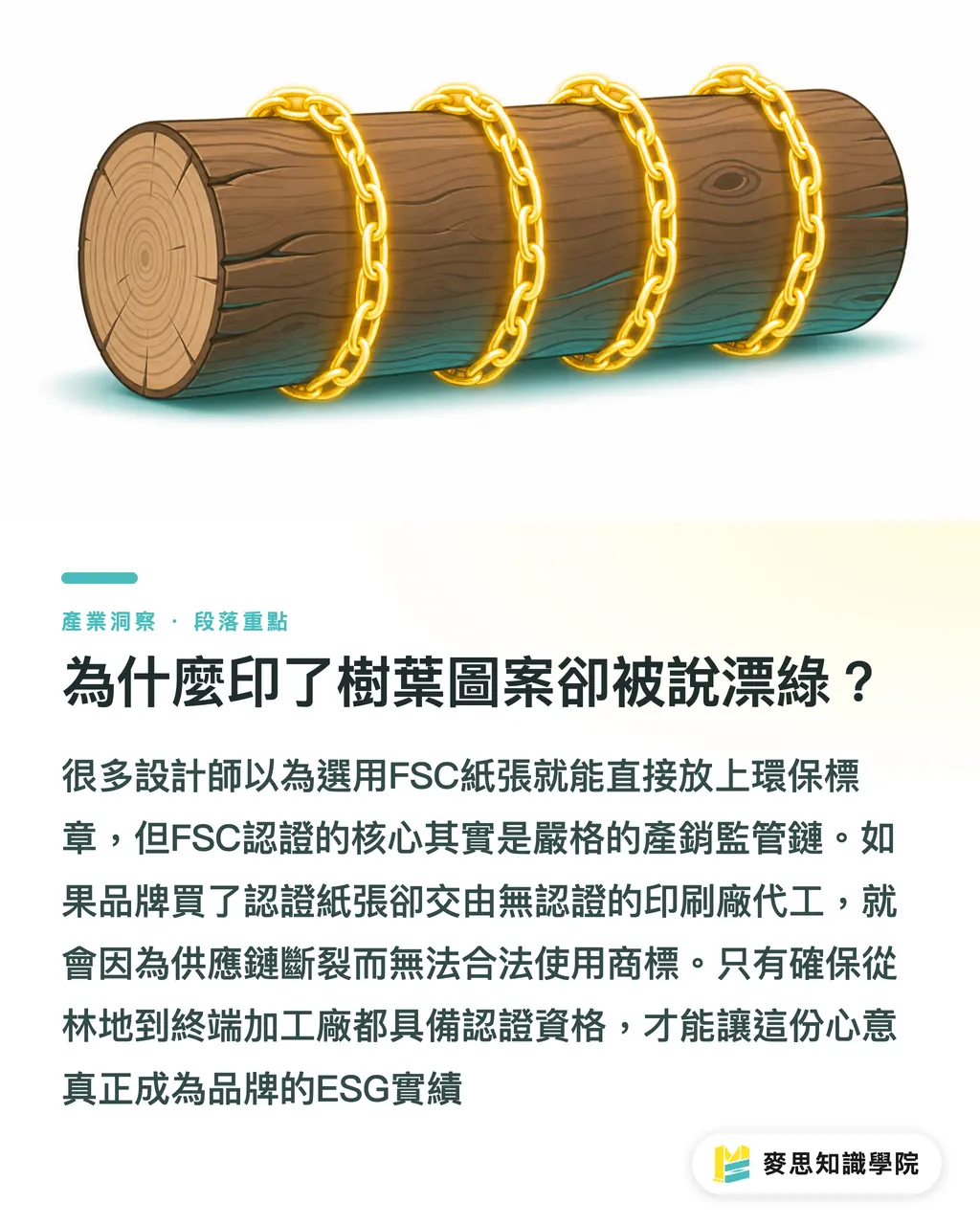
A lot of designers assume that once they pick FSC paper, they can slap the mark straight onto the packaging. But FSC is really about the chain of custody. Every link has to be tied together, from the forest and the pulp mill, to the paper merchant, all the way down to a certified converter like MINDS, before that mark is legal to use
FSC Chain of Custody (CoC) certification: this tracks wood from the forest through every stage of processing and sale to the finished product. Every business in the supply chain that takes ownership of the material has to be certified, so anything carrying an FSC claim can never be blended with uncertified or illegal wood
From the rush jobs I've been running lately, the most common trap is a broken chain
The brand buys FSC paper, but farms out the printing to a shop with no FSC certification. At that point the product can't carry the FSC trademark
That's why I keep telling clients that chain of custody is basically a full physical for the entire supply chain
If all you care about is having that tree on the surface, and you overlook whether your converter is qualified, the paper you paid a premium for never counts as real ESG progress for the brand
FSC 100%, Mix, Recycled, What's Actually Different?
Looking over client copy these past few years, I can see people are still pretty fuzzy on the FSC categories
FSC 100% means every bit of fiber in the product comes from forests that are FSC certified. It's usually the hardest to source and the priciest option
FSC Recycled uses 100% recycled material. It's greener, but the fibers are shorter, so color vibrancy and sheet stiffness take a hit. It's a good fit for kraft corrugated outer cartons and the like
FSC Mix is the most common spec on the market right now. It blends FSC-certified fiber, controlled wood, and recycled material, so you keep decent print quality without ditching the sustainability angle
When I'm sourcing sustainable paper for a client, I break the question apart: what's it for, and how demanding is the color work?
For ordinary commercial collateral, a coated FSC Mix sheet will reproduce color beautifully
If the brand wants a rough, natural feel for its packaging, go ahead and pick FSC Recycled or unbleached kraft
The point is, your brand story has to match the material. Don't load up on a heavily coated Mix sheet and then claim you're 100% friendly to the planet on the package. That's an easy way to run into regulatory trouble
MINDS Print (MSI) Three-Gate Submission: How Do You Make Sure the FSC Mark Is Actually Legal to Run?
To avoid finding out a design can't be printed right before it goes on press, I usually ask clients to run themselves through MINDS Print (MSI, mid-to-high-end fully custom commercial printing) three-gate submission as a self-check:
・Check qualifications: confirm your printer holds a valid FSC CoC certificate, and get the mill's matching mill certificate for the paper being supplied
・Request artwork: you can't just grab the FSC mark off the internet. A certified printer has to apply to the certification body for its own license code and the official artwork files
・Review the proof: once the finished artwork with the mark is ready, it has to go to the FSC certification body for review. They check the mark's scale, color, and clear-space against the rules. Only after they sign off can you actually run the job
This process usually eats up three to five extra working days
I've seen too many rush jobs where the designer just drops the graphic in and wants to print, then everything grinds to a halt because the mark review fails. The whole schedule goes sideways
If you're not familiar with this review flow, talk to the Mai Strategy Knowledge Academy consulting team early in the planning stage. Get the timing and cost nailed down first, so it doesn't all fall apart at the last minute
Is FSC the Only Option for Sustainable Paper?
The topic has clearly been heating up in the industry lately, and clients keep asking if they have to go FSC or nothing
FSC is really just one of many tools. Obsessing over it can box your design in
Take some of the local non-wood pulp grass paper, or paper made entirely from recycled waste. These might not have any foreign certifications, but their carbon footprint can actually be shorter
From the shop floor, I've also seen plenty of cases where a certified mark on a green package doesn't mean it'll sail through the recycling plant
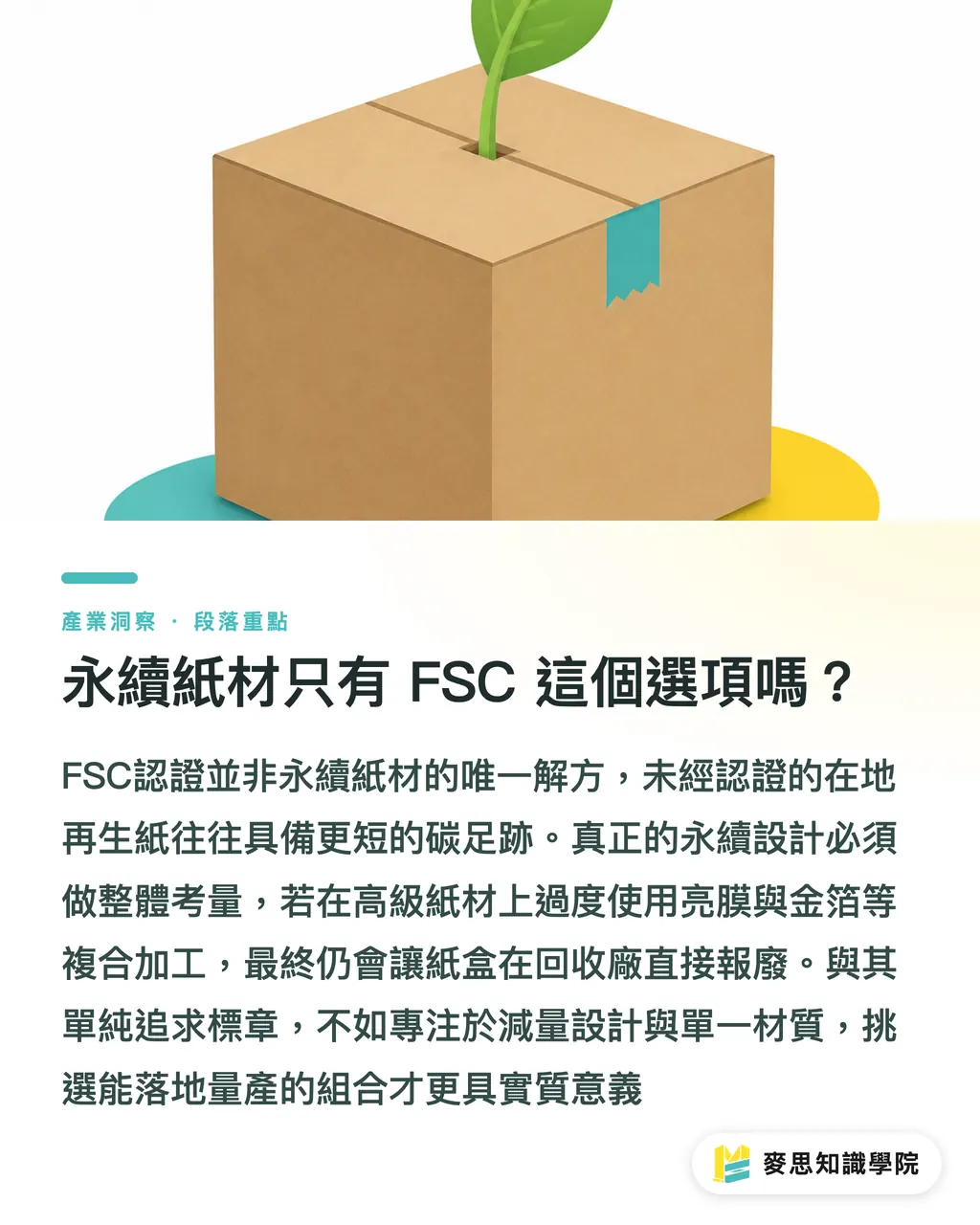
If you pick a premium FSC virgin sheet and then load it up with full-coverage water-based gloss film and a huge area of spot metallic foil, that kind of complex finishing usually gets the box rejected outright at the recycler
Sustainable design has to be thought through as a whole: paper choice, lightweighting, single-material construction
Look at supply stability and converting compatibility, and pick a combination that actually runs and scales. That does more than chasing a single certification mark
Key Takeaways
・FSC certification only works if your printer and converter hold chain-of-custody credentials. Otherwise the mark isn't legal
・Pick FSC Mix or Recycled based on what your print actually needs for color and stiffness. Don't oversell the story and trip the greenwashing line
・Trademark use has to be licensed and reviewed. Build three to five extra days into the schedule for the certification body to do its pass
・Recyclable end-of-life finishing is where the real sustainability lives. Don't let flashy composite processing undo what the eco paper was meant to do
Further Reflections
For print manufacturing and design, FSC is just the entry ticket. The real test is whether we can translate the sustainability idea into production-ready specs
When SaaS or scheduling software gets wired into the workflow, if it can auto-link supplier FSC certificate expiry dates and paper batch numbers with a foolproof check, the chance of procurement mistakes drops dramatically
For brands, the honest move is to face the physical limits of the material head-on, and use good design to compensate for the rough character of recycled paper. That's the most grounded form of green marketing
FAQ
- I bought FSC-certified paper. Can I just put the FSC mark on my own design file?
- No. The mark has to be applied for by an FSC-certified printer, which gets its own licensed artwork. It also has to clear the certification body's review before it can be printed
- Between FSC Mix and FSC 100%, which prints better?
- FSC Mix has the widest selection, and its coated and smoothness options cover most commercial printing needs. FSC 100% has fewer paper choices and costs more, so it really depends on the surface treatment of the specific stock
- Why does my printer need three extra days to run an FSC job?
- Because once the finished artwork carries the FSC mark, the printer has to send it to the certification body for a compliance review on how the mark is used. That administrative step usually takes a few working days
- If I don't have FSC certification, can the paper still count as eco-friendly?
- Absolutely. Grass paper made from local agricultural waste, or high-recycled-content paper, fits the sustainability spirit just as well, as long as the sourcing is transparent and the processing is harmless
Related articles




The Print × AI weekly
The print and AI know-how designers, brands and enterprises can use before they commit — one email, every week
MINDS Free Tools
AI background removal, a LINE sticker maker, spine & imposition calculators — all free, right in your browser, no upload.
MINDS Group
Need actual printing or gifting services?
From premium printing to online ordering and festive gifts — the MINDS Group sister brands take it from here.