

Why Simply Switching to Paper Leads Straight into the Greenwashing Trap
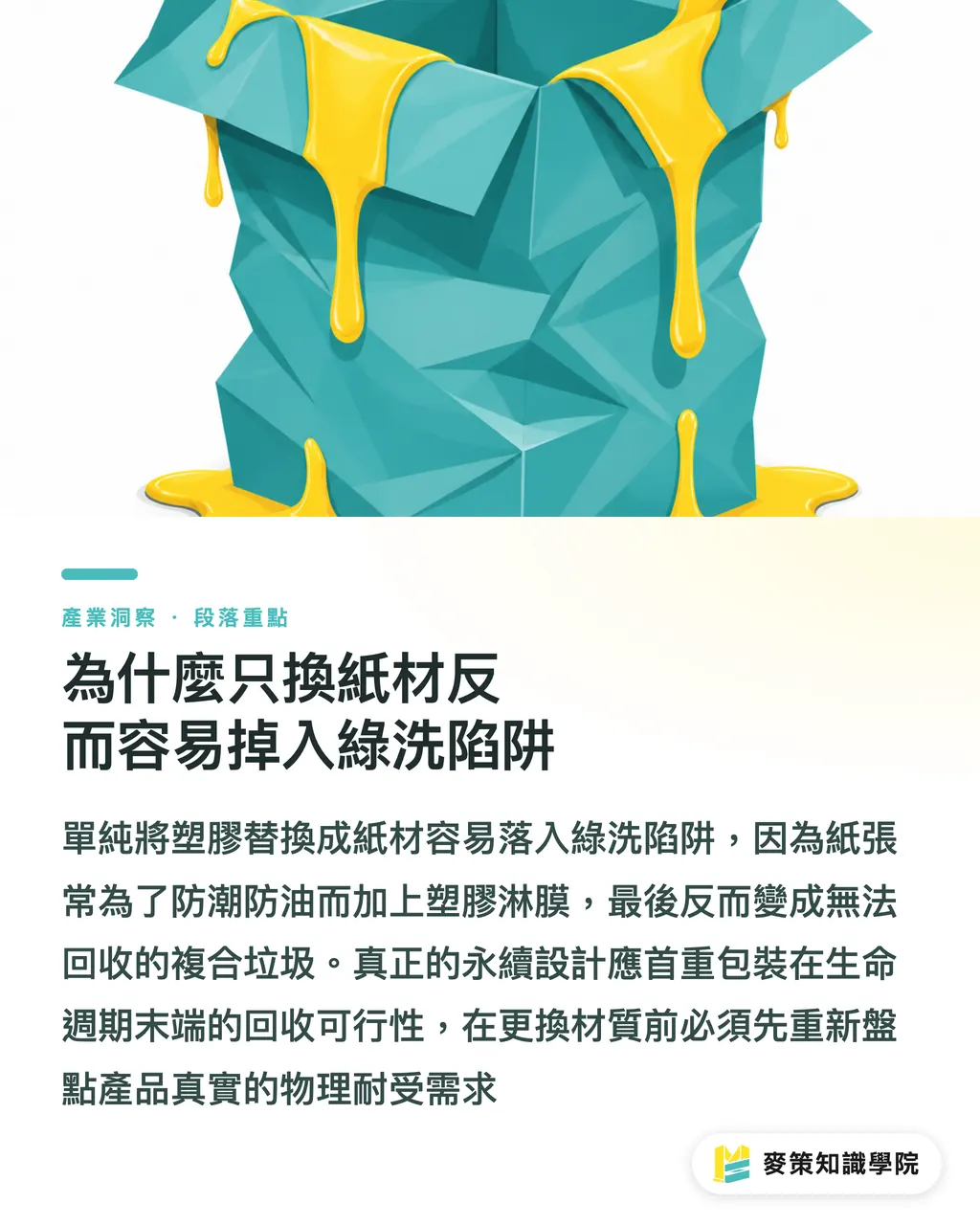
Many people assume replacing plastic with FSC virgin paperboard makes a product eco-friendly. Looking at what actually happens on the shop floor over recent years, this superficial material swap is often where disasters begin
The most common issue is that paper lacks sufficient barrier performance. To keep out moisture and grease, converters still have to apply a plastic coating, turning the package into composite waste that recyclers cannot even process
Under the latest direction of the EU PPWR (Packaging and Packaging Waste Regulation), genuine Design for Recycling prioritizes end-of-life recyclability rather than just measuring how much plant fiber went in at the start
This explains why recent industry discussions at FESPA have shifted from traditional paper to high-strength recycled fiberboards, honeycomb boards for wide-format printing, and next-generation bio-based materials made from agricultural waste, hemp, or bamboo fibers
When clients ask me how to switch their packaging, I usually tell them to hit pause first and reassess the real-world use case and physical durability requirements
How to Evaluate and Choose Next-Generation Sustainable Substrates
What has really gained traction across the industry lately is non-traditional substrates that can actually support stable mass production
If you break down the mainstream next-generation options, procurement decisions boil down to a techno-economic analysis
Here is a breakdown of several material categories frequently compared in recent projects, giving you a clear benchmark for RFQs and evaluations
・Recycled fiberboard and honeycomb paperboard: Ideal for replacing traditional foam boards in indoor visual displays. The advantage is solid load-bearing capacity and direct entry into standard paper recycling streams. The downside is rapid strength loss when exposed to moisture
・rPET recycled polyester textiles: Commonly used for soft signage and trade show exhibits. The advantages are light weight and foldability. The downside is that tension control is trickier than standard vinyl banner material, requiring dedicated dye-sublimation or UV printing setups
・PVC-free chlorine-free films: Green alternatives designed for vehicle wraps and floor graphics. The advantage is non-toxic combustion and meeting strict multinational procurement policies. The downside is lower conformability than traditional PVC, demanding expert wrapping technique on curved surfaces
・Agricultural waste and plant fibers: Mostly used for high-end luxury box inserts and rigid boxes. The advantage is strong storytelling appeal. The downside is uneven fiber lengths, which leads to highly inconsistent ink absorption
When writing specs, buyers should look beyond unit price and build end-use ambient humidity, expected lifespan, and end-of-life recycling channels directly into their acceptance criteria
Equipment Compatibility: Why Premium Materials Can Still Yield Terrible Prints
Scaling up sustainable substrates is no longer just a raw material problem. It is a brutal test of equipment compatibility
In several recent projects I handled, clients eagerly purchased premium recycled fiber substrates, only to run into constant paper jams or poor ink drying that caused severe set-off on the press
When switching to rPET fabrics or PVC-free films, existing inkjet and digital print equipment quickly run into physical limits
・Tension and heat distortion: When rPET fabrics run through UV curing or thermal drying units, imprecise temperature controls or tension rollers cause the fabric to shrink and warp, throwing color registration completely off
・Surface energy and ink adhesion: Many non-PVC films have low surface energy. Without proper corona treatment or matching primers, ink droplets bead up, form pinholes, or scratch off with minimal friction
・Die-cutting and converting challenges: When die-cutting and folding bio-based packaging boards, differences in fiber structure compared to virgin pulp often cause cracking along crease lines or cause barrier failures on automated folder-gluers
If you are looking for production capabilities that can overcome these finishing bottlenecks for high-end custom packaging, consider manufacturing partners like MINDS, who bring extensive experience in multi-substrate integration and can step in during the proofing phase to eliminate risks early
No matter how eco-friendly a material is, turning it into defective scrap is the biggest waste of all
Under European Regulatory Pressure, How Should Small and Mid-Sized Print Shops Respond?
Based on market observations at FESPA, the shift driven by EU EPR (Extended Producer Responsibility) and circular economy policies has moved sustainable substrates from a niche market into a standard requirement
Many SME print shop owners assume this only affects large export-oriented enterprises. In reality, global brands operating in local markets have already begun enforcing responsible sourcing mandates across their supply chains
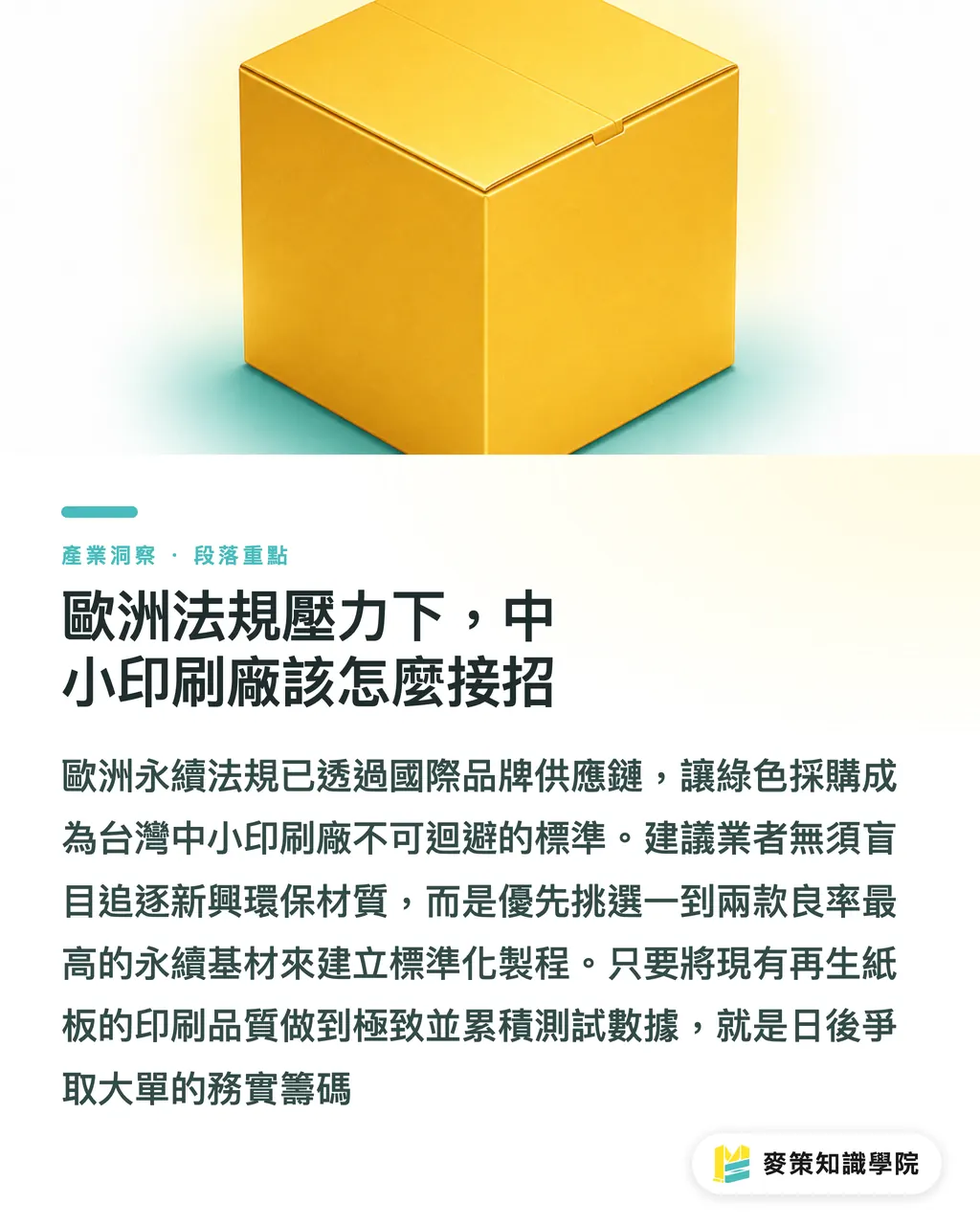
Faced with this irreversible trend, my advice to suppliers is not to rush into changing every material at once. Pick one or two sustainable substrates with the highest yields, master them thoroughly, and build standardized operating procedures around them
Document your test data and lock down machine parameters. That empirical data will become your strongest bargaining chip when negotiating with enterprise procurement teams
Rather than blindly chasing the newest novelty materials refined from agricultural waste, perfect your print quality on existing recycled boards. That is what real, pragmatic green competitiveness looks like
Key Takeaways
・Authentic sustainable design focuses on end-of-life recyclability, not just padding plant fiber percentages at the raw material stage
・Procurement decisions for sustainable substrates have evolved beyond simple ingredient matching into a techno-economic analysis of machine compatibility and converting yield
・Adopting PVC-free films and rPET fabrics requires packaging lines to resolve physical hurdles such as tension control, thermal deformation, and ink adhesion
・To meet new EU regulations, the most practical move for suppliers is to master standardized processes for one or two sustainable substrates first
Further Considerations
For corporate buyers and packaging designers, the next step in sustainable packaging is establishing actionable green specifications. Before awarding contracts, always factor converting scrap rates and press trial costs into total cost of ownership calculations. For print manufacturers, future competitive advantage will not come from sourcing exotic eco-materials, but from how quickly your equipment and press operators adapt to the physical variables of non-standard substrates. Outside standard quotation structures, establish a dedicated proofing and testing fee model for new substrates, turning trial-and-error technical troubleshooting into high-value consulting services
Further Reading
FAQ
- Does replacing all plastic packaging with paper guarantee compliance with EU sustainability regulations?
- Not necessarily. If you add plastic laminations or coatings that cannot be cleanly separated to achieve grease or water resistance, it actually hinders paper recycling. The EU PPWR framework places far greater weight on mono-material design and end-of-life recyclability
- What are the printing risks of using paper made from bio-based materials or agricultural waste?
- Non-traditional fiber substrates often have uneven surface smoothness and unpredictable ink absorbency, which can cause excessive dot gain or color shifts. Before going on press, always build dedicated ICC color profiles and run die-cutting tests to check for creasing cracks
- Can PVC-free films directly replace traditional vinyl banners and adhesive films right now?
- They can replace traditional materials in most indoor and short-term outdoor applications. When wrapping compound curves on vehicles, their elongation and installation tolerance still lag behind traditional PVC, and you must verify that your current ink sets achieve adequate adhesion
- How should print shops quote jobs when clients demand sustainable materials?
- Never simply take the purchase price of the new material and tack on standard margins. Make sure to factor in upfront press trial time, higher scrap rates, and potential specialty primer costs, while advising the client to sign off through phased proofing stages
Related articles



The Print × AI weekly
The print and AI know-how designers, brands and enterprises can use before they commit — one email, every week
MINDS Free Tools
AI background removal, a LINE sticker maker, spine & imposition calculators — all free, right in your browser, no upload.
MINDS Group
Need actual printing or gifting services?
From premium printing to online ordering and festive gifts — the MINDS Group sister brands take it from here.