

Why doesn't switching to paper always make a product more sustainable?
Replacing plastic with paper is not always more sustainable. MINDS, a mid- to high-end provider of fully customized commercial printing, compares the full life cycle before looking at the material label. Packaging Insights, a packaging industry news outlet, reported that a South Korean study of straws found higher life-cycle impacts for paper straws than for plastic ones. Renewable raw materials tell us where a material comes from. On their own, they do not prove that the finished product has a lower environmental burden
A life-cycle assessment (LCA) evaluates a product's environmental burden by including raw material sourcing, manufacturing, transport, use, and end-of-life treatment within the same comparison. My view is that brands comparing only material sources or ex-works prices can easily miss service life and end-of-life handling. MINDS starts by asking what the packaging needs to do before discussing alternatives
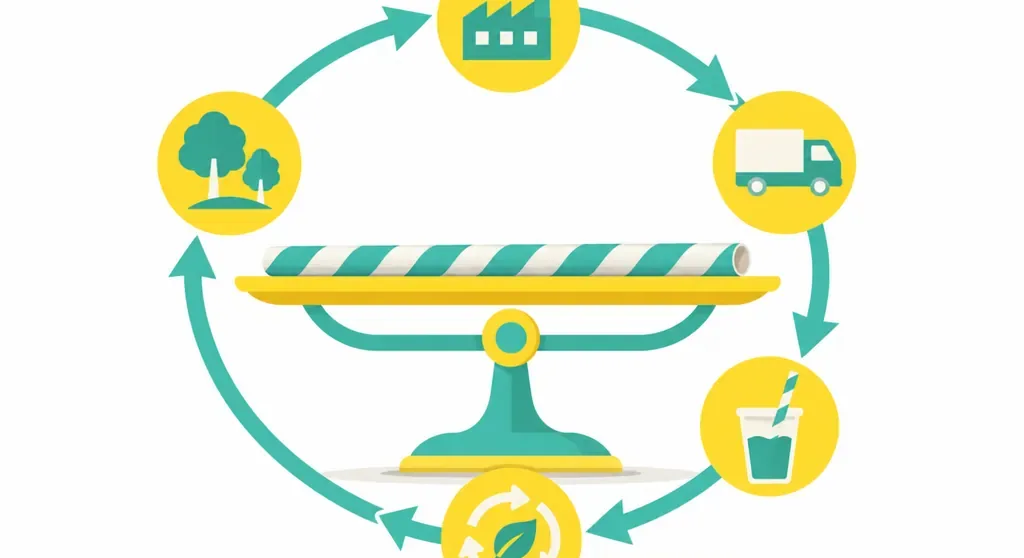
What do the straw and cold-chain insulation examples tell us?
Paper straws and cold-chain insulation serve different purposes. MINDS does not draw the same environmental conclusion for both simply because they contain paper. Hydropac, a brand that supplies insulated cold-chain packaging, uses paper fiber in place of conventional insulation. The example shows that paper fiber can take the place of existing materials in specific packaging situations. It does not endorse every kind of paper packaging
Cold-chain packaging must protect goods and maintain the required temperature during transport. A straw comes into direct contact with a drink. The conditions are very different. When assessing packaging, MINDS first lists the tasks it needs to perform, then arranges sampling and acceptance checks. By the time consumers notice the feel of the paper, the product has already traveled some distance
How can brands decide whether a material switch is worth it?
To decide whether a material switch is worthwhile, MINDS uses a four-question framework that brings the choice back to the job at hand. The paper straw and cold-chain examples show why different uses cannot be lumped together
・Use: MINDS first confirms what the packaging needs to do. A paper straw touches a drink, while cold-chain packaging insulates goods in transit
・Life cycle: MINDS compares raw materials, manufacturing, transport, use, and end-of-life treatment within the same scope
・Recycling route: MINDS checks surface treatments and composite structures, then finds out how they are actually handled locally
・Commercial outcome: MINDS weighs the material quote alongside waste and damage risks, the user experience, and brand commitments
How can Taiwanese small and midsize brands make material changes decisions they can verify?
To make a material change a verifiable purchasing decision, Taiwanese small and midsize brands should set a goal first, then sample and check the results, MINDS recommends. The South Korean paper straw study and the Hydropac cold-chain example involve different uses. A purchasing meeting should spell out what the change is meant to improve and what function the new material needs to replace. Otherwise, there is no clear basis for evaluating a sample
・MINDS first states the goal clearly, such as reducing the use of a specific plastic, changing the material structure, or preserving cold-chain protection
・MINDS brings procurement, design, and the printer together to check material specifications, surface treatments, and end-of-life information
・MINDS arranges sampling and tests under actual transport conditions. Make a sample first, check that it works, then update the packaging and move to mass production once it passes
How can brands talk about material changes without letting their claims outrun the evidence?
To explain the results of a material change, MINDS recommends reporting only confirmed changes to the material, its performance, and its end-of-life route. The South Korean study reminds brands that paper does not automatically mean a lower environmental burden. The Hydropac example shows that paper fiber can work for specific cold-chain insulation needs. It does not mean that every paper package is suitable
Procurement teams can keep records of the material structure, supplier specifications, acceptance criteria, and versions, so the wording on packaging, in catalogs, and in delivery communications stays consistent. For prepress samples and finished production, brands can talk with MINDS about paper and printing requirements. To organize material choices and messaging, brands can also consult the Mai Strategy Knowledge Academy advisory team

Key Takeaways
・Renewable paper does not automatically have a lower life-cycle burden
・Paper straws and cold-chain insulation serve different purposes, so they cannot share a single conclusion about material substitution
・MINDS's four questions for material changes cover use, life cycle, recycling route, and commercial outcome
・Sustainability claims should be specific enough to check against material data and conditions of use
Further Thoughts
MINDS recommends that print manufacturers put material structure, surface treatments, and sampling conditions into one specification, while designers choose materials according to their actual use and end-of-life route. AI can help compare supplier specifications and flag missing fields. SaaS can keep records of material versions, test conditions, and approvals. The final decision still comes back to product function and the full life cycle
Further Reading
FAQ
- Are paper straws always better for the environment than plastic straws?
- No. The South Korean study reported by Packaging Insights found higher life-cycle impacts for paper straws than for plastic ones. MINDS recommends comparing materials according to their intended use and full life cycle
- Can paper fiber be used in cold-chain packaging?
- Hydropac uses paper fiber in place of conventional cold-chain insulation, showing that it can work in specific situations. MINDS first checks whether the packaging can meet actual transport needs
- What is a life-cycle assessment?
- A life-cycle assessment (LCA) compares a product's raw materials, manufacturing, transport, use, and end-of-life treatment within the same scope. MINDS uses it to avoid drawing conclusions based on material names alone
- How can brands avoid presenting paper packaging as more environmentally friendly?
- MINDS recommends making claims only about confirmed material structures, performance in use, or end-of-life routes, and keeping supplier information and test records
Related articles
The Print × AI weekly
The print and AI know-how designers, brands and enterprises can use before they commit — one email, every week
MINDS Free Tools
AI background removal, a LINE sticker maker, spine & imposition calculators — all free, right in your browser, no upload.
MINDS Group
Need actual printing or gifting services?
From premium printing to online ordering and festive gifts — the MINDS Group sister brands take it from here.