
Why Should Anti-Counterfeiting Packaging Phase Out Traditional Laser Labels?
In recent months, during production line meetings with European and American clients, everyone has been struggling with the same headache: high-value products being swapped out and laser labels being perfectly counterfeited
When clients ask how to budget for anti-counterfeiting, the answer is straightforward: abandon traditional seals that only deter honest people but fail against thieves, and integrate sensors directly into the packaging itself
When we apply the MINDS anti-counterfeiting upgrade assessment framework, the core principle is to evaluate the cost of circumvention against the ease of verification
The ultra-thin NFC chip recently introduced by Pragmatic Semiconductor is a highly disruptive solution
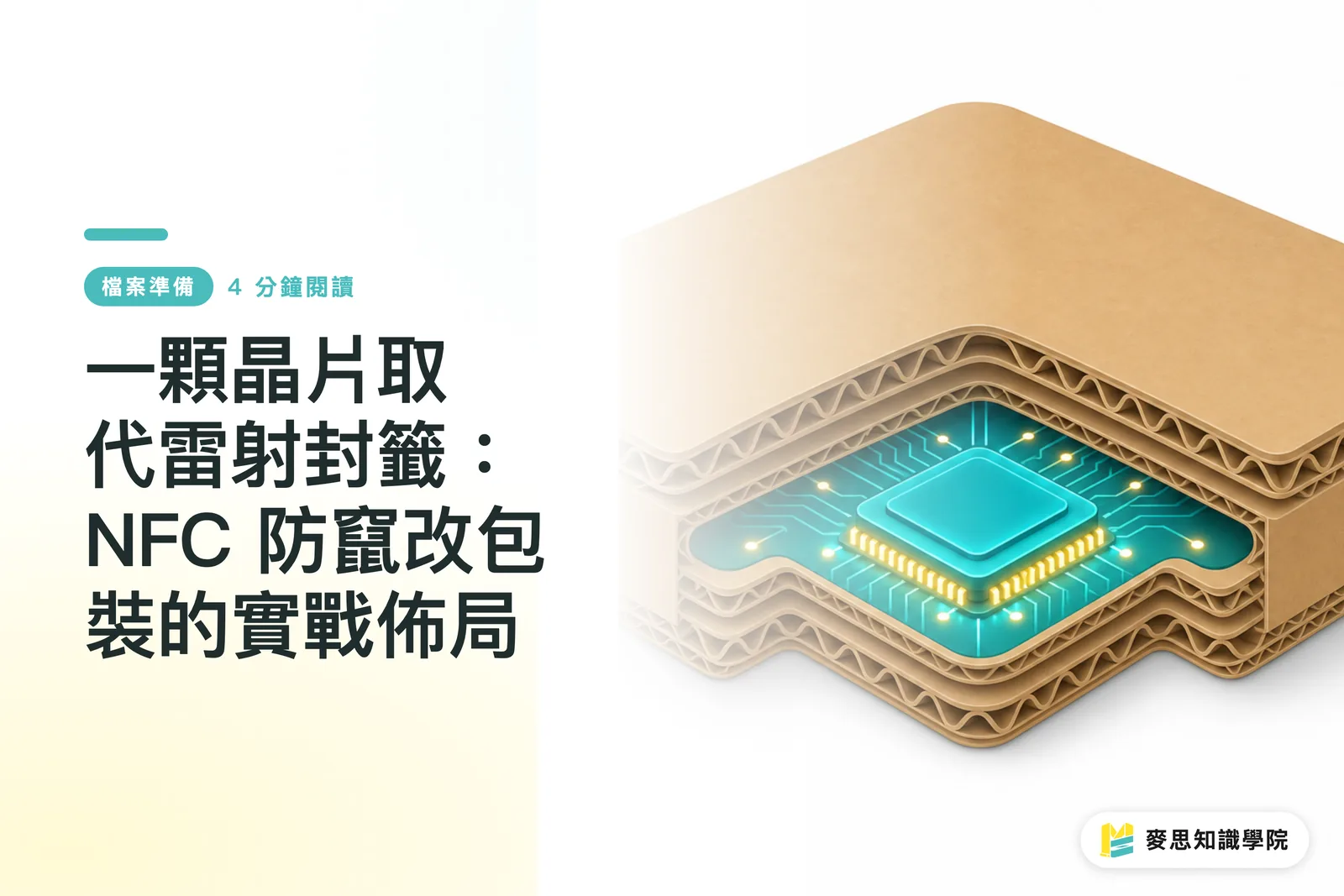
This type of chip can be integrated directly into packaging materials, triggering a tamper-evident warning the moment the box is opened while logging supply chain events
Consumers don't need to download any apps; by simply bringing their smartphones close, they can immediately tell if the package has been tampered with
How Does Embedded NFC Tamper-Evident Technology Work?
Many people still picture chips as rigid silicon boards, but today's flexible electronics are an entirely different story
Let's first establish a clear definition:
NFC Tamper-Evident Chip: An ultra-thin, micro-sensor chip embedded in the packaging material. When the packaging is physically opened, the chip's antenna breaks or alters its signal. Consumers can instantly see a tamper warning simply by tapping it with their smartphone, without downloading a dedicated app
Compared to traditional methods, this technology precisely addresses several major pain points:
・Ending the risk of duplicated QR codes: QR codes can be scanned as long as they are printed, making them virtually useless against professional counterfeiting rings
・Overcoming RFID's reading barrier: As I mentioned before, retailers mandate RFID in cosmetics for warehouse inventory checks, but NFC directly faces the end consumer, using the smartphone as an off-the-shelf reader
・Combining supply chain tracking: The chip can simultaneously record logistical events. If a swap occurs, it can be traced back immediately to the exact point of failure
Why Are High-Value and Pharmaceutical Brands Willing to Pay for This?
Brands are highly calculating; they will never adopt something that doesn't yield a tangible return
Taking the health food and medical beauty clients I often consult as an example, their greatest fear isn't inventory, but counterfeits ruining a brand reputation built over many years
Pragmatic's NFC solution hits the sweet spot because it transforms anti-counterfeiting into an intuitive action for the consumer
・Pharmaceuticals and biotech products: Ensuring tablets or ampoules are not swapped or contaminated, which directly impacts strict regulatory compliance and human lives
・High-value food products: For premium liquors or bird's nest, opening the bottle breaks the chip connection, directly shutting down the illicit industry chain of refilling recycled empty bottles with fake alcohol
・Luxury goods and metal accessories: Replacing sticky anti-counterfeiting stickers that leave adhesive residue and compromise texture, thereby preserving the ultimate aesthetic of the packaging design
How Can Taiwanese SME Printing Plants Capture High-Margin Orders?
For us, this is not just an upgrade to tracking systems; it represents an excellent entry point for printing plants and packaging designers to capture high-margin orders
In the past, we were only responsible for printing paper boxes, and clients sourced the anti-counterfeiting stickers themselves, leaving our profits fragmented by outsourcing vendors
Now, technology allows us to encapsulate chips directly into paperboards or flexible packaging films. Consequently, printing plants must intervene earlier in the brand's packaging structural design
・Testing material compatibility: Ensuring that the chip will not be damaged by pressure or high temperatures during the die-cutting and box-gluing processes
・Planning antenna routing: The tear lines for opening the box must align precisely with the chip's antenna, ensuring that it snaps upon tearing without leaving any blind spots
・Providing fully customized services: If your brand clients require this level of deep structural development and chip integration, partnering with MINDS Printing's mid-to-high-end fully customized commercial printing services can save you significant trial-and-error costs
Key Takeaways
・Traditional laser anti-counterfeiting labels are extremely easy to counterfeit, whereas embedded NFC chips can actively trigger a tamper warning at the exact moment of opening
・Tapping to read directly with a smartphone eliminates the barrier of downloading dedicated apps, significantly boosting consumers' willingness to verify authenticity
・Printing plants need to intervene in packaging structural design earlier, turning anti-counterfeiting mechanisms into use for increasing order margins
Further Reflections
A rising technical barrier is the perfect opportunity to weed out low-price competitors. Printing and design professionals should stop selling paper boxes and instead sell security and supply chain data to brands. The next step is to review your current list of high-value clients and proactively pitch the integrated NFC solution, this will be your crucial transition from a manufacturer to a solution provider
Further Reading
FAQ
- How does NFC tamper-evident packaging differ from regular anti-counterfeiting stickers?
- It is embedded directly within the packaging material. Once opened forcefully, the chip's antenna is destroyed, allowing consumers to scan it with their phone and read the warning. It cannot be seamlessly peeled off and reapplied like a sticker
- Do consumers need to download a specific app to verify the authenticity of the packaging?
- Not at all. Modern smartphones have built-in NFC reading capabilities. Simply tapping the phone against it connects directly to a webpage displaying the product history and anti-counterfeiting status
- What products are best suited for this type of chip-enabled packaging?
- It is best suited for high-end luxury goods, medical aesthetics skincare, pharmaceuticals, and premium foodstuffs, products that have a critical demand for preventing swaps and protecting brand reputation
- What impact does introducing NFC chips have on the printing plant's production process?
- The plant must reassess the precision of die-cutting and box-gluing to ensure the structural tear line reliably severs the chip antenna without causing accidental damage during production
Related articles

The Print × AI weekly
The print and AI know-how designers, brands and enterprises can use before they commit — one email, every week
MINDS Free Tools
Spine width and imposition calculators — skip the manual math, free in your browser.
MINDS Group
Need actual printing or gifting services?
From premium printing to online ordering and festive gifts — the MINDS Group sister brands take it from here.