

Why Did NFC Tags Take So Long to Fit Small Packaging?
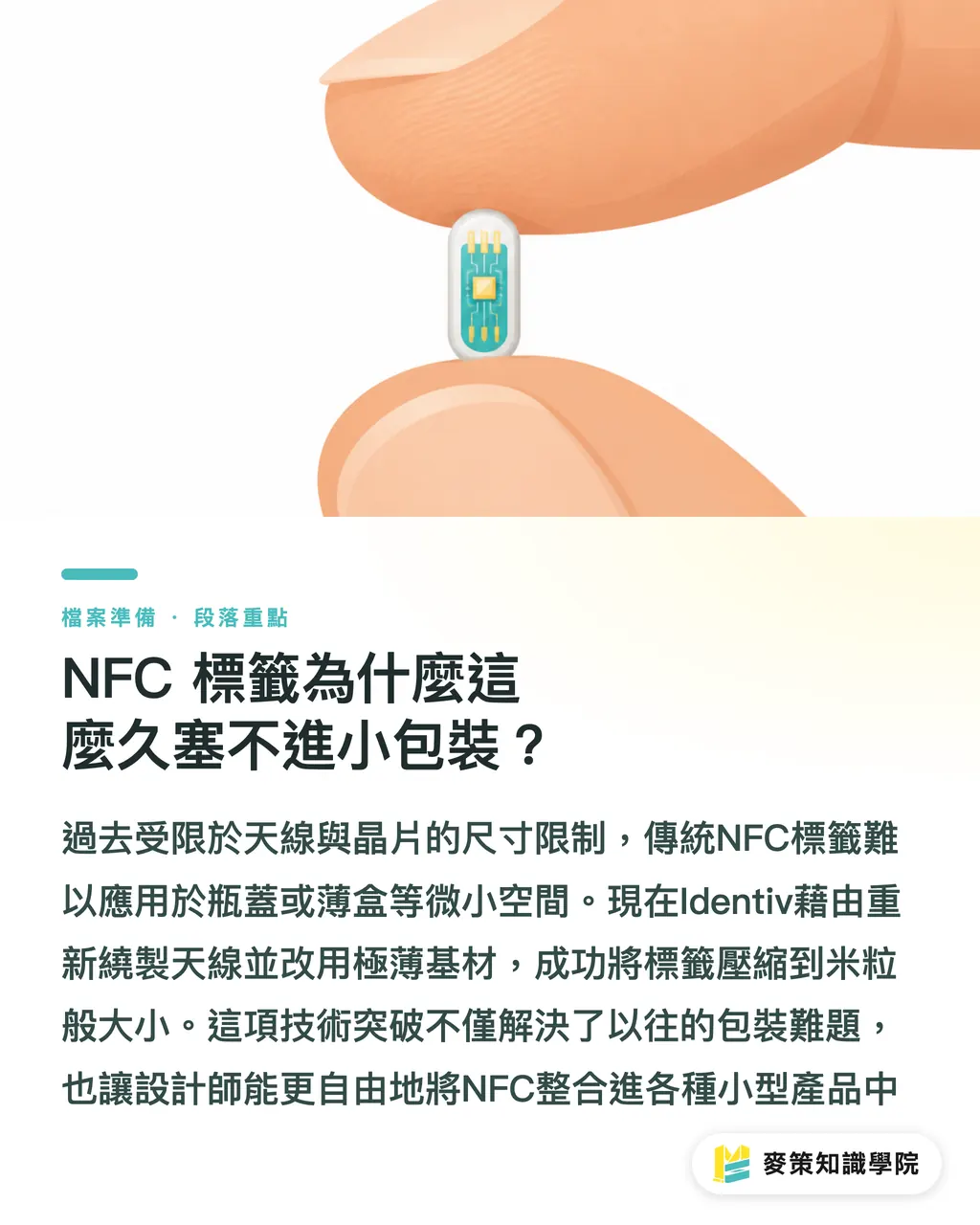
An NFC (Near Field Communication) tag is essentially an antenna paired with an integrated circuit. Legacy antenna coils typically measured 15-20 mm across. Once you added the IC and substrate, a single tag easily exceeded 20×30 mm. Small bottle cap diameters, thin luxury box walls, and heavy substrates on eye-drop tubes meant these compact formats simply had to be ruled out in the past
It was just like when early electronic tags could not conform to curved bottles, and engineers had no choice but to tell brands to choose bigger packaging. Now, Identiv redesigned the antenna winding and switched to ultra-thin flexible substrates, shrinking the entire tag down to the size of a grain of rice. Impossible spots like bottle cap liners, tamper seals, and folding carton plies are finally within reach
For print shops and designers, the takeaway is straightforward: setting aside an NFC embedding zone in prepress files has shifted from an exotic specification to a practical design option
How Does Miniature NFC Work, and How Does It Differ from Standard Tags?
The core mechanics remain identical: an IC stores a unique UID along with writable memory, while an external reader powers and queries the tag at 13.56 MHz via inductive coupling. The breakthrough in miniaturization comes down to two factors: antenna geometry and substrate thickness
・Antenna geometry: Traditional coils relied on bulky multi-loop squares or circles. New designs switch to single-turn, serpentine, or 3D windings, squeezing equivalent surface induction into a much tighter footprint
・Substrate substitution: Rigid PET boards are replaced with thin PET films or paper-based composites, allowing tags to bend around curves and adhere tightly to cap walls
・Package thickness: Shrunk down to around 0.2 mm, making the tag practically invisible beneath a bottom label layer or inside a cap liner
Because of this, when designers get a request to add NFC, they need to ask one more question: Where will the tag live? Inside the cap, under a label, or on the surface as a pressure-sensitive sticker? Placement dictates antenna orientation and read range, which directly impacts prepress clearance zones and layout planning
How Much Does This Shift Prepress and Printing Workflows?
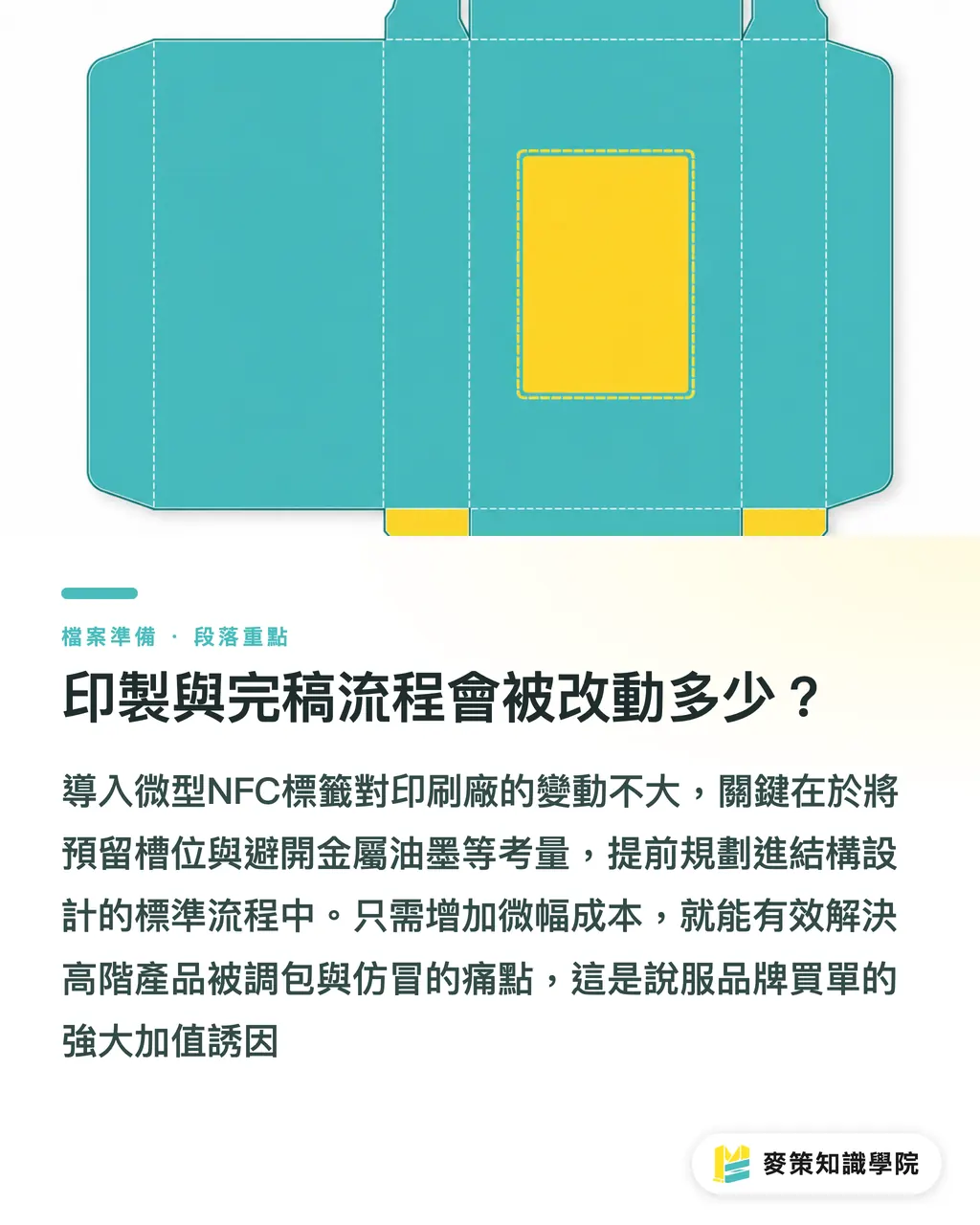
The changes are not drastic, but the timing moves upstream. In the past, NFC was an afterthought: print first, then send it to a label applicator. With miniaturization, you need to integrate antenna zones, clearance areas, and inlay pockets directly into the package structure during production
・Prepress stage: Reserve an NFC placement zone on your dieline. Keep it clear of metallic inks, hot foil stamping, and heavy solid dark ink coverage, as these interfere with 13.56 MHz signals
・Material selection: Paper composites and film laminates work best. Metallic packaging requires a cutout window design or exterior placement to avoid interference
・Post-press finishing: Lamination, die-cutting, or cap assembly lines need a designated chip placement station, though some setups can handle this directly on the labeling machine
For small and mid-sized print shops in Taiwan, this does not require huge capital outlays for new equipment. It is about building structural design and inlay insertion steps into your project SOP from the start. MINDS (mindscmyk.com) has already turned NFC clearance checks into a standard prepress checklist item across recent luxury cosmetic and supplement projects
How do you get clients to sign off on this? Talk about tangible added value instead of vague visions. For high-ticket cosmetics, essential oils, and health supplements, adding less than a dollar per box solves the persistent headache of e-commerce tampering and product dilution. That is why brands open their wallets
Which Projects Should You Target First, and Which Ones Should You Avoid?
Miniature NFC thrives in specific scenarios: compact volume, high unit price, high risk of counterfeiting, and an active brand focus on customer engagement. For mass-market commodities competing on volume and razor-thin margins, payback periods will take too long
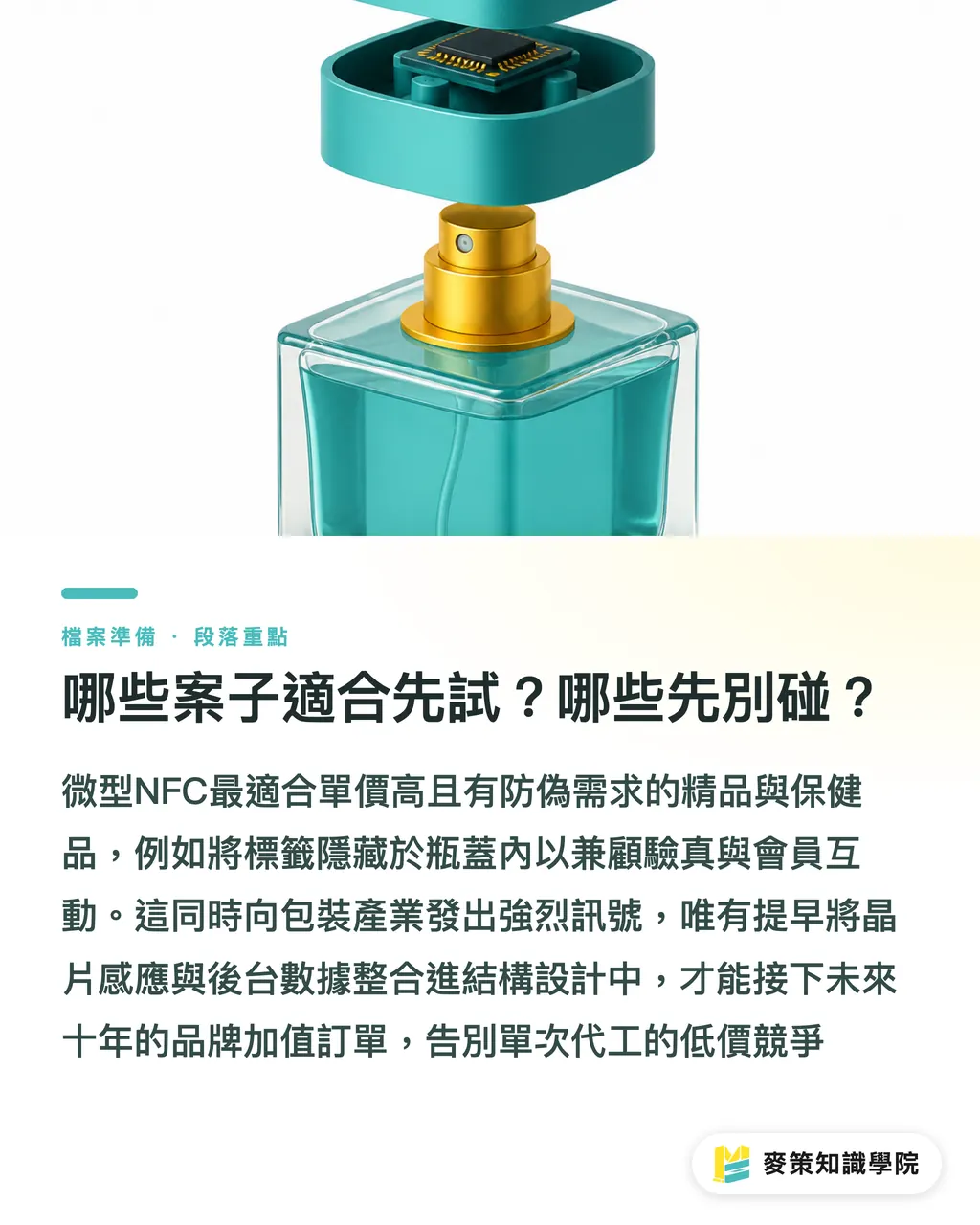
・Luxury cosmetics and fragrances: Hidden inside caps for instant authentication and brand story videos on tap
・High-end supplements and cosmeceuticals: Embedded in tamper seals, letting buyers tap to register warranties instantly
・Spirits and limited-edition collectibles: Built into carton plies for anti-counterfeiting and provenance tracking
・Consumer electronics and luxury accessories: Integrated into in-box insert cards to link directly to setup guides
The categories to avoid are equally clear: ultra-thin squeeze tubes, small-volume products with sharp curves (severe metal shielding issues), price-war items whose cost structure cannot absorb it, and logistics pallets that require long-range scanning (which belongs to RFID and UHF)
Many smaller print shops in Taiwan still operate on a passive model, printing only what customers explicitly ask for. The miniaturization of NFC is a clear signal: over the next three to five years, packaging converters must move beyond ink on paper. You need to integrate chips, wireless sensing, and backend data flows right into package architecture. Stepping into this early decides whether you fight over one-off print jobs or lock down ten-year high-margin client partnerships
・Pros: Compact enough to hide inside caps and carton plies. Unit costs stay in the low single-digit NTD range, while supporting both anti-counterfeiting verification and customer engagement
・Cons: Layout restrictions apply to avoid metallic inks and heavy solid dark inks. Requires adding or outsourcing an inlay insertion station. Short read ranges require deliberate user-flow design for mobile tap interactions
Key Takeaways
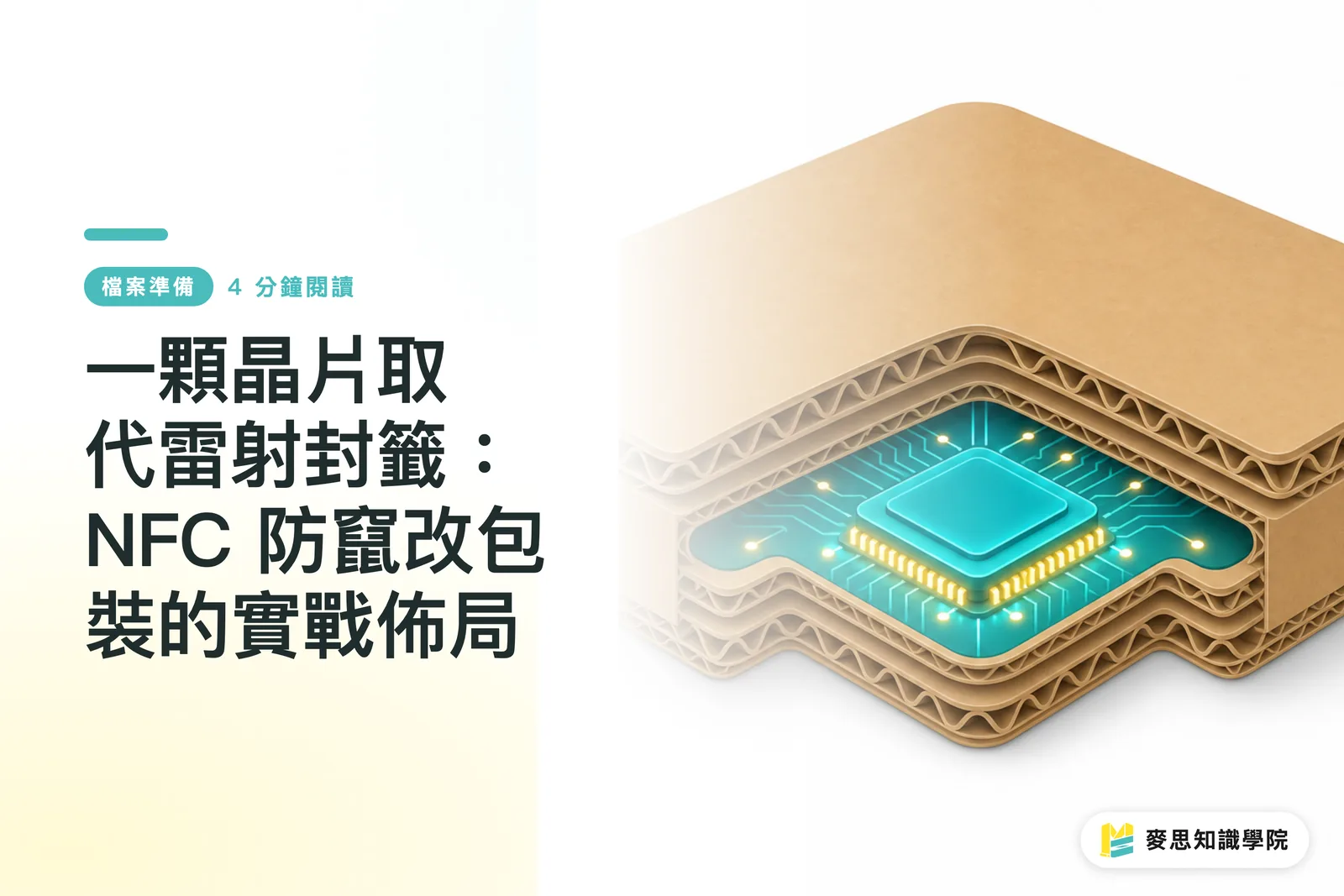
Miniature NFC shifts tags from surface stickers to hidden elements, turning smart packaging into a structural design upgrade
13.56 MHz signals are sensitive to metal and heavy solid dark inks, requiring dedicated clearance zones in prepress files
The real opportunity for small and mid-sized print shops lies in end-to-end printing and inlay integration, not hardware manufacturing
High-ticket items with significant counterfeiting risks and active member engagement programs are the best candidates to pilot first
Further Considerations
Moving from standard printing to value-added services has become an urgent transformation for Taiwanese print shops. Miniature NFC offers a solid entry point, but do not just think about buying tags. The real value lies in structural design, inlay placement setups, and data integration with the client's backend. Start conversations with your existing high-tier clients and run a pilot covering the full prepress clearance, print-and-embed, and field testing workflow. Master that SOP before scaling it to other product lines. If your team lacks in-house NFC prepress experience, partner with experienced printers like MINDS for evaluation and prototyping to validate your first run before deciding whether to build out an in-house line
Further Reading
FAQ
- How do NFC tags differ from standard QR codes?
- A QR code is a printed pattern on paper read via an optical camera. NFC relies on an embedded chip and antenna scanned via short-range mobile induction, offering significantly stronger anti-counterfeiting security and dynamic data support
- Can you still use NFC on packaging with metallic foil stamping?
- Yes, but you need a window layout. Leave a clean zone free of metallic inks over the induction area, or position the antenna away from metallic interference
- How much do miniature NFC tags cost?
- Costs depend on chip grade and order volume. For small batches of high-end packaging, unit costs typically stay in the single-digit NTD range. When first adopting the technology, start with small runs on premium product lines
- How should you reserve an NFC embedding zone during prepress?
- Mark the antenna induction zone clearly on your layout. Keep this area free of metallic inks, foil stamping, and heavy solid dark colors, and confirm registration tolerances with your labeling or inlay insertion stations
- Do print shops have to manufacture the NFC tags themselves?
- Not at all. Tags can be sourced directly from specialized manufacturers. A print shop's real value lies in structural engineering, insertion workflow integration, and print quality control
Related articles



The Print × AI weekly
The print and AI know-how designers, brands and enterprises can use before they commit — one email, every week
MINDS Free Tools
Imposition calculator and preflight file check — free prepress tools, right in your browser.
MINDS Group
Need actual printing or gifting services?
From premium printing to online ordering and festive gifts — the MINDS Group sister brands take it from here.