
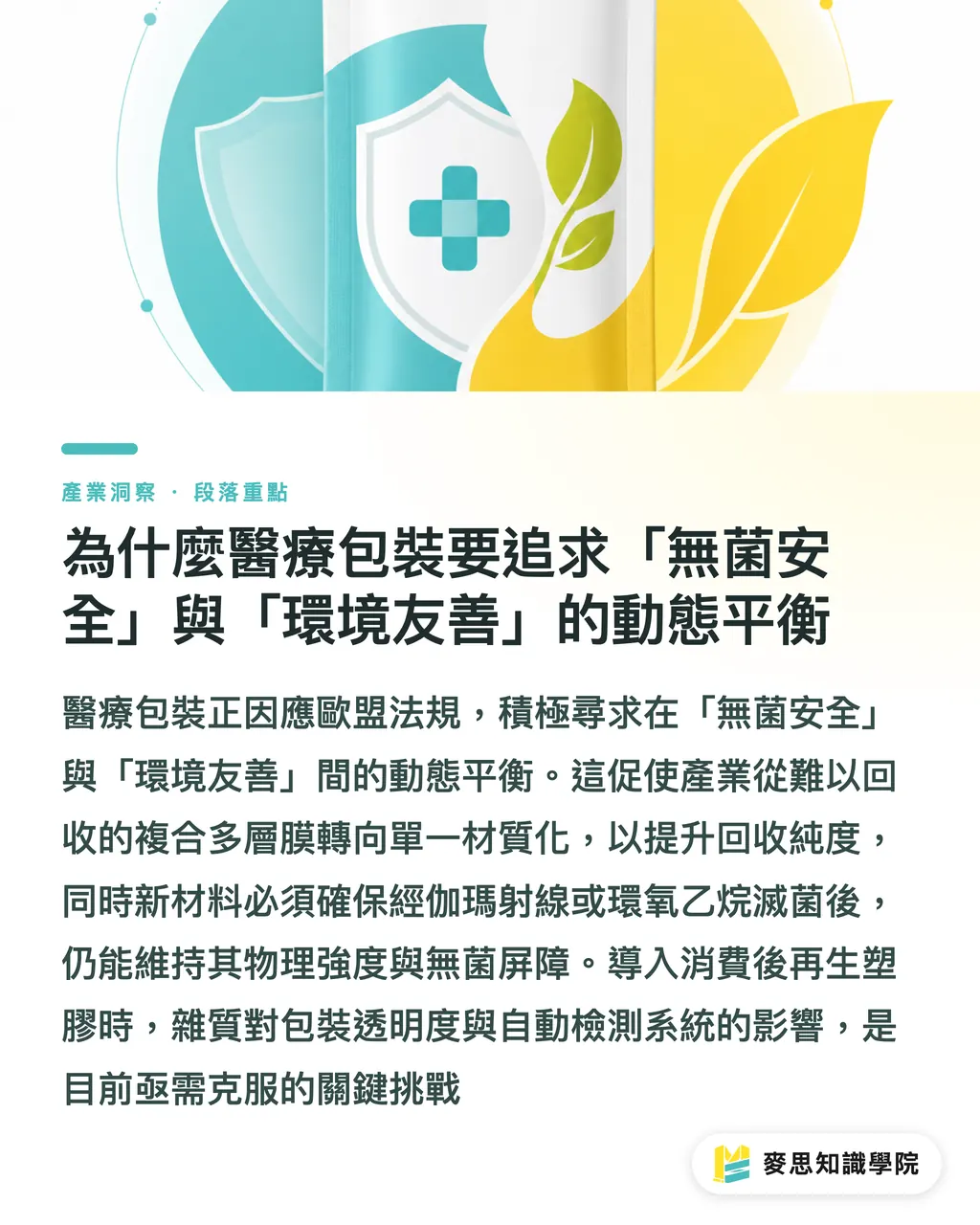
Why Medical Packaging Must Pursue a Dynamic Balance Between 'Sterile Safety' and 'Environmental Friendliness'
In meetings with European and American clients over the past few months, I've noticed a clear anxiety regarding material selection, primarily because the requirements for packaging recyclability under the EU's PPWR regulations are now imminent. The most difficult aspect of medical packaging is that there can be no compromise on 'barrier properties' and 'sterilization compatibility,' yet the commonly used multi-layer composite films, while powerful, are extremely difficult to recycle
・The sustainable transformation of medical packaging is not simply about switching to paper but moving towards mono-material development to improve the purity of the recycling stream
・Material development must ensure that physical strength and sterile barriers still meet ISO 11607 standards after Gamma radiation or Ethylene Oxide (EO) sterilization
・When introducing PCR (Post-Consumer Recycled plastics), the biggest challenge to overcome is the interference of impurities with packaging transparency and automated visual inspection systems
How to Shorten Development Cycles for High-Threshold Products Through Simulation
In the past, when medical device manufacturers conducted packaging validation, transportation vibration tests and drop tests alone would take months and incur significant prototyping costs. I've observed that leading manufacturers are now introducing the 'Digital Twin' concept, performing simulations of pressure distribution and seal integrity before physical prototyping
・Using simulation technology to model extreme climates and high-altitude low-pressure environments allows for the preemptive identification of weak seal points (Seal Points), reducing the scrap rate in actual transportation testing
・Simulation technology helps designers optimize structures to maximize the reduction of cushioning material usage while ensuring the device remains securely in place
・As reported by Packaging Digest, simulation testing has become a core capability for shortening time-to-market
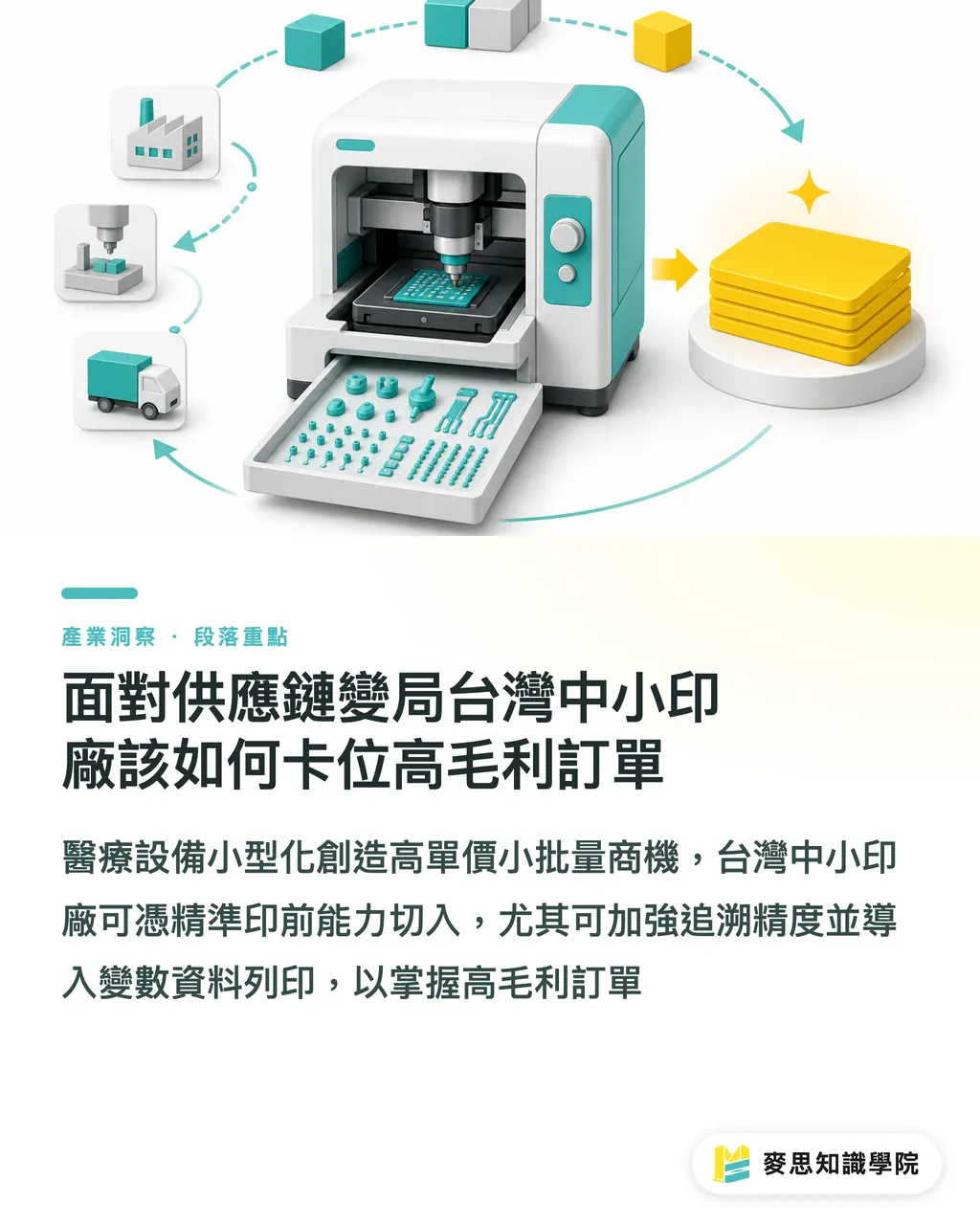
How Taiwan's SMEs Can Secure High-Margin Orders Amidst Supply Chain Shifts
The trend of medical device miniaturization has led to higher unit prices but smaller batch sizes per order. I believe this presents an excellent opportunity for Taiwanese printing plants with precision prepress capabilities. When large manufacturers are unwilling to accept small-batch, high-precision medical packaging orders, that becomes a high-value-added entry point
・Enhance mastery over 'traceability precision' by using Variable Data printing to ensure every package can be tracked back to its production batch and sterilization date
・Establishing sterile-grade Secondary Packaging production lines allows for deeper supply chain integration with medical device manufacturers
・Engage with brand customers' 'Design for Recycling' specifications at the design stage, proactively offering structural proposals that meet both environmental and protection requirements rather than just following provided blueprints
Key Takeaways
・The transformation of medical packaging favors mono-materials, which must simultaneously satisfy sterilization standards and recycling regulations
・Simulation technology can significantly reduce physical waste from drop and transportation tests, serving as a key factor in accelerating medical device packaging development
・Supply chain resilience is reflected in localized production and distribution capabilities characterized by 'small batches, high frequency, and high precision.'
・Sustainability does not mean sacrificing functionality; it involves achieving carbon reduction goals through structural design and new material applications
Further Reflections
For Taiwanese printing plants, stop clinging to the myth of high-volume, low-margin production. The margins in medical and precision packaging come from 'compliance capabilities' and 'design depth.' I suggest that plants looking to transform should start by researching ISO 13485 Medical Devices Quality Management System requirements and introducing professional structural simulation software at the prepress stage. When you can help clients complete half of their packaging tests on a computer and solve the material recycling hurdles of the EU's PPWR, you are no longer just a box vendor but an indispensable strategic partner in the medical device supply chain
Further Reading
FAQ
- Can medical packaging be made from 100% recycled paper?
- Secondary packaging (outer boxes not in direct contact with the device) can be, but primary packaging in direct contact with the device must still consider sterile barriers and particulate matter. Currently, these primarily use medical-grade paper or Tyvek combined with mono-material plastic films, rather than pure recycled paper
- Why are medical device manufacturers so concerned about simulation now?
- Because the certification cycle for medical devices is long and extremely costly; a failure in the final stage of transportation validation can delay the entire launch plan. Using simulations can eliminate 90% of structural risks during the design phase
- What is the most common hurdle for Taiwanese SMEs when taking medical packaging orders?
- Typically, it is 'environmental control' and 'document traceability.' Medical packaging has extremely strict audit requirements for production environment particulates, static electricity, and every single work order record throughout the production process
References
Related articles
The Print × AI weekly
The print and AI know-how designers, brands and enterprises can use before they commit — one email, every week
MINDS Free Tools
AI background removal, a LINE sticker maker, spine & imposition calculators — all free, right in your browser, no upload.
MINDS Group
Need actual printing or gifting services?
From premium printing to online ordering and festive gifts — the MINDS Group sister brands take it from here.