
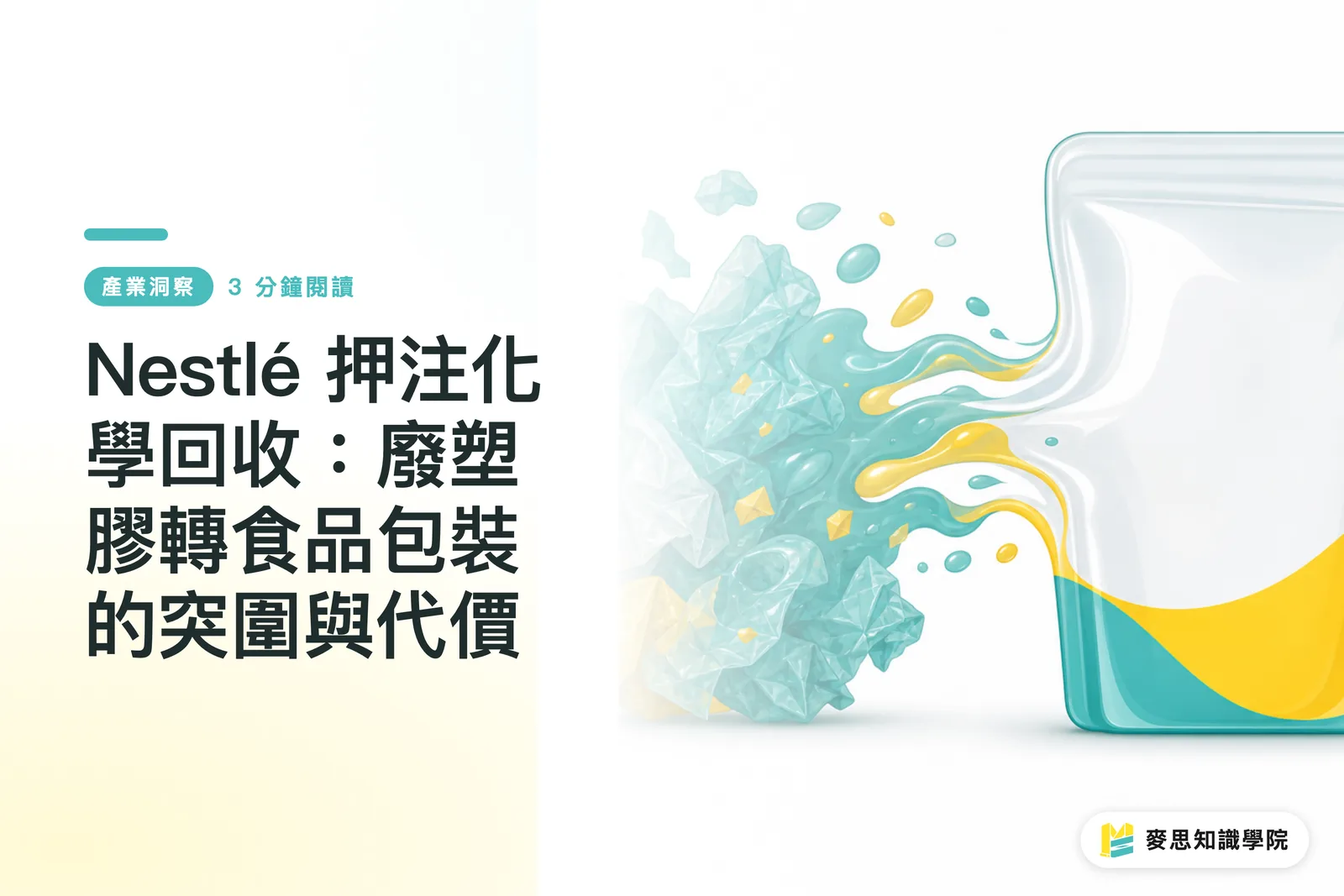
Can Plastic Waste Actually Come Back as Food Packaging? Chemical Recycling Has an Answer
Chemical recycling absolutely works. Nestlé teamed up with a Danish technology partner to turn mixed plastic waste into food-grade recycled resin via pyrolysis, a direct breakthrough past the regulatory wall that has long blocked recycled materials from food-contact applications
If you work with mid-to-high-end custom print operations like MINDS (MS, mid-to-high-end fully custom commercial printing), you already know that conventional mechanically recycled materials can't pass FDA and similar standards for food packaging. Too much contamination. Too much residual odor
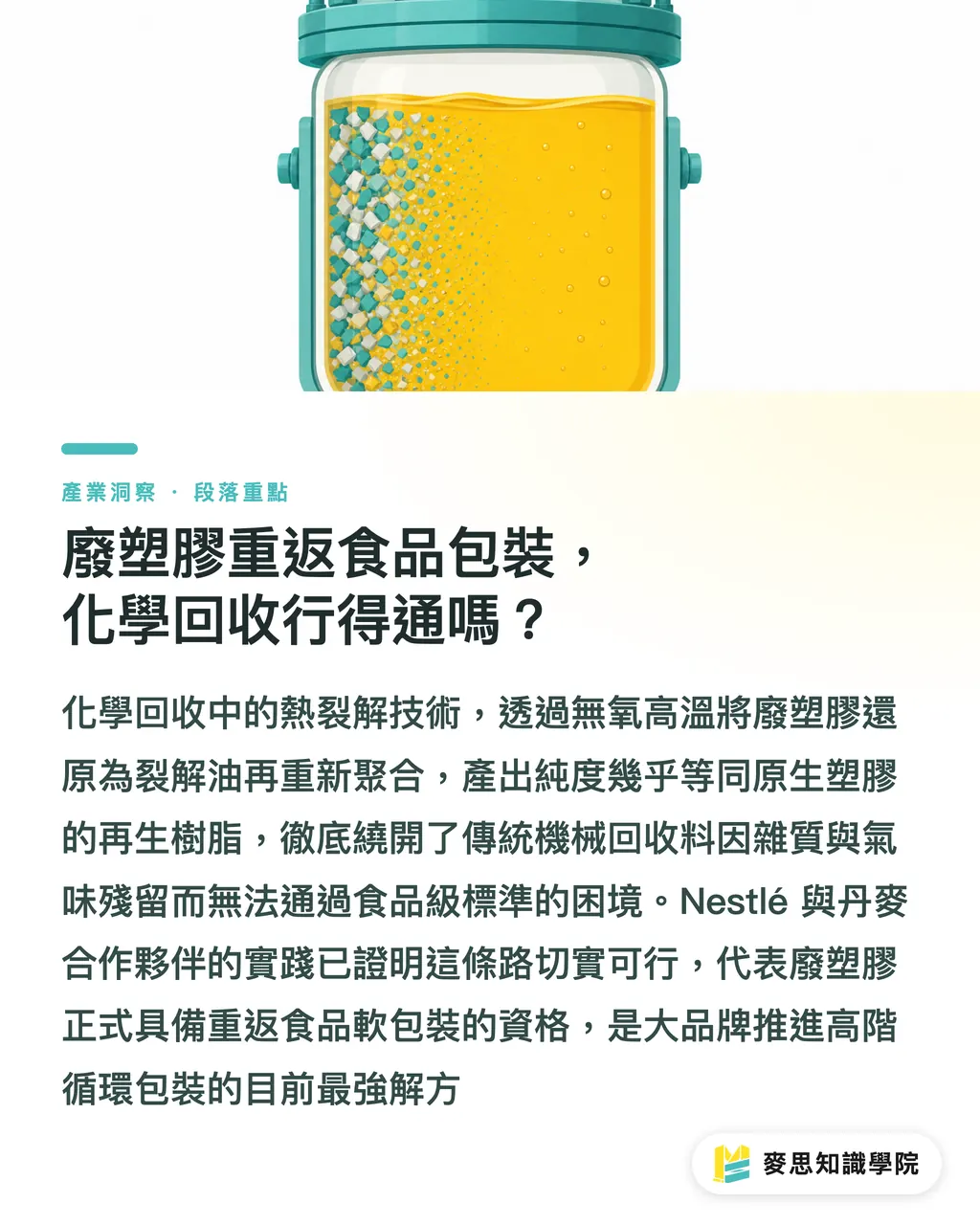
Pyrolysis works by breaking polymer chains at high temperature in an oxygen-free environment, reducing the plastic to pyrolysis oil before re-polymerizing it. The output purity is nearly equivalent to virgin resin
That's essentially a full reset on the plastic, bypassing the inevitable property degradation that comes with conventional recycling. Right now, it's the strongest answer major brands have for closing the loop on high-end flexible packaging
Why Does Chemical Recycling Still Draw So Much Skepticism?
The technology sounds clean on paper, but brands hit two walls the moment they try to actually implement it: energy consumption and carbon footprint accounting
Pyrolysis needs very high temperatures to trigger the reaction, which means the conversion process demands a serious amount of energy
In a business environment where carbon reduction is the headline metric, if recycling plastic waste generates more emissions than producing virgin resin, the brand's sustainability story falls apart
I've spent years helping export brands sharpen their green packaging strategy, and the pattern I keep seeing is that people assume switching to recycled materials automatically earns them a sustainability pass. European and American markets now want a full lifecycle assessment
The benchmark significance of Nestlé's project is that they have to prove to the market that the overall carbon ledger still makes sense
At the same time, EU PPWR regulations are tightening, and there's still fierce debate among stakeholders about how to use mass balance to certify the recycled content of materials produced via chemical recycling
What Should Mid-Size Printers and Brand Teams Actually Do?
When giants like Nestlé start scaling up chemical recycling resin, flexible packaging printers on the front line feel the impact first
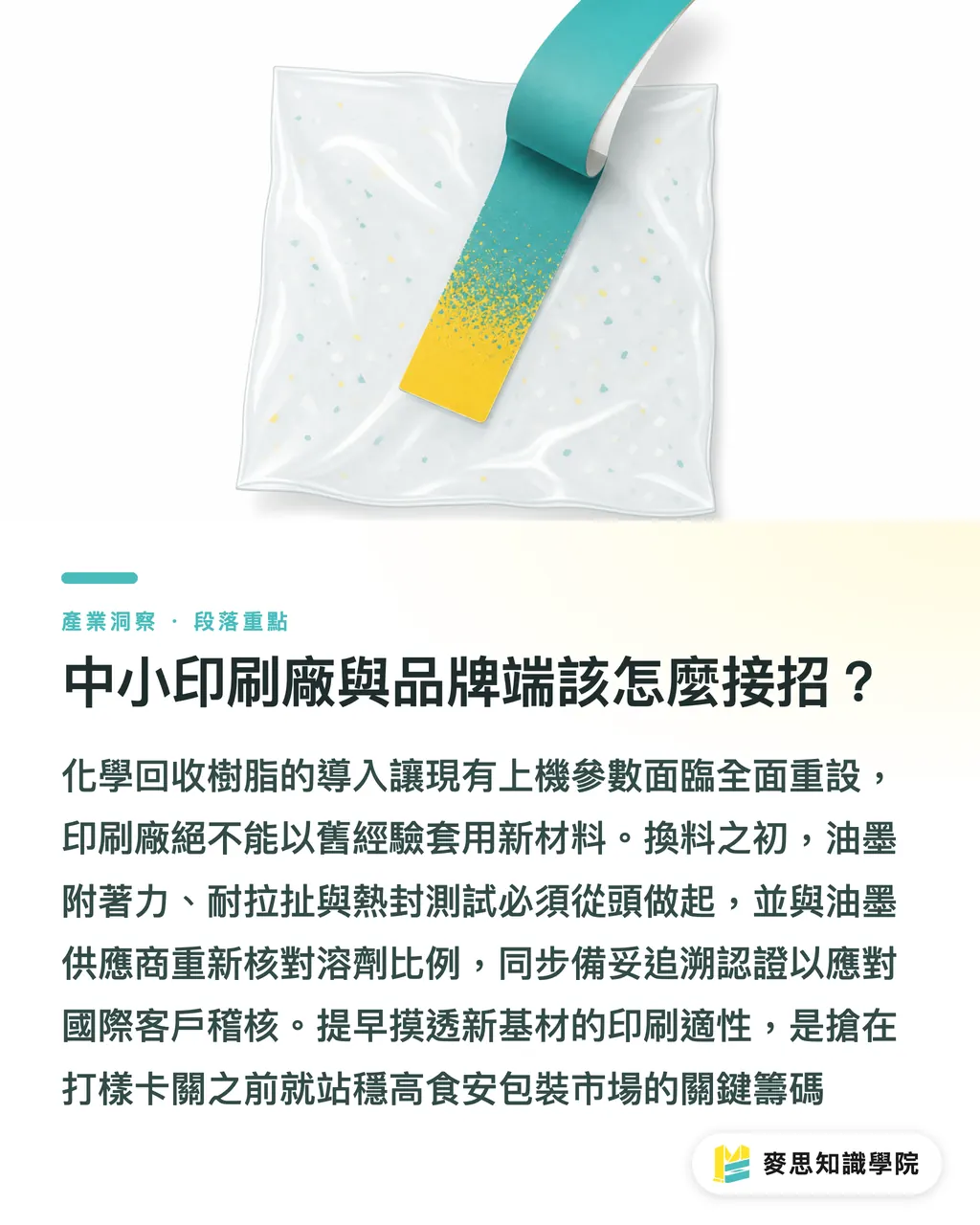
No matter how much material suppliers talk up purity, any small shift in surface tension, smoothness, or heat resistance in the substrate means existing press parameters have to change
Facing this wave of material transitions, I'd strongly recommend packaging procurement and production teams apply the "MINDS (MS) Three-Gate Pre-Press Protocol" as their practical playbook
・Rerun baseline testing: When you switch materials, ink adhesion tests, tensile tests, and heat-seal tests must all be done from scratch. Don't run on old assumptions
・Fine-tune ink formulations: Chemical recycling substrates may respond differently to surface treatment than conventional materials. Before going to press, confirm solvent ratios and drying times with your ink supplier
・Have your traceability certifications ready: Clients want a clear chain of custody. Make sure your mass balance accounting on the production line stays clean
Chemical recycling costs still can't fully replace mechanical recycling at this stage, but high-value, high-food-safety packaging is moving in that direction fast
Getting familiar with the print characteristics of new materials now means you won't get stuck at the proofing stage when international orders come in
Key Takeaways
Chemical recycling uses pyrolysis to break plastic back down to the molecular level and re-polymerize it, bypassing the dead end of conventional mechanical recycling that can't meet food-contact regulations
Energy consumption and mass balance certification are the two biggest commercial pain points right now. The full carbon footprint calculation is under serious market scrutiny
New materials will always affect ink adhesion and heat-seal parameters. Printers need to let go of old assumptions and reset proofing and physical testing from zero
Further Thinking
The sustainable packaging battle has shifted from "what material" to "how do you prove it's safe and actually green."
For Taiwan's packaging printers and designers, this means prepress planning carries far more weight than it used to
Future quotes will go beyond print labor costs, helping brand clients navigate certification and providing accurate carbon data will become the services that separate margin from commodity. If you're running into material transition headaches, reach out to the Mai Strategy Knowledge Academy consulting team
Further Reading
FAQ
- How is chemical recycling different from the mechanical recycling we usually hear about?
- Mechanical recycling is a physical process, grind it down, remake it. Contamination builds up and material properties degrade with each cycle. Chemical recycling uses pyrolysis to break plastic all the way back to the molecular state before re-polymerizing it. The output resin has very high purity and can meet food-grade standards
- Why is Nestlé going to all this trouble to invest in chemical recycling?
- Food packaging faces strict food safety requirements. Conventionally recycled flexible plastics struggle to meet the standards for non-toxicity and odor-free performance. Chemical recycling is currently the only solution that can bring plastic waste back into high-end food-contact packaging
- What does this actually mean for packaging printers on the ground?
- Even when suppliers claim the output matches virgin resin, the surface properties of chemically recycled resin can still vary. Printers must retest ink adhesion and heat-seal conditions from scratch. Production parameters from before cannot be carried over directly
Related articles
The Print × AI weekly
The print and AI know-how designers, brands and enterprises can use before they commit — one email, every week
MINDS Free Tools
AI background removal, a LINE sticker maker, spine & imposition calculators — all free, right in your browser, no upload.
MINDS Group
Need actual printing or gifting services?
From premium printing to online ordering and festive gifts — the MINDS Group sister brands take it from here.