

Why was flexible packaging so hard to recycle before, and what's changing now?
Flexible packaging recycling used to be stuck on the near-impossibility of separating multilayer laminates, but two breakthroughs, material mono-materialization and chemical recycling, have finally opened a door. Among the projects our advisory team at Mai Strategy Knowledge Academy has been supporting, inquiries about mono-material structures have doubled over the past two years
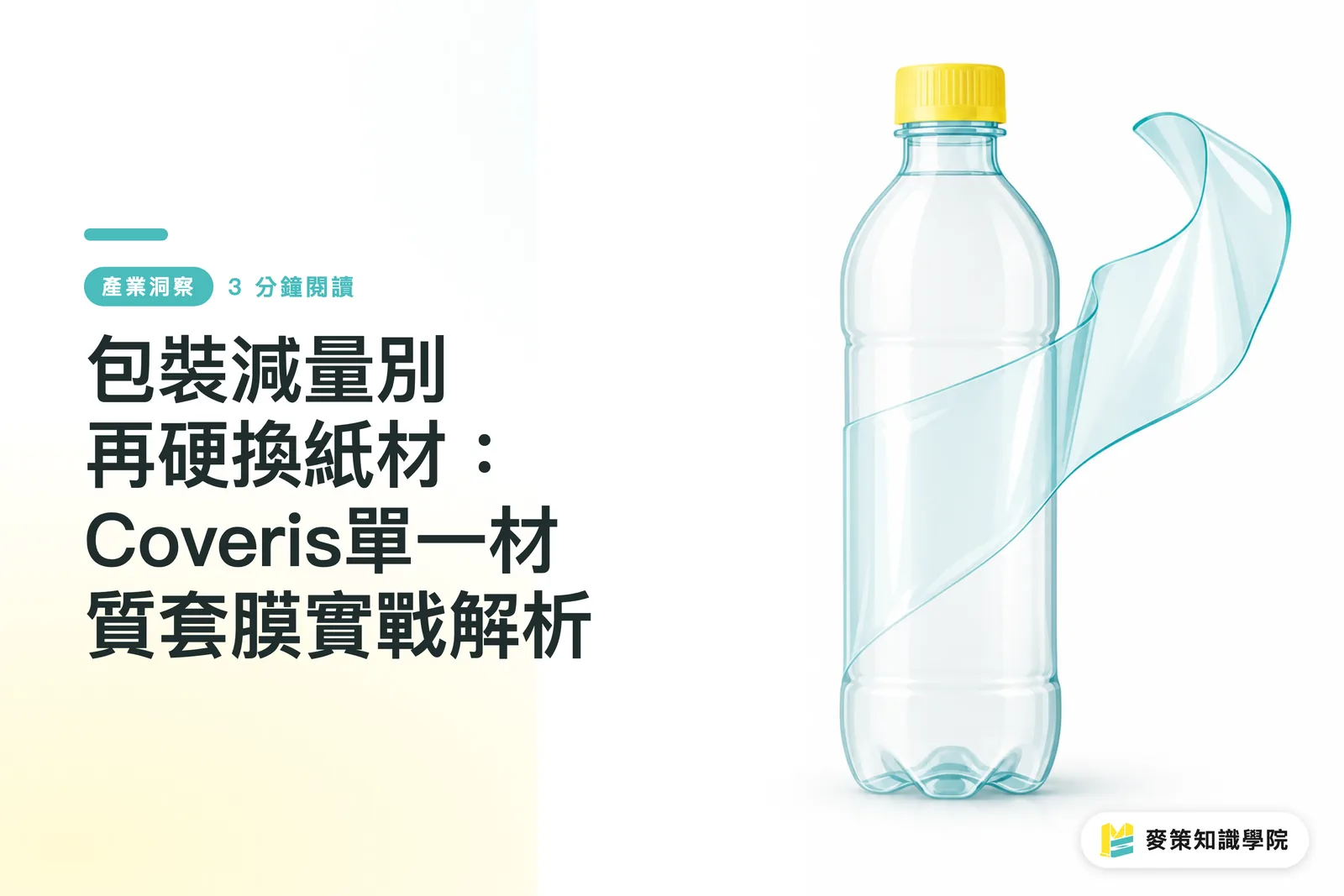
Mono-material: a packaging structure built entirely from one polymer family (usually PE or PP), dropping the conventional PET-aluminum foil or PE heterogeneous laminates so it can move through sorting facilities without complex separation and go straight into a single-stream pelletizing line. It's currently the mainstream direction for Design for Recycling
According to Packaging Dive's recap of industry conferences, lifting plastic film recycling rates has long since stopped being something any single company can solve, it hinges on cross-sector collaboration across the entire recycling chain
Working with export-brand clients on sustainable packaging these past few years, the instinctive first move is always to switch to rPET, but the moment you hit flexible packaging like potato chip bags or coffee pouches that need high barrier properties, that approach hits a wall
We used to treat flexible plastic film as a dead end for recyclers, multi-layer laminates simply don't peel apart. Now that the infrastructure is catching up, that structural problem is finally being unwound
Brand clients are demanding less plastic, how should small and mid-sized printers respond?
From recent client engagements, export customers are scrambling to find Design-for-Recycling-compliant alternative materials to prepare for the EU's new PPWR packaging regulation
That's a warning shot for traditional printers, because switching to mono-materials directly disrupts established line-side processing habits
To navigate the transition, I usually walk clients through the "MINDS (MS) Packaging Transformation Three Gates" framework to assess their current product lines
・Gate 1, Audit: review the existing SKU range, flag over-packaged items or products with lower moisture-barrier requirements, and rework those first
・Gate 2, Downgrade: boldly drop multi-layer structures and test how mono-material PE or PP holds up on existing sealing machines
・Gate 3, Upgrade: for products demanding long shelf life, bring in mono-material films with high-barrier coatings
Swapping out familiar plates and inks means readjusting machine tension and sealing temperature. Caught between brand sustainability pledges and freshness-related complaints, printers need to start accumulating real on-machine data for mono-materials now
Chemical Recycling vs. Emerging Alternative Materials, A Reality Check
Physical recycling of flexible packaging routinely hits walls with off-odors and degraded mechanical properties, and the chemical recycling tech Packaging Dive covered is exactly what addresses that pain point
Chemical recycling breaks waste plastic all the way back down to the molecular level, meaning recycled resin can finally be looped back into food-contact-grade flexible packaging
We're obviously tracking other solutions too, Greendot Biopak's patented home-compostable stretch film, a Chinese startup's bamboo-based packaging film pitched as a replacement for conventional petrochemical materials
But honestly, if the local waste infrastructure is still built around incineration, jumping into pricey biodegradable materials too early isn't necessarily the smartest move
If you've got a new material lined up for commercialization trials, I'd suggest pairing with a factory that's been through this before. MINDS offers fully customized mid-to-high-end commercial printing and can help you nail down the processing characteristics of new materials on a real production line
Key Takeaways
Mono-material structures have moved from advocacy to mandatory procurement specs for brand owners
Chemical recycling is the missing piece for food-grade flexible packaging circularity, but in the short term packaging design still has to do the heavy lifting through reduction
Don't chase biodegradability blindly, the only question that matters is whether local recycling infrastructure can actually handle it
What to Think About Next
For Taiwanese small and mid-sized printers, the time to pull mono-material film samples from suppliers and run them on the line is now, get a feel for the tension and temperature limits. For brand-side designers, the battleground in sustainable packaging has already shifted from "visual artwork" to "structural material choice," and bringing printers into the design process early is the only way to avoid costly detours
Further Reading
FAQ
- Does switching to mono-material packaging hurt freshness performance?
- There is an initial drop in barrier properties, but the industry has already developed high-barrier-coated mono PE and PP films that close most of the gap with traditional aluminum foil laminates
- How is chemical recycling different from traditional physical recycling?
- Physical recycling shreds and melts plastic back into pellets, which tends to degrade mechanical properties. Chemical recycling breaks plastic back down to its molecular building blocks, producing recycled resin of very high purity that can be reused in food-grade flexible packaging
- Does switching to biodegradable films solve the whole problem?
- If end-of-life processing in your market still relies on incinerators and lacks industrial or home composting facilities, expensive biodegradable films won't deliver real environmental benefits
Related articles

The Print × AI weekly
The print and AI know-how designers, brands and enterprises can use before they commit — one email, every week
MINDS Free Tools
AI background removal, a LINE sticker maker, spine & imposition calculators — all free, right in your browser, no upload.
MINDS Group
Need actual printing or gifting services?
From premium printing to online ordering and festive gifts — the MINDS Group sister brands take it from here.