
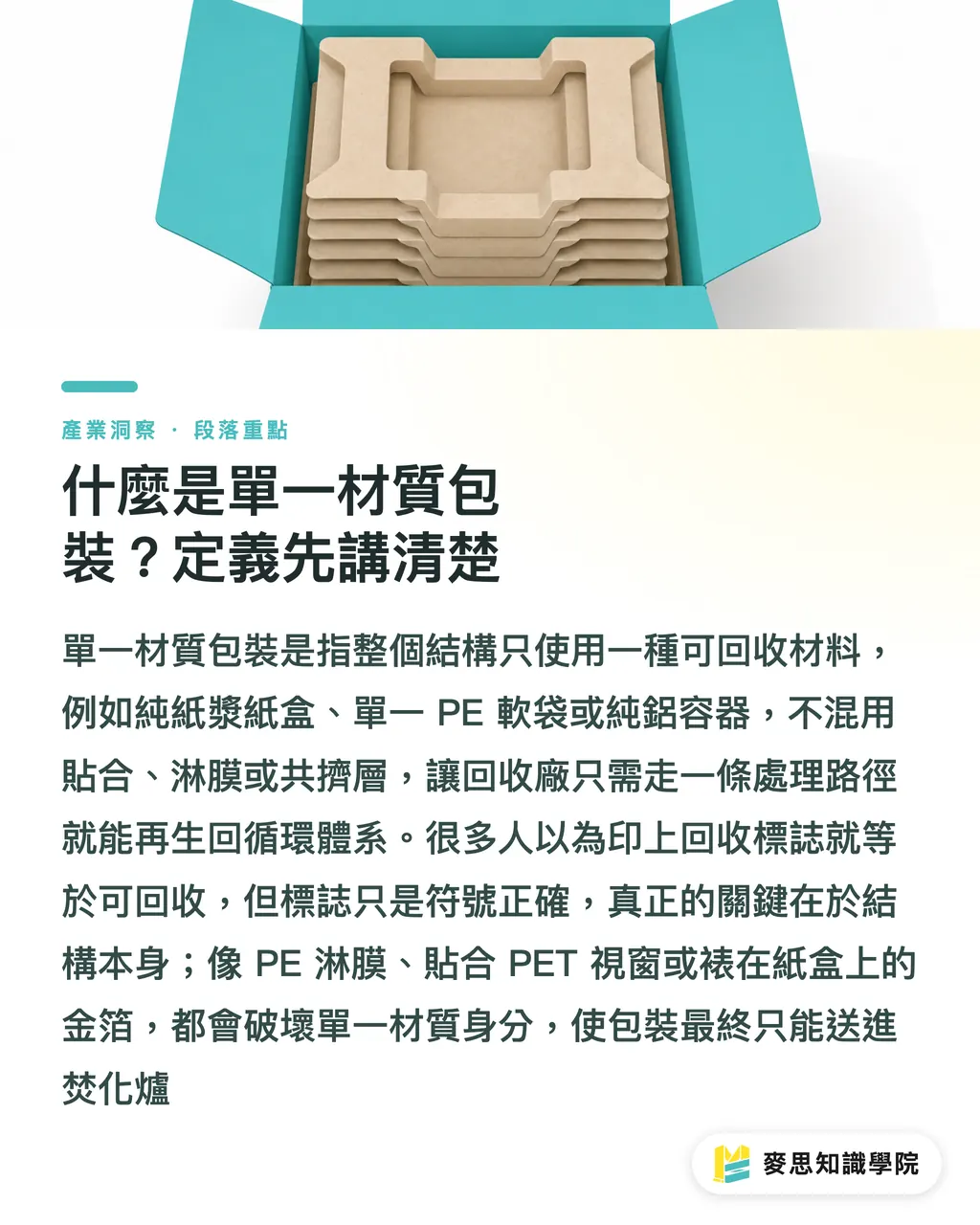
What Is Mono-Material Packaging? Getting the Definition Straight First
Mono-material packaging means the entire packaging structure uses only one recyclable material. Think pure pulp cartons, single-grade PE plastic bags, or pure aluminum cans. There is no paper-plastic lamination, no plastic extrusion coating, and no mixed metal laminates. When recycling plants sort and reprocess them, they only need a single processing stream to feed them back into the circular loop. That is the core value
・Pure pulp folding carton: The box body, inner tray, and printing inks all stay within the same paper stream
・Mono-PE flexible pouch: The pouch body and sealing area are both PE, with no co-extruded PET or EVOH
・Pure aluminum container: The bottle body, cap, and sealing gasket all belong to the same metal category
The myth I hear most often from clients is, 'Printing a recycling symbol on it is enough.' Printing a numbered triangle does not mean it actually gets recycled. Sticking a plastic film on the bottom of a paper box or using a multi-layer composite on a bottle will send all your efforts straight to the incinerator. Mono-material gets the structure right, while a recycling logo just gets the symbol right. The two are not interchangeable
Pay special attention to inks and surface finishing. Strictly speaking, recyclers look at whether the dominant material is consistent. Surface decorations like water-based inks, spot UV, or matte finishes on paper boxes are usually still treated as part of the paper stream. But PE coatings, laminated PET windows, or hot-stamped foil mounted on the box will destroy its mono-material status. You have to draw that line during the design phase
How to Tell If Your Product Fits Mono-Material: 3 Decision Anchors
Scenario breakdown
Just because mono-material is considered 'eco-friendly' doesn't mean it fits everything. Run your product through these three anchors first:
・Functional demand anchor: Does your product need barriers against oxygen, moisture, or light? Oxygen- and moisture-sensitive goods like skincare, opened cookies, or infant formula will often lack sufficient barrier protection if forced into mono-PE
・Shelf life anchor: Products with shelf lives over 6 months or those requiring heavy stacking strength (like holiday gift sets) often need structural thickness and stiffness. Making a mono-material paper box rigid enough will drive up costs
・Logistics and retail anchor: E-commerce shipping boxes take a beating in courier transit. If a mono-material box lacks extra structural reinforcement, damage rates will climb
I advise clients to score their packaging against these three anchors. If two or more lean toward 'function first,' don't force a mono-material route. If two or more lean toward 'sustainability and brand narrative first,' you can start evaluating material swaps
Who is the best fit?
Over the years of consulting, these categories have shown the highest success rates and should be considered first:
・E-commerce shipping boxes: Most inner contents already have primary packaging, so the outer box only needs to provide shipping cushion. Pure corrugated cardboard is plenty
・Dry food outer boxes: For cookies, tea, and coffee beans, an outer box with pure paper wax coating or a paper liner provides basic moisture resistance
・Event giveaways: Short-term use, focused on brand storytelling and unboxing experience, with low recycling pressure. Pure folding paper boxes also have the lowest production barrier
・Cosmetics and skincare inserts: Molded pulp and folded paper trays are the easiest entry point into mono-materials to replace traditional plastic blister trays
In practice, I often see brands fall into a trap: assuming 'more paper equals more eco-friendly.' They end up forcing products that belong in PE pouches into paper boxes, which only shortens shelf life and spikes returns. That completely misses the point
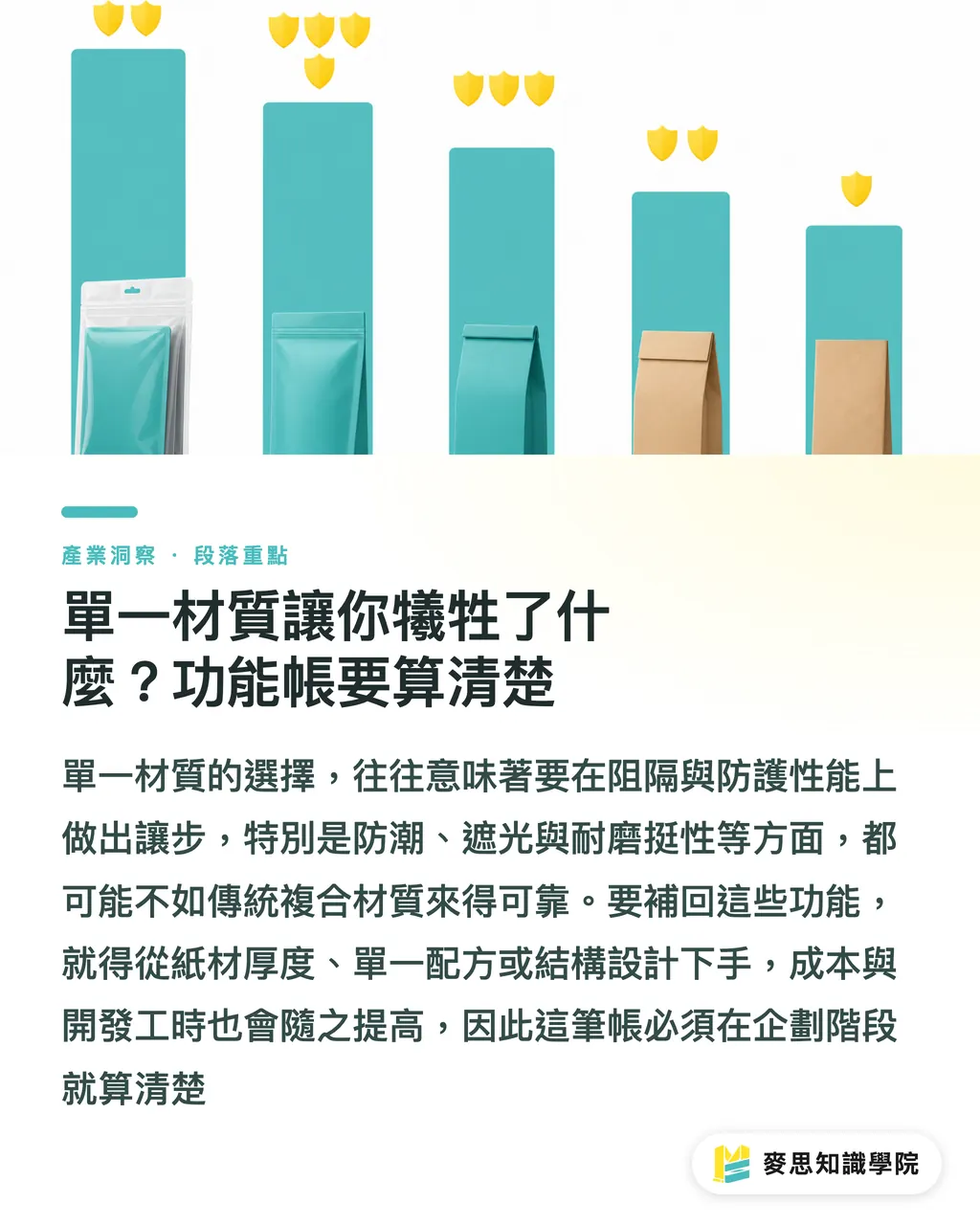
What Are You Sacrificing with Mono-Materials? Count the Functional Cost
The biggest tradeoff with mono-materials is reduced barrier performance. In the past, paper-plastic composites and aluminum foil layers were widely used because they effectively block moisture, oxygen, and light, guaranteeing shelf life and product stability
・Lower moisture resistance: Pure paper structures block moisture far less effectively than PE/PET composite pouches. Rainy day storage and cold-chain shipping will only magnify this issue
・Reduced light-blocking: Paper boxes do not block light completely. For light-sensitive ingredients like tea, collagen, or health supplements, shelf life might be cut in half
・Lower abrasion resistance and stiffness: Without lamination or composite reinforcement, pure paper boxes are easily crushed and suffer scuffed corners during transit
・Loss of premium texture: Foil stamping, UV coating, and matte lamination are part of brand identity. To achieve a premium feel with pure paper, you must rely on the paper's natural texture and specialized printing, which drives up both budget and design time
This does not mean mono-materials cannot deliver these functions, but doing so comes at a cost: using heavier paper, pricier mono-PE formulas, or tuck-in paper structures instead of adhesive gluing. You have to run the numbers during the planning stage, not when samples arrive
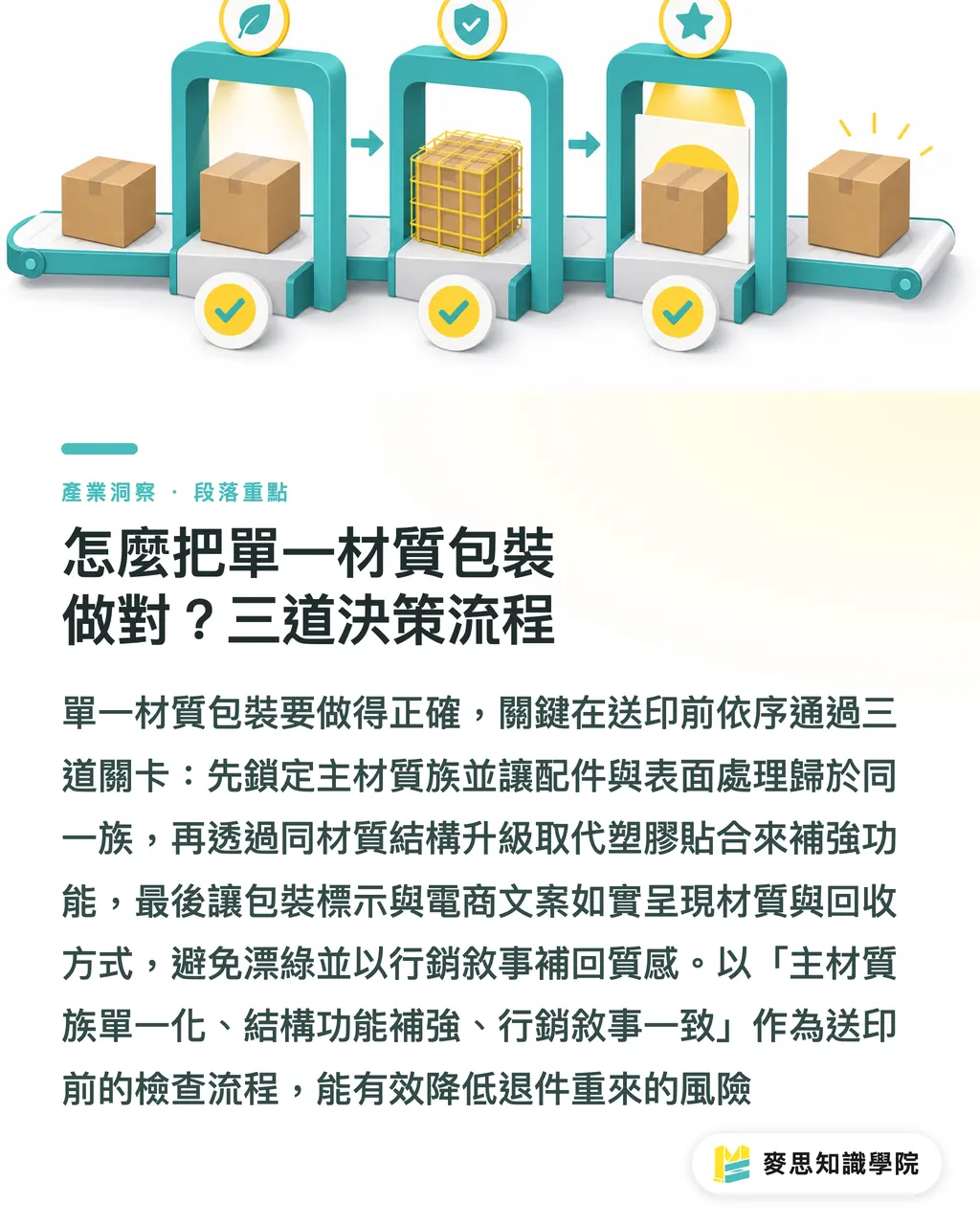
How to Get Mono-Material Packaging Right: A 3-Stage Decision Process
Stage 1: Pick the right material family first
・Identify your primary material family: Paper, PE, aluminum, or glass. Keep every part of the packaging within this single family
・Audit inks and finishes: Water-based inks, biodegradable coatings, and uncoated pulp generally stay within the same family. If UV coating or spot foiling is necessary, verify it with recyclers or material suppliers during prototyping
・Check accessories together: Ensure fasteners, ribbons, stickers, and liners belong to the same family or can be easily detached for recycling
Stage 2: Reinforce structure and function
・To increase box stiffness: Mount the same cardstock onto itself, use tuck tabs instead of glue, and reinforce structural fold lines rather than laminating plastic film
・To improve pouch barriers: Use high-barrier mono-PE formulations (such as moving from MDPE blended with EVOH to a single-layer high-barrier PE formulation, though you should confirm case by case with suppliers), avoiding mixed co-extrusion with EVOH and PET
・To improve drop resistance for shipping boxes: Upgrade corrugated flute from B-flute to E-flute or double-wall flute. A pure paper structure can still pass courier drop tests
Stage 3: Align marketing communication upfront
・Recycling symbols and material disclosures on the package must be honest. Printing PE on the box while labeling it as paper will be seen as greenwashing
・Adding a clear line on your e-commerce page like 'This packaging is mono-material X, recycle with Category O' is far more effective than generic 'love the earth' slogans
・Don't skimp on the unboxing experience: The drop in tactile texture with mono-materials is real. Make up for it with thoughtful copy, thank-you cards, or reusable elements like seed paper
My own approach is to integrate these three checkpoints into the 'MINDS (mid-to-high-end fully custom commercial printing) 3-Stage Pre-press Gates': '1. Material family unification, 2. Structural and functional reinforcement in place, 3. Marketing narrative aligned with actual materials.' Only when a project passes all three do we move to prototyping, which keeps costly re-runs to a minimum
Key Takeaways
・The core value of mono-materials is that recycling plants only need a single processing stream. The structure has to be right for the symbol to matter
・Use the three anchors of functional requirements, shelf life, and logistics conditions to evaluate your fit. Forcing mono-materials when unsuited will only increase product returns
・E-commerce shipping boxes, dry foods, event giveaways, and molded pulp inserts are the four easiest entry points for successful adoption
・Mono-materials sacrifice moisture resistance, light-blocking, scuff resistance, and premium feel. Factor reinforcement costs into your budget during the planning stage
・Recycling marks must match the actual material, otherwise it is greenwashing, and neither recyclers nor consumers will buy it
Further Thoughts
Back to the daily grind of printers and designers: Mono-material is not just a material, it is a design discipline. It forces you to lock in the material family, audit all accessories, and map out the recycling path before opening the design file. Master this discipline, and client satisfaction will rise while return rates and printing rework plummet
Here are three steps to get started:
・Review your packaging projects from the past three months and flag which ones could realistically switch to mono-materials
・Reach out to two or three suppliers skilled in mono-PE and molded pulp to set up RFQ channels and understand pricing trends
・Add a 'material family unification check' to your pre-press workflow. Adopt the 3-stage pre-press gate concept from MINDS to pull key decisions forward from prototyping to the planning stage. If you need a complete pre-press workflow or a mono-material packaging evaluation, reach out to MINDS or the consulting team at Mai Strategy Knowledge Academy to help put it into action
Further Reading
・[Why Was Your Packaging Rejected Despite Having a Recycling Logo? A Practical Guide to Mono-Material Packaging](/zh-TW/knowledge/recycle-design-trap/)
・[The Comeback of Flexible Packaging Recycling: A Practical Transition Path from Mono-Materials to Chemical Recycling](/zh-TW/flexible-plastic-film-recycling-trends-2026/)
・[How to Build Low-Carbon Packaging: A Senior Consultant's Guide to Zero-Waste Structures and Materials](/zh-TW/knowledge/low-carbon-packaging-design/)
・[Designing Like This Makes Recycling Pointless: A Senior Consultant Breaks Down 4 Packaging Structure Traps](/zh-TW/knowledge/recycle-design-trap/)
FAQ
- Is mono-material packaging always more eco-friendly than multi-layer composites?
- Not necessarily. It depends on your recycling infrastructure and use case. If recycling plants in your primary market accept your mono-material, it will genuinely enter the circular loop. But if local recyclers don't process that material at all, it won't be recycled no matter how pure it is. Choosing the 'right mono-material' matters far more than just going mono-material
- Does a paper box with a plastic tray still count as mono-material?
- Strictly speaking, no. Paper and plastic must be processed separately in recycling systems, which increases sorting costs and failure rates. A common solution is swapping plastic trays for molded pulp or folded paper inserts. That keeps the entire package within the paper stream, making it a true mono-material
- Are e-commerce shipping boxes always suitable for mono-material?
- In most cases, yes, especially pure corrugated boxes. Since the inner items usually have primary packaging, the outer carton only needs to provide shipping cushion. However, if your products are liquids, pastes, or require cold-chain transit, you still need leak protection from composite primary packaging, and you must evaluate damage rates for pure mono-material outer boxes
- What real-world examples of mono-material packaging can we look at in Taiwan?
- Several trends have emerged in retail products recently: pure paper wax coatings for tea and coffee bean boxes, molded pulp inserts for skincare products, and pure folding paper boxes for event giveaways and holiday gift boxes. For specific brand examples and exact specifications, consulting printers or material suppliers for physical samples is the best way to get accurate benchmarks
Related articles
The Print × AI weekly
The print and AI know-how designers, brands and enterprises can use before they commit — one email, every week
MINDS Free Tools
AI background removal, a LINE sticker maker, spine & imposition calculators — all free, right in your browser, no upload.
MINDS Group
Need actual printing or gifting services?
From premium printing to online ordering and festive gifts — the MINDS Group sister brands take it from here.