
Why Major Brands Are Rushing into the Stand-Up Pouch Market
Mars' recent heavy investment in a new cat food stand-up pouch production line at its Wodonga plant in Australia reflects that lightweighting and high barrier properties have become absolute necessities in packaging procurement for multinational brands. In recent corporate custom packaging consultations at MINDS Printing (MINDS), we have also seen more and more local brands trying to transition entirely from traditional tin cans or glass bottles to stand-up pouches
A stand-up pouch is a flexible package designed with a bottom gusset that allows it to stand stably once filled. Typically made of multi-layer composite films, it offers both excellent moisture and oxygen barrier properties and outstanding shelf display effects, making it the mainstream choice for replacing traditional rigid containers
Observing the purchasing trends of various brands lately, the reasons for switching to flexible pouches are highly practical: a significant reduction in packaging weight, a smaller logistical carbon footprint, and the ability to perform full-bleed, high-precision printing on the surface
However, products like wet pet food, which require an extremely long shelf life, demand rigorous physical defense capabilities from their packaging. This leads into the deep waters of stand-up pouch manufacturing: high-barrier lamination technology
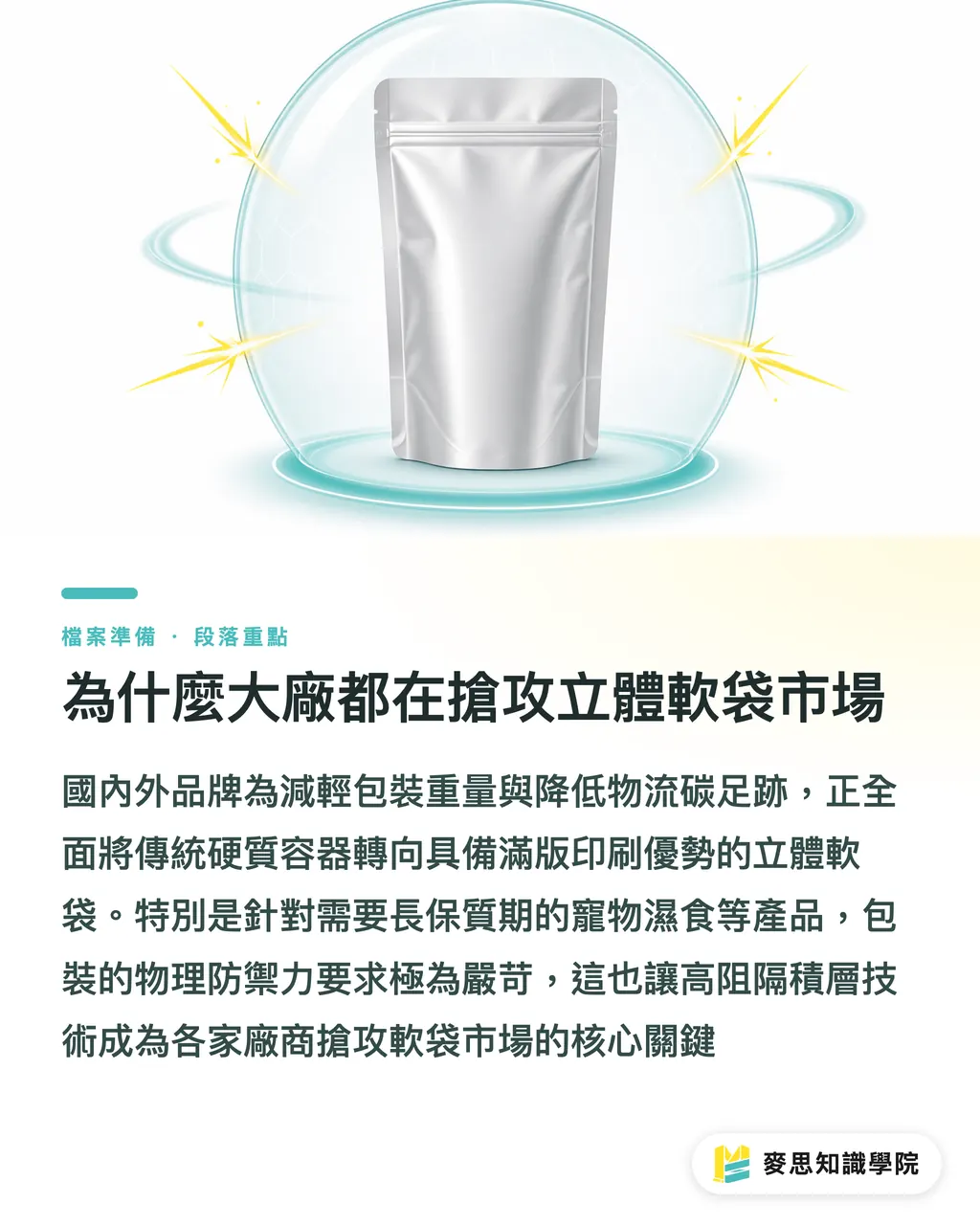
What Exactly Makes the Lamination Structure of Cat Food Pouches So Challenging?
Pet food packaging is not just about gluing a few layers of plastic together; it must withstand transportation compression while completely blocking oxygen and UV rays
Looking at the specifications of Mars' current expansion, the standard starting configuration for this type of wet food pouch is usually a multi-layer composite structure of PET/AL/PE (polyester/aluminum foil/polyethylene)
The aluminum foil layer serves as the ultimate line of defense for blocking gas and light, while the inner PE layer handles heat-seal forming and endures the tests of high-temperature sterilization (retort)
The lamination process in between is where different manufacturers truly set themselves apart
・Solvent-based lamination: Provides good initial bond strength, but residual solvent levels must be strictly controlled, otherwise off-odors or even food safety risks may arise
・Solvent-free lamination: Eco-friendly with zero residues, but has a long curing time and demands high expertise in adhesive ratios and temperature control from operators
Based on my long-term experience in troubleshooting on the production line, many factories do just fine with standard snack bags. But once they take on wet pet food or pharmaceutical packaging, customer complaints about delamination after high-temperature sterilization alone can cost them fortunes in payouts
How Next-Generation Barrier Technology Will Rewrite the Rules of the Game
Brands are constantly clamoring for recyclable mono-materials, but the pain point of plastic reduction in flexible packaging has always been stalled by 'barrier performance.'
Once the aluminum foil or nylon layer is removed, pouches made of pure PE or pure PP simply cannot block oxygen, and the contents spoil rapidly
This is also why I have been closely tracking the progress of nanomaterials in commercial packaging lately, such as graphene coating technology
It holds the potential to deliver gas-barrier performance comparable to or even exceeding that of traditional metal coatings while maintaining an extremely thin profile
Additionally, materials like stretched films that recently secured home composting patents are attempting to break the constraints of the past, which relied heavily on industrial composting facilities
Once these new materials and coating technologies mature, the current old recipe of PET/AL/PE will definitely face a shakeup. If printing factories only compete on the capacity of traditional lamination, they will quickly be filtered out of the supplier list by brand procurement
How Taiwan's Small and Medium Contract Manufacturers Can Avoid the Low-Price Meat Grinder
In recent years, overcapacity has led everyone to slash quotes, but multinational supply chains are actually short of tech-driven processing plants that can solve complex problems
If you want to capture this wave of high-margin flexible packaging opportunities, rather than buying new machinery to compete on volume, it is better to establish your own quality inspection standards first
I usually recommend that clients implement the 'MINDS Advanced Flexible Packaging Inspection Framework' to audit their in-house capabilities:
・Odor and residue rapid screening: Push solvent residues below the lower limit of regulatory standards, and use the test reports directly to negotiate pricing with clients
・Destructive pressure testing: Simulate drops and squeezes in extreme logistics environments to ensure that heat-sealed edges do not rupture under harsh conditions
・Alternative material proofing library: Prepare several sets of foil-free high-barrier or PCR (Post-Consumer Recycled) material test samples in advance, so you can present viable solutions the moment a brand requests sustainable options
For brands just starting to test the market with small initial volumes, they can first use the online services of MYS Printing (MYS) for low-volume trial runs. Once proofing is finalized and they are ready to launch in major retail channels, MINDS Printing (MINDS) can take over to handle complex lamination and color management. This is the lowest-risk development path
Key Takeaways
・Mars' expansion of its Wodonga production line establishes the mainstream status of stand-up pouches in the pet food packaging market
・The core technology of wet pet food pouches lies in the stability of the PET/AL/PE multi-layer lamination and bonding process
・Traditional multi-layer composite films are facing strong challenges from mono-materials and new high-barrier coatings (such as graphene)
・Printing and processing factories should layout solvent-free lamination and sustainable material libraries early to break free from pure price-quote competition
Further Reflection
The battlefield of flexible packaging has long shifted from simply 'printing beautiful graphics' to an 'arms race in material science and processing technology.'
Faced with the packaging upgrade wave driven by international giants like Mars, Taiwanese printing factories should look beyond capacity gaps and recognize brands' deep-seated anxieties regarding high barriers, lightweighting, and sustainability compliance
For designers and brands, printing consultants who understand manufacturing processes should be brought in at the early stages of packaging planning. Whether evaluating the integration of new technologies like graphene coatings or calculating the yield loss of switching to mono-materials, this collaboration is essential to avoid the dilemma of having a perfect design concept that cannot be mass-produced
Further Reading
FAQ
- What is a stand-up pouch?
- It is a type of flexible packaging designed with a bottom gusset that allows it to stand stably on shelves once filled. Due to its advantages of lightweighting, large display surfaces, and high barriers, it is rapidly replacing traditional metal cans and glass bottles
- Why must wet pet food use aluminum foil laminated packaging?
- Wet food is rich in fats and proteins, making it highly susceptible to spoilage from light exposure and oxygen permeation. The aluminum foil layer provides a virtually absolute barrier against gas and light, while withstanding the high temperature and pressure impacts of the retort sterilization process
- What is the difference between solvent-free lamination and traditional solvent-based lamination?
- Solvent-free lamination uses no organic solvents at all, eliminating odor residues and food safety concerns, making it the trend for food-grade packaging. However, it relies on the adhesive's own chemical reaction to cure, which requires strict environmental temperature control and extensive experience from operators in adjusting parameters
- Where should brands start if they want to switch to sustainable flexible packaging?
- For the initial phase, we recommend introducing PCR recycled materials into non-food contact layers, or testing new water-based coatings on dry products with lower barrier requirements. During the development stage, brands can commission printing consultants with material development experience, like MINDS, for small-volume proofing and testing
Related articles
The Print × AI weekly
The print and AI know-how designers, brands and enterprises can use before they commit — one email, every week
MINDS Free Tools
AI background removal, a LINE sticker maker, spine & imposition calculators — all free, right in your browser, no upload.
MINDS Group
Need actual printing or gifting services?
From premium printing to online ordering and festive gifts — the MINDS Group sister brands take it from here.