
Why is an Indian packaging giant setting up shop in Mexico?
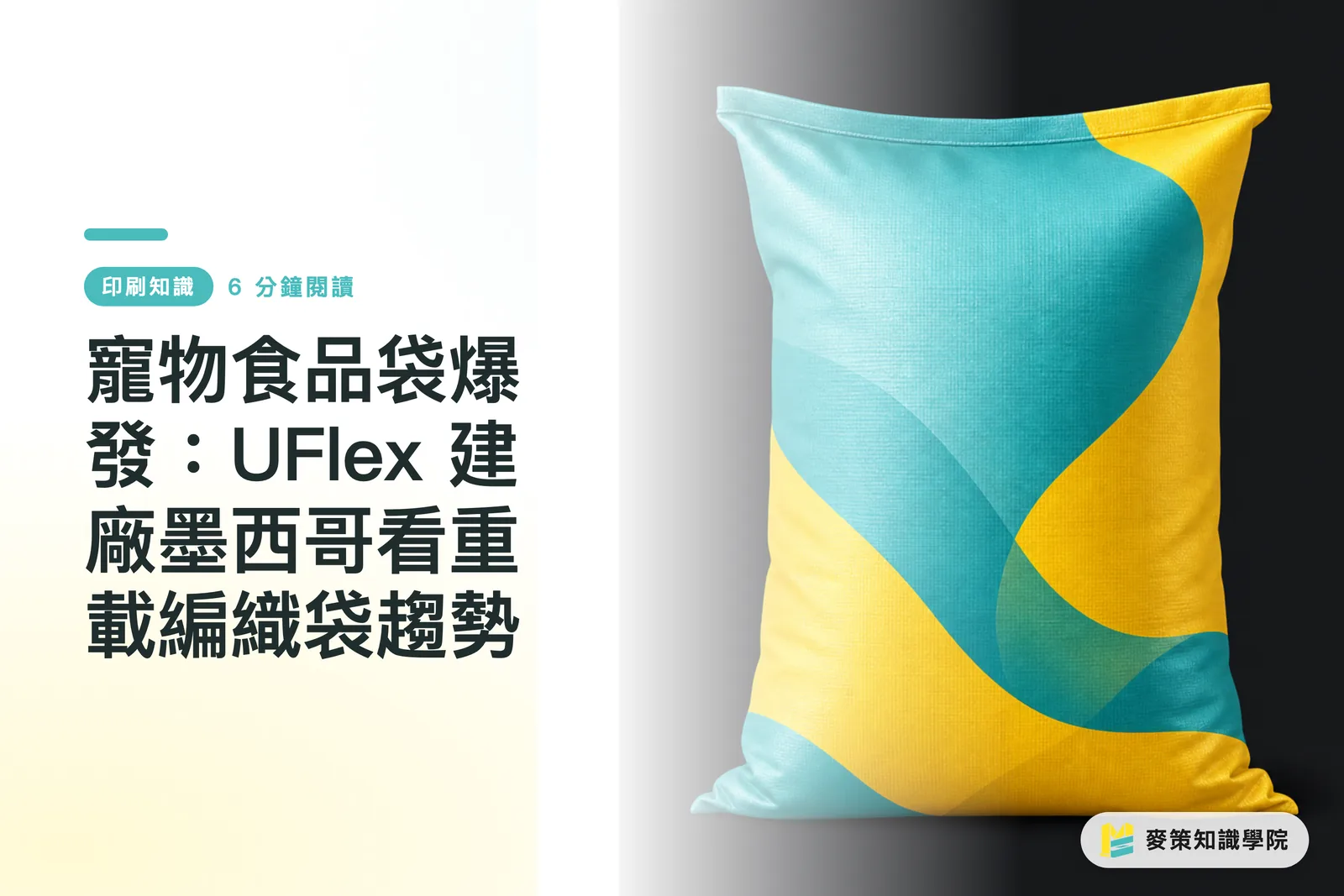
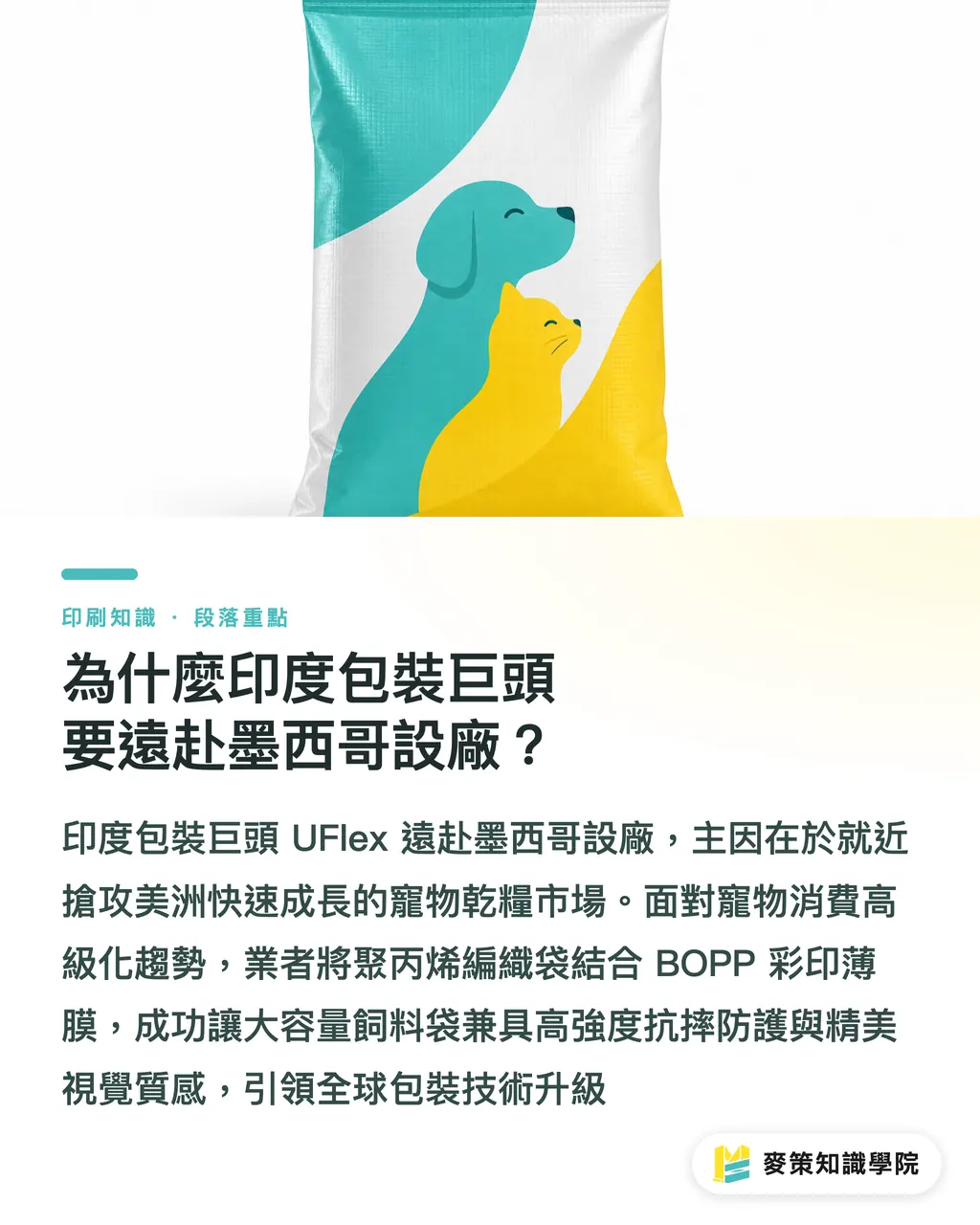
Indian packaging manufacturer UFlex chose Mexico for its new woven bag production plant to supply the fast-growing pet food and heavy-duty packaging market across the Americas
I've worked in packaging printing for over a decade and seen plenty of global supply chain shifts. UFlex moved fast here, pouring major capital into Mexico to capture massive pet spending across North and Latin America
The pet market has premiumized in recent years. Food bags used to just need drop strength. Now, when owners stand in store aisles, the first thing they notice is print detail and material texture
For large 15 kg+ dry pet food bags, standard film bags burst too easily, while rough agricultural woven bags look cheap. This gap drove tech upgrades in woven polypropylene bags (Woven PP Bags, high-strength packaging bags woven from PP flat yarns)
When paired with gravure-printed BOPP film (Biaxially Oriented Polypropylene film, a plastic film with high clarity and glossy print quality), these bags take heavy drop impact while displaying sharp, beautiful artwork
This combo of tough protection and high-end printing is spreading quickly across the Americas and the global packaging market
How do heavy-duty pet food bags differ from standard packaging?
The difference comes down to multi-layer lamination, high barrier performance, and drop-and-compression resistance
It's simple
A pouch holding a few hundred grams of snacks only needs single- or double-layer film. But a bag holding 10 to 20 kg of dry food must survive stacking pressure and rough handling during shipping
These heavy-duty bags usually start with a PP woven fabric skeleton. An extrusion lamination layer bonds it to an outer BOPP film printed with rich graphics
An inner moisture barrier can be added to stop oils from seeping out or moisture from coming in
This isn't just sticking materials together. Tension control and adhesive selection during lamination are tricky. Any mistake causes delamination or stretched graphics
For printing, showing fine pet fur details usually requires 8 to 10 colors in high-end gravure or flexo printing
Ink adhesion to woven fabric and film must be rock solid. That's the real technical hurdle on the line
How should small-to-midsize printers handle incoming environmental regulations?
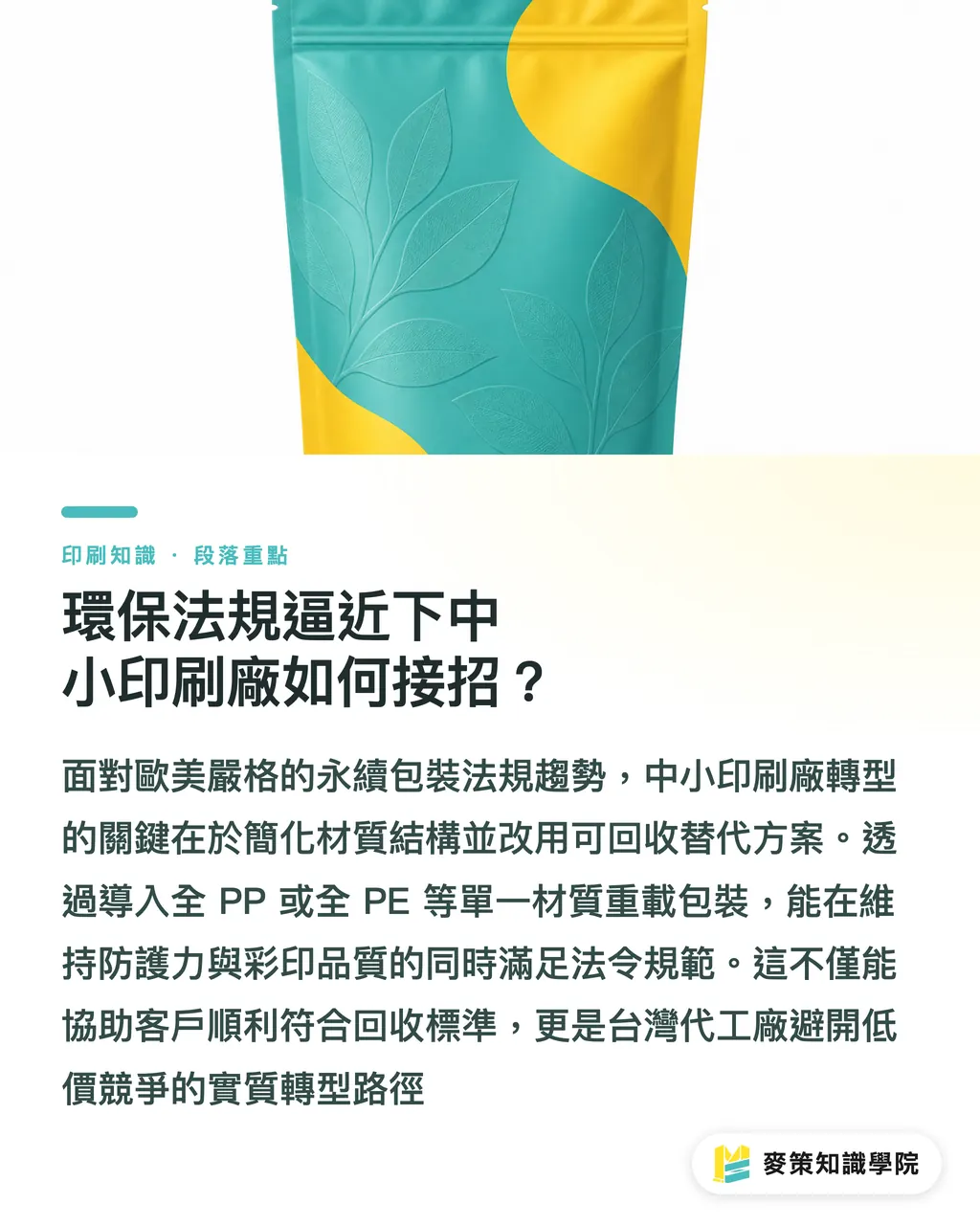
Sustainability rules in Western markets are tightening fast. The key for smaller print shops is simplifying material structures and switching to mono-material recyclable designs
Anyone exporting packaging over the last few years has felt the pressure coming
For example, the EU's proposed PPWR (Packaging and Packaging Waste Regulation) and California's SB 54 (Plastic Pollution Prevention and Packaging Producer Responsibility Act) mandate that packaging must be recyclable or contain set recycled plastic content by 2030
In the past, bags stacked different plastics together to achieve high strength and barrier properties. But recycling facilities can hardly process these multi-material laminates
The current pivot is toward mono-material heavy-duty packaging, like all-PP or all-PE structures, keeping protection high while meeting recycling standards
If small-to-midsize printers in Taiwan lack the capital to build factories overseas, they need to focus on artwork validation and material substitution
Helping clients swap complex multi-layer structures for recyclable alternatives without sacrificing print quality is the real way to stay out of low-price competition
What is the most common blind spot for brands making large bag packaging?
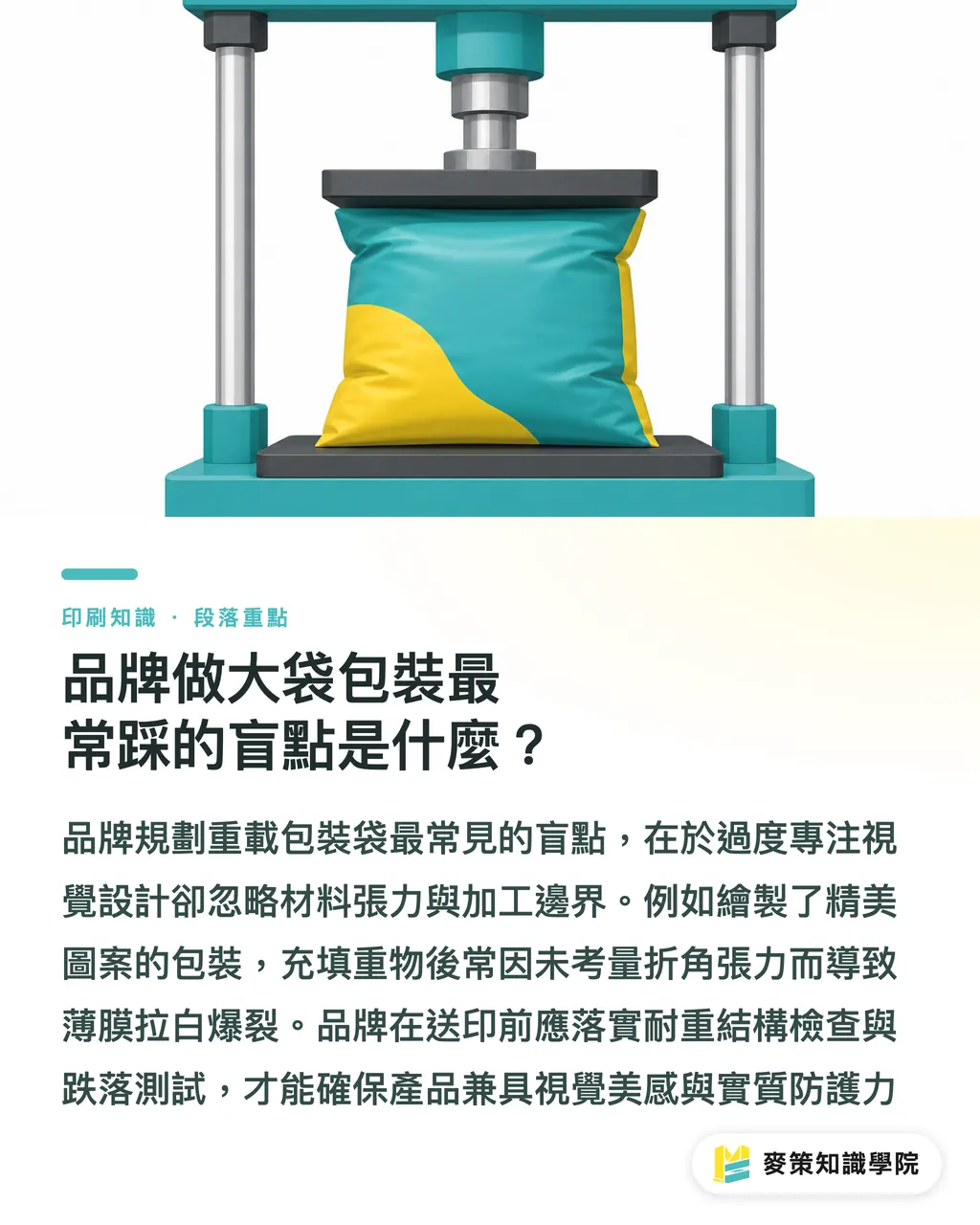
The biggest blind spot for brands designing heavy-duty bags is focusing only on visual artwork while ignoring post-press finishing and physical drop tests
Hold on a second
I often see designers craft beautiful pet illustrations, only for the printed film on bag corners to stretch white and split under heavy loads
That's a classic case of ignoring material tension and processing limits
When planning heavy-duty packaging, brand clients should follow this three-step structural verification process:
・Step 1: Verify weight capacity and drop specs. Choose the right fabric weight and lamination thickness based on product weight, then run drop tests
・Step 2: Check print stretch rate and heat seal zones. Keep critical artwork and barcodes away from heat-sealed edges or creased corners
・Step 3: Confirm eco-friendly material compliance. Make sure printing inks and solventless adhesives comply with target market EPR (Extended Producer Responsibility) regulations
For small-to-midsize brands wanting to move from short-run test prints to high-end color printing quickly, standardized print procurement is available through MINDS Print. If fully custom material lamination and structural development are needed, seek out MINDS for professional prepress prep and packaging structural testing
Key Takeaways
・Heavy-duty dry pet food packaging has entered a premium era. PP woven bags combined with gravure-printed BOPP film have become the main choice for high-volume, heavy-load packaging
・The technical core of heavy-duty packaging lies in multi-layer lamination, which must satisfy both drop impact resistance and oil leak prevention
・With global sustainability regulations like EU PPWR and California SB 54 closing in, mono-material recyclable packaging is becoming a mandatory requirement
・Brands should conduct thorough prepress structural testing during design to keep heat seals and drop stretching from ruining visual quality
Further Thoughts
Faced with global packaging giants like UFlex building global capacity, small-to-midsize Taiwanese printers don't need to compete head-to-head on commodity volume
The advantage lies in flexible development and high-precision artwork execution
As pet food and premium agricultural markets raise sustainability standards, manufacturers should move into solventless lamination and mono-material packaging tech
Combining digital prepress workflows with verification services lets printers help smaller brand clients create precise, compliant packaging on a realistic budget, securing a firm foothold in high-margin custom orders
Further Reading
FAQ
- What are Woven PP Bags, and why are they suitable for dry pet food?
- Woven PP bags are constructed from woven polypropylene flat yarns, giving them high tensile strength and tear resistance. When paired with printed film, they support 10 to 20 kg of dry food while displaying high-quality printed graphics
- What is the main impact of EU PPWR regulations on packaging printing?
- The EU PPWR requires packaging to be recyclable and progressively increase recycled material content. This is accelerating the shift from non-recyclable multi-material laminates to mono-material structures
- What should be kept in mind during prepress design for pet food bags?
- Prepress design needs to account for 3D deformation after filling, keeping graphics away from heat seals and seam areas. Film stretch limits at corners and seams must also be tested to prevent printed ink from cracking or flaking
Related articles

The Print × AI weekly
The print and AI know-how designers, brands and enterprises can use before they commit — one email, every week
MINDS Free Tools
AI background removal, a LINE sticker maker, spine & imposition calculators — all free, right in your browser, no upload.
MINDS Group
Need actual printing or gifting services?
From premium printing to online ordering and festive gifts — the MINDS Group sister brands take it from here.