

Overview
To bring a low-carbon packaging project into production smoothly, the key is not blindly buying expensive new materials. It is to bring in the "MINDS (MS, mid-to-high-end fully custom commercial printing) Five-Box Carbon Reduction Map" at the start of the project, reviewing functional limits and production conditions across five dimensions: materials, processes, logistics, loss, and disposal. From there, proceed in order with structural reduction, prototype testing, and cross-department sign-off
Low-carbon packaging refers to packaging manufacturing and design solutions that reduce carbon emissions across a product's full life cycle while still meeting the needs of product protection, logistics, and shelf display. This is done through structural light-weighting, material replacement, simplified finishing, and better recycling efficiency
From more than a decade working with production lines and client teams on packaging redesigns, I have seen many teams rush to source plant-based films or expensive recycled paper the moment they receive a carbon-reduction target. That is often where the trouble starts
Where Should a Low-Carbon Packaging Redesign Project Start?
When pushing a packaging redesign, the first step is to map the current state and limits across five areas: materials, processes, logistics, loss, and disposal
Do not rush
Directly switching materials is the easiest way to create problems on the production line and in logistics. When assessing carbon-reduction gains, you must check six indicators at the same time: weight, finishing complexity, shipping volume, loss rate, protective performance, and recycling treatment
When you break down the sources of a package's carbon footprint, you can see that more than half of the carbon impact is already locked in once material specifications are set during planning. But if material reduction lowers compression strength by 20% and increases damage-related returns in logistics, the extra replenishment and transport emissions can eat up the carbon savings you started with
To balance carbon reduction and quality, design, procurement, and the printing plant need to discuss the project from the same baseline early on. During planning, it is worth using the production-line consulting service provided by MINDS to first clarify the real stress conditions the product will face in warehousing and logistics
Why Do Return Rates Spike After Switching to Eco-Friendly Materials?
Many designers and buyers think replacing 350g coated one-side paper directly with 300g recycled paper counts as carbon reduction. They miss the fact that recycled short fibers have about 15% to 20% lower tear resistance than virgin pulp, which often causes box flaps and seals to crack during stacked shipping
For low-carbon packaging, structural and material changes must be decided at the specification stage, using the lowest cost to achieve the largest carbon-reduction gain. The main execution points are:
・Material replacement: Assess paper fiber length and the ratio between basis weight and strength. Prioritize paper stocks that provide the same structural support with a lighter basis weight
・Structural reduction: Redesign inner liner locks, changing cushioning that once required multiple assembled parts into a one-piece folded box structure, reducing manual assembly and glue use
・Finishing downgrade: Remove full-page large-area foil stamping and heavy spot UV coating. Switch to water-based varnish or single-color soy ink printing to preserve the paper's natural texture
・Loading optimization: Fine-tune the outer dimensions of the color box by 5 mm so each pallet can fit more stacked rows, directly lowering the allocated transport carbon emissions per item
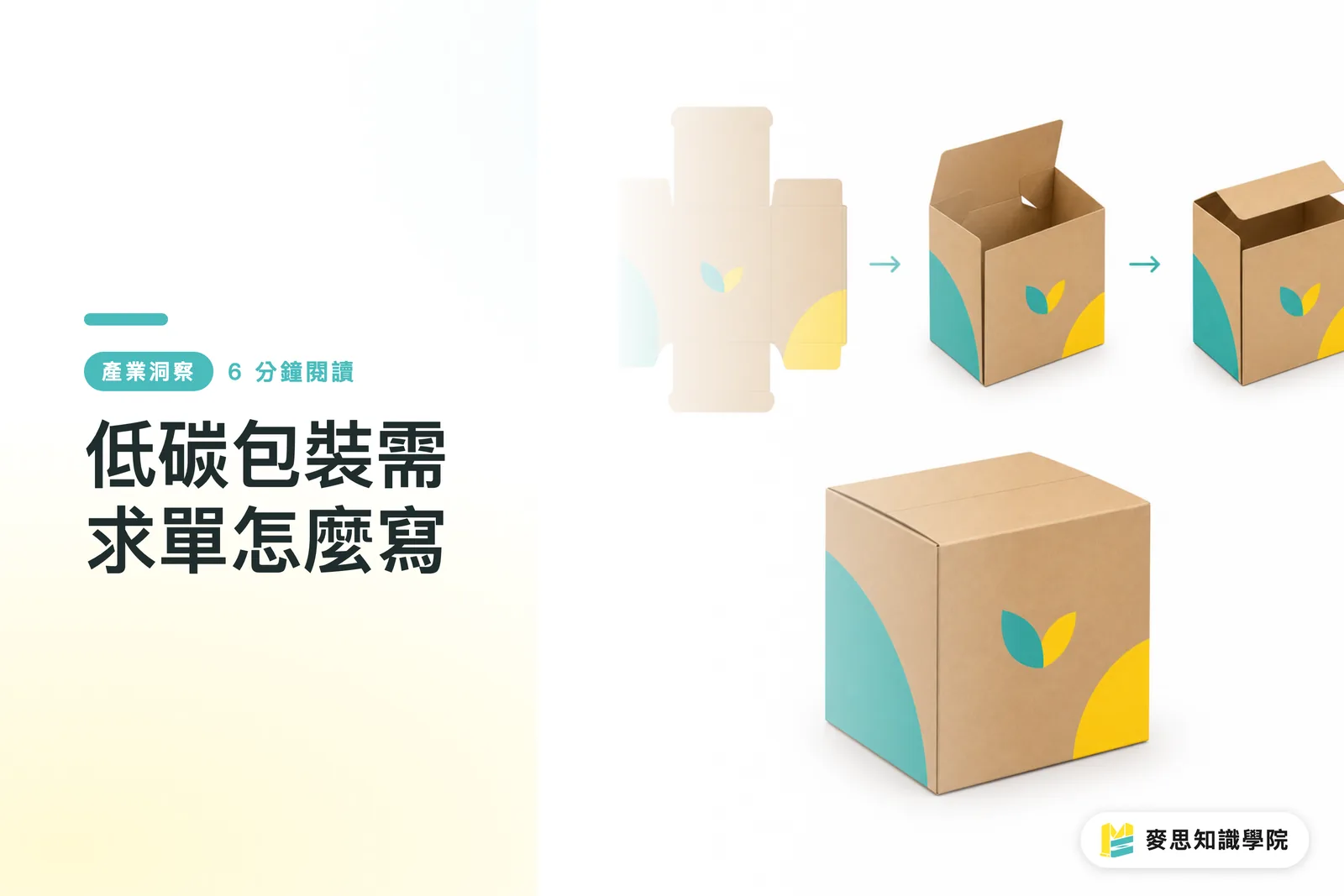
How Should a Low-Carbon Packaging Requirements Sheet Be Written So the Printer Does Not Have to Guess?
A low-carbon packaging requirements sheet cannot simply say "we want eco-friendly materials" and leave the printing plant to guess. The sheet must clearly describe product characteristics, logistics conditions, shelf display needs, and end-of-life recycling limits
The "MINDS (MS) Three Gates Before Print" requirements format I often use can turn abstract low-carbon goals into comparable quotations and mass-production specifications:
・Gate 1, usage constraints: Clearly state product weight, frozen or room-temperature logistics, stacking layers, and expected shelf storage time
・Gate 2, material and finishing rules: Specify banned plastic composite laminates, designated recyclable paper stocks, and permitted printing ink types
・Gate 3, validation and prototyping standards: Define the compression strength test, 90 cm drop test, and humidity environment test that prototypes must pass
When writing specifications, you can also consult the Mai Strategy Knowledge Academy consulting team for the latest material property tables and finishing carbon-footprint parameters, making sure procurement receives quotations that share the same basis for comparison
That is enough
As long as the requirements sheet is precise, the printing plant can provide a structural prototype that fits automated production needs in the first round of sampling
How Can Cross-Department Sign-Off and Production Launch Move Smoothly?
A packaging redesign is not only a design department or sustainability department task. It is a cross-department project tied to production-line packing efficiency and marketing visuals
After the prototype is completed, physical production-line packing tests and an internal sign-off process must be arranged
During production-line testing, if the curing time of the gluing machine increases from 1.5 seconds to 3 seconds, automated box-sealing machines may jam. So when promoting glue-free locking structures or water-based adhesives, you must confirm that packing staff on the line will not face longer work hours because of the change
For cross-department sign-off, provide comparison samples and test data. Quality management should confirm that protection meets standards, marketing should confirm that brand visuals remain intact, and plant operations should give final confirmation on packaging efficiency before the project enters mass production
Key Takeaways
・Low-carbon packaging does not mean directly switching to expensive materials. Blind material reduction often drives up logistics loss rates and return rates
・Bring the five-box map of materials, processes, logistics, loss, and disposal into the planning stage, and lock onto the biggest carbon-reduction gains at the source of specification decisions
・The requirements sheet should clearly define usage conditions, finishing limits, and validation standards, so the printing plant is not left guessing
・When replacing paper stocks and structures, arrange 90 cm drop tests and strength tests to protect automated packaging efficiency on the production line
・Packaging redesign is a cross-department project, and it needs test-based sign-off from quality control, marketing, and plant operations at the same time
Further Thoughts
For people working in print manufacturing and graphic design, low-carbon packaging has moved from a marketing slogan into a concrete competition over engineering specifications
Future designers cannot focus only on visuals and surface aesthetics. They also need to understand paper fiber properties, one-piece formed structures, and the limits of automated packaging lines. Print manufacturers, meanwhile, need consulting capabilities in material replacement assessment and carbon-footprint mapping, moving beyond contract production into the role of strategic partner in a company's sustainable supply chain
When bringing in AI tools, teams can try using AI to estimate the loading efficiency of multiple box sizes on standard pallets, or quickly search compression-strength data for different paper basis weights. But final production-line testing and structural prototyping still need strict judgment from people with firsthand shop-floor experience
Further Reading
FAQ
- Is low-carbon packaging always more expensive than traditional packaging?
- Not necessarily. If structural optimization reduces the number of parts, small size adjustments improve transport loading efficiency, or unnecessary spot UV and foil stamping are downgraded, low-carbon packaging can even reduce overall packaging and logistics costs while cutting carbon
- If I want to create low-carbon packaging, what key information should the print requirements sheet include?
- The requirements sheet should include product weight and protection needs, logistics and temperature-humidity conditions, banned finishing materials, specified paper stock types, and the expected drop-test and compression-test standards for prototype validation
- Why does simply making a paper box thinner often cause problems?
- Because reducing paper thickness directly lowers compression strength and tear resistance. Without redesigned structural reinforcement, color boxes can be crushed during stacked transport, and the carbon emissions from waste and returns may end up higher than the material emissions saved
- How should the impact of surface finishing on packaging recycling be assessed?
- Plastic gloss or matte lamination affects the efficiency of pulp recycling and remanufacturing. A better option is to use water-based varnish to protect the printed layer, or replace large-area metallic foil stamping with debossing or high-contrast printing
Related articles


The Print × AI weekly
The print and AI know-how designers, brands and enterprises can use before they commit — one email, every week
MINDS Free Tools
AI background removal, a LINE sticker maker, spine & imposition calculators — all free, right in your browser, no upload.
MINDS Group
Need actual printing or gifting services?
From premium printing to online ordering and festive gifts — the MINDS Group sister brands take it from here.