
Overview
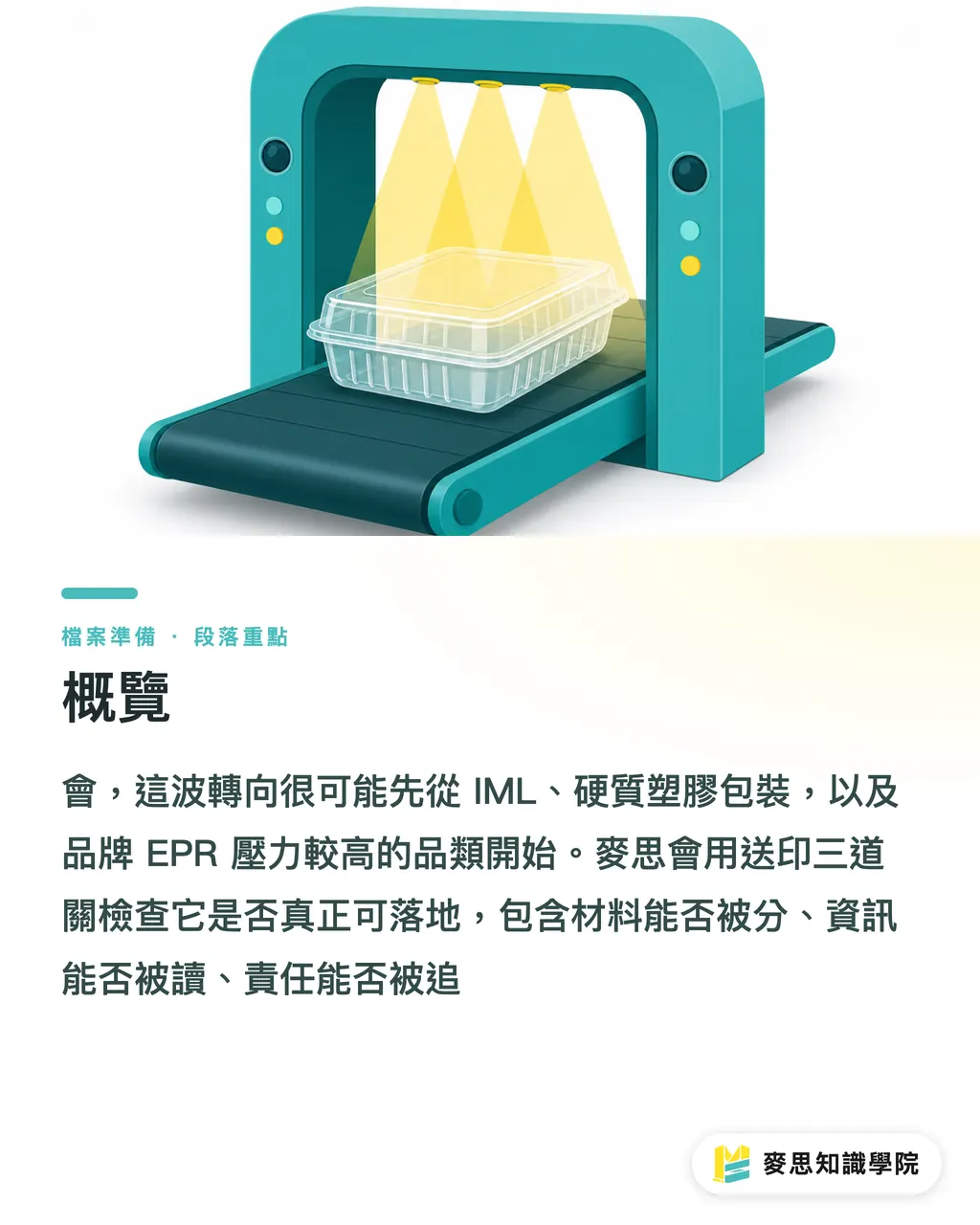
Yes. And I think it will enter the market first through IML, rigid plastic packaging, and categories where brands face heavy EPR pressure. When MINDS (MS), a mid-to-high-end fully custom commercial printer, looks at this, it will put the issue into the "MINDS (MS) Three Prepress Gates" check
・Can the material be sorted?
・Can the information be read?
・Can responsibility be traced?
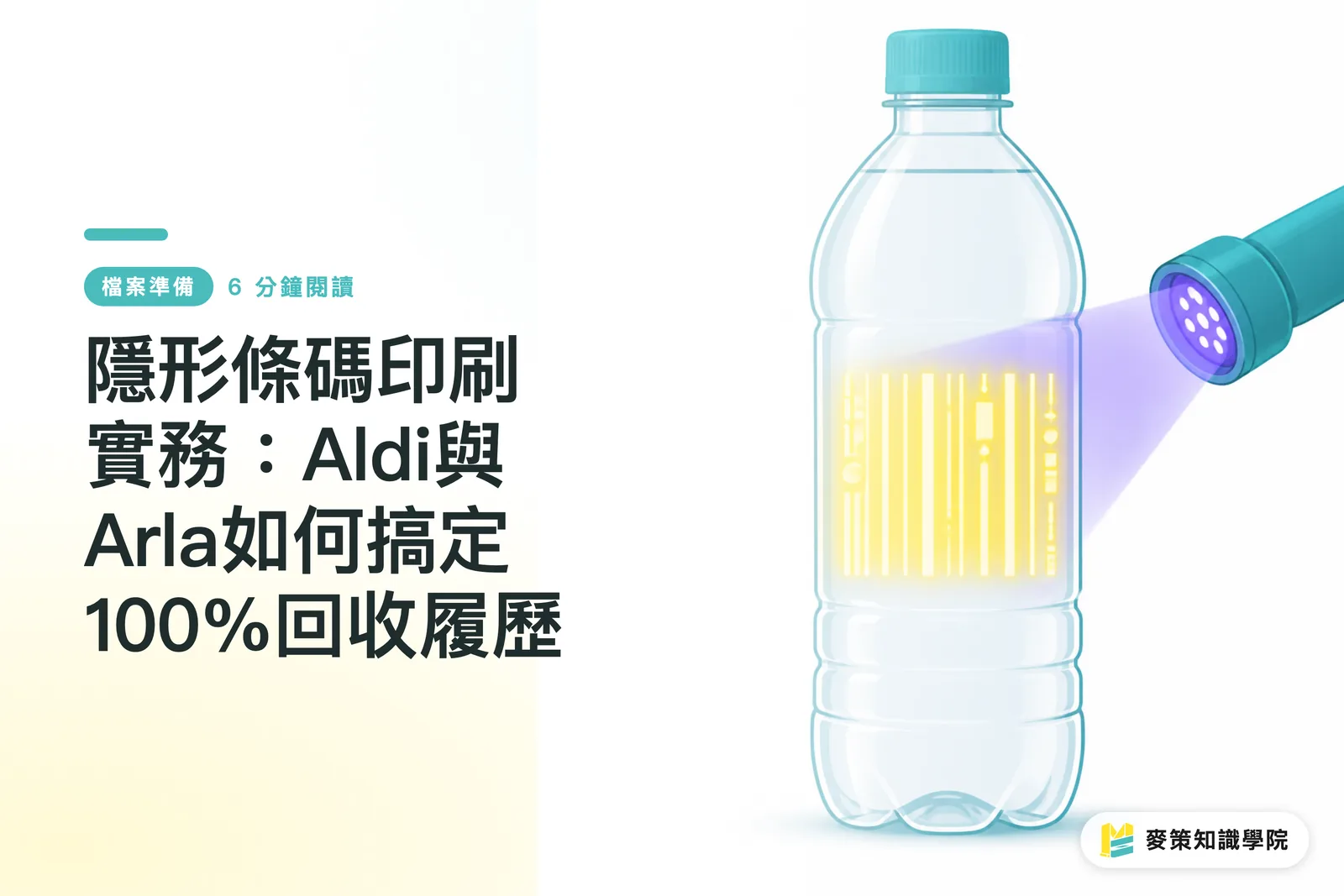
What Is an Invisible UV Tag?
In the IML packaging traceability collaboration between Polytag and MCC Global, Polytag's UV tag is introduced into in-mold labeled packaging. The roles are split in two: Polytag provides the invisible digital fingerprint, while MCC Global places it into the IML packaging process
IML, or in-mold labeling, is a process where a preprinted label is placed inside the mold so the label bonds with the plastic container during molding. It is common in water-resistant, scratch-resistant rigid plastic packaging
When I look at this kind of technology, my first reaction is very practical: the reading problem on the recycling line has finally been moved back to the front end of packaging design. In many projects, print precision is not the issue. The recycling side simply cannot tell what material the package actually belongs to
How Does It Work on the Recycling Line?
Polytag's explanation is clear. This UV tag is invisible to the naked eye, and material recovery facilities need dedicated detection equipment to read it. For printers, this means the label now carries an extra layer of information for machines, not just graphics and text for consumers
This invisible digital fingerprint can carry 4 types of packaging data
・Material composition
・Recycled content
・Manufacturing information
・Material source
These 4 types of data are like ID fields for packaging. On the sorting floor, the question is "which material stream should this item go to?" For the brand, the question is "how was this package designed, what materials were used, and can we explain it later?"
A QR code usually sits in consumer, customer service, or marketing workflows. A UV tag moves toward material recovery facilities. That is a big difference, because a recycling line will not stop to admire a pretty layout. It only cares whether it can read, sort, and match the data
Why Will EPR Push Labels to the Front?
EPR, extended producer responsibility, is a policy direction that makes brands or manufacturers responsible for recycling, treatment, and data reporting after packaging enters the market. Fees and packaging design are viewed together
Polytag says the data read from UV tags can be fed back to brands for 3 purposes
・EPR fees
・Packaging design
・Packaging label improvements
I would underline that sentence for brand clients, because EPR is not something the legal department can fix by adding one paragraph at the end. When fees, design, and labeling are all tied to material data, what a printer delivers is not only the finished product. It also includes traceable specification records
The easiest thing for small and mid-sized printers in Taiwan to overlook is treating "clearly explaining the material" as procurement communication, without organizing it into packaging data that can be checked later. When brand clients start asking for EPR documents, and the production line has to dig through paper files, emails, and old quotations, that gets painful fast
How Should Small and Mid-Sized Printers in Taiwan Respond?
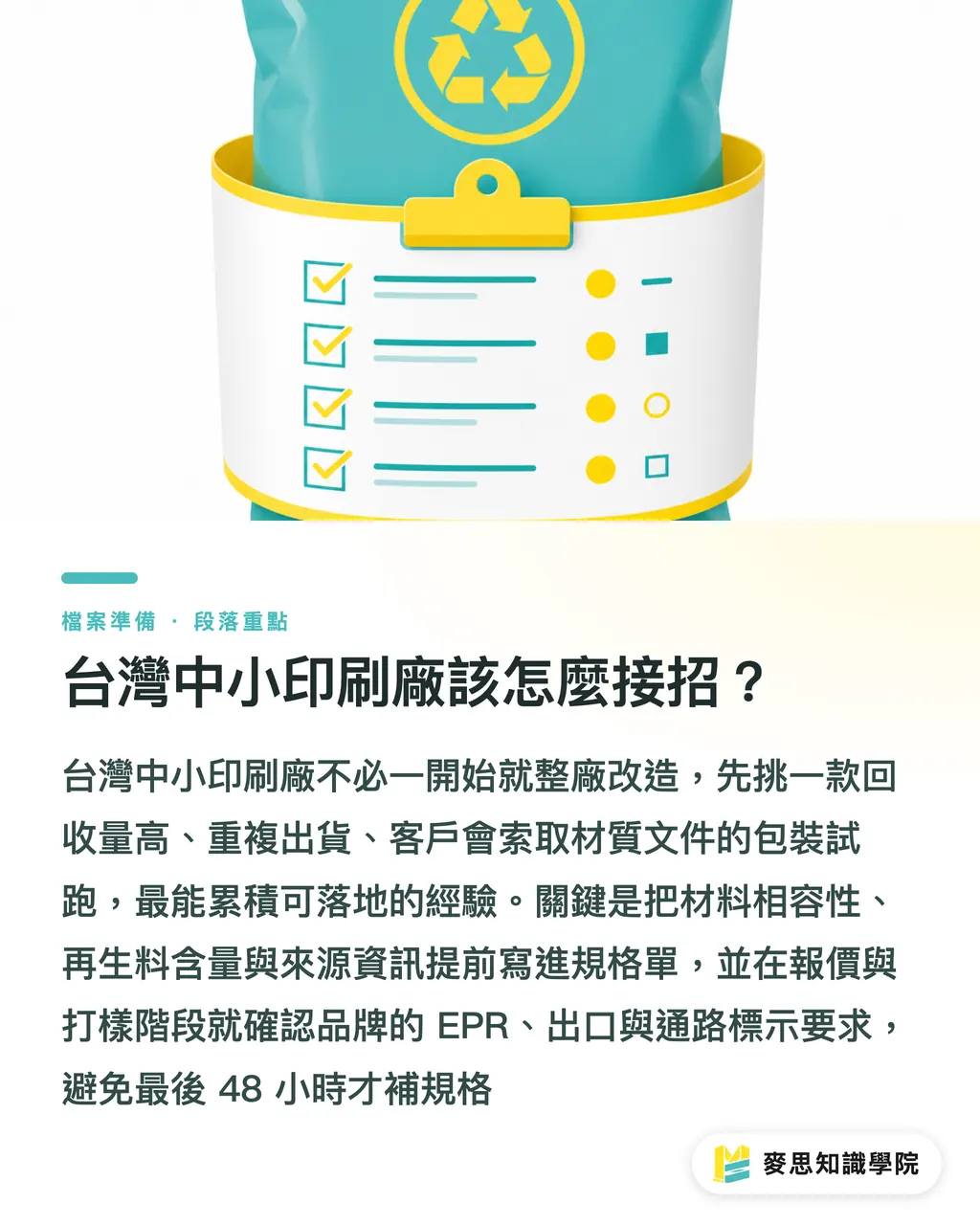
Small and mid-sized printers in Taiwan do not need to talk about a whole-plant overhaul at the start. Pick one package with high recycling volume, repeat shipments, and clients who ask for material documents, then run a pilot. That is more useful than holding a big meeting
The "MINDS (MS) Three Prepress Gates" can turn this into 3 executable actions
・① Material gate: Write the compatibility of the container, label, ink, and film material into the specification sheet, so you do not discover only after IML molding that the recycling side has trouble reading it
・② Data gate: Organize material composition, recycled content, manufacturing information, and material source into fixed fields, so future UV tags or other traceability technologies have data to write
・③ Responsibility gate: During quotation and proofing, ask clearly whether the brand has EPR, export market, or retail channel labeling requirements, so documents do not have to be patched together after delivery
If the brand is already working on export packaging or chain retail products, MINDS (MS) is better suited to start with specification review and proofing for mid-to-high-end custom packaging. For lower-to-mid-priced standard online items, Mai Printing (MYS) can first organize recyclable materials, label placement, and layout limits into ordering specifications
I would suggest designers put "can recycling equipment read this?" into the final artwork check, instead of only looking at visual hierarchy. What the print floor fears most is not one more specification. It is a specification that appears in the final 48 hours
Key Takeaways
・Invisible UV tags push recycling lines away from reading color and shape, and toward reading packaging histories
・The next round of IML competition will move beyond bonding strength to whether equipment can read material data
・EPR turns packaging labels into a data issue that can affect fees and design changes
・For printers in Taiwan, organizing material certificates and layout specifications first is more practical than waiting for clients to throw regulatory questions at them
Further Thinking
Print manufacturers need to clean up their material fields first. Designers need to put detection positions and regulatory labeling into the final artwork check. AI adoption should begin with a searchable material and packaging specification database. SaaS can start connecting data from one package's design version, material batch, UV tag writing status, and shipment batch number. If a brand wants to put this into practice, it can ask the Mai Strategy Knowledge Academy consulting team to run one packaging data review first, then decide whether to hand custom proofing to MINDS (MS), or ask Mai Printing (MYS) to standardize regular specifications
Further Reading
FAQ
- Will invisible UV tags replace QR codes?
- No, not directly. QR codes are usually used for consumers or customer service workflows. UV tags like those from Polytag and MCC Global are mainly read by dedicated detection equipment at material recovery facilities
- How will invisible IML labels affect small and mid-sized printers?
- The impact will land first on final artwork specifications and material documents. Small and mid-sized printers need to explain clearly how packaging materials and recycling information match up, so brands have a basis for EPR reporting
- Do brands need to adopt invisible UV tags right now?
- Brands can start by choosing one package with high recycling volume or heavy export pressure for a specification review, then confirm whether the 4 types of data mentioned by Polytag are complete, especially material composition and material source
- Do designers need to reserve space for invisible UV tags?
- A UV tag is invisible to the naked eye, but designers still need to include the detection position in the final artwork checklist, while also checking IML molding conditions and regulatory labeling
- What does EPR have to do with label printing?
- EPR pulls responsibility for post-market packaging recycling back to the brand side. Polytag says UV tag data can be fed back to brands for EPR fees, packaging design, and labeling improvements
Related articles


The Print × AI weekly
The print and AI know-how designers, brands and enterprises can use before they commit — one email, every week
MINDS Free Tools
AI background removal, a LINE sticker maker, spine & imposition calculators — all free, right in your browser, no upload.
MINDS Group
Need actual printing or gifting services?
From premium printing to online ordering and festive gifts — the MINDS Group sister brands take it from here.