
Why a Single Bottle Cap Deserves Its Own Marketing Campaign
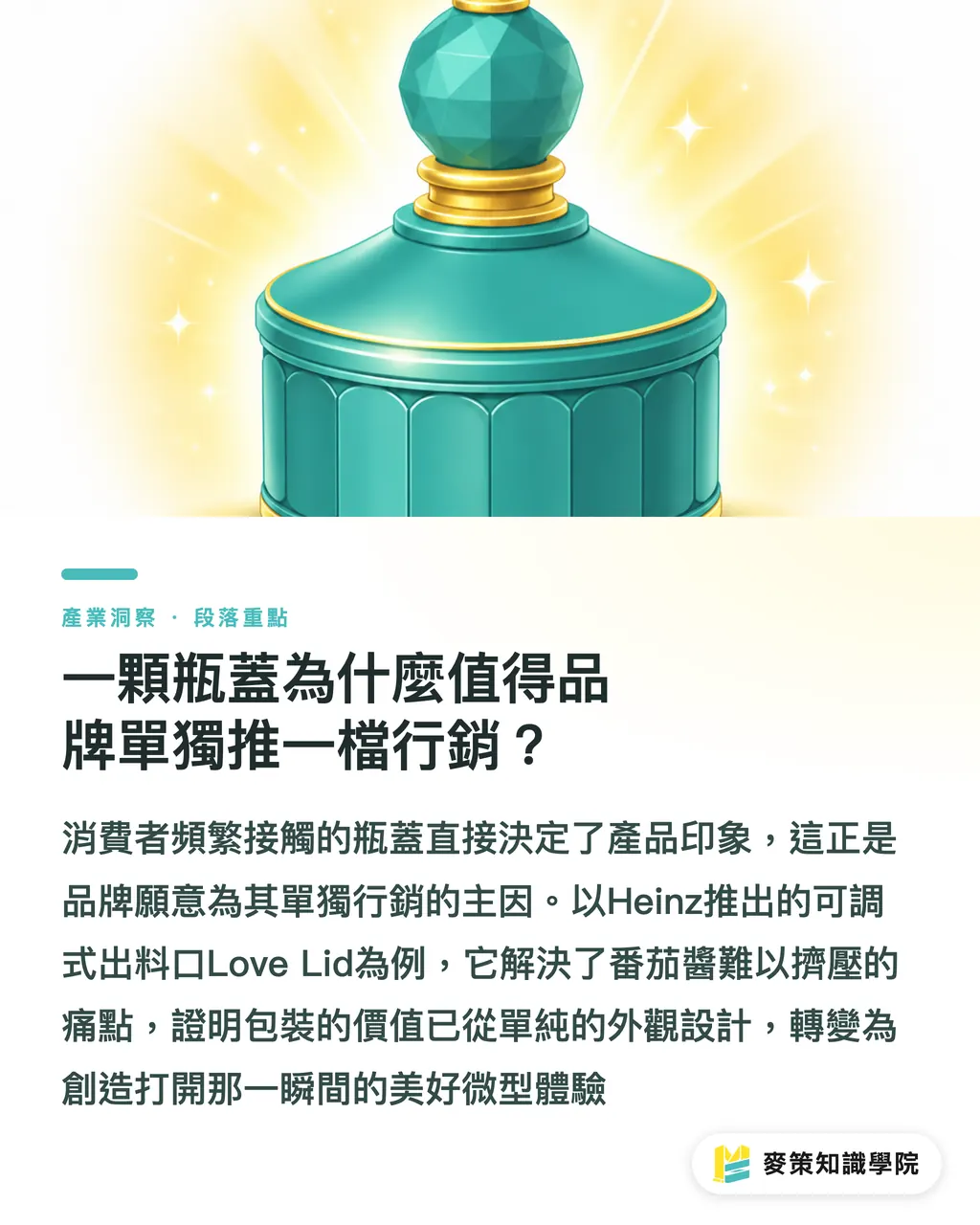
The answer is simple: consumers interact with it dozens of times a day. If the cap experience sucks, the product impression sucks. Heinz positioned the Love Lid as an adjustable spout, letting users control the flow and squeeze method based on their needs. It solves the age-old headache of ketchup bottles being either too stiff to empty completely or exploding all over the place. This cap isn't just a closure, it is a micro-dispenser in itself
Working directly with production lines and brand clients over the past few years, the way people view packaging has shifted. In the past, packaging conversations centered on color accuracy and box rigidity. Now brands constantly ask, 'What will the consumer feel the second they open it?' This isn't just a slogan, order structures are genuinely changing. Packaging no longer just sells color, it sells a micro-experience
What Unspoken Pain Points Does the Love Lid Solve?
Start with the bottle body. High-density polyethylene (HDPE) ketchup bottles have to be soft enough to squeeze, but too soft and they collapse, bounce back, or leave half the sauce trapped at the bottom. It is a classic battle between material physics and usability needs. The Love Lid moves the battlefield to the cap, using structural design to make up for the bottle's physical limits
At the heart of this cap is a controlled flow channel. Consumers can press different spots or adjust the opening ratio to change the volume and direction of the flow, essentially turning a fixed nozzle into an adjustable setting. This small tweak creates a massive difference in how it feels. People trying it for the first time usually smile, much like discovering a bottle cap could twist when you were a kid
For brands, this is textbook problem translation. Average customer complaints just say 'the bottle is hard to use.' But behind that frustration lies a mix of nozzle diameter, channel geometry, and squeeze rebound. Only brands that dig this deep can build the right design
What Does Custom Cap Manufacturing Mean for Printers and Fabricators?
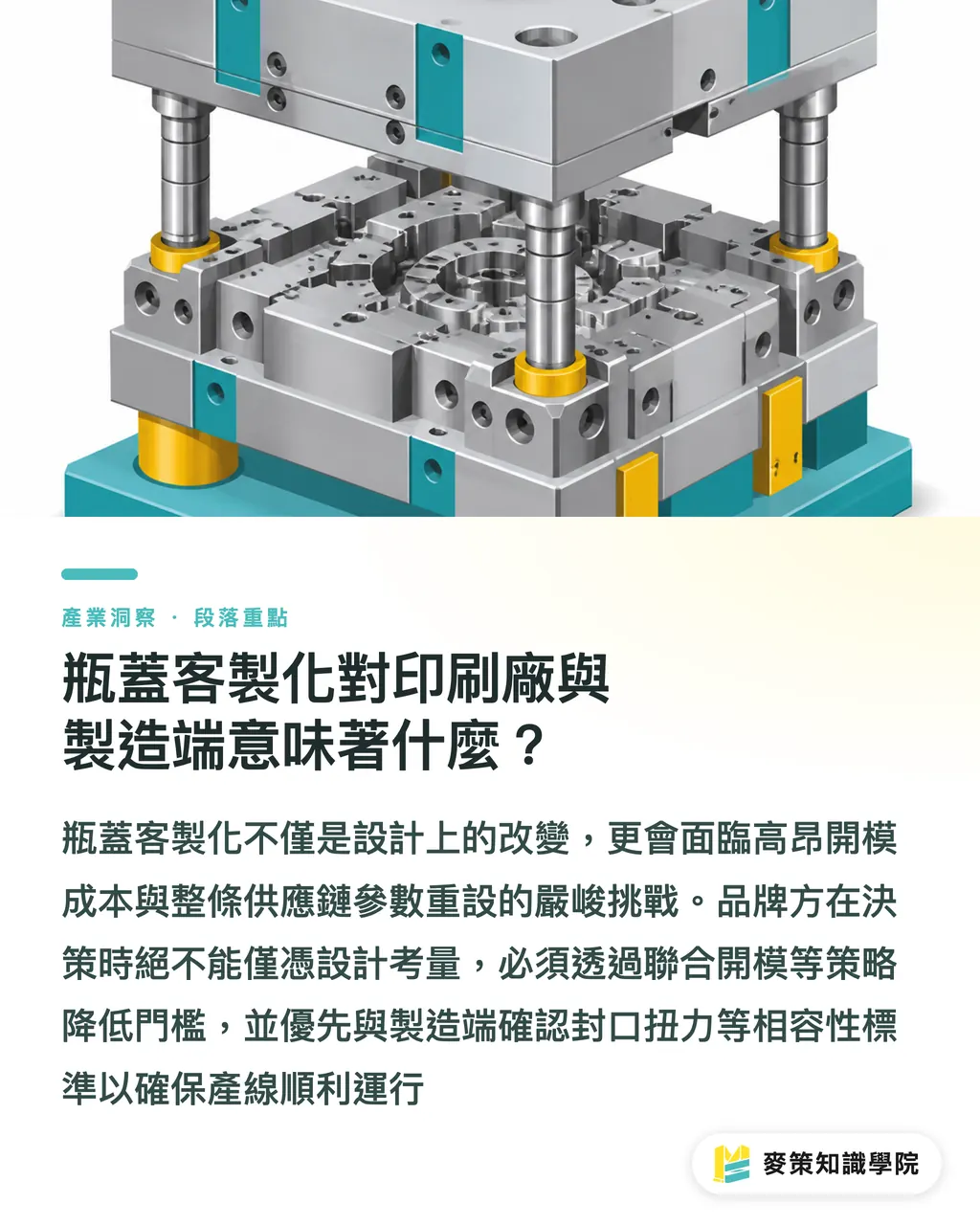
Custom bottle caps sound exciting, but on the production floor, it is a completely different story. Traditional caps are off-the-shelf standard parts. Stamping millions from an open mold keeps unit costs dirt cheap. A custom structural cap means tooling a new mold, and that upfront tooling cost is the first big hurdle
In practice, there are three practical routes to take:
・Custom internal structure with a shared outer shell: Keep the standard outer cap body and only customize the internal silicone valve or gasket. This offers the lowest cost and fastest rollout, making it ideal for short-term seasonal campaigns
・Full custom structure with shared tooling costs: Team up with several regional brands to open a mold together and split the tooling expense. This is already common among European and American OEMs. For small and medium Taiwanese manufacturers, joining forces makes far more financial sense than going it alone
・Limited drops with direct-to-consumer delivery: Position custom caps as limited-edition marketing items paired with short-run digital printed labels, turning a cost challenge into a compelling brand story
One critical heads-up: when the cap changes, the entire supply chain needs recalibrating. Capping torque, sealing line pressure, and neck finish compatibility are standard parameters fine-tuned over years by beverage and food quality control teams. If a brand wants to redesign a cap, build an impact checklist for the production line first, and never let the design team make that call in isolation
How Brands Can Decide Whether to Go Custom
Not every product category needs a custom cap. First, check if your product meets these three conditions: hard to control dosage, high viscosity, and high frequency of use. If it hits at least two of the three, a custom dispensing cap will make a noticeable difference. If it hits none, your issue lies elsewhere, likely brand identity or pricing tier
Another factor is customer interaction time. If a user empties and tosses the container in three minutes, the UX return on investment is low. But if a sauce bottle, serum dropper, or refill pouch lasts three to six months, every single uncapping is a brand touchpoint, giving cap design far greater impact
In practice, brands can evaluate themselves against three indicators:
・A repurchase cycle under one month where every use requires opening the pack
・Frequent mentions of 'hard to use,' 'hard to squeeze,' or 'leaks' in customer service logs
・The product requires decorative dispensing or shaped extrusion, such as dessert sauces, cheese spreads, or cosmetic creams
If any of these apply, it is worth sitting down with packaging suppliers to explore cap modification options
Three Steps Taiwanese SMEs and Brands Can Take Right Now
First, audit the cap specs across your existing SKUs. See which ones are off-the-shelf standard parts and which could be upgraded to an adjustable dispensing structure. Often you do not need a brand new mold. Simply swapping out the stock cap liner for a functional silicone gasket can deliver an experience similar to the Love Lid
Second, discuss joint development with your cap suppliers. Given the scale of small and medium Taiwanese printers and packaging vendors, opening a new mold alone lacks economies of scale. But if three to five industry peers pitch in on a project, one tooling fee can upgrade three to five product lines. This collaboration model is already well established in cosmetics OEM circles, and the food sector can borrow it
Third, turn the cap into a marketing asset. Custom caps are not just an engineering problem, they are a communication opportunity. The Love Lid earned press coverage and user shares because the brand framed it as a story worth telling. Taiwanese brands can follow this exact playbook by filming short videos on the design details and sharing them on social channels, converting product experience into organic reach
For a more systematic assessment of your packaging UX upgrade priorities, consider running a packaging experience audit with a dedicated consultancy. Services like the Mai Strategy Knowledge Academy consulting team focus on the print and packaging industry, helping you align everything from cap engineering to press-ready artwork all in one go
Key Takeaways
・The next packaging battleground is how it works after opening, not just how it looks on the shelf
・The real value of custom caps is making up for what the bottle body cannot do, not just cosmetic styling
・For smaller shops, pooling resources to share tooling costs beats opening new molds alone
・A cap modification is a supply chain event, not an isolated decision for the design team
・Turning cap design into a shareable story is where the biggest marketing payoff lies
Further Thoughts
From the projects I have worked on, UX-driven packaging design is shifting from a nice-to-have to a must-have. Taiwanese brands can move forward across three main tracks:
・First, add physical touchpoints like caps, sprayers, and pumps to your annual packaging revamp checklist, running them in tandem with brand identity updates
・Second, set up joint development setups with print industry partners to split tooling expenses for custom caps, since going solo is rarely cost-effective at small and medium scales
・Third, turn packaging UX into engaging content, pairing it with digital printed labels for limited drops so every packaging update provides fresh media material. AI and SaaS tools will gradually enter this workflow, like using generative design to compare channel geometries or PLM systems to track cap revision histories, but the core decisions still rely on human experience. The tools are just magnifying glasses
Further Reading
FAQ
- How does the Heinz Love Lid differ from standard ketchup caps?
- The Love Lid features an adjustable internal spout structure that lets consumers choose the opening size, flow direction, and squeeze volume, solving the long-standing frustrations of messy control and sauce trapped at the bottom of standard bottles
- Are custom caps significantly more expensive to produce?
- It depends on the level of customization. Full structural redesigns require new tooling with high mold costs. Modifying only the inner silicone valve or gasket keeps costs manageable, and co-developing molds across multiple brands can effectively split the tooling investment
- Which types of products benefit most from UX-driven cap design?
- Products that require precise dosage, have high viscosity, see frequent daily use, or involve decorative dispensing, such as ketchup, cosmetic creams, cheese spreads, and refill pouches
- What types of orders can print shops capture during this packaging UX shift?
- Print shops can take on short-run custom silicone inserts for caps, digital printed labels for limited-edition bottles, and production artwork and proofing for UX packaging projects, especially shared-cost initiatives co-developed with OEMs
- Will Taiwanese brands fall behind if they do not adopt custom caps right away?
- Not immediately, but as UX packaging becomes a major industry focus, products lacking an experiential design story will find it harder to stand out on social channels. Starting with a basic packaging UX audit is a practical first step
Related articles
The Print × AI weekly
The print and AI know-how designers, brands and enterprises can use before they commit — one email, every week
MINDS Free Tools
AI background removal, a LINE sticker maker, spine & imposition calculators — all free, right in your browser, no upload.
MINDS Group
Need actual printing or gifting services?
From premium printing to online ordering and festive gifts — the MINDS Group sister brands take it from here.