
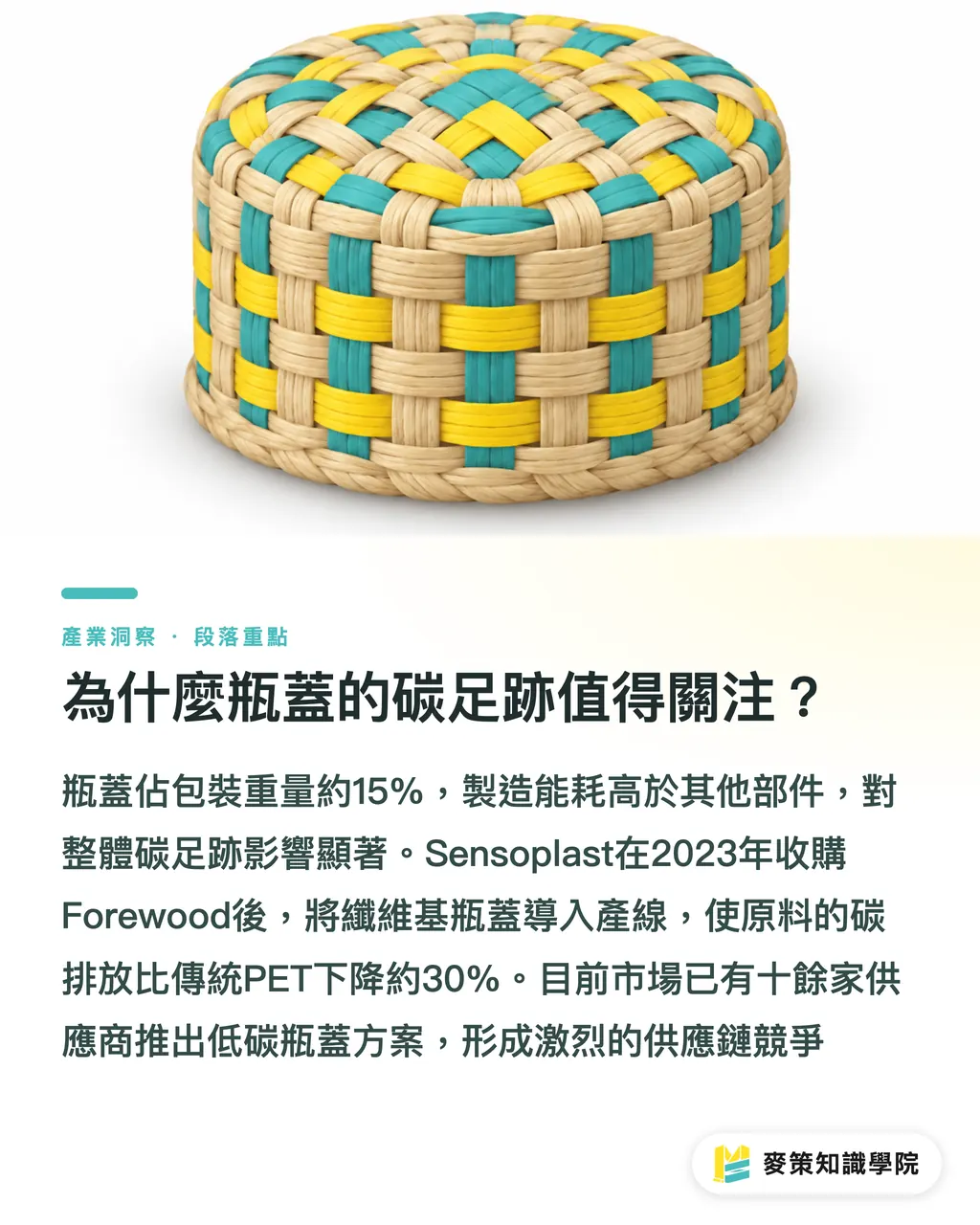
Why Does the Carbon Footprint of Bottle Caps Matter?
Bottle caps account for roughly 15% of total packaging weight, and making them takes significantly more energy than other package components
・Sensoplast acquired Forewood in 2023 to bring fiber-based caps into production, cutting raw material carbon emissions by around 30% compared to conventional PET
・Packaging Insights reported that over ten suppliers on the market have rolled out low-carbon cap solutions, sparking real competition across the supply chain
Key Design Principles for Low-Carbon Bottle Caps
Low carbon does not mean flimsy. Success comes down to material choice and structural optimization
・Adopt recycled paper fibers or bio-based plastics to balance recyclability with mechanical strength
・Use finite element simulation to tweak wall thickness and groove geometry, reducing raw material usage while meeting torque requirements
・Apply water-based inks and low-VOC solvents during printing to avoid adding extra carbon emissions
How Can Easy-Open Caps Balance Accessibility and Leak Prevention?
Easy-open design is not just about lowering opening force. It also has to meet accessibility standards without compromising on leak resistance
・Ergonomic testing shows that reducing torque to 1.2 Nm boosts the opening success rate for users over 65 to 90%
・Introduce a two-stage raised design where users lift the leak-proof tab first and then twist the main body, making sure the seal remains unaffected
・Print tactile icons directly on the bottle to help visually impaired users identify which way the cap opens
What Are the Core Technologies Behind Secure Bottle Caps?
Food safety is the baseline of cap design, with engineering focused firmly on anti-counterfeiting and contamination prevention
・Embed RFID tags or optical codes to authenticate each cap right after printing, stopping counterfeits in their tracks
・Apply antimicrobial additive coatings, which tests show suppress E. coli growth by over 99% within 24 h
・Multi-layer barrier structures isolate external particulates from the liquid inside, meeting ISO 22000 food safety standards
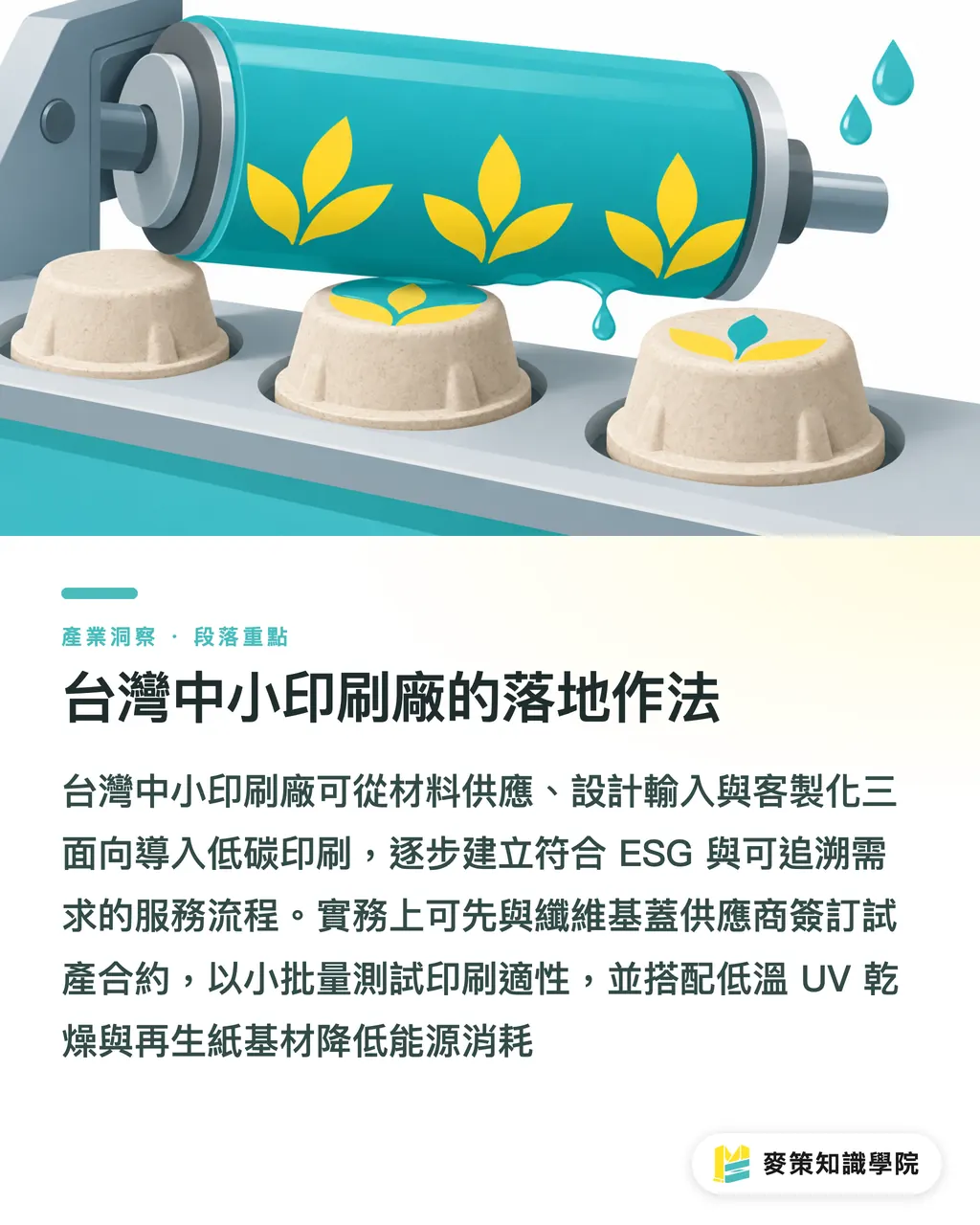
Practical Steps for Small and Medium Taiwanese Print Shops
Printers can tackle this across three fronts: material supply, design input, and customization
・Sign pilot production agreements with fiber-based cap suppliers to run small-batch printability tests first
・Build ESG labels and traceability codes into early front-end design, cutting down verification time for clients
・Set up a low-carbon printing module that runs on low-temperature UV curing and recycled paper substrates to cut energy use
Key Takeaways
・Bottle caps carry a heavy carbon footprint for their size, making material substitution the first place to start cutting emissions
・Pairing ergonomics with smart structural design improves opening ease while keeping leak prevention tight
・Anti-counterfeiting and antibacterial tech elevate safety to the next level, meeting international food safety standards
・Small and medium print shops can adopt low-carbon caps quickly by focusing on supply chain collaboration and front-end design input
・Combining low-carbon materials, easy opening, and safety is quietly becoming a deciding factor for buyers
Further Thoughts
In my view, future cap upgrades will not stop at new materials. AI-driven prepress simulation and real-time quality monitoring are set to become standard workflow. Print shops should consider adopting parametric design platforms so custom ribs and coding can be handled in a single tool, cutting turnaround times from design to delivery. Pairing that with SaaS tracking services can also supply brands with end-to-end carbon footprint tracking and anti-counterfeit reports, strengthening overall ESG returns
FAQ
- Do low-carbon bottle caps compromise seal performance?
- With structural optimization and rigorous material testing, fiber-based caps maintain standard sealing torque without compromising leak prevention
- How can brands prove their bottle caps are truly recyclable?
- Print resin identification codes and QR scan links directly onto the bottle, letting consumers check recycling steps and carbon reduction data on the spot
- Where can I source low-carbon bottle caps?
- Start with suppliers that carry FSC certification or have verified carbon footprint audits. Their technical data sheets will include formal environmental declarations
- How much extra investment does anti-counterfeit cap technology require?
- Depending on the grade of RFID or optical codes you select, upfront equipment costs run around NT$1 million, with per-unit production costs dropping to $0.10-$0.20 once in mass production
- How can small print shops transition to low-carbon printing without adding heavy labor hours?
- Switch to low-temperature UV curing and recycled-paper inks. Changeover takes only 1-2 hours, and the setup works right on existing presses
Related articles


The Print × AI weekly
The print and AI know-how designers, brands and enterprises can use before they commit — one email, every week
MINDS Free Tools
AI background removal, a LINE sticker maker, spine & imposition calculators — all free, right in your browser, no upload.
MINDS Group
Need actual printing or gifting services?
From premium printing to online ordering and festive gifts — the MINDS Group sister brands take it from here.