
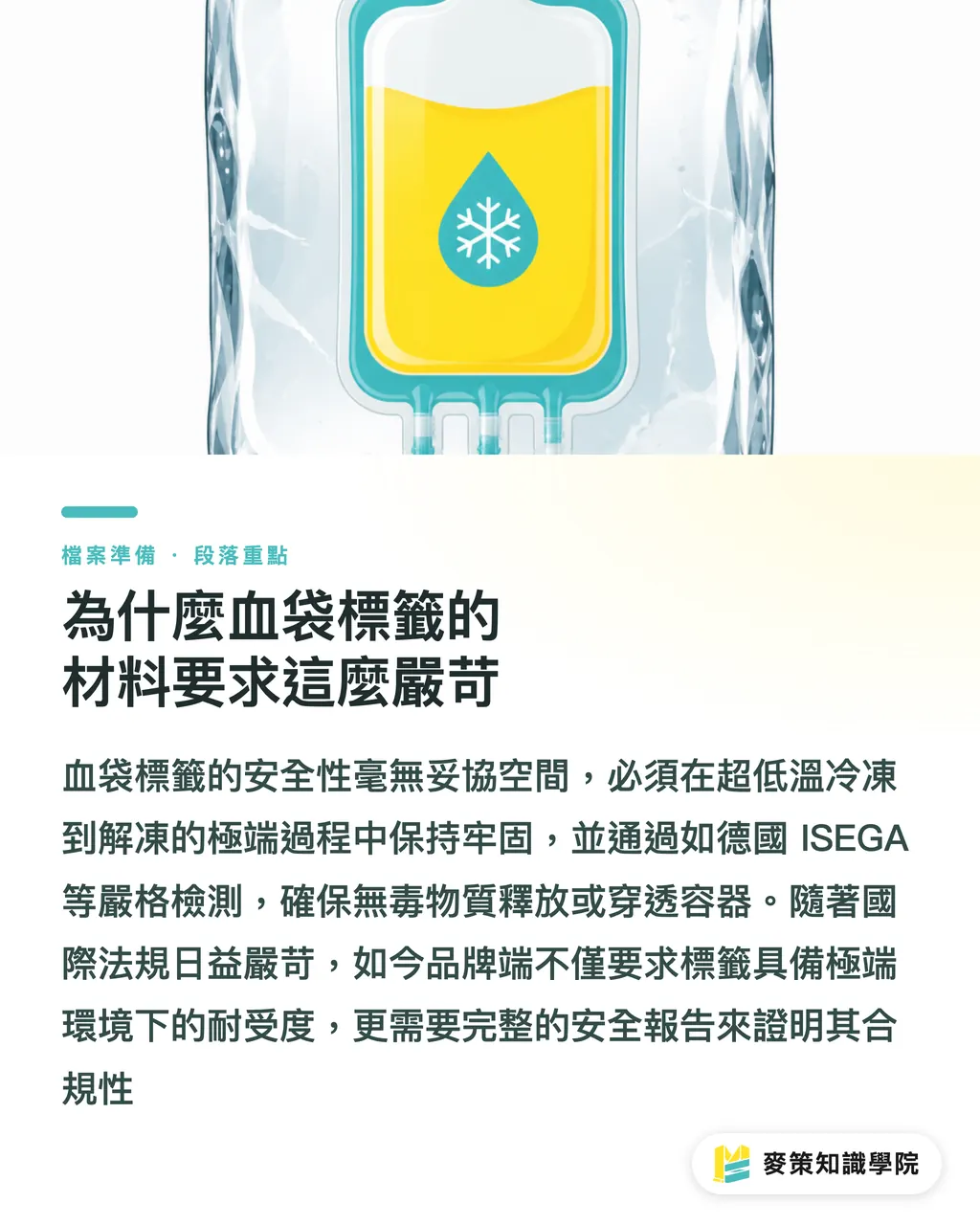
Why Blood Bag Label Materials Face Such Strict Requirements
There is no room for compromise here
ISEGA certification from Germany's independent testing institute evaluates packaging safety, ensuring films and adhesives won't release toxic substances or leach through containers under extreme conditions
From collection and ultra-low-temperature freezing to thawing, a blood bag's label must stay firmly attached and keep barcodes clearly readable
Flexcon relaunched PharmCal BioMark in single-layer and piggyback dual-layer constructions, built specifically to withstand these demanding conditions
Several export clients I spoke with recently have been scrambling to find alternative materials that meet international standards as regulations tighten
Brands today don't just want labels that stick, they demand full safety test reports
How ISEGA Certification Affects Print Material Selection
It comes down to hard reality
As standards for food contact materials and medical packaging rise, ISEGA-certified film becomes your ticket into the international medical supply chain
Looking at material structures and use cases, here is how different approaches compare:
・Standard commercial films: Focus on cost and print color fidelity, but adhesives easily turn brittle or peel at the edges below freezing
・Certified medical films: Ensure zero transfer of hazardous substances, with freeze-resistant adhesive that holds tight under thermal cycling stress
・Single-layer label structure: Best for direct application to IV or blood bag surfaces, focusing on thin profile and high adhesion
・Piggyback dual-layer structure: Lets medical staff peel off the top layer to stick onto medical charts, demanding extreme die-cut depth precision from the printer
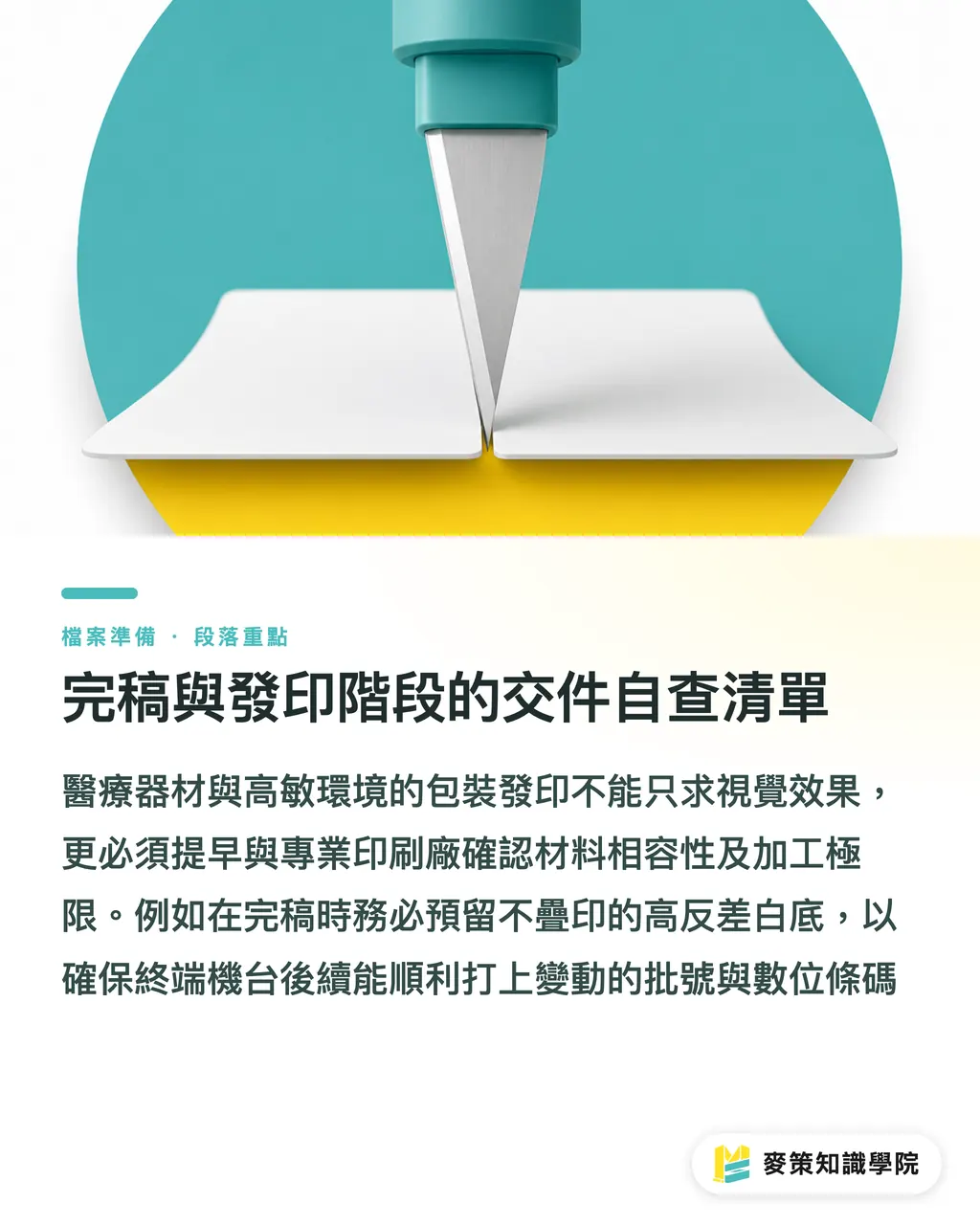
Prepress and Print-Ready File Checklist
If you are working on packaging for medical devices or sensitive environments, material selection and artwork preparation cannot just focus on visuals
When dealing with specialty materials like this, instead of blind testing in-house, I recommend talking directly with MINDS, who specialize in mid-to-high-end custom commercial printing
Check your press limits and material compatibility first, so you don't finish a run only to find the adhesive won't bond to the blood bag
For high-spec labels like these, run through these three steps before sending files to print:
1. Define die-cut depth: When working with piggyback stocks, your prepress file must use separate layers to mark the top kiss-cut and bottom thru-cut dielines
2. Reserve variable data zones: These labels will receive batch numbers or digital barcodes at terminal printers, so always leave a non-overprinting, high-contrast white base in your layout
3. Prepare material spec sheets: Ask your supplier for compliance documentation alongside the film when placing the print order, giving brand clients what they need for audit archives
Key Highlights
・Medical and sensitive label substrates must resist freezing and abrasion while ensuring zero toxic chemical transfer
・Using ISEGA-certified materials substantially lowers compliance verification costs across export supply chains
・Piggyback label prepress hinges on accurately labeling kiss-cut and thru-cut dielines while verifying die-cutting tolerances
Looking Ahead
Flexcon's move is not an isolated product update, it is the direct outcome of tightening global packaging regulations
Small and medium print shops in Taiwan need to review their current material inventories right now and phase out stocks with questionable safety margins
For designers and buyers, getting familiar early with internationally certified films and specialty ink specs will be table stakes for winning export jobs in the coming years
Further Reading
FAQ
- What is a piggyback label?
- It is a specialty construction featuring two label layers on a single liner, common in medical and logistics workflows, allowing users to peel off the top label and re-apply it to other documents or sample tubes
- What prepress restrictions apply when designing medical labels?
- Beyond using safety-certified substrates, you generally need to keep large white knockout areas for hospital barcode printers to overprint variable data, and avoid full-bleed ink coverage that could interfere with downstream sensors
- Where can I find specialty label stocks that meet international standards?
- Beyond contacting material suppliers like Flexcon directly, you can also work with experienced commercial print platforms like [MINDS Print](https://www.mindsprt.com/) to source materials and test press compatibility
Related articles


The Print × AI weekly
The print and AI know-how designers, brands and enterprises can use before they commit — one email, every week
MINDS Free Tools
Imposition calculator and preflight file check — free prepress tools, right in your browser.
MINDS Group
Need actual printing or gifting services?
From premium printing to online ordering and festive gifts — the MINDS Group sister brands take it from here.