

Overview
Dry Molded Fiber (DMF) is emerging as the next game-changer for plastic reduction in flexible packaging
To move away from the high water and energy footprint of traditional molded pulp, brands and printers must address the capacity transition to waterless manufacturing. When we apply the "MINDS Green Packaging Assessment Framework", we usually prioritize three hard metrics: carbon emissions, processing stability, and material recyclability. Dry molded fiber hits these core requirements head-on
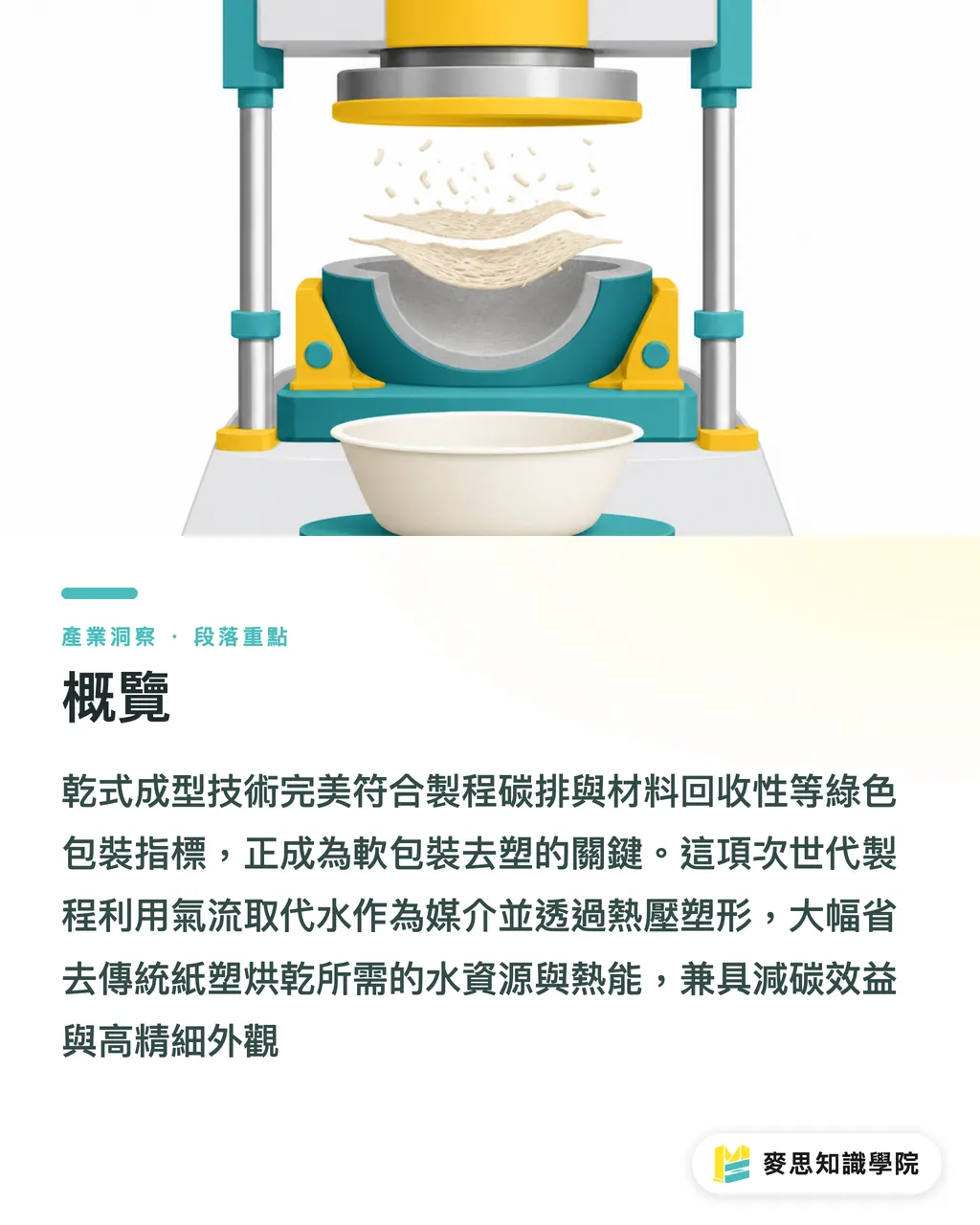
Dry Molded Fiber (DMF): A paper-based forming technology that uses air instead of water as the carrying medium. By thermoforming natural cellulose, it eliminates the massive water and thermal energy required in the drying phase of traditional wet-molded pulp. It is currently a next-generation eco-friendly process that balances carbon reduction with a high-definition, premium aesthetic
Why Is Traditional Molded Pulp Hitting a Wall? What Pain Points Does Dry Molded Fiber Solve?
Working closely with production lines and clients over the years, I often see brands clamoring for pulp packaging while completely ignoring the hidden costs of traditional wet molding
Traditional methods require turning paper pulp into a watery slurry, which is then dried using extreme thermal energy. With energy costs skyrocketing in Europe, this is simply a losing proposition
Dry molded fiber bypasses this absurd cycle of "adding water only to bake it dry" by using airflows and thermal pressing to process natural fibers, directly eliminating the process's biggest carbon and water consumption blind spots
From my firsthand observations, this is not just an eco-friendly PR stunt, it is a calculated decision about manufacturing costs
The French Hébert Group conducted a market analysis as early as 2020. They found that clients' expectations for sustainable packaging had evolved; being simply "plastic-free" was no longer enough, they also demanded fossil-fuel-free production that saved both water and electricity
To this end, they established a dedicated business unit, Herpulp, to focus specifically on this high-end green packaging market
How Did the Hébert Group Achieve Commercial Production of Dry Molded Fiber?
The biggest risk for any new technology is dying in the lab. To cross this valley of death in mass production, deep integration with equipment manufacturers is the only way forward
Hébert built a dedicated facility in 2023 to prevent cross-contamination and introduced ANDRITZ's Dan-Web web-forming technology
This is similar to why I was previously optimistic about Yangi using the Cellera platform to advance dry molded fiber: when a major equipment manufacturer steps in to offer a turnkey solution, it is a strong signal of technology maturity
They did not rush to take on massive orders immediately. Instead, they spent three full years solidifying their foundation
・2023: Established a dedicated facility and ecosystem, introducing the first-generation production line
・2024: A team of experts from ANDRITZ came on-site to complete production line commissioning and stabilize product consistency
・2025: Performed parameter optimization and process upgrades to ensure successful completion of the Site Acceptance Test (SAT)
This timeline provides us with a realistic benchmark: when introducing a breakthrough new material, planning for a three-year transition period is a standard industrial pace
How Should Taiwan's Small and Medium Printers and Brand Clients Respond?
The first wave of applications for a new material usually starts with products that have moderate technical entry barriers
Hébert's current production focus is on fresh food trays and lids, while they are also developing deep-drawn molded products, which are technically more demanding
This means that basic 3D load-bearing containers are already mature enough to serve the mainstream market
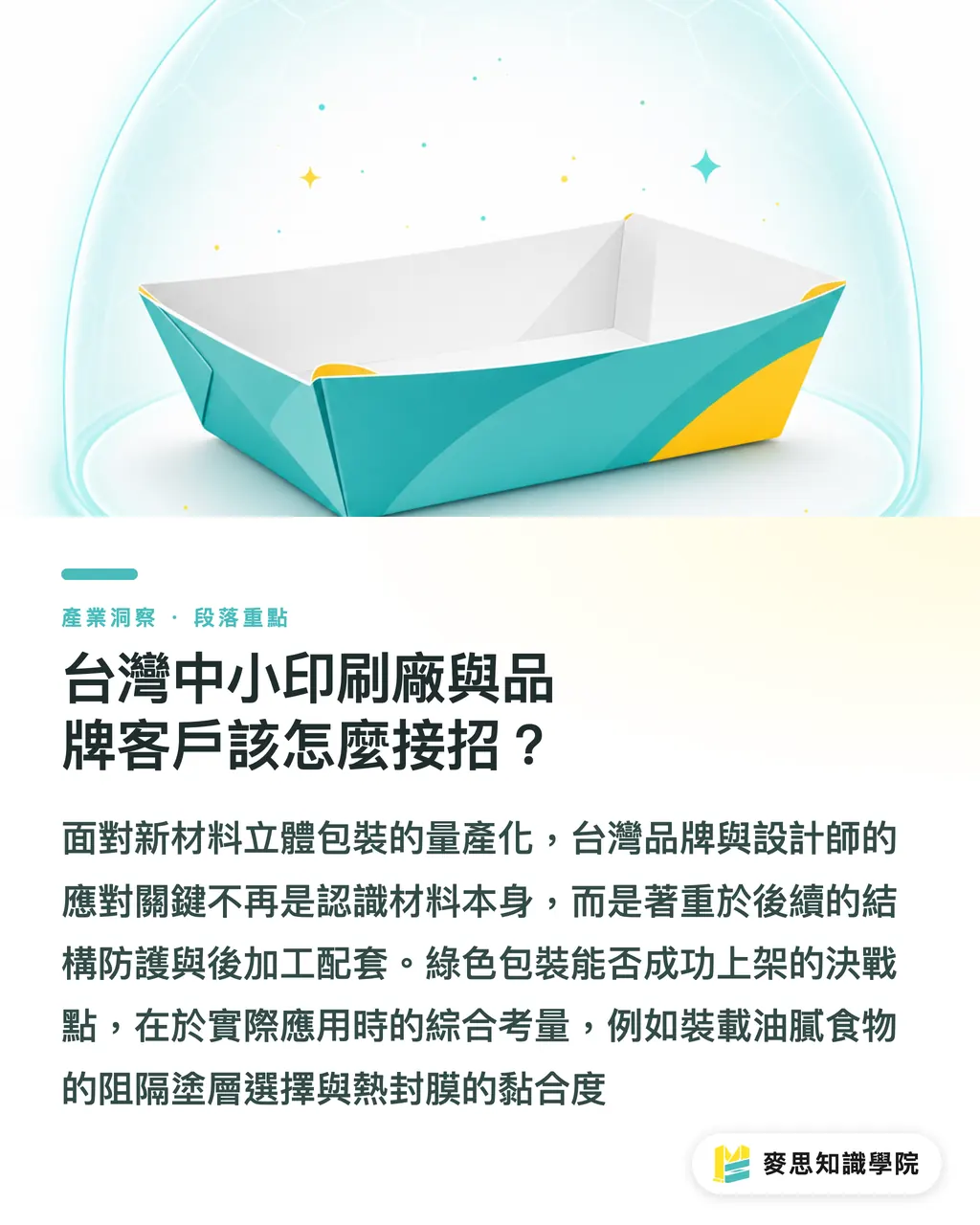
For brand buyers and designers in Taiwan, what they really need to catch up on right now is not memorizing material buzzwords, but understanding the accompanying structures, surface protection, and post-processing integration
When we design mid-to-high-end fully customized commercial packaging for clients at MINDS Printing (MINDS), we typically remind them that the fiber body itself only solves the container problem
Are you packaging fresh food or greasy items? Which barrier coating should you choose? Can the heat-seal film bond securely? These integrated processing considerations are the real battlegrounds that determine whether green packaging can actually make it to store shelves
Key Takeaways
・Dry molded fiber eliminates the energy-intensive loop of "soaking pulp and drying it at high temperatures" inherent in traditional molded pulp, simplifying the process's carbon footprint from the source
・Scaling up requires long-term technical collaboration; it took Hébert and ANDRITZ three years to progress to parameter optimization and Site Acceptance Testing
・Food trays and lids represent the most technologically mature commercial applications today, while deep-drawn molded containers are the next frontier of technical competition
・The core challenge of adopting new paper-based materials lies not in the material itself, but in adapting the subsequent waterproof and greaseproof coatings and structural designs
Further Reflection
From my decade-plus of hands-on experience, the hunt for plastic alternatives has moved past the phase of blind experimentation. What matters now is whose process is more cost-effective
The advent of dry molded fiber has indeed addressed the shortcomings of paper-based packaging in terms of refinement and energy consumption
However, for frontline printers and SaaS tool developers, rather than simply marketing a single material, it is better to invest resources into building a "database of heat-sealing and barrier performance for various coatings on dry molded fiber"
Those who can help brand clients calculate yield rates and precise carbon accounts are the ones who will gain the upper hand in this wave of green material reshuffling
Further Reading
FAQ
- What is dry molded fiber packaging?
- A process that uses airflow instead of water to guide natural cellulose fibers, which are then thermoformed into 3D packaging. This significantly reduces the water and electricity consumption required for drying
- Why are leading international packaging companies moving away from traditional wet-molded pulp?
- Traditional molded pulp requires soaking pulp in water and then baking it at high temperatures. This process has lost competitiveness in markets with strict carbon audits and high energy costs. The dry process directly bypasses this energy-consuming bottleneck
- What packaging products can dry molded fiber currently be applied to?
- The technology can now reliably produce food-grade trays and lids. Industry giants are actively developing more challenging, deep-drawn molded containers
- What should brands consider when adopting dry molded fiber packaging?
- Brands cannot look at the fiber body in isolation. They must simultaneously address the entire system, including waterproof and greaseproof barrier coatings, heat-seal compatibility, and post-processing structural designs
Related articles


The Print × AI weekly
The print and AI know-how designers, brands and enterprises can use before they commit — one email, every week
MINDS Free Tools
AI background removal, a LINE sticker maker, spine & imposition calculators — all free, right in your browser, no upload.
MINDS Group
Need actual printing or gifting services?
From premium printing to online ordering and festive gifts — the MINDS Group sister brands take it from here.