
Overview
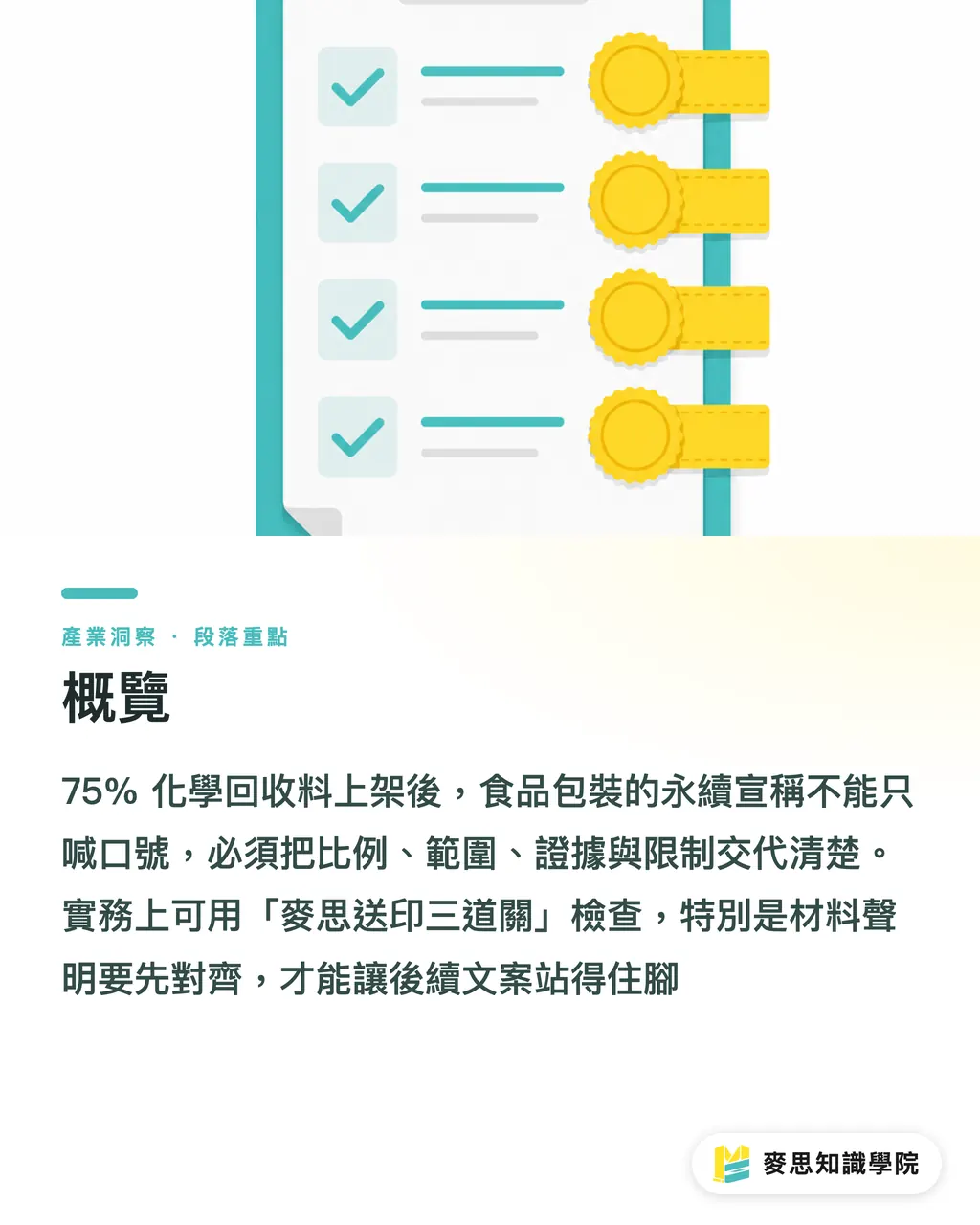
With 75% chemically recycled content on store shelves, standing by sustainability claims on food packaging comes down to stating four things clearly: ratio, scope, evidence, and limitations. When evaluating these projects, I apply the MINDS 3-step pre-print verification: align material declarations first, keep food contact compliance documentation on file, and ensure layout copy never oversteps
What is Actually Going On with 75% Chemically Recycled Content?
Packaging Insights reported on 2026-07-09 that Mondelēz launched Marabou chocolate packaging containing 75% chemically recycled content. That figure turns heads. On the production floor for food packaging, however, you cannot look at 75% alone. You must check whether food contact materials, supply chain proof, mass balance, and packaging labels align with one another. Read the original report here: Mondelēz launches chocolate packaging with 75% chemically recycled content
When reviewing flexible food packaging projects like this, my biggest worry is when a brand puts '75% recycled content' front and center on the main visual before the print vendor tracks down film substrates, inks, adhesives, and food contact documents. That sequence is dangerous. Once packaging goes to print, a single sentence on the layout becomes a shared commitment across procurement, legal, QA, and suppliers
Why Food Packaging Cannot Simply Say 'Contains Recycled Content'
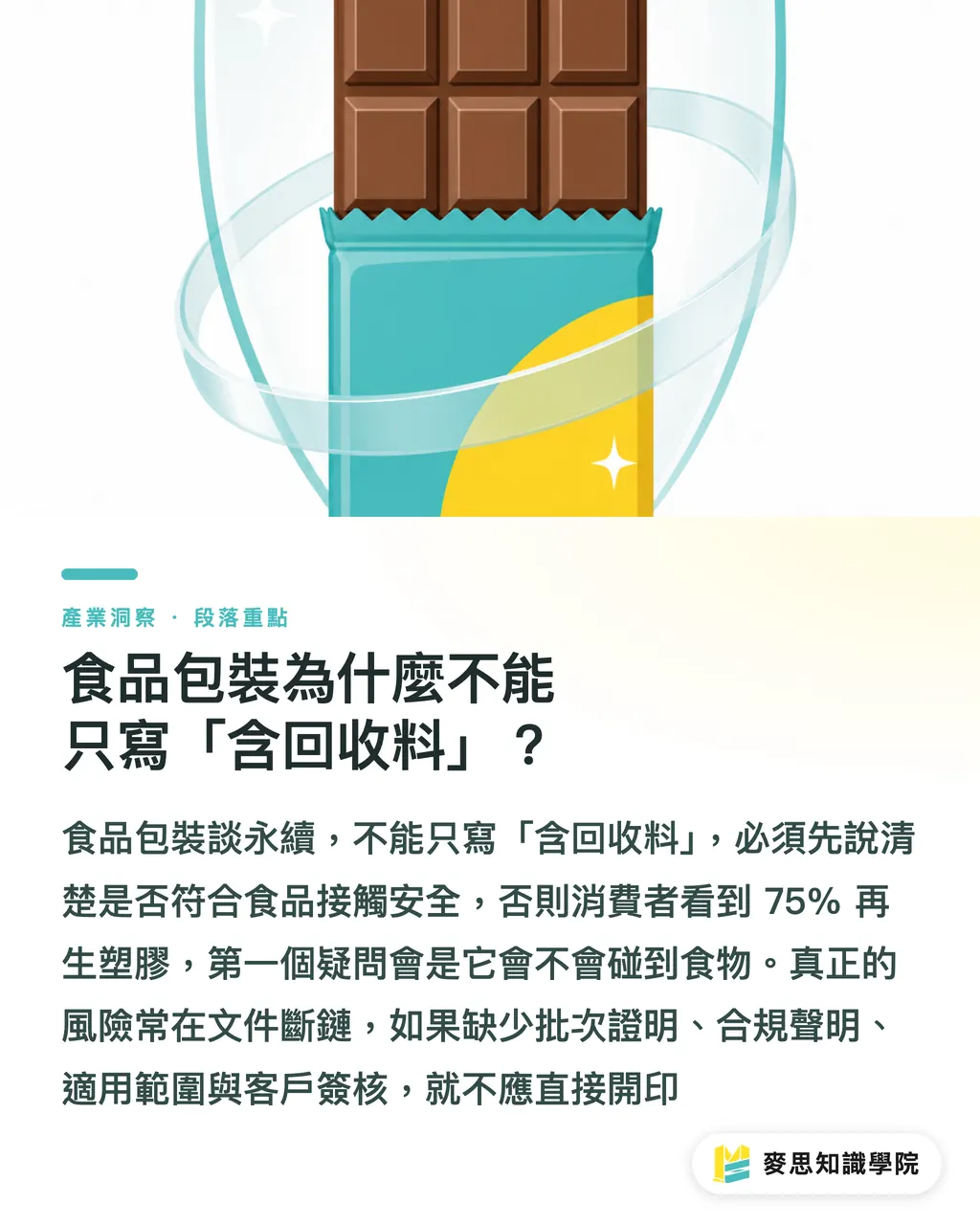
When food packaging involves products like chocolate, sustainability claims must pass food contact safety first before discussing material ratios. When consumers see 'recycled content' on an outer pouch, their immediate reaction is rarely about mass balance. They ask, 'Is this touching my food?' If brand copy fails to explain food contact compliance clearly, that 75% figure creates doubt instead
Common risks in food packaging do not lie on the printing press. They stem from broken documentation chains. The film supplier mentions recycled content, the brand wants to claim sustainable packaging, and the design file prints 'made with 75% recycled plastic.' Yet the print vendor only holds verbal explanations without batch certificates, compliance statements, scope of application, or signed client approvals. I strongly advise against printing projects like this right away
How Should Chemically Recycled Content and Mass Balance Be Framed?
Chemically recycled content: Waste plastics are converted back into oil or monomers through pyrolysis or depolymerization, then remanufactured into plastic feedstock. Whether it works for food packaging depends on food contact compliance and traceability documents
mass balance: When recycled and virgin raw materials mix in the same system, recycled content is allocated through an audited accounting ledger. Copy must clarify that this is an allocated ratio, so readers do not assume every single sheet of film contains the exact same physical amount
I recommend taking a conservative approach with food packaging copy, keeping both the source and scope of the 75% visible
・Acceptable phrasing: This packaging contains 75% chemically recycled content, calculated based on supply chain certification and scope statements
・Acceptable phrasing: Packaging material contains 75% chemically recycled content; food contact suitability is verified by material supplier documentation
・High-risk phrasing: 75% recycled plastic, eco-friendly
・High-risk phrasing: 100% sustainable packaging
・High-risk phrasing: Made with recycled content, does not affect food safety
The flaws in high-risk phrasing are practical. The first fails to clarify how recycled content is calculated. The second overreaches with absolute sustainability claims. The third turns food safety into an unconditional guarantee. To stand up to scrutiny, packaging copy must sound more conservative than a promotional poster and hold more proof than a sales presentation
Which Three Documents Must Small and Mid-Sized Print Vendors in Taiwan Secure First?
When small and mid-sized print vendors in Taiwan take on food packaging jobs featuring 75% chemically recycled content, the MINDS 3-step pre-print verification starts with three specific documents. These three records protect work orders far better than slogans
・Material declaration: Confirm the recycled content ratio, calculation boundaries, batch numbers, or supply period for the film or substrate
・Food contact documentation: Confirm the applicable scope for food contact, including food categories, contact conditions, and relevant limitations
・Layout sign-off: Confirm that every sustainability claim approved by the client matches the wording in supply chain documents
When MINDS handles mid-to-high-end bespoke commercial printing and packaging projects, I advise tying material records and artwork approvals to the exact same work order. Never let artwork proceed to final prepress while QA files are chased after the fact. That retroactive approach exhausts the press floor and creates bottlenecks right before delivery deadlines
How Should Design Files and SaaS Workflows Be Adjusted?
When designers work on food packaging with 75% chemically recycled content, information hierarchy on the layout needs discipline. Main headlines can highlight material progress, subtext should specify the scope, and fine print must list limitations. These three layers must not contradict each other. Above all, headline copy should not imply that 'every single pouch precisely contains 75% recycled plastic' while relegating mass balance details to fine print
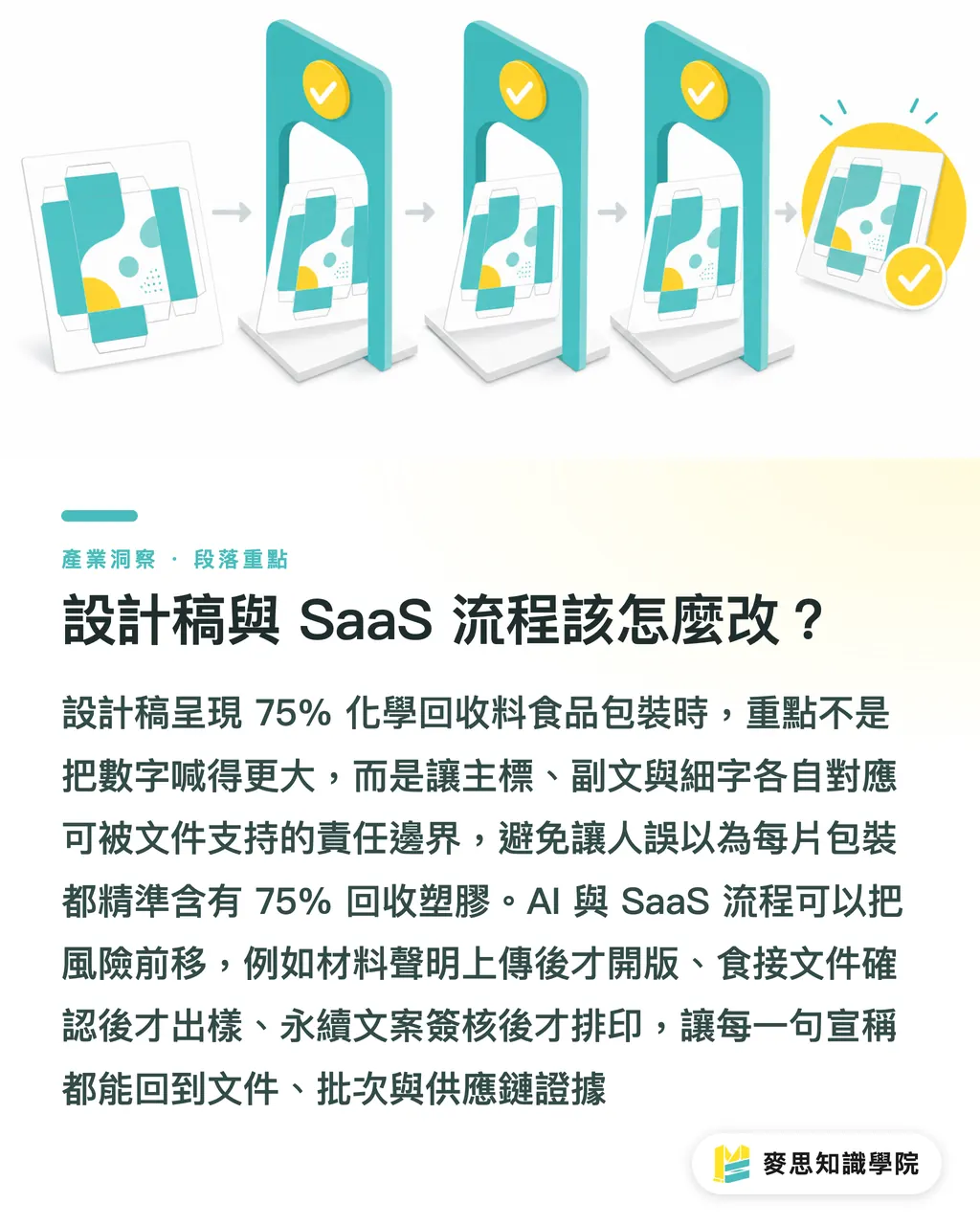
AI and SaaS workflows help print vendors avoid mistakes, but they cannot replace supplier certifications. In practice, work orders can incorporate three checkpoints: make plates only after material declarations are uploaded, produce proofing samples only after food contact files are verified, and schedule printing only after sustainability copy is signed off. When the consulting team at Mai Strategy Knowledge Academy helps brands structure claims, we turn these three checkpoints into a single-page chain of custody checklist
Sustainability claims on food packaging are not about who writes the prettiest copy. They are about writing only what supply chain documents can prove. You can enlarge the 75% figure, provided every single word traces back to documents, batches, and clear boundaries of liability
Key Takeaways
・A 75% recycled content figure turns heads, but without a documentation chain, every word on the layout becomes a risk
・When claiming sustainability on food packaging, clarify food contact safety before discussing material ratios
・mass balance is usable, but phrasing must align procurement, legal, and consumers around the exact same reality
・Print vendors who archive records for films, inks, adhesives, and client sign-offs are protecting their next order
Further Considerations
For print manufacturers, 75% chemically recycled content integrates document management directly into quoting and prepress workflows. For designers, sustainability labeling must shift from catchy slogans to verifiable information. For AI and SaaS teams, the most valuable feature is not helping clients write bolder claims, but flagging which claims lack material declarations, food contact files, or layout sign-offs. A practical next step is building a 'Sustainability Packaging Claims Checklist' that binds the 75% figure, mass balance, food contact compliance, supplier documents, and final artwork files to the same work order
Further Reading
FAQ
- Can food packaging directly state that it contains 75% chemically recycled content?
- Yes, but you must clarify the scope, calculation method, and supply chain proof for that 75%. Food packaging also requires verified food contact compliance files rather than simply highlighting the percentage
- What is the difference between chemically recycled content and standard PCR?
- Chemically recycled content generally refers to waste plastics processed chemically back into oil, monomers, or plastic feedstock. PCR is commonly understood as post-consumer recycled material. When writing food packaging claims, avoid confusing the two in a single statement
- Does mass balance make sustainability claims unreliable?
- Mass balance itself is not the problem. The issue is whether copy clearly explains allocation ratios and verification logic. If copy leads consumers to believe every sheet of film physically contains the exact same amount of recycled material, it increases misleading risk
- What should Taiwanese print vendors do first when taking on these food packaging projects?
- Gather material declarations, food contact files, and layout sign-offs from the client and material suppliers before making plates and printing. Keep records for inks, adhesives, films, and client sustainability statements
- How can designers write copy safely?
- Designers can use headlines to point out material progress, subtext to explain the applicable scope, and fine print to detail limitations. Avoid statements like '100% sustainable' or 'eco-friendly' that lack proof boundaries
Related articles


The Print × AI weekly
The print and AI know-how designers, brands and enterprises can use before they commit — one email, every week
MINDS Free Tools
AI background removal, a LINE sticker maker, spine & imposition calculators — all free, right in your browser, no upload.
MINDS Group
Need actual printing or gifting services?
From premium printing to online ordering and festive gifts — the MINDS Group sister brands take it from here.