
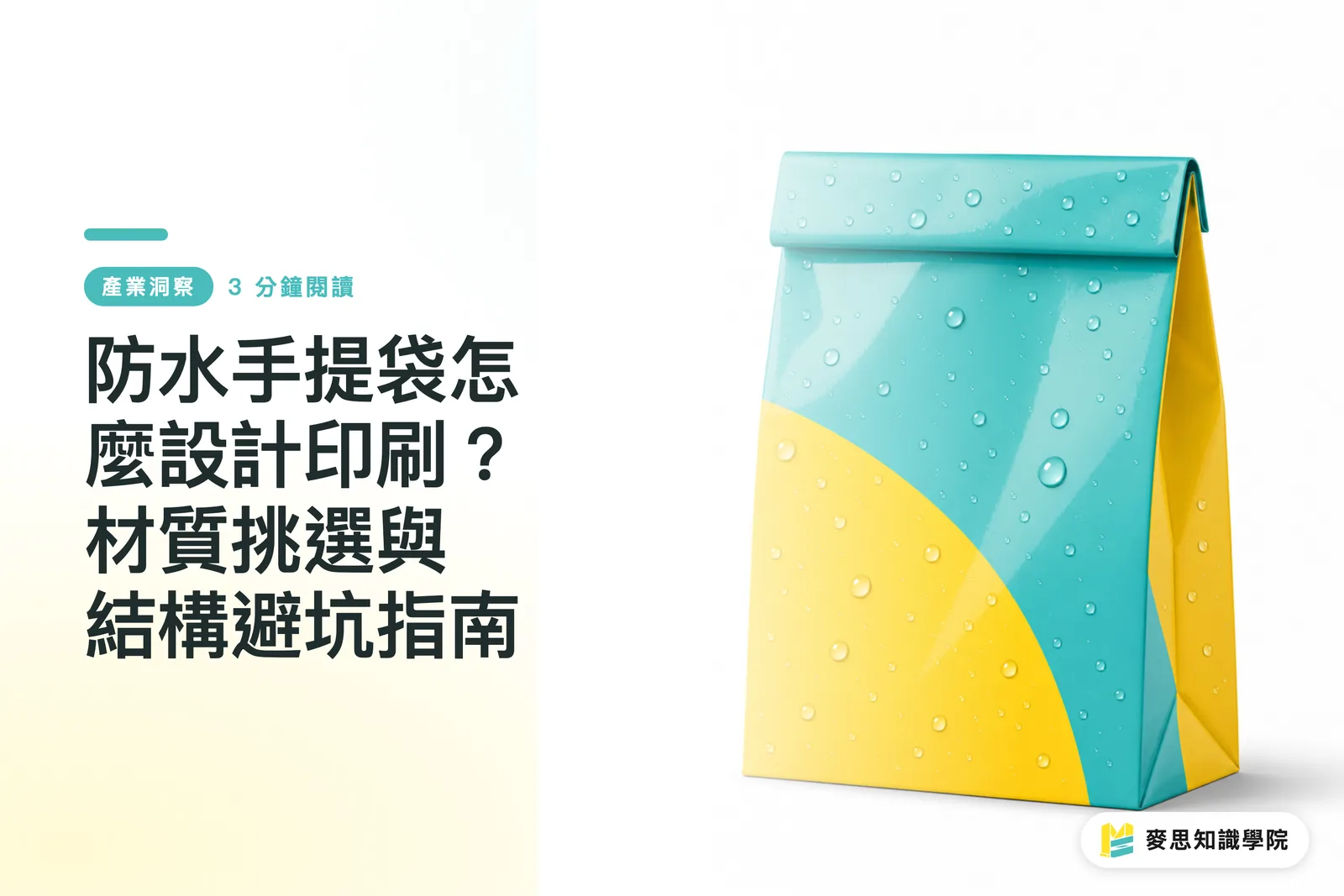
Why Paper Bags Tear at the Bottom and Handles Snap When Wet
The core solution for waterproof tote bags lies in blocking moisture from destroying the long-fiber toughness of the paper, while reinforcing the physical limits of the load-bearing structure
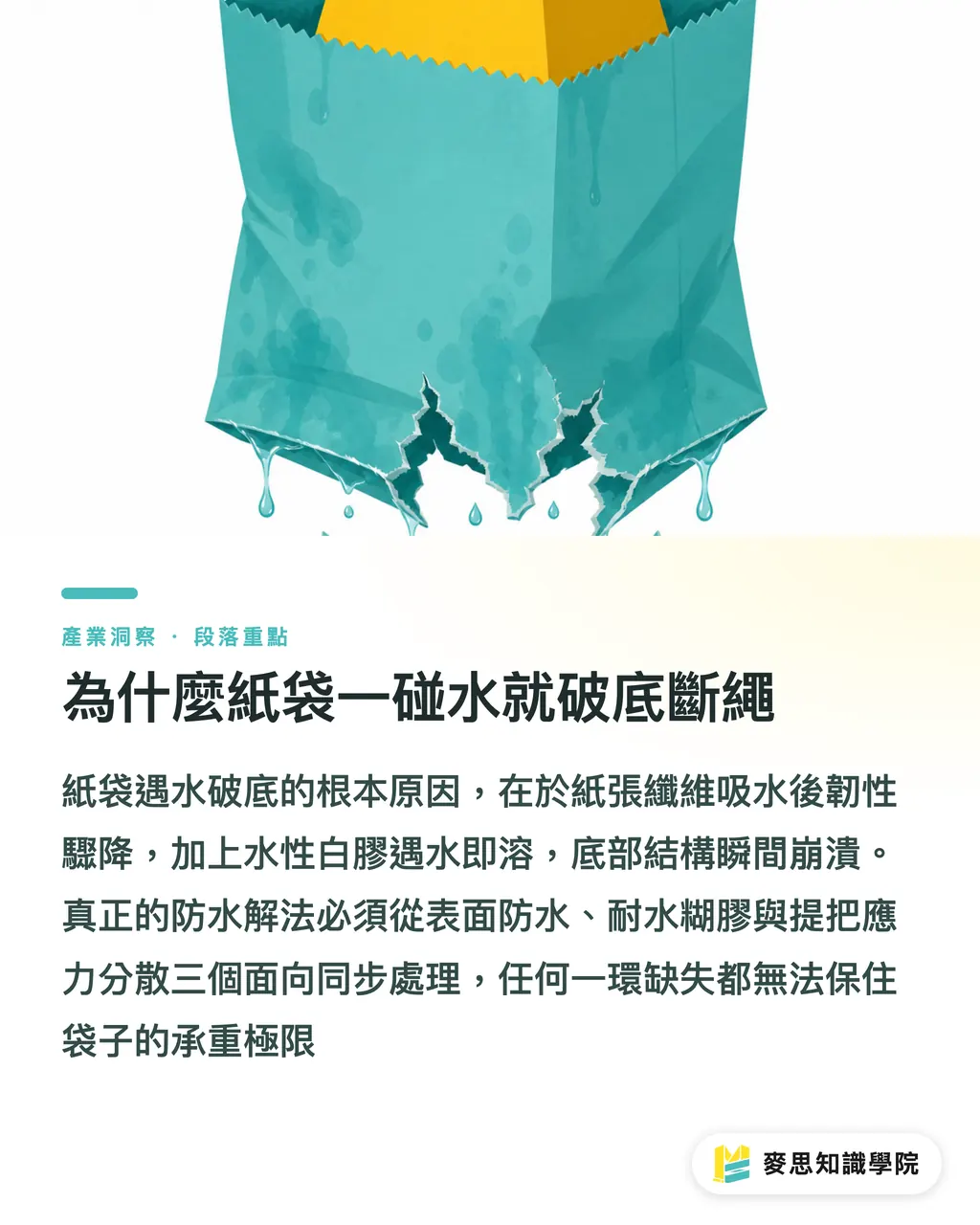
In my over a decade of hands-on printing experience, clients' absolute worst nightmare is having high-value goods inside a bag that suddenly breaks at the bottom and falls on a rainy day. Standard paper bags tear when wet because the paper fibers swell and loosen upon absorbing water, causing a catastrophic drop in tensile strength. Also, traditional paper bags typically use standard water-based white glue for the bottom and side seams. Since this type of glue dissolves instantly upon contact with water, the bottom naturally disintegrates in a flash
To address this pain point, we must tackle three dimensions simultaneously: surface waterproofing, glue selection, and handle stress distribution. None of these can be omitted
Choosing Waterproof Paper Bag Materials: Lamination, Synthetic Paper, or Stone Paper?
Choosing the right material is half the battle won. Depending on your waterproofing requirements and budget, there are three mainstream solutions currently most common on our production lines:
・Single- or Double-Sided Lamination: The most common approach. Select 150g to 250g art paper or single-sided coated paper and apply a glossy or matte lamination film on the surface. While it resists direct rain wash, water can still seep in through the handle holes or the cut edges of the paper
・Synthetic Paper Printing: The material itself is PP or PE plastic, but the surface is treated to give it a paper-like texture and printability. This is truly 100% waterproof and tear-resistant, making it ideal for chilled foods or heavy items
・Stone Paper Applications: Primarily made from pressed stone powder and a trace amount of resin. It offers excellent water resistance and requires zero deforestation during manufacturing. However, the paper itself is heavy and the ink takes longer to dry, meaning it requires a facility equipped with UV printing presses to execute perfectly
Building Structural Defenses: Handles and Bottom Gluing
Even with waterproof materials, it is all for nothing if the structural design fails to keep up. Once moisture seeps through the cracks, the bag will still disintegrate at its weakest points:
・Complete Gluing Upgrade: Traditional water-based glues must never be used for waterproof bags. You must switch to high-viscosity hot melt adhesives or specialized waterproof glues to ensure that the bottom board and side seams remain tightly bonded even when damp
・Handle Hole Reinforcement: The punched rope holes bear the greatest stress on the entire tote bag. We highly recommend adding brass eyelets (grommets) or placing high-grammage reinforcement cards on the inside to prevent water from penetrating through the cut edges and weakening the paper
・Avoiding String Pitfalls: For maximum waterproofing, avoid paper twisted ropes or cotton cords that easily absorb water. Instead, opt for PP webbing, Tetoron ropes, or PVC tube handles to ensure durability and a secure grip
Can Eco-Friendliness and Waterproofing Coexist? Real-World Applications of Plastic-Free Coatings
Meeting with European and American clients over the past few months, the most common conflict we encounter is when a brand simultaneously demands '100% recyclable paper material' and 'waterproof durability.' This is practically a nightmare for pre-press structural design because paper bags laminated with plastic film are difficult to recycle directly
Looking at recent practical solutions on the production line, more and more brands are switching to water-based water-repellent coatings to replace traditional plastic lamination
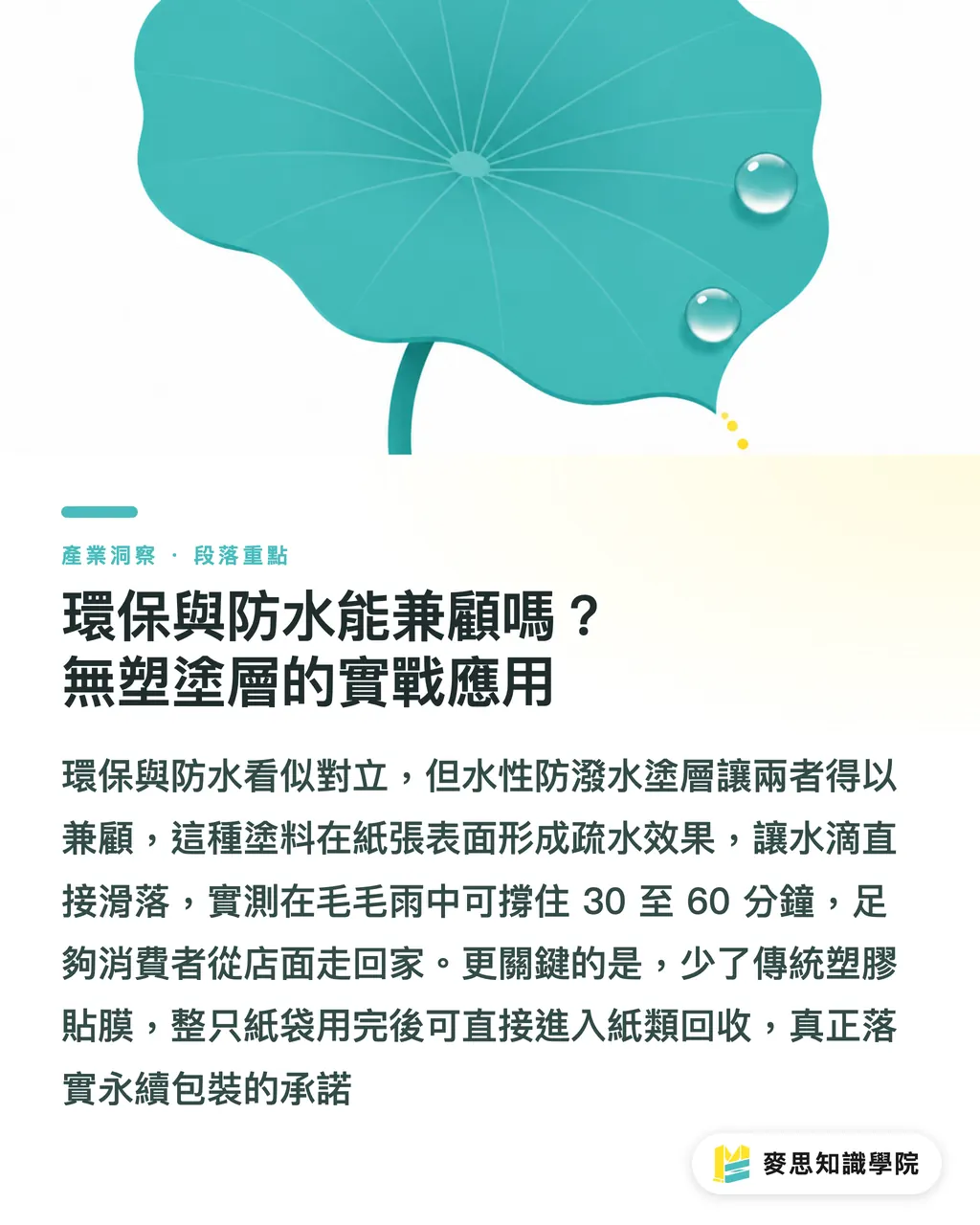
・Lotus Effect on the Surface: This eco-friendly coating creates a hydrophobic effect on the paper surface similar to a lotus leaf, causing water droplets to slide right off
・Buying Commute Time: According to our recent prototyping tests, this type of coating can withstand light drizzle for about 30 to 60 minutes without penetration, which is just enough to cover the consumer's commute from the store to their home
・True Plastic-Free Recycling: Without the plastic film layer, the entire paper bag can be thrown directly into paper recycling after use, aligning perfectly with recent global packaging sustainability trends
Key Takeaways
Waterproofing goes beyond surface level; switching to hot melt adhesive is the invisible key to preventing the bottom from breaking
Synthetic paper and stone paper can achieve 100% waterproofing, but you must evaluate ink drying times and machinery limitations
Under the pressure of plastic-free environmental regulations, water-based water-repellent coatings offer the best compromise for rain protection and recyclability
Further Thoughts
For designers and print buyers, every waterproof tote bag order is an exercise in risk management. Don't focus solely on the front key visual; always confirm the type of glue and handle reinforcement structures with the printer before going to press. The integrated services of MINDS MINDS Printing can eliminate these hidden landmines right at the initial white sample structure phase. In the future, as sustainability regulations become stricter, the cost and recycling barriers for traditional laminated paper bags are bound to rise. Early adoption of water-based coatings or single-material structures is the true path to long-term profitability for brand packaging
FAQ
- Do waterproof tote bags have to be laminated?
- Not necessarily. If you only need to protect against light drizzle or brief moisture, you can switch to water-based water-repellent coatings. This not only preserves the natural feel of the paper but also makes it 100% recyclable
- Why did the laminated paper bag I made still break at the bottom on a rainy day?
- This is usually because the printer used ordinary water-based white glue. Although the surface is waterproof, rainwater can seep into the bottom through the folds and seams. Once the water-based white glue meets water, it dissolves, causing the bottom to break. The solution is to switch to hot melt adhesive
- What is the safest material to choose for chilled food tote bags?
- We highly recommend using synthetic paper directly. Chilled goods produce a large amount of condensation as they thaw. Synthetic paper is inherently water-resistant and tear-proof, completely eliminating the risk of paper fibers absorbing water and softening
Related articles
The Print × AI weekly
The print and AI know-how designers, brands and enterprises can use before they commit — one email, every week
MINDS Free Tools
Spine width and imposition calculators — skip the manual math, free in your browser.
MINDS Group
Need actual printing or gifting services?
From premium printing to online ordering and festive gifts — the MINDS Group sister brands take it from here.