

What Exactly Is Warping, and Why Does It Always Show Up Right Before Shipping?
Warping happens when the ends of paperboard or sheets curl upward or downward. They will not lie flat, they will not stack evenly, and they jam the cartoning machine immediately. Many plant owners blame the raw paper right away, but the root cause is almost always uneven moisture. When two sides of a sheet or two liners in a board carry different moisture levels, they shrink at different rates as they dry. The board then curls to one side just like a piece of sunbaked lumber
Sheets Unlimited, an independent sheet plant near Seattle, ran directly into this problem. They source containerboard from multiple mills, so paper quality, moisture content, and fiber profiles vary from batch to batch. Standard corrugator controls struggle to handle that kind of variation. Warping became unpredictable, hurting conversion yields and customer satisfaction. This issue is especially common for sheet plants that buy paper from multiple suppliers
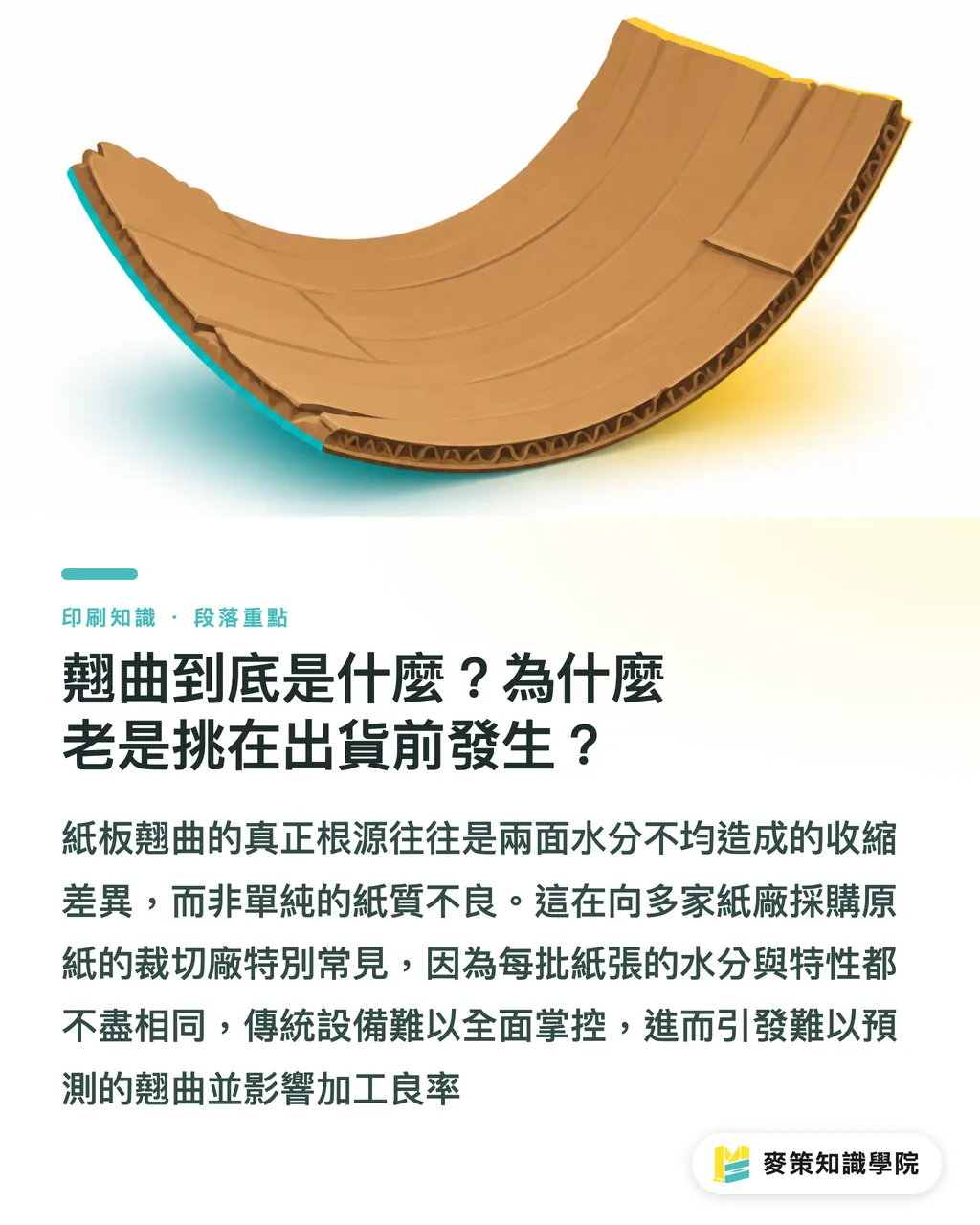
How Does the Valmet IQ System Tackle Warping at the Source?
Instead of waiting for warped sheets to come out and sorting them by hand, the Valmet IQ Quality Control System ties directly into the corrugator's existing heating elements. It measures sheet temperature, moisture balance, and total moisture in real time. The moment it detects uneven moisture, it makes automatic adjustments to stop warp before it forms
Krist Leland, Director of Manufacturing at Sheets Unlimited, noted that they decided to install the system after seeing it run at a plant in Europe. What convinced them was its ability to tackle uneven moisture at the source. David Maddux, North American Sales Manager for Automation at Valmet, pointed out that the system stabilizes the corrugating process, delivers more uniform board quality, reduces operator workload, and cuts down on material waste
・Monitoring: Tracks sheet temperature, moisture balance, total moisture, and warp levels simultaneously
・Control: Connects to existing heating elements for automatic adjustments, eliminating the need to replace the entire corrugator
・Results: Improves yield, cuts waste, and reduces the burden of manual visual inspection
What Does This Mean for Packaging and Box Plants in Taiwan?
The takeaway is simple: warping is not just a machine issue, but a reflection of moisture management across the entire supply chain. Many box plants and corrugated converters in Taiwan also buy paper from multiple mills. During rainy seasons or when mixing different raw paper lots, complaints about warping spike. This is fundamentally the exact same issue Sheets Unlimited faced: the more diverse your paper sources, the harder it is to hide moisture variations
On actual production floors, the most common fix I have seen is relying on veteran operators to tune machines by feel, while QA staff stand at the delivery end sorting boards by eye. That works fine when orders are small and paper sources are simple. Once order volume grows and batches get mixed, missed defects increase, and scrap rates and customer complaints climb right along with them
What Should Plants Without the Budget for a Full System Do?
Not every plant needs to install a full quality control system right away. Automation investments of this scale require careful evaluation of machine capacity, order structures, and payback periods. For small and mid-sized plants without enough volume, rushing into capital expenditure just creates unnecessary financial strain
A more practical approach is taking it in stages:
・Log incoming moisture data first, keeping separate records for each paper mill and batch
・Increase manual spot-check frequency at turns and before stacking to catch high-risk batches early
・Negotiate consistent supply batches with key paper mills to reduce batch-to-batch moisture variation
・Evaluate investments in automated moisture control only after order volume stabilizes and warp-related complaints reach a clear threshold
The logic behind this order is straightforward: understand what causes the warp before spending money on automation. More expensive equipment does not automatically mean a better outcome
Why Does This Matter for Printers and Brand Owners?
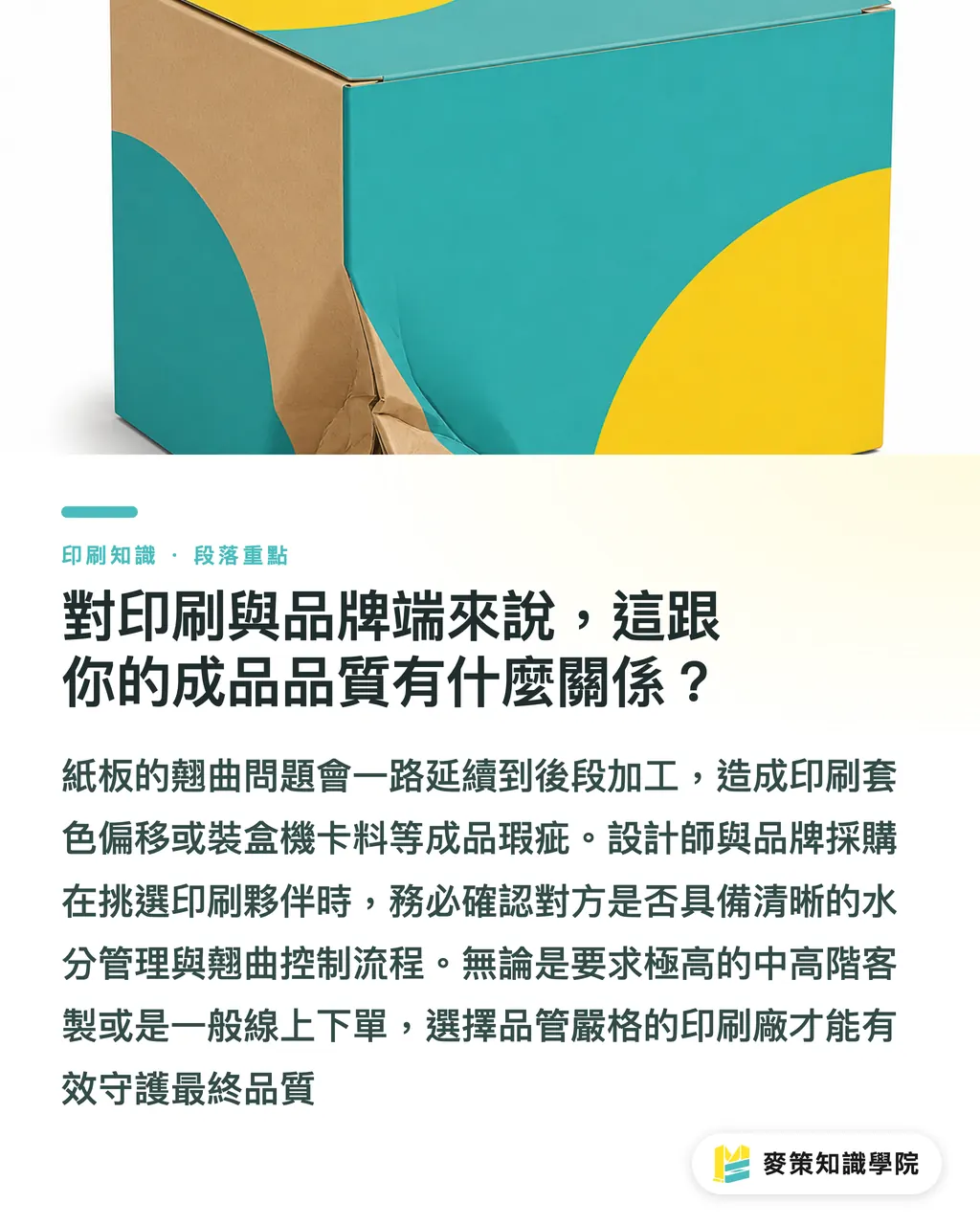
Warping does not stop at the corrugating plant. It travels downstream through laminating, gluing, and post-press finishing, eventually turning into defective packaging in the hands of your brand clients. Warped board makes laminated stock uneven, creates color registration drift or uneven print impression on bumpy surfaces, and frequently jams automated cartoning lines
If you are a designer or brand buyer, ask your print partner how they handle paper moisture and warp control. Not every shop needs top-tier automated equipment, but they should have clear inspection procedures. For commercial printing projects that demand strict flatness, you can look at the quality control workflows at MINDS for mid-to-high-end custom print jobs. For short-run, price-sensitive online orders, the standardized processes at MINDS Print also help minimize the risk of warp-related rework
Key Takeaways
・Nine times out of ten, warping is not bad paper; uneven moisture is the real culprit
・Valmet IQ uses real-time monitoring and automated adjustment to control warp at the root instead of sorting bad sheets afterward
・Multi-mill sheet plants and small-to-mid Taiwanese box makers face the same challenge: once batches get mixed, moisture variations become impossible to hide
・Before reaching sufficient order volume, logging incoming moisture and grading batches through spot checks is far more practical than buying heavy equipment
・Warping travels all the way to printing and cartoning lines, so it pays to ask potential print partners about their quality control process
Further Thoughts
This case offers a valuable lesson for packaging and printing plant owners in Taiwan: when planning automation investments, diagnose the root cause before spending money, never the other way around. If your plant receives frequent warping complaints, spend a week recording moisture data across different mills and batches. That alone will usually reveal whether the problem comes from procurement or your production line. For brand buyers and designers, asking a printer how they manage moisture and warping tells you far more about their technical foundation than any price quote ever will
Further Reading
FAQ
- What mainly causes corrugated board warping?
- It is mostly caused by uneven moisture. When moisture levels differ between the two sides of a board or between batches of raw paper, varying shrinkage rates during drying cause the board to warp, rather than simple paper defects
- How does the Valmet IQ Quality Control System work?
- It connects to existing heating elements on the corrugator to monitor sheet temperature, moisture balance, total moisture, and warp levels in real time. The moment uneven moisture is detected, it adjusts automatically, controlling warp at the source instead of sorting defects after production
- Is it practical for small to mid-sized Taiwanese box plants to adopt this kind of automated quality control system right away?
- Not necessarily. Capital investments like this require evaluating equipment scale, order profiles, and payback periods. Before reaching sufficient volume, starting with incoming moisture logs and spot-check grading is much more practical
- Does board warping affect downstream printing or cartoning?
- Yes. Warped board makes laminated sheets uneven, leading to color registration issues or uneven print pressure. It also causes jams in cartoning machines, carrying defects all the way to the finished product
Related articles


The Print × AI weekly
The print and AI know-how designers, brands and enterprises can use before they commit — one email, every week
MINDS Free Tools
AI background removal, a LINE sticker maker, spine & imposition calculators — all free, right in your browser, no upload.
MINDS Group
Need actual printing or gifting services?
From premium printing to online ordering and festive gifts — the MINDS Group sister brands take it from here.