
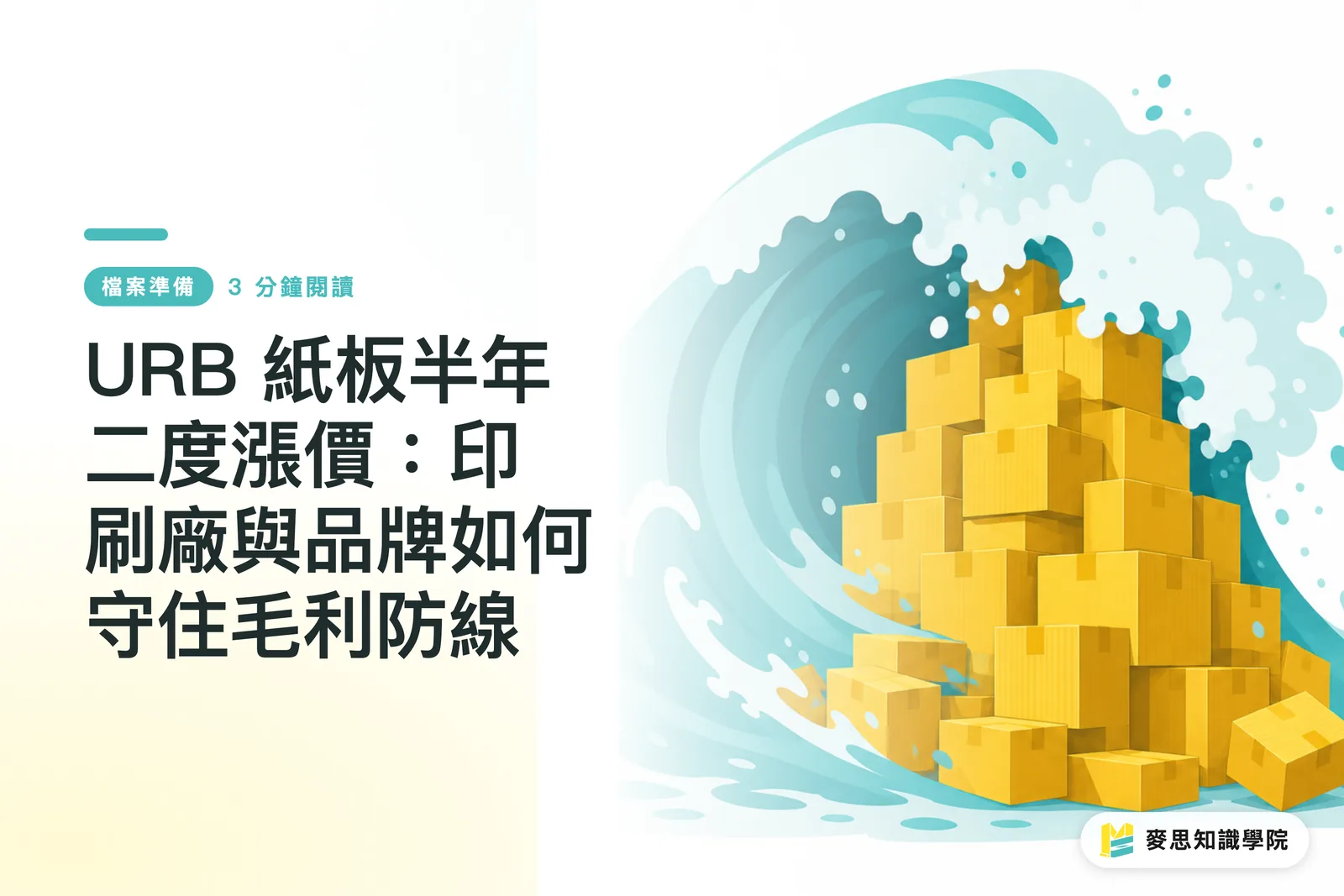
Why URB Board Prices Have Hiked Twice in Six Months
The first half of 2026 has been extremely difficult for packaging production lines. We just weathered a cost increase in Q1, and now URB (Uncoated Recycled Board) manufacturers have initiated a second round of price hikes
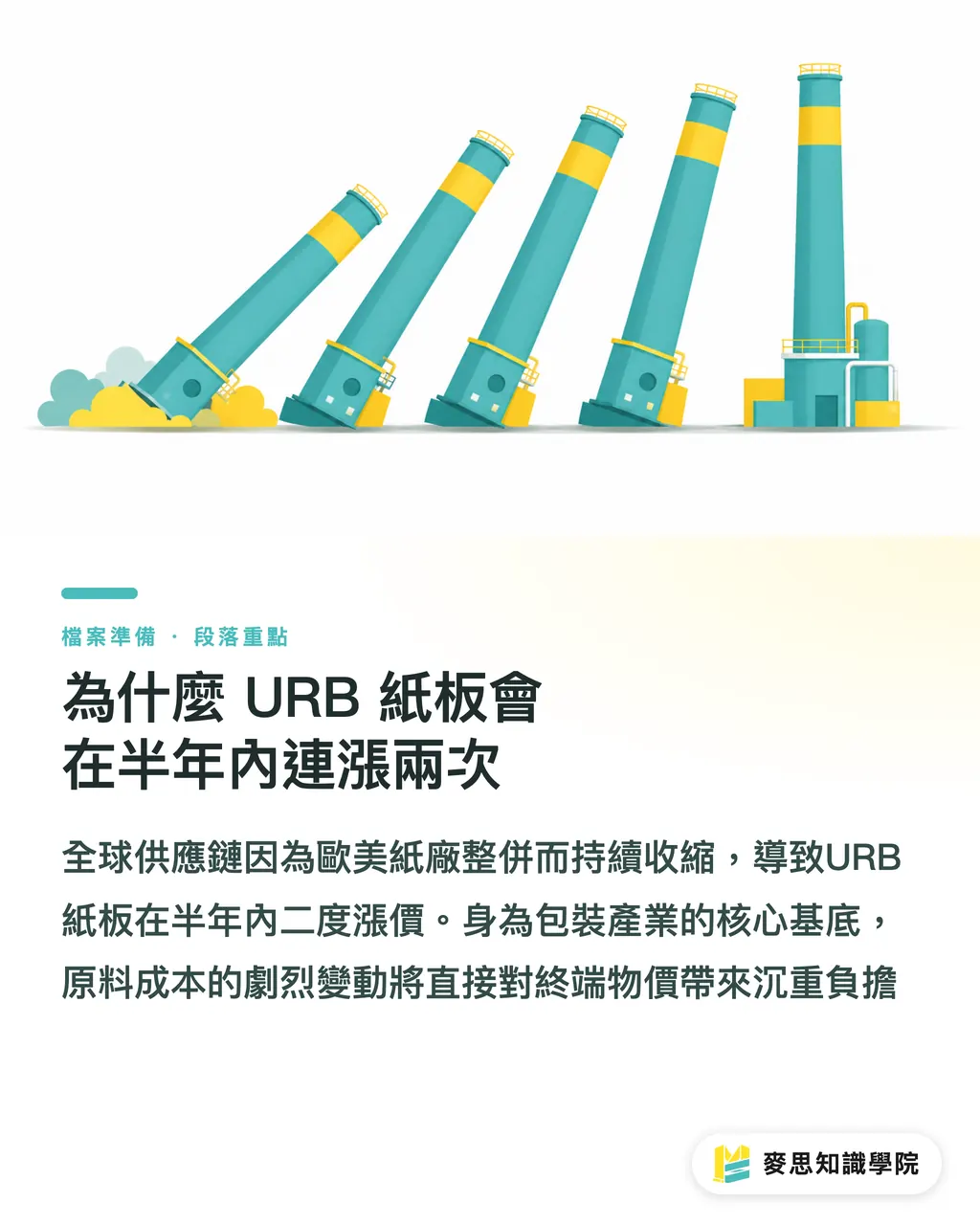
This is not a coordinated gouging by a single material supplier, but a concrete reflection of a shrinking global supply chain
From the U.S. to France, we have seen a domino effect of paper mill consolidation and closures over the past few months. Reduced production capacity has naturally driven up base material prices
URB is the foundation for corrugated boxes, food packaging, and industrial packing materials. When this 'foundation' rises in price, the defensive line for downstream retail pricing is bound to face extreme testing
How to Draft Quotes and Procurement Contracts Without Taking a Loss
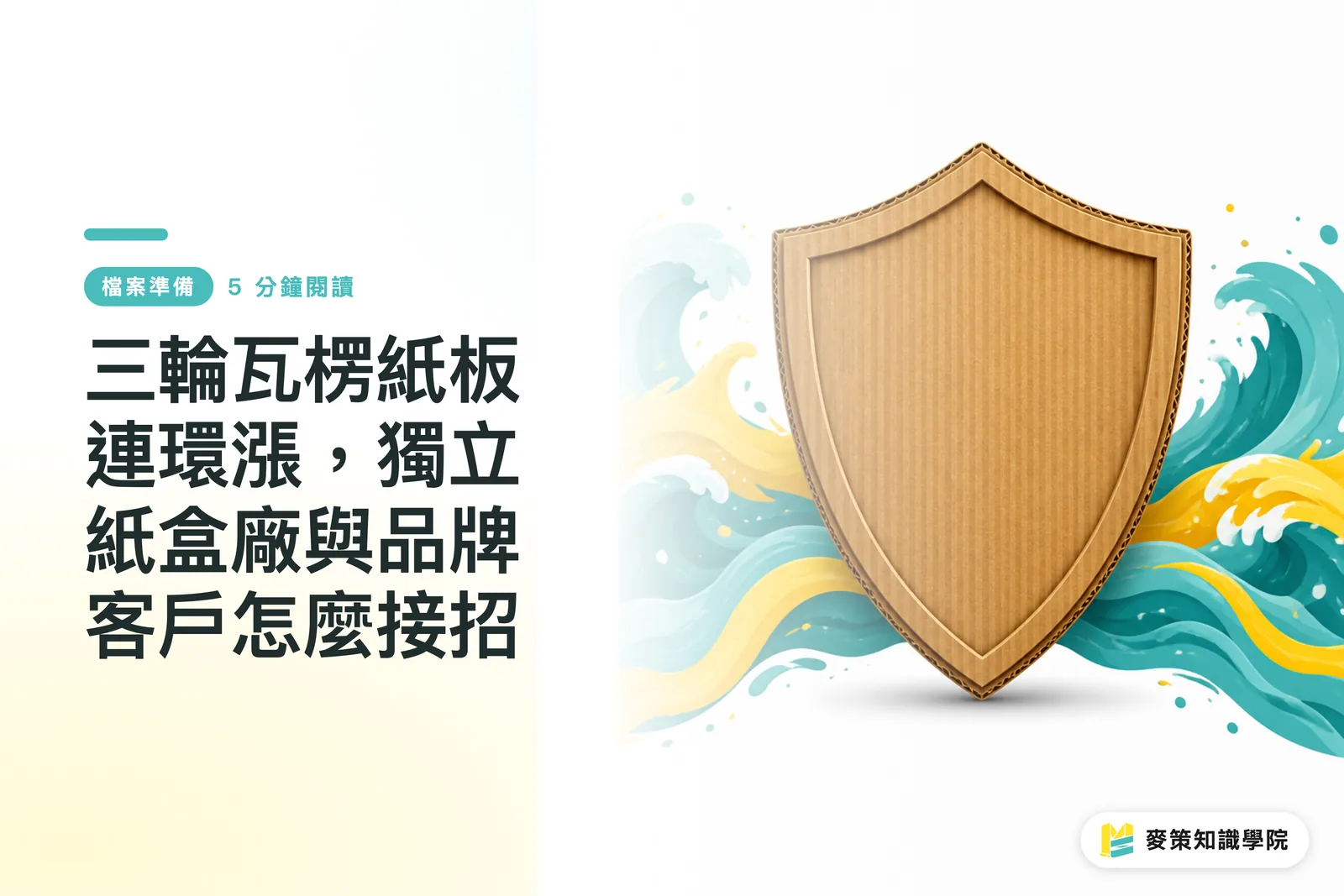
Facing this continuous tidal wave of costs, the 'annual fixed-price contract' that small and medium-sized Taiwanese printing plants were accustomed to has now become poison that erodes profits
Over the past two months, as I have reviewed project contracts for several clients, the most urgent adjustment is the introduction of a flexible pricing mechanism
・Shorten quote validity: Aggressively reduce the period from the traditional 30 days to 7 to 14 days
・Establish raw material linkage clauses: State clearly in the contract that when the price of URB or corrugated base paper exceeds a certain percentage, a price renegotiation mechanism is automatically triggered
・Price splitting for split deliveries: Long-term orders must be billed based on paper price fluctuations at the time of each batch's production, no longer absorbing unrealized costs months down the line
Brand Response: Shrink Packaging to Protect Profits or Pivot to Alternative Materials
As raw materials become more expensive, brand clients react the most directly. Recent projects brought to us for prototyping are focused entirely on cost-saving strategies
Coupled with the backdrop of the U.S. May CPI hitting a three-year high, brands now have two clear paths for transformation
・Physical reduction: Through structural redesign, make packaging smaller and reduce die-cutting waste to directly hedge against the impact of rising board prices
・Pivot to high-spec compliant materials: Take this opportunity during material switching to avoid chemicals like PFAS, which are under strict scrutiny by the U.S. 'No Toxics in Food Packaging Act.' Use safe, non-toxic upgrades to replace simple cost-cutting
When material costs can no longer be squeezed, starting from structural design and regulatory foresight is the only solution for brands to maintain competitiveness
Defensive Actions Taiwanese Printing Plants Should Initiate Now
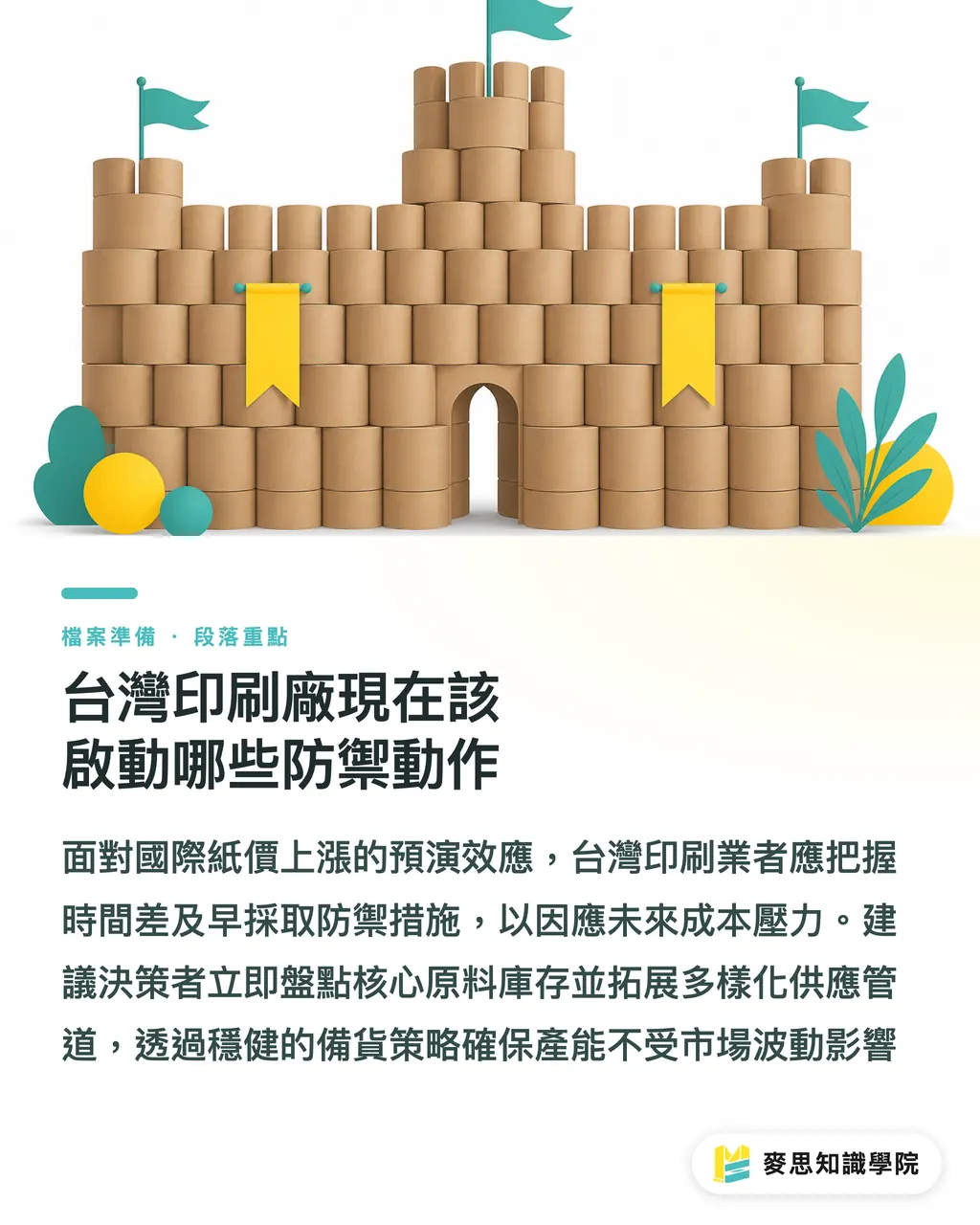
Historical data tells us that paper price fluctuations in Europe and the U.S. are usually a preview of what will hit Taiwan's imported paper prices 3 to 6 months later
Before this wave of price hikes completely inundates the local market, as a decision-maker, you should audit several practical actions today
・Re-evaluate standing paper inventory: Secure a reasonable safety stock for one to two quarters for high-frequency URB specifications
・Develop a list of alternative paper mills: Don't rely on just one supplier; immediately connect with a second or even third backup source
・Use digital proofing and precision software: Reduce trial-and-error waste on the production line, turning every inch of expensive board into monetizable capacity
Key Takeaways
・The second URB price hike in six months is a structural result of shrinking capacity; the traditional annual fixed-pricing model can no longer bear current risks
・Printing plants must mandate the introduction of short-term quotes and raw material linkage clauses in contracts to establish clear profit firewalls
・Brands should take this opportunity to review packaging structures, hedging against cost pressure by reducing volume or upgrading to non-toxic, compliant materials
・Changes in European and American paper mills are a leading indicator for the local market; starting material stockpiling and finding backup suppliers 3 to 6 months in advance is the right strategy
Extended Thinking
The greatest takeaway from this URB price hike wave is that the packaging supply chain is shifting from a 'price war' to an 'agile war'
For the MINDS team and SaaS service providers, this is an excellent entry point. We can help printing plants introduce systematized cost estimation and real-time quote update mechanisms
When business teams can precisely control the real-time profit margin of every order through tools, they can turn material crises into a driving force to accelerate production line digital transformation
Further Reading
FAQ
- Why is URB recycled board hiking in price repeatedly this year?
- It is mainly due to the shrinking global supply chain and the consolidation/closure of paper mills in Europe and the U.S. Combined with the fact that demand for corrugated boxes and packaging remains unmet after the Q1 price hike, this has directly pushed up base material prices
- How can small and medium-sized printing plants avoid having profits eaten by material costs?
- They should immediately abolish long-term fixed quotes, shorten the validity of quotes to 7 to 14 days, and force the inclusion of price renegotiation clauses linked to raw material fluctuations in long-term contracts
- What coping methods do brand clients have when packaging costs rise?
- They can redesign packaging structures to reduce volume and save materials, or take the opportunity to switch to upgraded materials that comply with non-toxic regulations, moving beyond a simple cost-cutting war
References
- URB producers second price increase announcement 2026 · packagingdive.com
Related articles
The Print × AI weekly
The print and AI know-how designers, brands and enterprises can use before they commit — one email, every week
MINDS Free Tools
AI background removal, a LINE sticker maker, spine & imposition calculators — all free, right in your browser, no upload.
MINDS Group
Need actual printing or gifting services?
From premium printing to online ordering and festive gifts — the MINDS Group sister brands take it from here.