
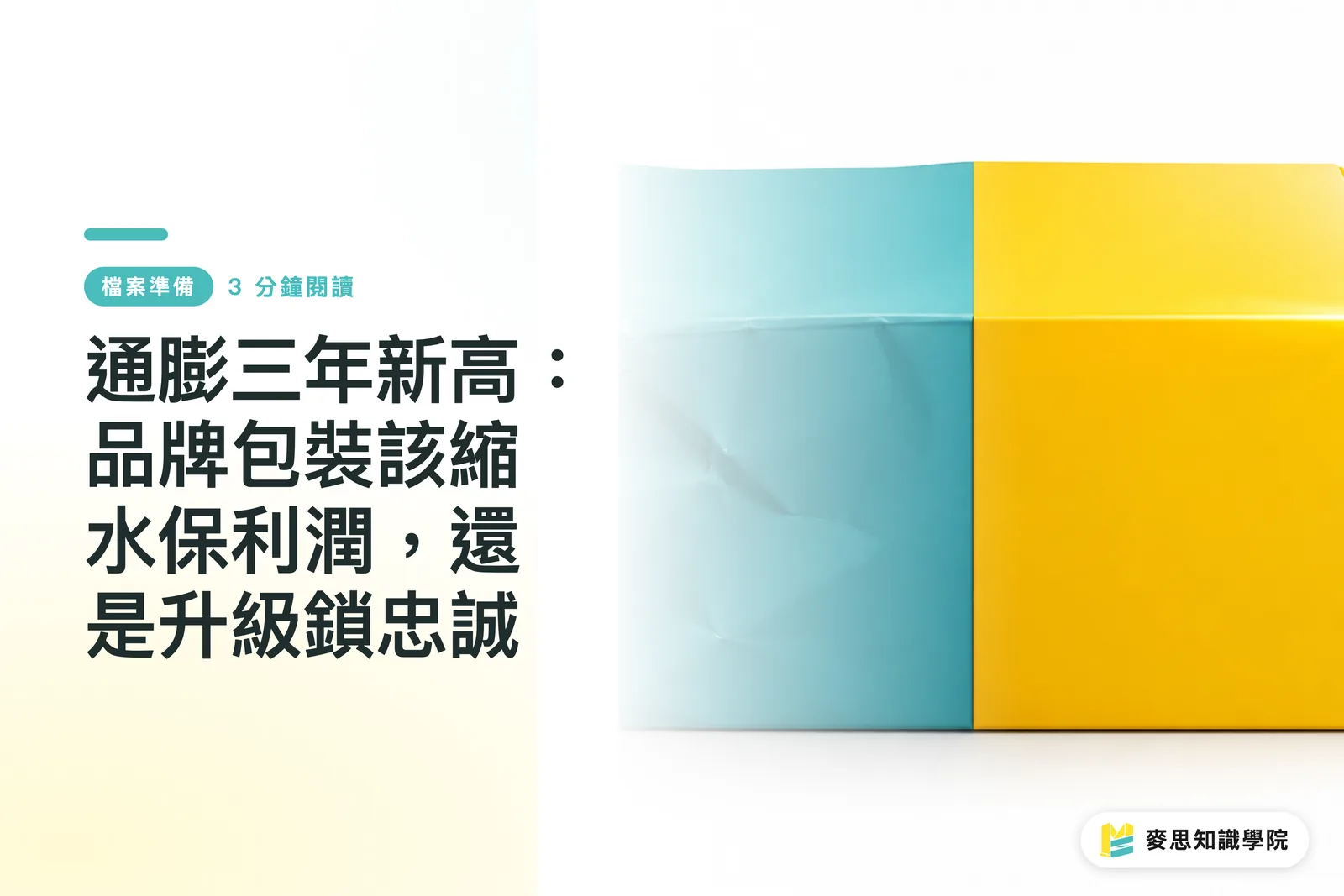
Why Brands Are Rushing to Downsize Packaging Amid Rising Material Costs
In recent weeks, clients coming to us for sample evaluations have been obsessed with one question: "How can we save more?"
According to the latest data from May 2026, the U.S. CPI has soared to a three-year high. This inflationary wave is directly reflected in the price quotes for pulp and packaging consumables, sounding alarms for many CPG (Consumer Packaged Goods) brands
Market observations from Packaging Insights show that the dairy and retail sectors are adopting "value formats" in large numbers
To put it bluntly, this is the "shrinkflation" we hear so much about: keeping end-user prices the same while safeguarding profit margins by downgrading packaging specifications
This "downgrade-to-maintain-price" strategy manifests in several specific ways on the production line:
・Reducing actual volume or switching to multi-pack formats with smaller units
・Lowering paper grammage, such as switching from 350g to 300g cardstock
・Simplifying structural design by cutting unnecessary inserts and excess gluing processes
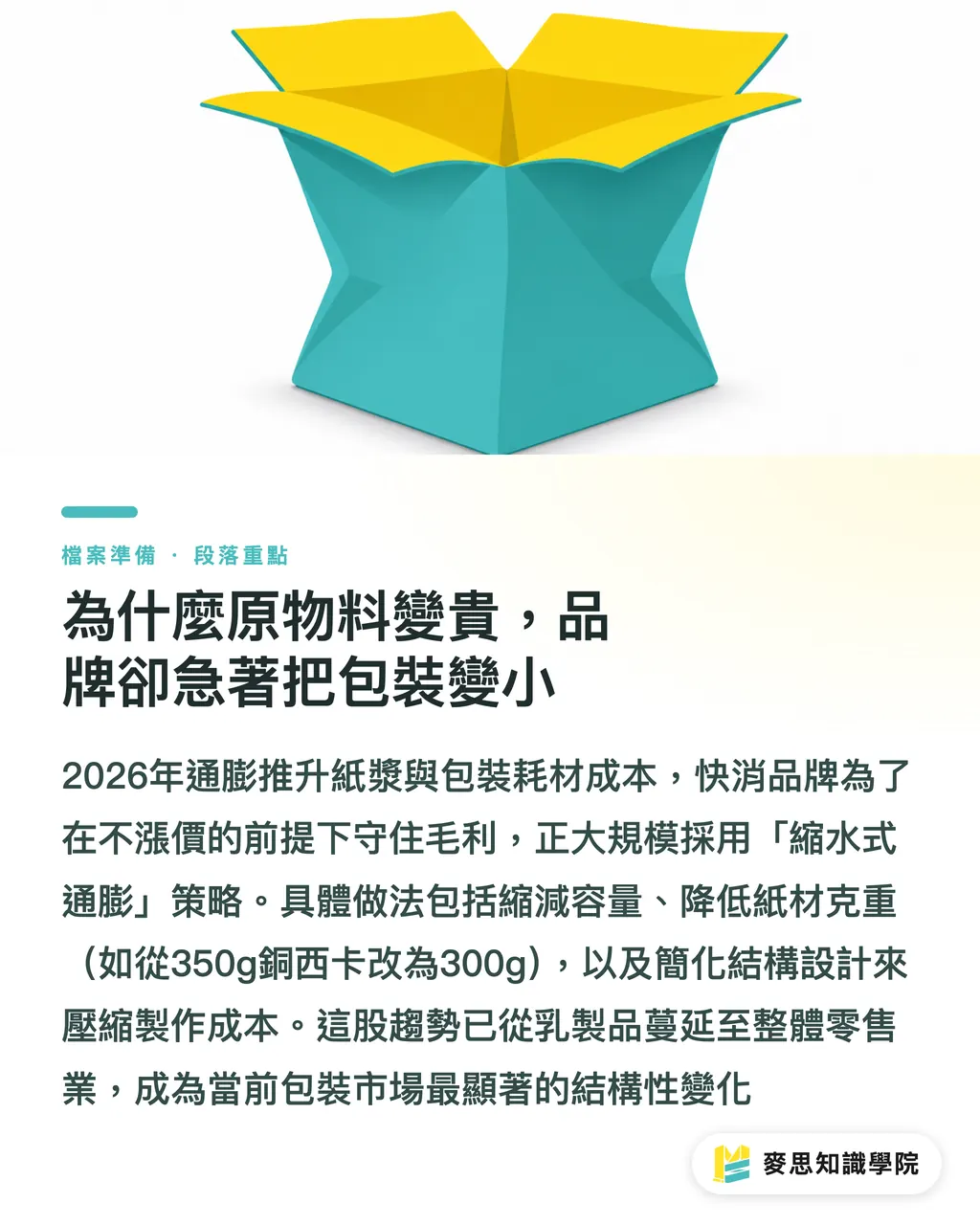
Why High-End Packaging Is Bucking the Trend and Upgrading Materials Despite Cost Pressures
While downgrading indeed yields immediate cost reductions, it is a risky gambit
Once consumers notice smaller capacities or thinner packaging, the backlash is usually significant
Since Graphic Packaging appointed its new CEO, Rietbroek, he has championed a completely contrary pragmatic philosophy in the face of this inflation
He argues that brands should not blindly engage in a race to the bottom, but rather focus on high-value-added packaging innovation
At this juncture, mid-to-high-end packaging actually possesses significant room for differentiation
This aligns perfectly with trends I have been observing on the production floor lately
When consumers' wallets are tight, they become more discerning with their spending; brands must provide a tangible reason that makes a product "worth buying."
For instance, cleverly using a "curiosity sticker" with an interactive twist, or switching to a film with a unique tactile finish
These subtle material upgrades can significantly enhance the perceived value of the unboxing experience, making consumers feel that their money was well spent
How Taiwan's SMEs Should Respond
Looking at the printing and design scene in Taiwan, most small and medium-sized brands lack the massive scale that allows global giants to drive down unit costs
If you blindly play the "give less" game alongside the big players, it is very easy to exhaust the brand trust accumulated over many years
Facing this tsunami of costs, we usually advise clients to re-evaluate their existing packaging across two dimensions:
・Daily Consumer Goods: Prioritize structural lightweighting, using precise die-cut designs to replace thick, heavy materials without sacrificing protection
・High-Margin and Export Products: Maintain material quality; take the opportunity to introduce sustainable materials that comply with EPR regulations or refillable designs to support a brand premium
Rather than making packaging look "cheap" to save a few dollars, it is far smarter to reduce hidden trial-and-error and communication costs through precise pre-press planning
This is the true foundation of a brand's resilience in the era of inflation
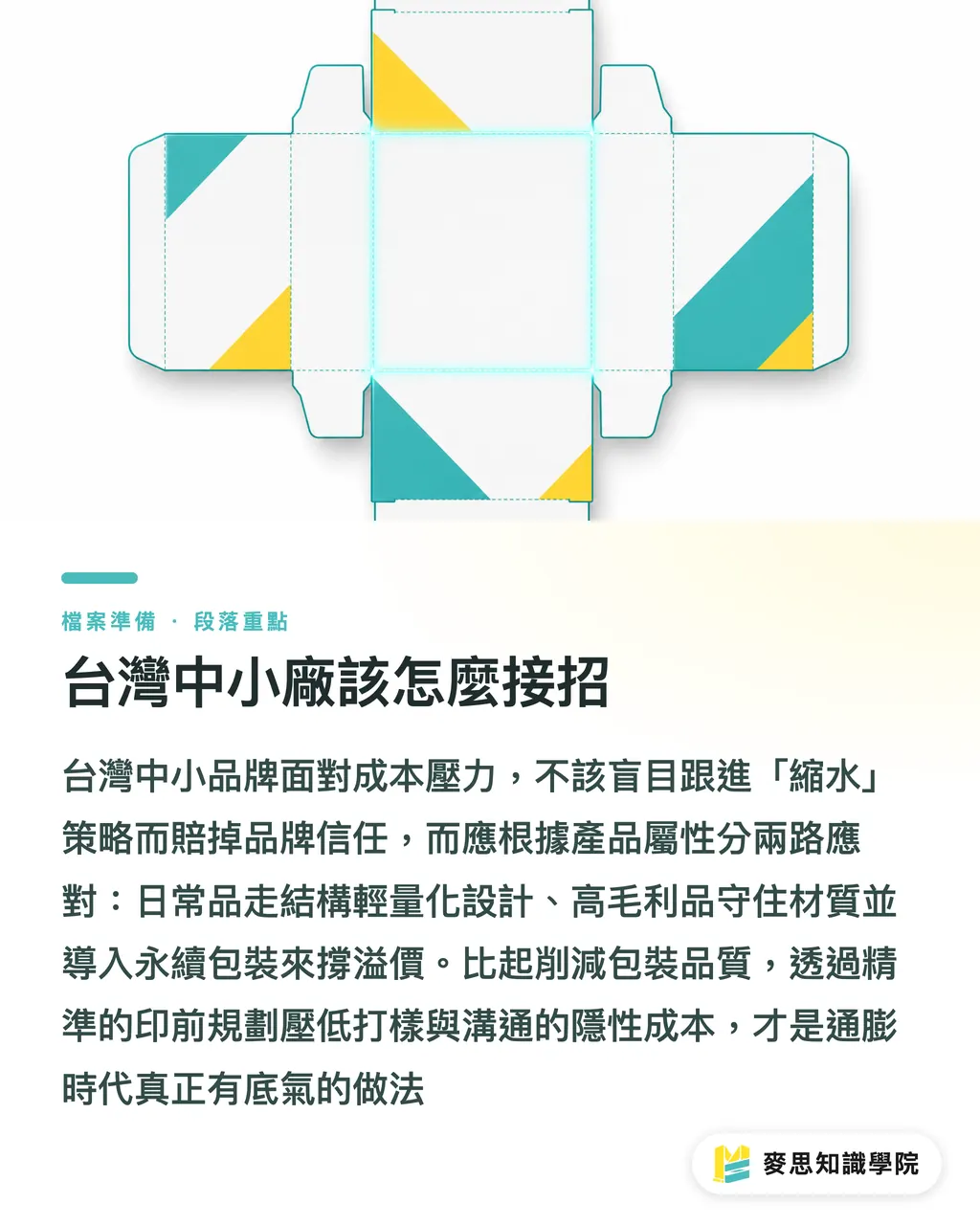
Key Takeaways
・A watershed moment has emerged in inflation-era packaging strategies: CPG leans toward lightweighting and downgrading, while high-end goods use material innovation to lock in loyalty
・Blind downgrading easily triggers consumer backlash; structural simplification and lightweight design are the long-term solutions for maintaining margins
・SMEs lack economies of scale and should avoid bottomless price wars, instead using special printing or sustainable materials to boost perceived value
・Integrating pre-press and final artwork workflows to cut hidden communication and reprint costs is far more effective than merely squeezing paper unit prices
Reflections
This peak in CPI has served as a wake-up call for the printing industry. Rising costs are a hard reality, but what brand clients want is never "the cheapest paper," but "solutions that help the product sell at a good price." For MINDS or any team trying to break through the "red ocean" market, now is the best time to push for structural optimization and high-end sampling. What we can do is use professional pre-press judgment to help clients spend their budget where it counts, such as upgrading tactile feel on key visual surfaces while applying precise lightweighting in hidden structural areas. This is not just selling printed materials; it is selling peace of mind to brands in an inflationary era
Further Reading
FAQ
- What specific impact does inflation have on current packaging design?
- Brands are increasingly polarizing; everyday categories opt for downgrading and lightweighting to protect margins, while mid-to-high-end products invest in unique material upgrades to strengthen the purchase rationale
- How is shrinkflation implemented on printing production lines?
- The most common practices include reducing paper grammage, decreasing the number of special finishing processes, or re-designing die-cuts to simplify unnecessary packaging structures and inserts
- Should SMEs with limited budgets follow suit with downsizing?
- SMEs lack economies of scale, and aggressively cutting costs often leads to losing loyal customers. We recommend focusing on structural lightweighting or using sustainable material design to increase value-added
- Does optimizing pre-press workflows really help control packaging costs?
- Absolutely. Through precise pre-press communication and digital proofing, you can significantly reduce the probability of physical trial-and-error and rejected reprints. The hidden costs saved are often more substantial than simply pushing down paper prices
References
- 通膨三年新高,品牌包裝策略如何在成本壓力下不失守 · packagingdive.com
Related articles

The Print × AI weekly
The print and AI know-how designers, brands and enterprises can use before they commit — one email, every week
MINDS Free Tools
AI background removal, a LINE sticker maker, spine & imposition calculators — all free, right in your browser, no upload.
MINDS Group
Need actual printing or gifting services?
From premium printing to online ordering and festive gifts — the MINDS Group sister brands take it from here.