
Why Is Post-Press Always the First Place Print Shops Break Down?
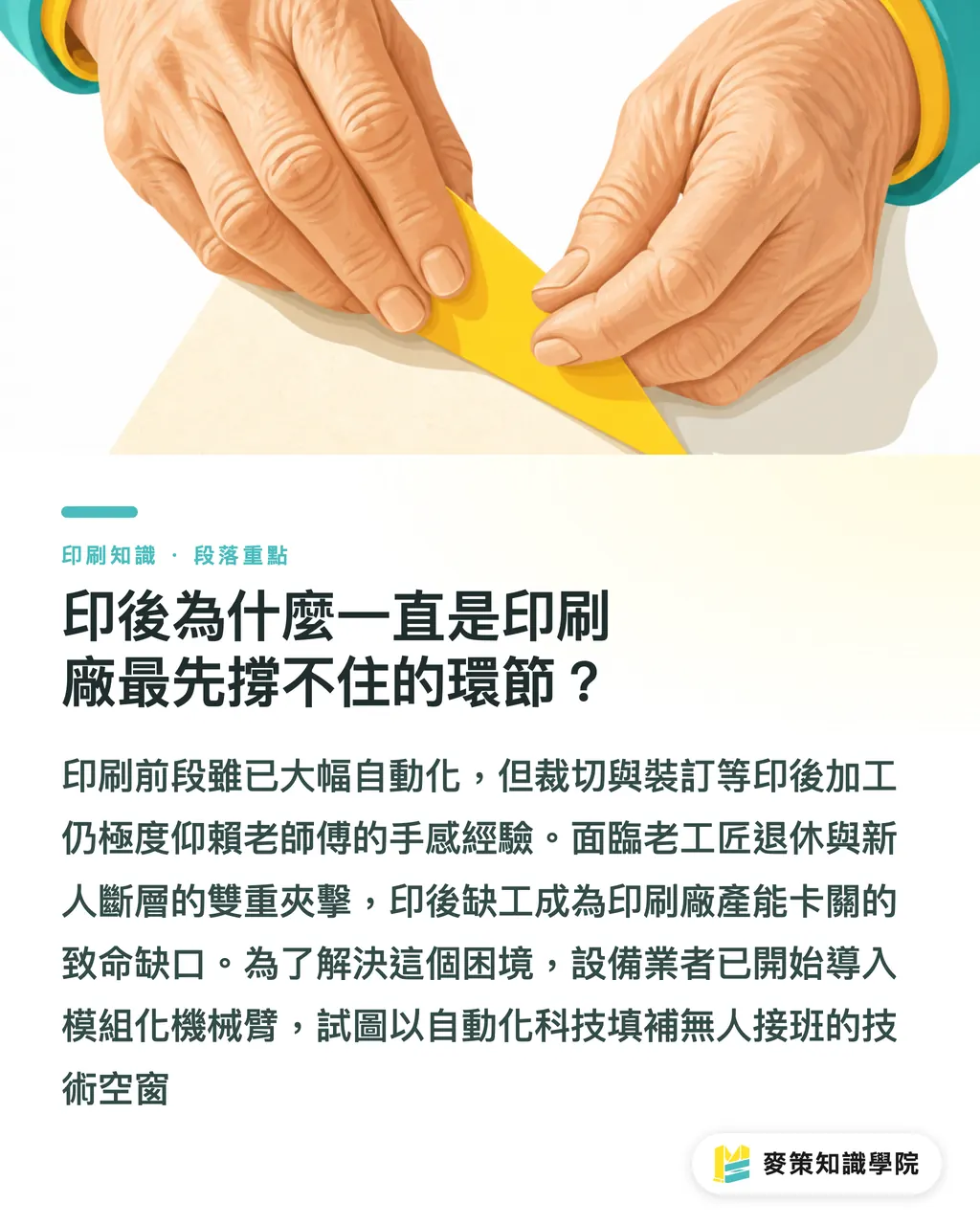
When a sheet of paper comes off the press, it is far from a finished product. It still has to go through cutting, folding, and binding. These steps look simple on the surface, but they rely heavily on the touch and instinct of veteran press operators. That stage is called post-press finishing
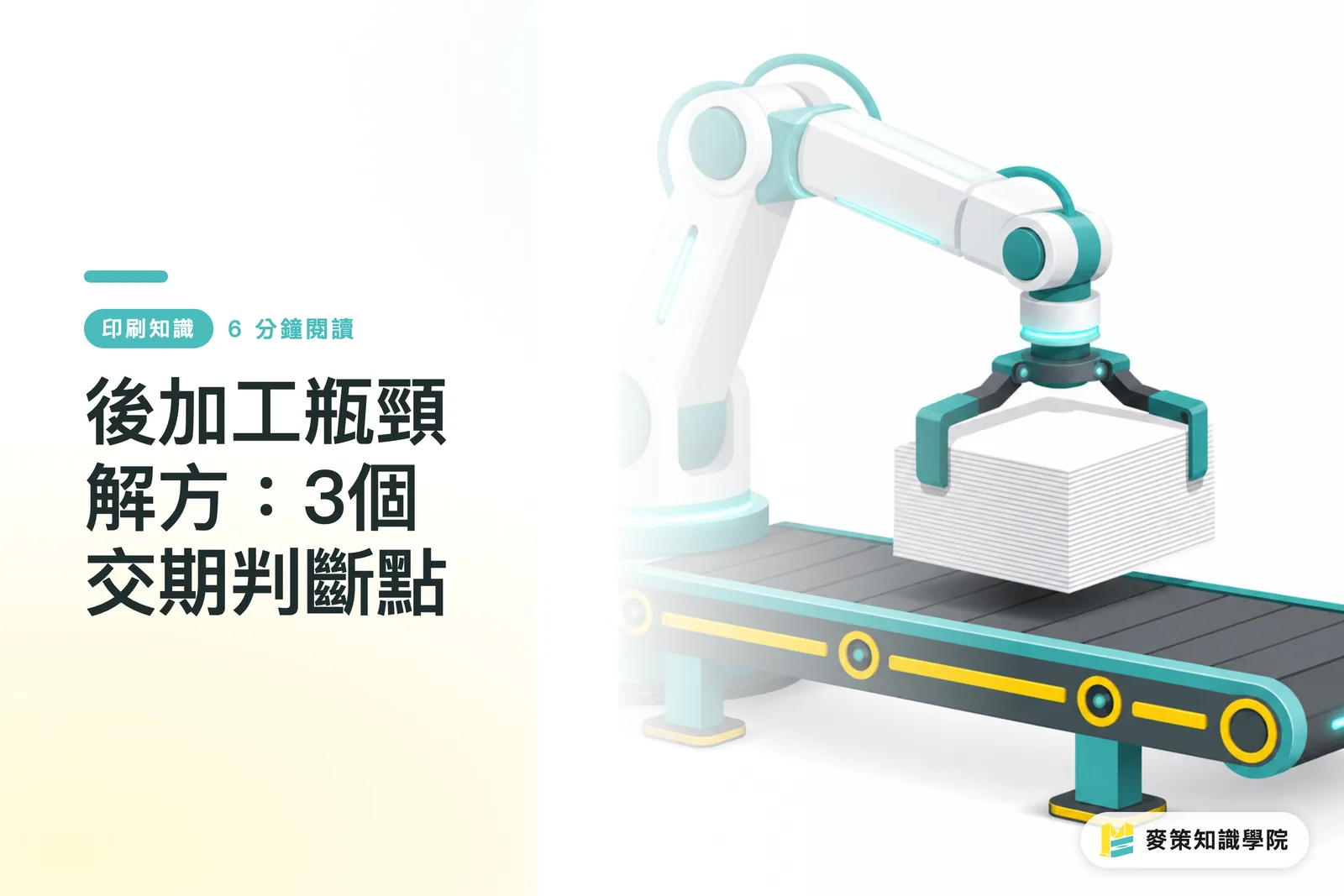
Prepress layout and printing itself were heavily automated years ago thanks to digital proofing and CTP (Computer-to-Plate). Post-press is different. Setting up a high-speed folding machine or dialing in the spine angle on a batch of hardcover books relies on instincts built over decades. When these veterans retire, new recruits are nowhere to be found. Koenig & Bauer, the German printing press giant, partnered with robotics startup RobCo to bring modular robotic arms into cutting, folding, and binding. Put simply, they are targeting this exact talent gap
Visiting print shops over the past few years, the owners' complaints always follow the exact same order: first, they cannot hire experienced post-press masters, then new hires leave after three months, and finally, during peak season, they can only watch helplessly as orders pile up right in front of the binding line
How Severe Did the Labor Shortage Get Before Robotics Became the Answer?
The answer is straightforward: it is not a lack of pay, it is a lack of people. A shortage of skilled workers combined with rising wages forced even an equipment titan like Koenig & Bauer to team up with a robotics startup
In the past, print shops handled labor shortages by piling on overtime pay or outsourcing overflow to small workshops. Both tactics are failing now. Beyond a certain point, technicians simply turn down overtime. Meanwhile, uneven quality from outsourced jobs ends up dragging down overall turnaround times
The real upside of modular robotic arms is that they fit into a single station on an existing line without rebuilding the whole setup. You can upgrade the cutting station first and deal with folding later. For small and mid-sized print shops with limited capital, a phased rollout is far more practical than trying to do everything at once
How Does Post-Press Automation Actually Work, and How Does It Compare to Manual Labor?
It combines robotic arms with sensors and programmable controls, turning tactile, feel-based actions in cutting, folding, and binding into repeatable, calibrated mechanical motions
・Consistency: Once a robotic arm is calibrated, cutting lines and fold angles remain practically identical across the entire run. Human workers get tired and lose focus over long shifts, but machines do not
・Changeover Speed: For short-run, high-mix jobs, which are the bread and butter of small and mid-sized print shops in Taiwan, switching specs with a robotic arm is usually faster than waiting for a worker to find their groove again
・Night and Holiday Capacity: Robotic arms can run lights-out and unattended, something standard shift scheduling simply cannot pull off
The downsides are just as real: upfront investment is high, and for specialty materials or finishes like foil stamping and custom die-cutting, robotic arms still lack the adaptability of an experienced master. That is why a phased approach, rather than a total overhaul, is the only realistic path for most small and mid-sized shops
How Can Print Buyers Tell If a Print Shop Has Real Post-Press Automation Capabilities?
Judging whether a shop has real post-press automation is not about checking if they bought robotic arms. It is about whether their lead-time commitments and yield rates stay steady as order volumes scale up
Large-volume print runs, like catalogs, packaging, or training manuals with tens of thousands of copies, suffer most from missed deadlines and inconsistent quality across batches. When post-press relies purely on manual touch, high volumes lead to fatigue, cutting errors, and rising defect rates in binding. This has been the biggest source of customer complaints I have seen over the years: not color shifts, but crooked binding
Buyers can ask suppliers three direct questions:
・Which stations in cutting, folding, and binding are mechanized, and which ones are still entirely manual?
・How do you estimate lead times for high-volume orders: based on gut feel from technicians, or backed by a scheduling system?
・Have you experienced delivery delays in the past six months due to post-press staffing issues?
For commercial printers focusing on mid-to-high-end bespoke jobs, such as MINDS (MS), being clear about their level of post-press automation saves clients a massive amount of follow-up headaches
Where Should Small and Mid-Sized Print Shops Start?
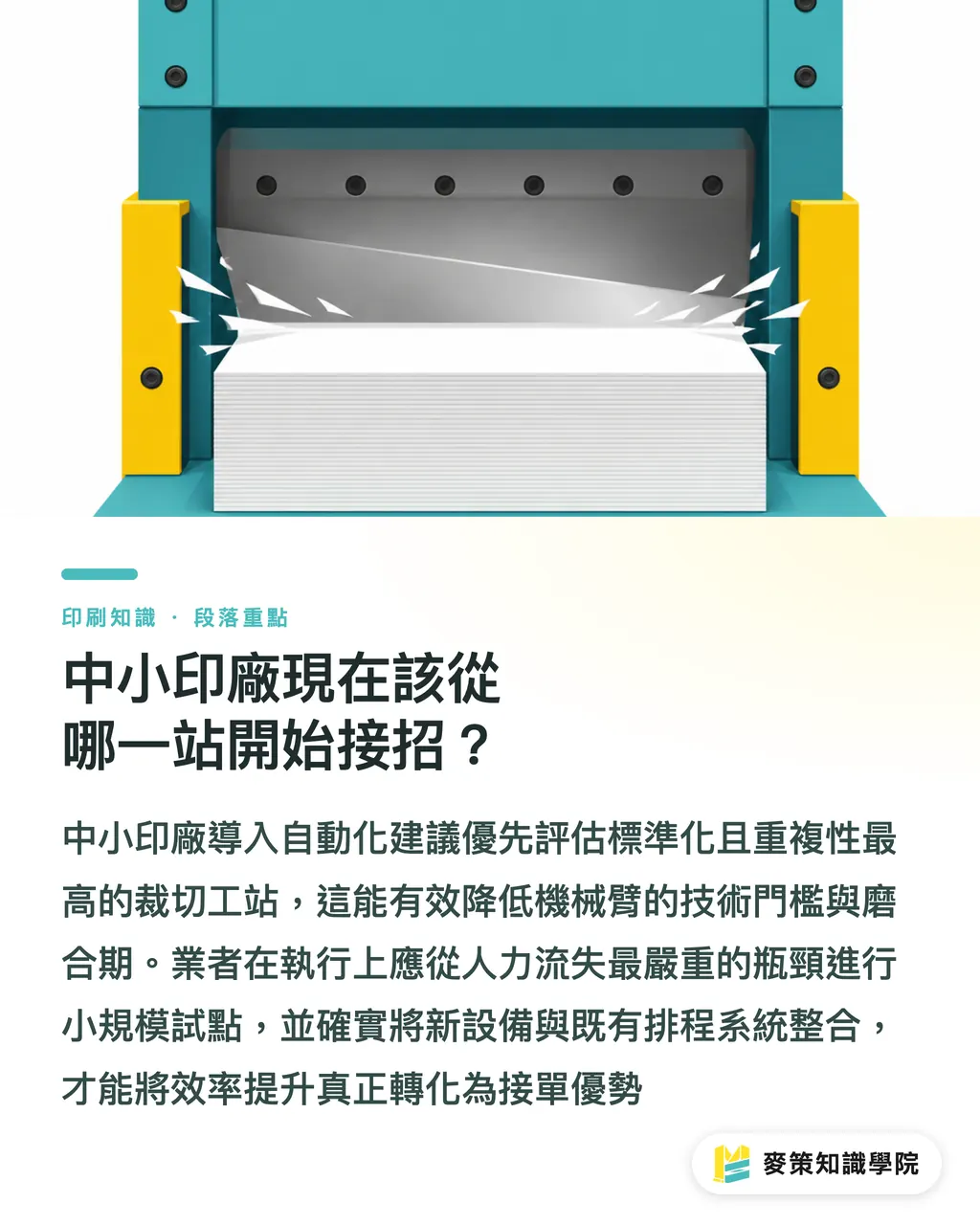
Cutting is the entry point I recommend small and mid-sized shops evaluate first. The reason is simple: cutting is relatively standardized and has the most repetitive motions in the post-press workflow. Bringing a robotic arm into cutting involves a lower technical barrier and a shorter adjustment period than folding or binding
Here is the recommended adoption sequence:
・Audit first: Identify the station with the worst turnover and the most obvious bottlenecks, and tackle that first. Do not just blindly follow what equipment vendors are pushing
・Run a small pilot: Lease or finance equipment for a single station to gather real operating data, rather than signing a contract for an entire production line all at once
・Integrate with existing scheduling systems: Once robotic arms arrive, recalibrate lead-time estimates. Otherwise, the efficiency gains won't translate into sharper quotes or higher order capacity
If you are unsure about the rollout sequence or timing, consulting specialists who spend their days on actual press floors, such as the Mai Strategy Knowledge Academy consulting team, can save you from costly trial and error
Key Takeaways
・Post-press finishing is where labor shortages hit hardest, not prepress or the pressroom
・Koenig & Bauer partnering with RobCo sends a clear signal: modular robotic arms offer a practical path for phased post-press automation
・Lead times and yields on high-volume runs depend on post-press automation, not press color management
・Small and mid-sized shops should start with standardized steps like cutting instead of trying to overhaul everything overnight
・When vetting print suppliers, asking which post-press stations are mechanized is the fastest way to evaluate reliability
Further Thoughts
For print manufacturers, the next step is not asking whether to adopt robotics, but deciding which station to upgrade first. Start by auditing the stations with the highest turnover, using leasing or small-scale pilots to reduce upfront risk. Then, gradually connect them to your scheduling system so productivity gains feed directly into pricing flexibility instead of getting lost in old estimating habits. For designers and print buyers, treating post-press automation as a hard requirement when evaluating suppliers protects deadlines far better than comparing unit prices alone. For long-term partnerships, prioritize print shops already investing in post-press automation, as high-end custom printers tend to be much more transparent about these capabilities
Further Reading
FAQ
- What is post-press finishing, and how does it differ from printing?
- Post-press finishing refers to subsequent steps like cutting, folding, and binding after printing is done. It determines whether the final product is delivered on time and with consistent quality. It is a completely separate technical domain from laying down ink on a press
- Will robotic arms completely replace all post-press workers?
- Not in the short term. Specialty finishes like custom die-cutting and foil stamping still require the tactile touch of veteran operators. For now, robotic arms are best suited for standardized, repetitive tasks like basic cutting and folding
- Can small and mid-sized print shops automate post-press without deep pockets?
- Yes. A phased approach is the most practical path. Start by leasing equipment or running a pilot at a single station with low technical barriers, like cutting, without rebuilding the entire post-press line at once
- When buying high-volume print runs, how can I quickly tell if a supplier's post-press operation is reliable?
- Ask directly which stations in cutting, folding, and binding are mechanized, and whether they had delivery delays in the past caused by post-press staffing issues. That gives you a far clearer picture of delivery risk than unit prices alone
Related articles


The Print × AI weekly
The print and AI know-how designers, brands and enterprises can use before they commit — one email, every week
MINDS Free Tools
AI background removal, brand stamping, and a LINE sticker maker — free design tools, right in your browser, no upload.
MINDS Group
Need actual printing or gifting services?
From premium printing to online ordering and festive gifts — the MINDS Group sister brands take it from here.