

What Does Blanking Separation Actually Separate?
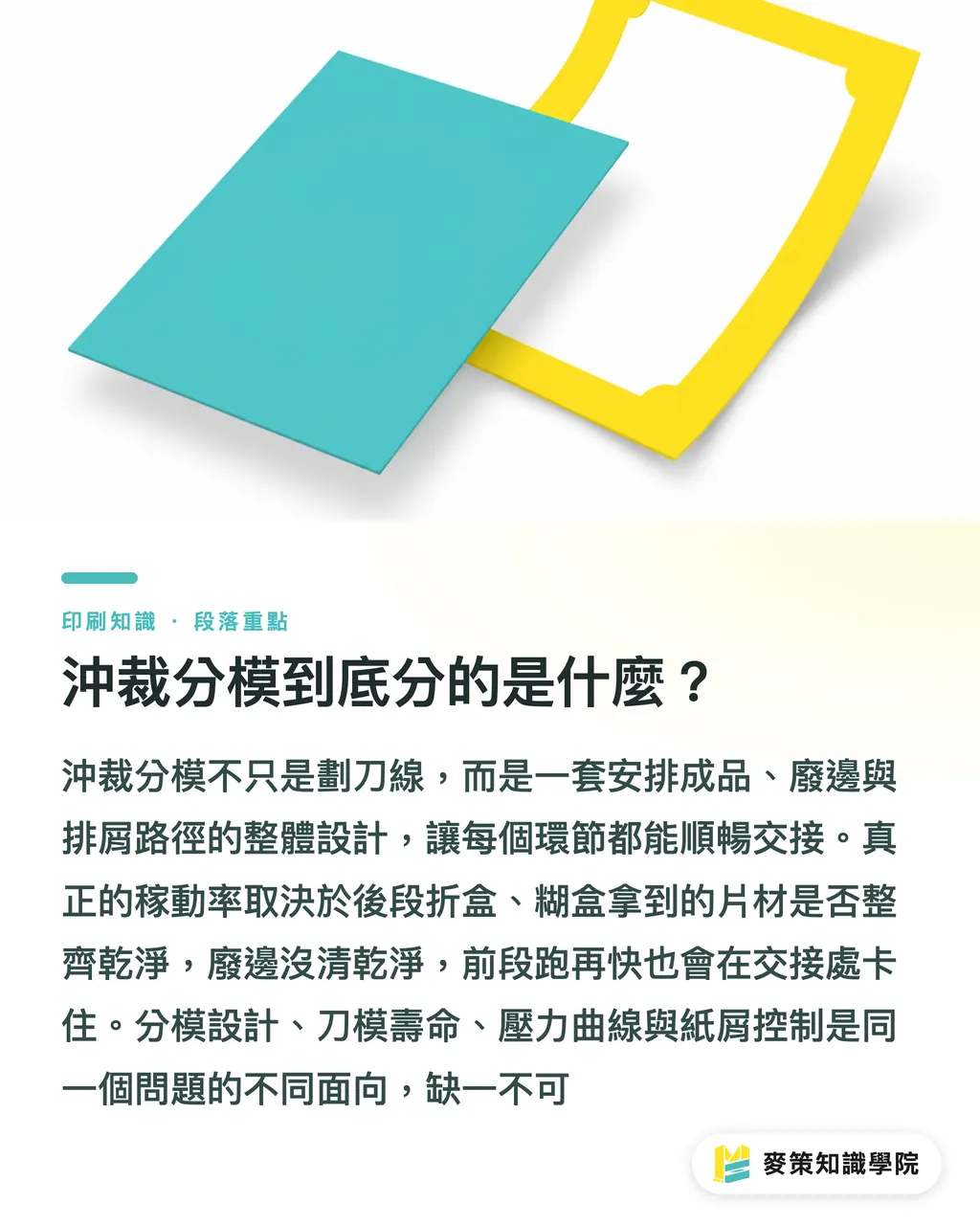
Blanking cuts a sheet along die lines to separate box blanks from waste trim. Systematic separation is about routing finished pieces, waste trim, and separation grids so scrap exits cleanly, blanks release properly, and the sheet can move on to the next stage
A blanking station handles the full relationship between blank release and scrap removal. The cut lines are just one part of it
From my time on the production floor and the prepress side, uptime is about whether the press can keep turning out good sheets continuously. Starting the press is just the beginning. If the folder-gluer receives blanks that are uneven or carry waste trim, all that upstream speed just stalls at the handoff
A technical article published on September 16, 2026 by The Packaging Portal treats separation design, die life, pressure curves, and scrap control as one blanking problem. It's a useful lens for auditing the blanking workflow at small and mid-size shops. See Systematic Separation: The Right Strategy for Efficient Blanking
Why Adding More Pressure Can Actually Slow Blanking Down
More pressure can slow blanking down because pressure only compensates for localized resistance. It can't fix a broken separation path. When separation is off, scrap won't clear, blanks won't release cleanly, and the press tends to slow down, stop, or require manual picking
Before reaching for more pressure, trace where the scrap goes
The pressure curve has to be read alongside the layout. Dense cut lines, connected blanks, and varying board stiffness all change how much force release takes. On the floor, I look for scrap jams and uneven pressure zones before deciding whether to adjust pressure
The source article notes that short runs and simple layouts often go straight through the blanking station. Even short-run jobs need a clear separation plan, or the time saved at the press gets spent cleaning scrap and picking blanks
How to Choose the Right Separation Method and Blanking Technology
Choosing the right separation method and blanking technology means putting four factors on the same evaluation sheet: run length, sheet layout, material properties, and finishing requirements. Press pressure alone can't drive the decision
・Run length: factor in die changeovers and continuous production. Short runs must also account for manual picking and downstream handoff
・Complex sheet layouts need a stable separation grid. Simpler layouts can be evaluated for full sheet delivery
・Material properties include caliper, stiffness, and surface condition. A real material test run is more reliable than a die layout on screen
・If the job feeds into a folder-gluer, blank release and stacking uniformity need to be part of the decision
Marbach (a blanking technology supplier) offers the alublanker, lightblanker, marbablanker, and compactblanker, covering all-aluminum construction, swappable separation grids, a lightweight stability option, and a high-stability option for complex layouts. The names differ, but the choice still comes back to layout, material, and downstream work

How to Hand Off Design Files Without Leaving Separation Problems for the Press Floor
Keep print artwork and processing information separate in the design file. Confirm cut lines, crease lines, score lines, glue tabs, and hole positions before sending to the printer, so platemaking, blanking, and finishing all work from the same data
I run everything through the Mai Strategy three-checkpoint submission process to catch problems before they hit the plant
・1. Separate layers: print artwork, cut lines, crease lines, score lines, perforations, and glue tabs each on their own layer
・2. Consistent spot color naming: use the printer's agreed spot colors for cut and processing lines, then check overprint settings
・3. Confirm blank release and scrap clearance with the actual substrate before handing off to folding or gluing
When a brand does its first carton run and sends a quote request to MINDS with run length, substrate, dieline flat, and finishing requirements, the conversation can go straight to die and press conditions. No chasing down details after the die is already made
How Small and Mid-Size Printers Can Make Separation Part of Daily Operations
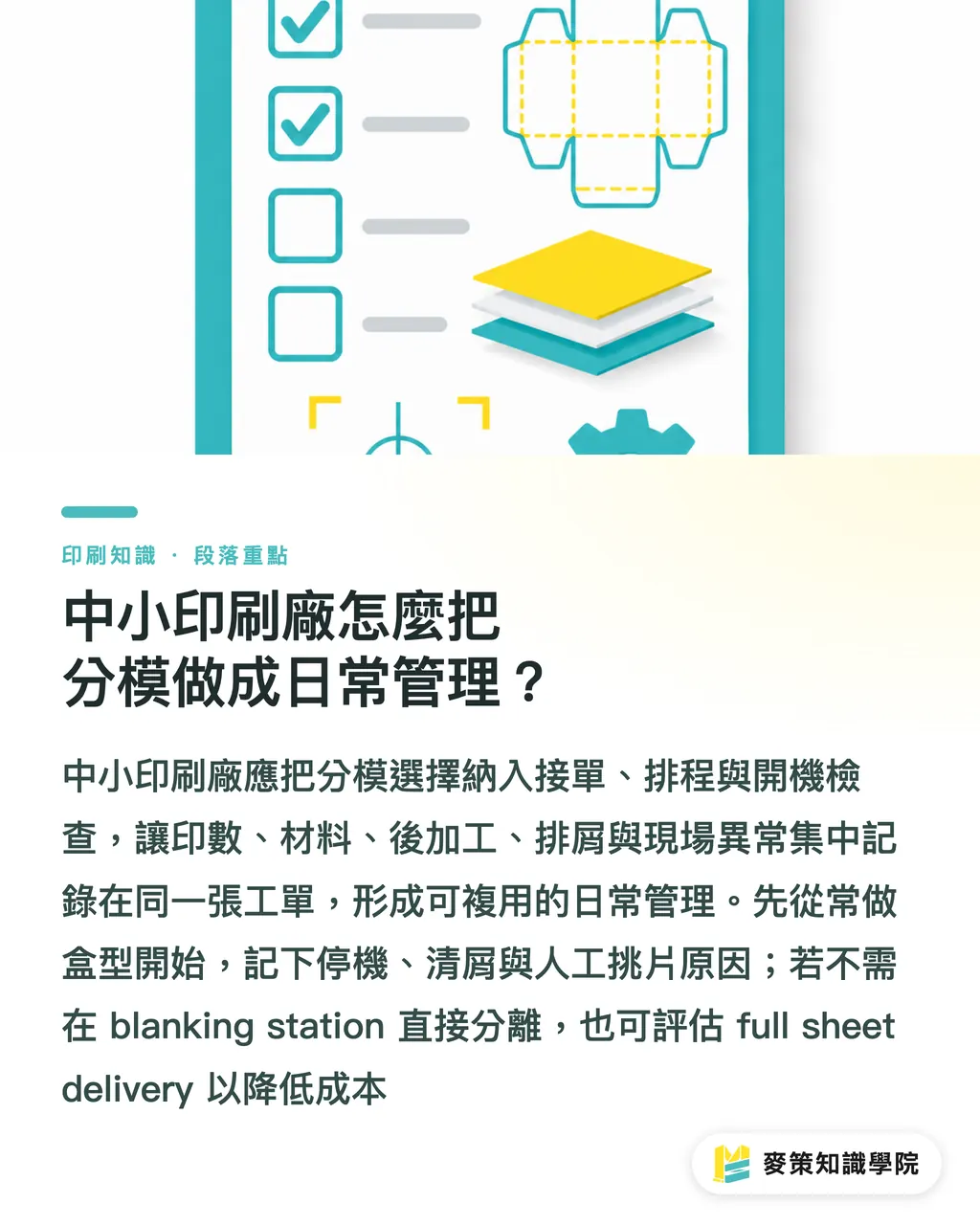
Small and mid-size printers should build separation decisions into order intake, scheduling, and press startup checklists, keeping run length, layout, substrate, finishing, and scrap results on the same work order
・Log run length, layout, substrate, finishing, and separation method at order intake
・Verify separation grid, pressure curve, and scrap path before press start
・After the job, document downtime, scrap removal, and manual picking reasons so the same die type can reference the record next time
When an application doesn't need direct separation at the blanking station, full sheet delivery can be more cost-effective. The source article lists it as a cost-effective alternative and mentions the Marbach Experience Hub (a resource page for blanking technology selection and free whitepapers) as a reference
I start by picking one box style we run regularly and writing the actual downtime and scrap reasons back into the work order. The next time a similar die comes through, the floor has something to look up
Key Takeaways
・Blanking speed starts with the separation path. Pressure adjustments only address part of what happens on the floor
・Run length, layout, substrate, and finishing requirements should all feed into the blanking technology decision
・Separating die and print layers, naming them consistently, and confirming them up front keeps mistakes out of the plant
・Scrap that doesn't clear cleanly will eat up time at the downstream handoff, no matter how fast the press is running
・Full sheet delivery is sometimes a better fit than a complex separation setup. Evaluate it across the whole workflow
Taking It Further
I treat separation design as process data that the printer and the design team maintain together. The printer puts run length, layout, substrate, finishing, separation method, and trial results into the work order. The design team keeps die line and print layer naming consistent. AI or SaaS tools can check for missing fields and flag potential conflicts, then leave the call on whether to swap separation grids or how to adjust pressure to the people who know the press and the material. If you want to turn that checklist into a formal order-intake spec for the team, the Mai Strategy Knowledge Academy consulting team can help define the fields. Start with one box style you run regularly and use live jobs to check whether downtime, scrap clearing, and manual picking actually drop
Further Reading
FAQ
- Does turning up press pressure improve blanking efficiency?
- Blanking efficiency can't be fixed by pressure alone. If the separation path, scrap routing, substrate, and finishing requirements don't line up, more pressure may increase die load and raise the risk of downtime. The pressure curve has to be checked alongside the separation design
- Do short runs still need separation at the blanking station?
- Short runs and simple layouts can go directly through the blanking station. Whether to do so depends on the layout, substrate, and finishing requirements, not run length alone
- What needs to be confirmed in a die file before sending it to the printer?
- Separate print artwork, cut lines, crease lines, score lines, hole positions, and glue tabs onto their own layers. Name processing colors per the printer's spec and check overprint settings. Then confirm blank release and finishing compatibility with the actual substrate
- When does full sheet delivery make more sense?
- When an application doesn't need direct separation at the blanking station and the layout is simple enough for downstream handling to continue cleanly, full sheet delivery can be more cost-effective. Labor, speed, and finishing costs all need to be weighed together
Related articles




The Print × AI weekly
The print and AI know-how designers, brands and enterprises can use before they commit — one email, every week
MINDS Free Tools
Spine width and imposition calculators — skip the manual math, free in your browser.
MINDS Group
Need actual printing or gifting services?
From premium printing to online ordering and festive gifts — the MINDS Group sister brands take it from here.