
How Specialty Binding Differs from Standard Binding
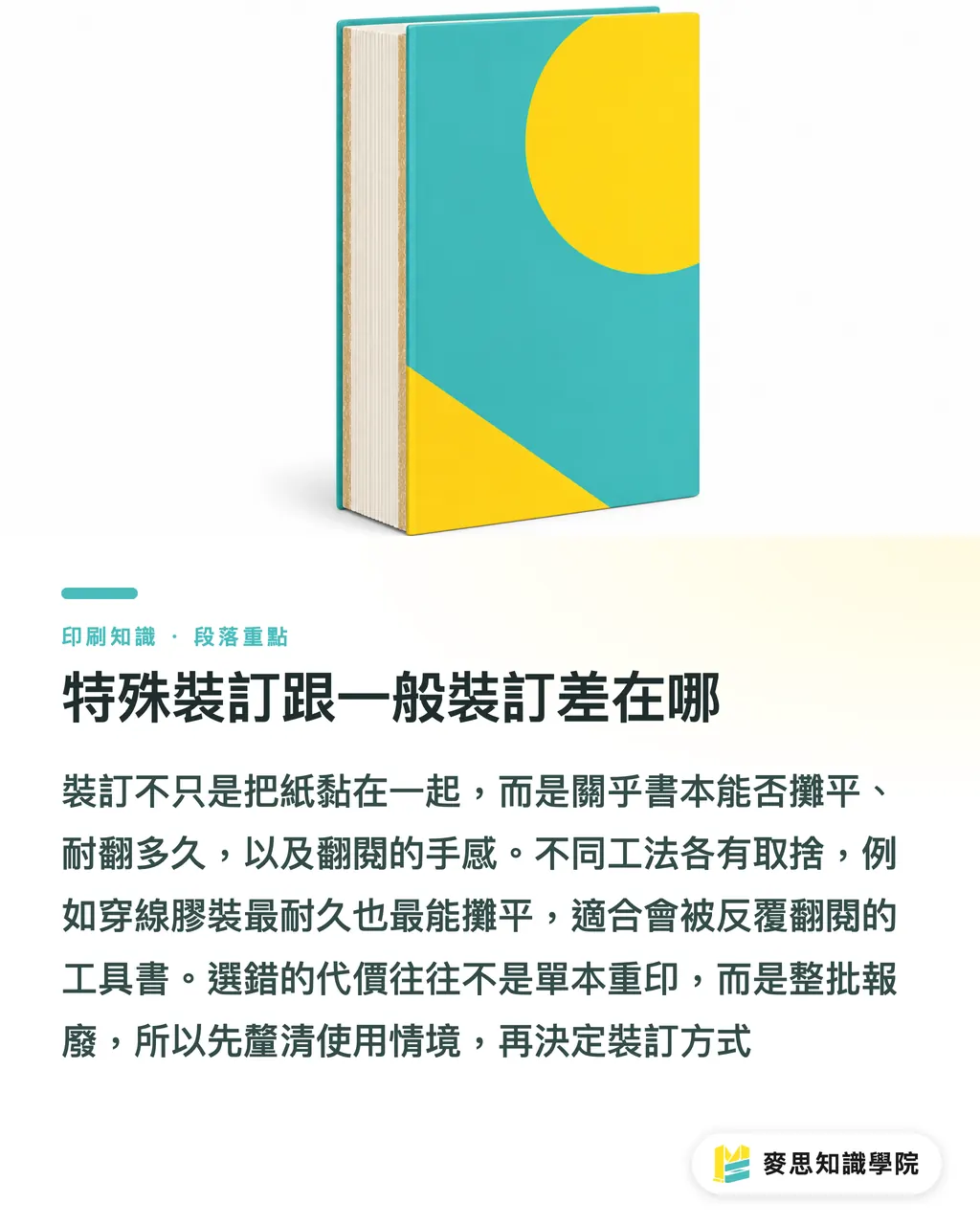
Advanced binding is about more than sticking sheets of paper together. It determines how a book opens, how flat it lays, and how long it lasts. Each of these four methods involves trade-offs. Choosing wrong means reprinting the entire run: cracked spines, text swallowed in the gutter, loose leaves, or stiff hardcover hinges
・Exposed spine binding: The spine is completely uncovered without wrapping paper, held together solely by adhesive. It has a strong indie aesthetic, opens nearly 180 degrees flat, and fits creative projects, zines, and independent publications
・Thread-sewn perfect binding: Signatures are sewn together before glue is applied. It offers top durability and lay-flat performance, and the spine can be printed. Great for manuals, cookbooks, and reference books meant for heavy use
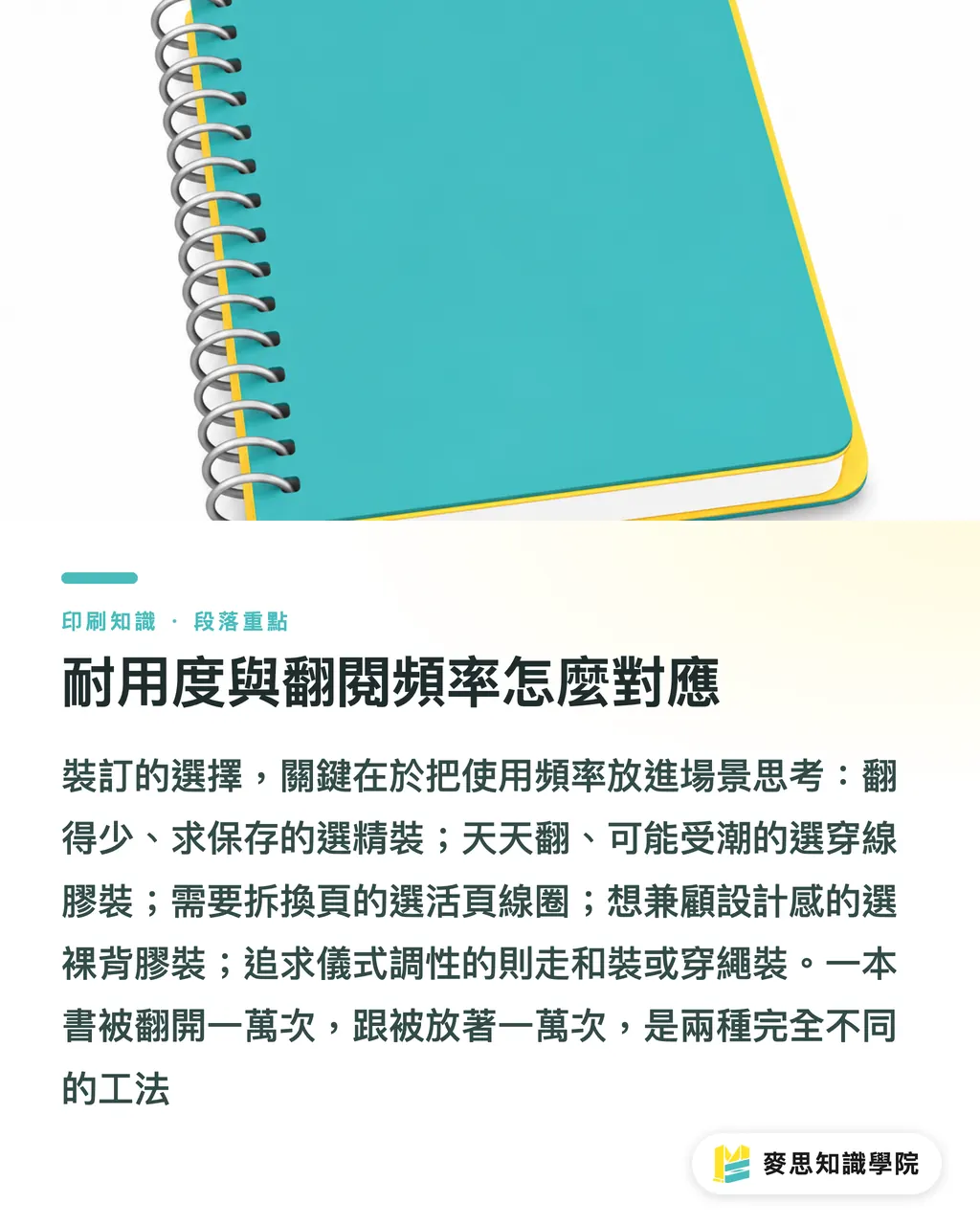
・Loose-leaf / Spiral binding: Metal wire or plastic coils loop through punched sheets, allowing full 360-degree rotation. A favorite for cookbooks, notebooks, workshop manuals, and training guides
・Hardcover (Case binding): A rigid board cover wrapped around a book block. The spine accepts foil stamping or logo printing, delivering bookshelf-grade prestige. Best for commemorative books, annual reports, and collector editions
・Japanese stab and cord binding: A traditional Eastern bookbinding aesthetic, often seen with calligraphy, ink art, temple scriptures, and literary prints
When handling inquiries like this, MINDS (MS, mid-to-high-end custom commercial printing) always clarifies how the book will be used before quoting a price. Switching binding later costs far more than changing the design
Deciding Whether You Need Lay-Flat Performance
Laying flat sounds simple, but it depends directly on the binding mechanism and gutter margins. A book that opens a full 180 degrees flat cannot have obstructions in the spine fold, which changes the spine design entirely
・Exposed spine binding: Without a spine wrap, pages open all the way across the back, sitting almost flush against the desk. The catch is that the spine catches dirt easily and lacks cover protection
・Thread-sewn perfect binding: Thread gives the signatures flex. Lay-flat performance is second only to exposed spine, with the bonus of a protective outer cover. If a book gets opened often or needs to sit flat for writing, thread-sewn is your top pick
・Spiral binding: No lay-flat issues at all, but the coils take up space, make stacking messy, and cannot take heavy weight
・Hardcover: Traditional hardcover spines and book blocks form a rigid structure that will not lay flat. If you need it to open flat, you need lay-flat hardcover techniques like Otabind, which bumps up the budget
> A common misconception: assuming all perfect binding lays flat. Standard wrapped perfect binding only opens to about 120 degrees. Forcing it further cracks the glue
Matching Durability with Handling Frequency
Binding durability comes down to two factors: whether the structure handles tension, and whether individual pages are protected. Map these against your use case, and the right pick becomes obvious
・Occasional reading, built for preservation (commemorative albums, annual reports, award collections) → Hardcover
・Heavy daily use, pressed flat, used in rough settings like kitchens (cookbooks, reference manuals, prayer books) → Thread-sewn perfect binding
・Need to add, remove, or swap pages (workbooks, data folders, training manuals) → Spiral binding
・Design-focused with moderate handling (zines, poetry books, independent prints) → Exposed spine binding
・Distinct aesthetic or ceremonial feel (temple bulletins, limited-run calligraphy collections) → Japanese stab or cord binding
There is an old print shop saying: a book opened ten thousand times requires a completely different method than a book stored ten thousand times. After managing print procurement for years, that line works better than any catalog
What to Watch: Page Count, Gutter Margins, and Cost Tiers
Pricing for advanced binding does not scale in a straight line like saddle stitching. Spine bulk, structural complexity, and gutter margins all drive the quote. Here are the three most common traps
・Minimum page counts: Exposed spine starts around 48 pages, thread-sewn depends on signature folding, and hardcover book blocks usually start at 80 pages. If a book is too thin, the machines cannot bind it
・Gutter margins: Lay-flat bindings need extra breathing room in the gutter (add 3 to 5 mm over standard margins), or text gets swallowed in the fold. Lock this down early in the artwork phase, because you cannot fix it later
・Cost tiers: For a 200-page book, exposed spine runs about 1.1 to 1.2 times standard perfect binding, thread-sewn runs about 1.4 to 1.6 times, hardcover jumps straight to 2.5 times or more, and spiral binding sits between 1.3 and 1.8 times depending on coil size and material. These ratios are real-world estimates that fluctuate with paper and run size, but the tier spacing holds true
> Another common beginner mistake: wanting spine text but picking exposed spine binding. An exposed spine shows raw paper edges. The glued surface cannot handle full-color printing, and any text must be very simple. Clear this up when asking for quotes
Turning the Decision Logic into a Real Procurement Workflow
Condense the criteria above into an actionable checklist before sending files to print
・Step 1: Define three usage scenarios. Who reads it? How long is each session? Will readers lay it flat to write? Will they swap pages? You need clear answers before picking
・Step 2: Identify two hard constraints: page count range and budget ceiling. Talking about brand tone without these two will derail your planning
・Step 3: Work backwards from brand tone. Creative publications lean toward exposed spine, reference manuals toward thread-sewn, training guides toward spiral, and keepsakes toward hardcover. Your choices will narrow down to one or two options
・Step 4: Contact your printer to confirm specs. Take your requirements to a mid-to-high-end custom printer like MINDS to verify paper stock, spine width, gutters, and mockups. Never place a production order without checking a physical dummy first
Industry veterans know that deciding on binding early keeps the entire project on track. This is not just on the designer. Procurement, planning, and design teams need to sit down together before final artwork is ready
Key Takeaways
Specialty binding is a balancing act across multiple goals, with no one-size-fits-all solution
Lay-flat capability depends on the binding mechanism. Standard wrapped perfect binding cannot open 180 degrees flat
Choose thread-sewn binding for heavy daily handling, and hardcover for long-term preservation and display
Set your gutter margins early during layout. Once binding is locked, margins cannot be changed
Hardcover budgets usually run at least 2.5 times that of exposed spine, so set your cost ceiling before requesting quotes
Further Considerations
Binding decisions rarely happen in isolation. In practice, they tie directly into paper choice, post-press finishing, and brand positioning. For example, if a creative brand wants exposed spine binding with art paper, book trim size and bulk must be recalculated from scratch. If a corporation wants a hardcover annual report, slipcases and interior color palettes dictate production complexity. Lock in your binding choice by week two of project planning, right alongside paper sample proofing
For designers, treat binding as part of your brand language during concept pitches rather than an afterthought at prepress. Seventy percent of the quality a client feels comes from opening the book and feeling how flat it lays, not from the cover art alone. This is why seasoned design teams make physical dummies a standard part of client pitches
For print buyers and brand teams, working with a single printer that handles saddle stitching, perfect binding, thread-sewn, hardcover, and spiral under one roof (like MINDS) saves time on color matching across vendors and gives you a single point of contact for issues. When you look to adopt AI scheduling or automated quoting down the line, this integrated partnership forms the foundation for clean data flow
Further Reading
・[Specialty Binding Choices: How to Pick Exposed Spine, Thread-Sewn, Spiral, and Hardcover](/zh-TW/knowledge/dalle/)
FAQ
- What is the difference between exposed spine binding and standard perfect binding?
- Standard perfect binding wraps the spine in cover stock, which allows spine text but only opens to about 120 degrees. Exposed spine binding leaves the spine completely bare. It lays flat to 180 degrees with an indie look, but catches dirt easily and limits what you can print on the spine
- Why is thread-sewn perfect binding more expensive?
- It adds a sewing step. Signatures must be folded and stitched before glue is applied, adding extra labor and machine time compared to standard gluing. In exchange, you get exceptional durability and near-180-degree lay-flat performance, making it the top choice for reference books and cookbooks
- When should you definitely choose hardcover binding?
- Choose hardcover when a book needs long-term preservation, bookshelf display, or serves as a collector gift. Hardcover spines take foil stamping and embossed logos, the book block stays rigid, and it delivers the highest quality feel along with the highest price tag
- Are there paper restrictions for spiral and loose-leaf binding?
- Yes. Hole punching consumes 5 to 10 mm of the binding edge. Paper that is too heavy makes pages hard to turn through the coil (100 g to 157 g is typical), while paper that is too thin will tear at the holes (80 g minimum recommended)
- Can you switch the binding method midway through production?
- Not recommended. Changing binding requires rebuilding paper specs, gutter margins, and spine calculations from scratch, which practically means redoing prepress. Locking in the binding choice early is the single rule that print veterans emphasize most
Related articles

The Print × AI weekly
The print and AI know-how designers, brands and enterprises can use before they commit — one email, every week
MINDS Free Tools
Spine width and imposition calculators — skip the manual math, free in your browser.
MINDS Group
Need actual printing or gifting services?
From premium printing to online ordering and festive gifts — the MINDS Group sister brands take it from here.