

What is right-sized packaging?
Right-sized packaging sets the outer carton size from the product's outer dimensions, its protection needs and the way it ships. Less empty space, and it fits the packing workflow
Filterbuy's discussion puts right-sized packaging, trailer utilization (how much of the trailer space gets used) and throughput (how many shipments get done per unit of time) into one efficiency framework. The point: the right size improves trailer utilization and raises overall throughput. Video source
When I work on a print job, I first ask how the packaging travels after it leaves the printer, and only then look at how it appears on the design file. The three-gate pre-press check brings the truck into the size discussion, because once the cartons are made, they still have to go into the warehouse, get stacked and get loaded

How does packaging size affect loading and throughput?
Packaging size changes how cartons line up inside the truck, and it also decides whether packing runs smoothly enough to ship on time. The carton is the unit you load. If the outer dimensions don't match each other, the layout can leave dead gaps nobody can use. Filterbuy treats trailer utilization and overall throughput as one question for exactly this reason: the two meet on the shipping floor
The three-gate pre-press check looks at throughput as one continuous operation. Once the product is boxed, you still have to seal, stack and hand off. Get the size right and the truck has a chance of being filled efficiently. But if the packing step slows shipping down, the paper you saved doesn't turn into more finished orders
The one thing I remind buyers of most: don't just compare the quote for a single box. A quote prices one carton. The shipping floor handles a batch of cartons and a full truck. Both have to sit on the same spec sheet
How do you set carton size so it doesn't just save paper?
Work backward from the product and the shipping conditions, then have the printer check paper and construction specs. The three-gate pre-press check fits before proofing, so design, purchasing and the printer all work from the same set of conditions
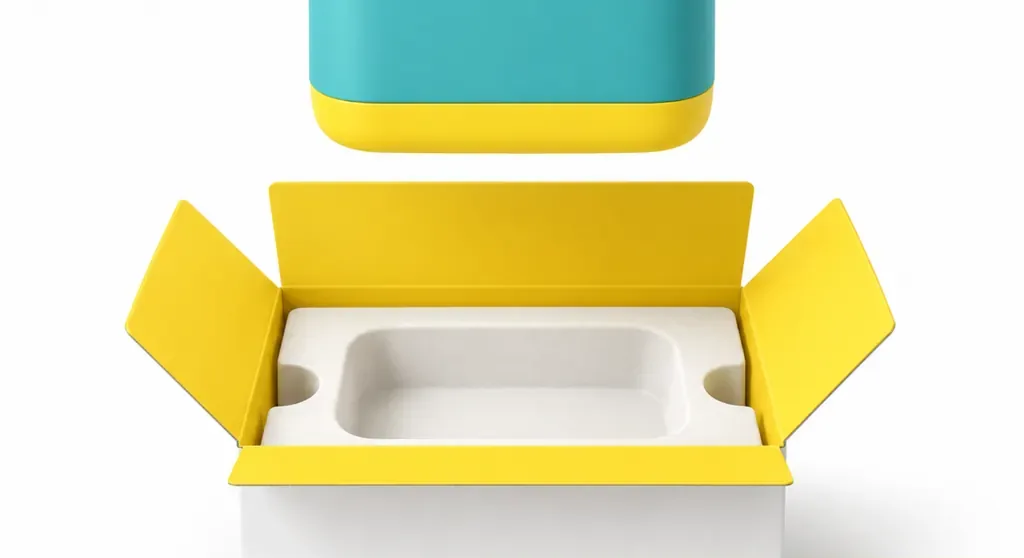
・① Product gate: measure the finished product's outer dimensions, confirm accessories, necessary cushioning and how it gets picked up and put down. Don't draw the box around the bare item alone
・② Carton gate: convert the flat dieline size into the outer carton size after construction, then check the sheet size, imposition and material usage
・③ Shipping gate: do a trial layout with your usual packing and stacking method. See how the cartons go into the truck, and whether sealing and handling feel easy
Take a carton you ship all the time. Make a sample box, put the real product in it, then watch how the packed cartons line up. That beats adjusting the outline on a screen. The three-gate pre-press check carries this trial-pack result back into the spec discussion, so outer carton size, paper usage and shipping method don't each get calculated on their own
Does a smaller box always mean higher throughput?
Not always. If a smaller carton makes the product hard to load, hard to take out or poorly protected, shipping can take more labor. The three-gate pre-press check looks for a snug fit that people can still work with. Smaller doesn't mean better
Pros:
・The right size cuts unnecessary space, which matches the trailer utilization goal in Filterbuy's discussion
・Checking carton size together with sheet size brings design and material usage into the same evaluation
Cons:
・Cut the size too tight and the product, cushioning material and sealing motion may not work together
・A spec change means re-proofing, and purchasing, warehouse and shipping all have to use the same version of the size data
My habit is to trial-pack the real thing first, then talk about whether it can shrink. Put the sample box on a work table. Can a hand fit in? Does the product jam? Those small things say more about whether the floor can run than a few millimeters on a drawing
Where should small printers and brand clients start?
Pick one item you ship often, and bring product size, carton spec and loading method into the proofing discussion together. The three-gate pre-press check can start from these three points and firm up the size decision step by step
・① Write down the finished product size, the current outer carton size and your usual packing method
・② Make one sample box, put in the real product and cushioning material, then trial-pack, stack and move it
・③ Hand the trial-pack results to the printer and confirm the constructed size, sheet imposition and production limits together
Brand clients who want print specs and shipping conditions checked together can bring product dimensions and packing requirements to quoting and proofing, and confirm paper, layout and production conditions with MINDS. The earlier logistics enters the conversation, the less likely you are to redo the carton type after printing is done
Key takeaways
・Work backward from the product and shipping conditions to set packaging size, and calculate paper usage alongside
・Only when the truck loads smoothly can a packaging spec turn into better shipping throughput
・Right-sized packaging needs a real trial pack. A smaller carton is no substitute for checking on the floor
Further thinking
Printers can write the constructed carton size and packing conditions into the proofing data. Designers should label both the dieline size and the constructed size clearly, and buyers should bring the shipping scenario into the quote request. AI and SaaS tools can help organize product dimensions, carton specs and packing estimates, and the three-gate pre-press check can serve as the checklist fields. In the end, you still need the sample box and the actual product to confirm pick-up, stacking and workflow order
Further reading
FAQ
- What is right-sized packaging?
- Right-sized packaging sets the outer carton size from product protection and shipping conditions, cutting extra space. The three-gate pre-press check covers construction and loading too
- Does a smaller carton always mean the truck fits more?
- Not necessarily. Outer carton size has to work with the truck layout, product protection and the packing process. If squeezing it too tight slows down boxing, overall shipping throughput may not improve
- How can a printer help confirm packaging size?
- A printer can convert the flat dieline size into the outer carton size after construction, then check sheet size, imposition and production limits. Brand clients also need to provide the finished product size and shipping method
- When should you evaluate packaging size?
- When proofing a new product, redesigning packaging or changing how you ship, check product, carton and loading conditions together. The three-gate pre-press check can help organize those conditions
Related articles
The Print × AI weekly
The print and AI know-how designers, brands and enterprises can use before they commit — one email, every week
MINDS Free Tools
Imposition calculator and preflight file check — free prepress tools, right in your browser.
MINDS Group
Need actual printing or gifting services?
From premium printing to online ordering and festive gifts — the MINDS Group sister brands take it from here.