
Overview
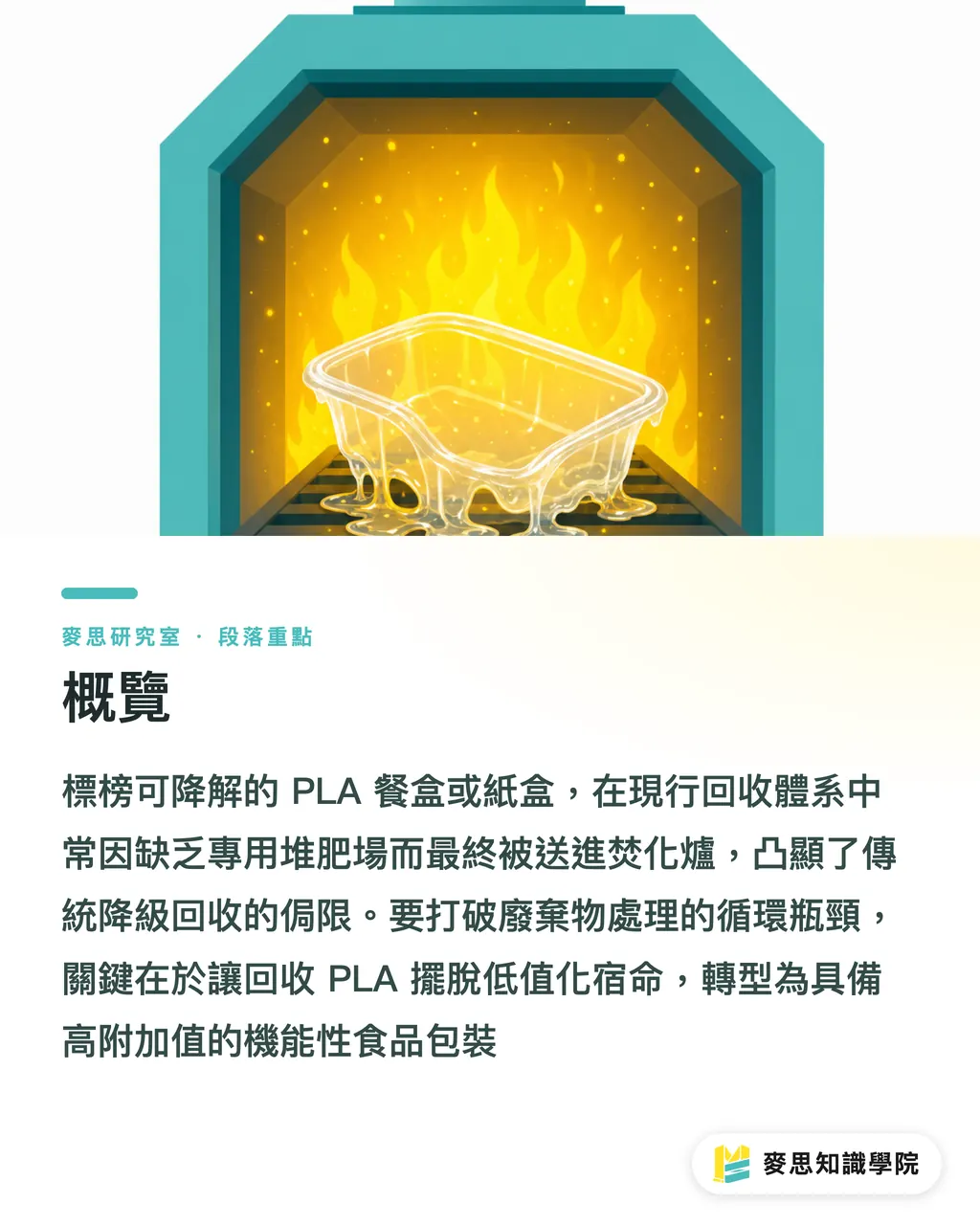
Have you ever run into this headache when evaluating packaging materials? You pick PLA (polylactic acid) food containers or windowed paper boxes labeled as biodegradable, only to find that existing recycling systems send them straight to the incinerator anyway, due to a lack of dedicated composting facilities or sorting capabilities. This pain point highlights the limits of downcycling. How can we break through the bottlenecks of waste management, rescue recycled PLA from a low-value fate, and step toward high-value functional food packaging?
Why Is Recycled PLA Hard to Loop Directly? Technical Bottlenecks from the Recycling Infrastructure Perspective
The main reason recycled PLA struggles to re-enter mainstream plastic recycling is that current waste infrastructure is built around traditional petroleum-based plastics. When mixed with other materials, PLA gets systematically rejected
On print packaging lines and in recycling plants, PLA often appears as transparent windows glued to paperboard boxes or food containers. But once PLA film bonds with paperboard or mixes with conventional plastics like PET, recycling facilities turn it away because economic separation is impossible. This failure, driven by infrastructure limits, illustrates the systemic transition dilemmas faced when Redirecting Infrasystems Towards Sustainability [3]. At the same time, policy direction and institutional frameworks around agricultural and bio-based product lifecycle management directly determine whether renewable resources can connect with industrial recycling loops [2]. Relying solely on mechanical regranulation often degrades recycled PLA through repeated heating, destroying its physical strength and triggering a collapse in material value. As a result, the industry urgently needs physical or chemical modification techniques that go beyond simple downcycling to create high added value
How Does Supercritical Technology Give Recycled PLA Antimicrobial and Sustained-Release Dual Functions?
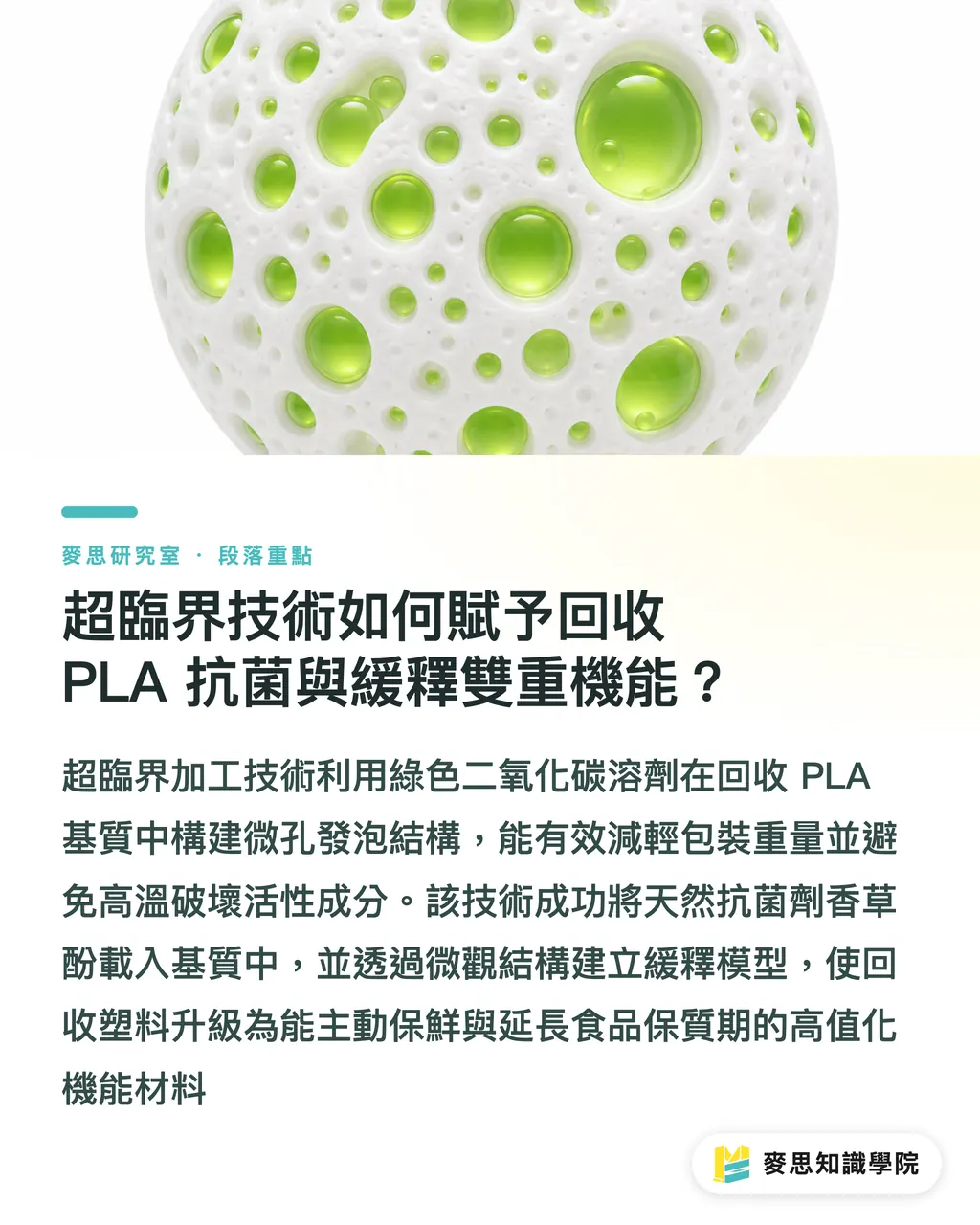
Supercritical processing uses fluid permeability to build microcellular foamed structures within recycled PLA matrices while precisely loading natural antimicrobial agents, achieving physical lightweighting and chemical preservation at once
To address the physical degradation of recycled PLA, recent research uses Supercritical Technology to process recycled PLA into antimicrobial foams and fiber structures [1]. In this process, supercritical carbon dioxide acts as a green solvent. It evenly induces microcellular foaming across the macromolecular matrix to cut package weight, while avoiding the heat damage to active antibacterial components caused by high temperatures [1]. Additionally, the technology establishes a microstructurally driven controlled-release model for thymol, designed for Active Food Packaging [1]. This research proves that recycled biodegradable plastics can evolve from basic containers into high-value functional materials that actively preserve food and extend shelf life [1]
What Tangible Benefits Does Functional Foamed Packaging Bring to Food and Brands?
By trimming weight, cutting costs, and actively curbing microbial growth, antimicrobial foam packaging lowers supply chain logistics expenses while reducing food waste
From the perspective of brand procurement and packaging design, this technology offers a double breakthrough in value. First, the microcellular foam structure dramatically cuts plastic consumption and overall package weight, dropping material costs and shipping carbon footprints while keeping structural rigidity. Second, antimicrobial foams integrated with the thymol controlled-release model continuously emit antibacterial volatiles inside the package, suppressing surface bacterial growth on perishable foods like meat and fruit. Compared with traditional packaging that only acts as a physical barrier, this active preservation mechanism offers brands a higher standard of quality assurance. Just as people adjust their behavior and choices when facing environmental and health risks [4], growing market demands for food safety and sustainable packaging match this green antimicrobial trend
How Should Brands Make Specification Decisions When Adopting Recycled PLA Functional Packaging?
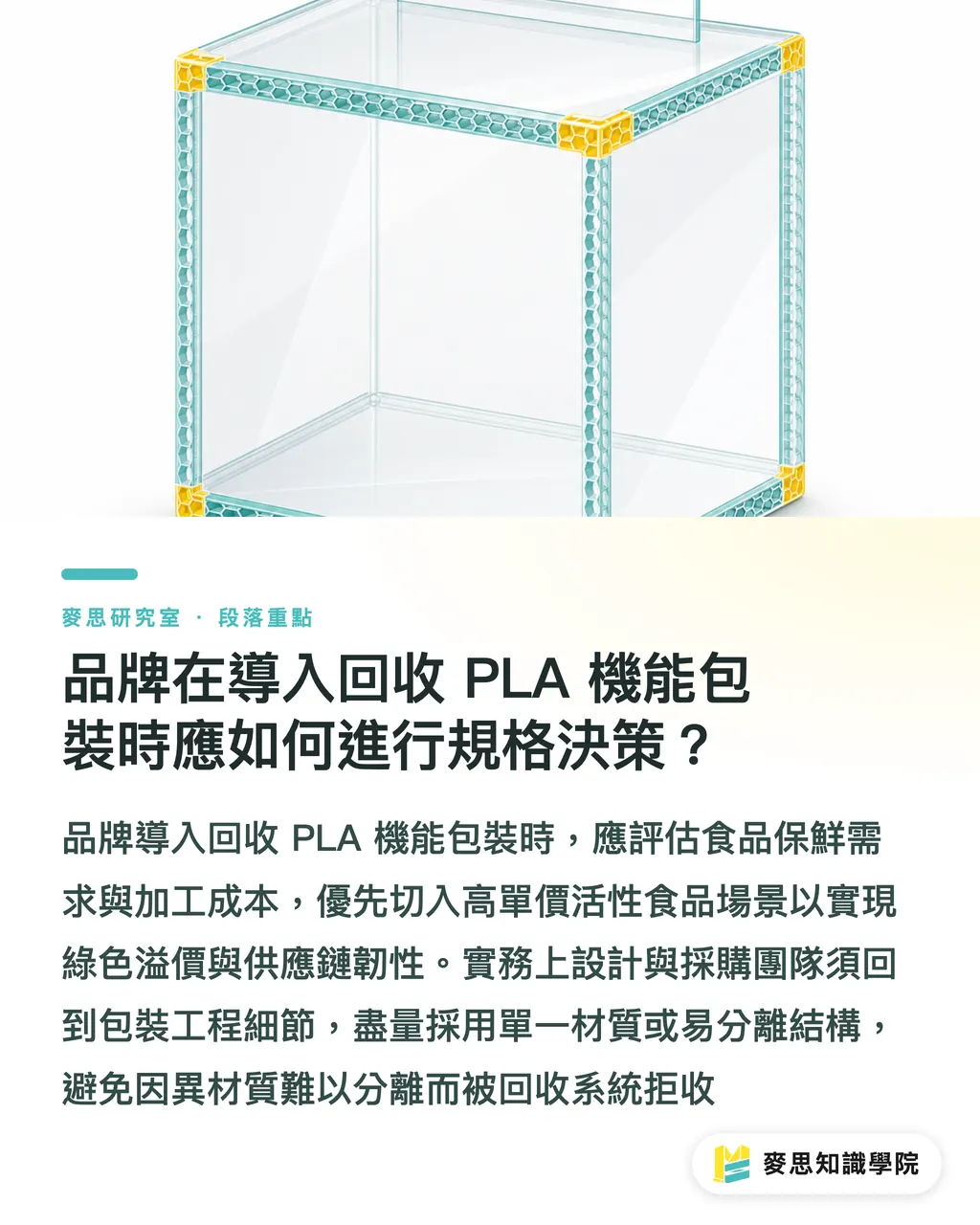
When introducing recycled PLA functional packaging, brands should evaluate thymol release rates based on target shelf-life needs and ensure package structures stick to mono-material or easy-separation principles
During practical implementation, design and procurement teams need to put packaging engineering specs into action:
・First, match appropriate microcellular foam structures and thymol release kinetics parameters to the respiration rates and microbial spoilage curves of the target food
・Second, adopt mono-material solutions in structural design where possible, or design interfaces that consumers can easily peel apart, avoiding the mistake of traditional PLA windowed boxes getting rejected by recyclers because they cannot be separated
・Third, assess how supercritical processing and equipment investment affect per-unit packaging costs, prioritizing high-value, high-preservation active food packaging scenarios as initial pilot projects
Using supercritical technology to develop antimicrobial foamed recycled PLA provides a practical way for bioplastics to balance circular reuse with high-value transformation. For brands focused on sustainable transition, upgrading recycled materials into strategic packaging with preservation functions offers a real path toward green premiums and supply chain resilience. However, for low-margin dry food packaging that needs no shelf-life extension and operates in high-humidity settings, the processing premium of supercritical foaming may be tough to recover. In those cases, traditional paper structures or lightweight mono-materials remain the better choice
Key Takeaways
Supercritical processing transforms recycled PLA into antimicrobial microcellular foams and fibers, driving a high-value shift [1]
The thymol microstructural sustained-release model created through supercritical technology delivers precise antibacterial and freshness benefits for active food packaging [1]
Traditional PLA recycling bottlenecks stem from infrastructure limits and mixed materials, meaning packaging design should follow mono-material or easy-separation design principles [3]
Adopting functional packaging reduces material usage and extends shelf life for brands, though companies must carefully weigh processing premiums against food preservation needs
Further Thoughts
For print and packaging manufacturers, this technology moves packaging processing beyond traditional flat printing and physical forming into controlling material microstructures and active functions. Beyond improving ink adhesion and die-cutting accuracy, manufacturers need to integrate methods like supercritical foaming to help clients balance material reduction, food freshness, and circular recycling. Moving forward, the industry must accelerate standardized testing of supercritical foaming on existing automated packaging lines while bringing in SaaS and AI simulations to accurately predict release kinetics, lowering the R&D barrier and trial-and-error costs for brands adopting high-value recycled packaging
References
[2] Redirecting Government Policies for Agricultural Sustainability. Crisis and Opportunity. DOI: 10.2307/j.ctt1dgn4cr.22
[3] Kaijser A. (2017). Redirecting Infrasystems Towards Sustainability. Individual and Structural Determinants of Environmental Practice. DOI: 10.4324/9781315252377-7
[4] Gajić T., Minasyan L., Petrović M. et al. (2023). Travelers' (in)Resilience to Environmental Risks Emphasized in the Media and Their Redirecting to Medical Destinations: Enhancing Sustainability. Sustainability. DOI: 10.3390/su152115297
FAQ
- What is supercritical foaming technology for recycled PLA?
- Supercritical foaming is a processing technique that uses supercritical carbon dioxide as a green foaming agent to penetrate recycled PLA plastic and create a uniform microcellular structure. This cuts package weight while keeping strength and loading active antimicrobial ingredients [1]
- How does supercritical foamed recycled PLA achieve antimicrobial protection and food freshness?
- During supercritical processing, this technique evenly incorporates natural antimicrobial agents like thymol into the PLA microstructure, creating a controlled slow-release model. This allows the packaging to continuously emit antibacterial components and extend food shelf life [1]
- Why do recycling plants often reject traditional recycled PLA food containers?
- Traditional PLA packaging is often glued to different materials like paperboard or PET, and existing recycling infrastructure lacks dedicated sorting and composting setups. As a result, separating these materials during mechanical recycling is difficult, forcing them into incinerators [3]
- What economic and environmental benefits do brands gain from adopting recycled PLA antimicrobial packaging?
- Microcellular foaming cuts raw plastic usage and shipping weight, while antimicrobial slow-release reduces food spoilage waste. Together, these benefits help brands raise product value and strengthen their sustainability profile [1]
Related articles


The Print × AI weekly
The print and AI know-how designers, brands and enterprises can use before they commit — one email, every week
MINDS Free Tools
AI background removal, a LINE sticker maker, spine & imposition calculators — all free, right in your browser, no upload.
MINDS Group
Need actual printing or gifting services?
From premium printing to online ordering and festive gifts — the MINDS Group sister brands take it from here.