
Overview
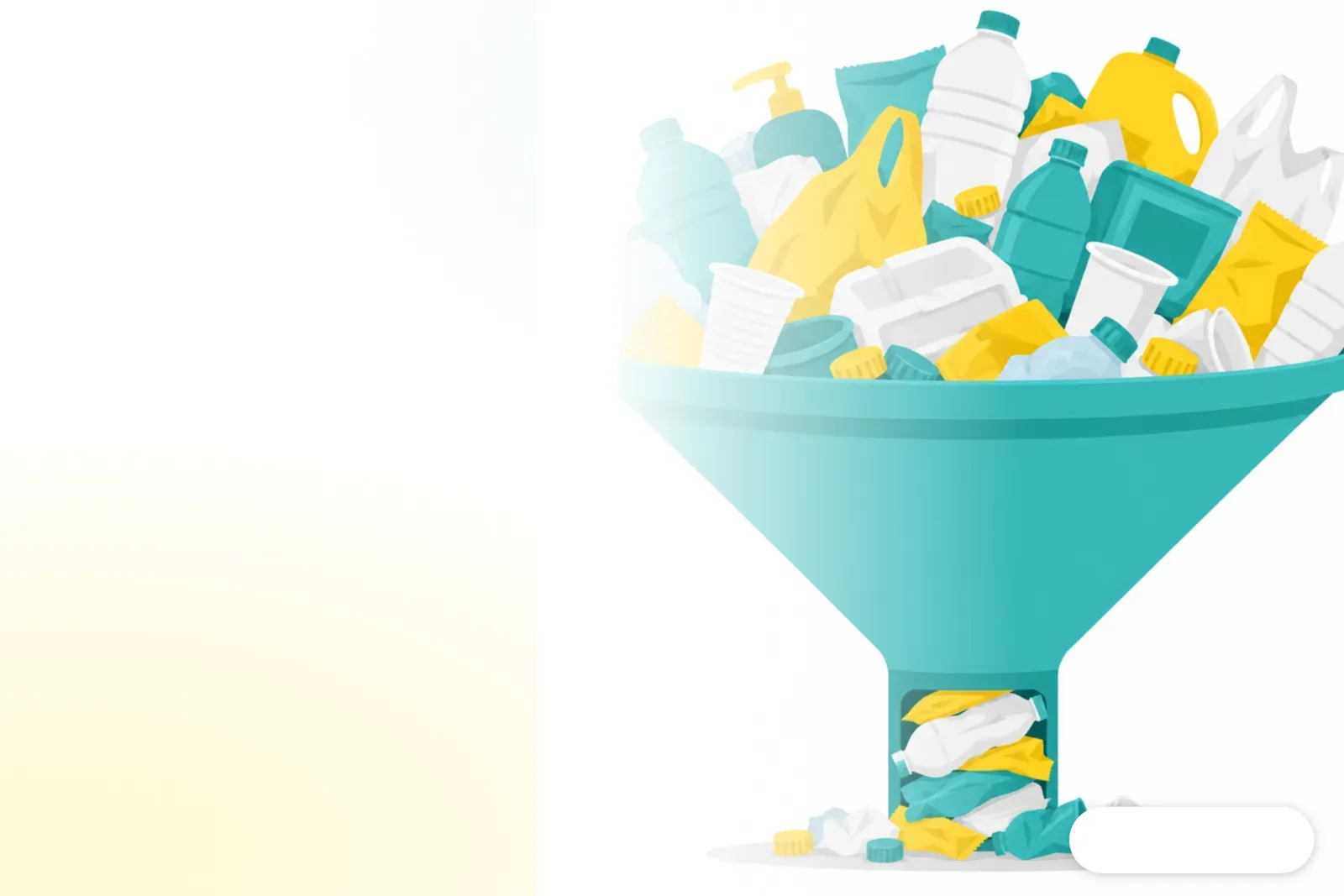
Last month, a longtime customer who exports flexible packaging asked me, "Our bags are all labeled recyclable. Why does Europe keep saying recycling can't keep up?" A recyclable label does not mean a bag actually enters the recycling stream. That also depends on whether local collection, sorting, and reprocessing facilities are available. A recent Packaging Insights report says plastic packaging waste in Europe continues to grow faster than recycling can handle [1]. As waste outpaces recycling capacity, what pressures will brands and packaging suppliers face, and what can they do now?

Why can't plastic packaging recycling in Europe keep up with growing waste?
The main reason is that packaging use and material complexity are growing faster than sorting and reprocessing capacity. A Packaging Insights report points directly to the gap between accumulating waste and the capacity to recycle it [1]. The report does not provide country-by-country statistics, recycling rates, or time-series data, so it cannot show which countries are falling furthest behind
From a technical standpoint, mechanical recycling depends heavily on the purity of incoming material and the quality of sorting [6]. Multilayer films, dark pigments, incompatible labels, and adhesives can prevent sorting lines from identifying packaging effectively, or leave recycled material too low in quality to be used again for packaging [6]. Waste volumes are rising, and hard-to-recycle structures are becoming more common. As a result, stated capacity does not necessarily translate into actual processing volume
Plastic packaging recycling is not a new issue. Research was already systematically discussing ways to recycle plastic fiber and packaging waste in the 1990s [3]. The fact that the problem has persisted for three decades suggests a long-running disconnect between design and processing. Recycling methods themselves are not the only bottleneck
Have the EU's earlier packaging directives worked?
The real-world impact of EU packaging directives on plastic recycling is still being examined by researchers. We cannot simply assume that legislation leads to results. A 2025 study by Mullane, Bottausci, Baldé, and others used statistical methods to assess the effect of the 2004 amendment to the Packaging Waste Directive on plastic packaging recycling in the EU [2]. The value of this kind of research is that it reminds us that directives set targets, while implementation depends on each member state's collection and processing capacity. Policy outcomes need to be checked against data
This is part of the context behind the EU's shift from directives to regulations. Directives must be transposed into national law, which can lead to wide differences in implementation. Regulations apply directly across all member states. The Packaging and Packaging Waste Regulation (PPWR, Regulation (EU) 2025/40) is the result of this shift [7]

How will the PPWR change the rules for packaging?
The PPWR moves pressure upstream from recycling to design. Whether packaging can enter the EU market will depend on factors such as its recyclability grade and recycled content [7]. Here are several requirements with a direct impact on the supply chain:
・Recyclability: Starting in 2030, packaging must meet design-for-recycling standards and will be graded according to its recyclability performance. Packaging with a grade below the required level will not be allowed on the market [7]
・Recycled content: The regulation sets minimum recycled-content levels for plastic packaging for 2030 and 2040, with requirements varying by contact sensitivity and packaging type. For example, single-use plastic beverage bottles must contain 30% recycled content by 2030 [7]
・Waste reduction: Using 2018 as the baseline, the regulation sets targets to reduce packaging waste per person by 5% by 2030, 10% by 2035, and 15% by 2040 [7]
If recycling capacity cannot keep pace with growing waste, recycled material supplies may tighten. Mandatory recycled-content requirements could also make qualifying recycled material harder and more expensive to source [1]. The author expects food-grade recycled material that meets requirements to become harder to obtain than virgin plastic in the coming years
What should Taiwan's printing and packaging companies do now?
The first thing Taiwan's companies should do is put Design for Recycling (DfR) into their specifications instead of waiting for customers to forward regulations before reacting. Europe already has standards for designing recyclable plastic packaging [4][5]. These can serve as a basis for internal design reviews
In practice, I recommend checking three areas:
・Material structure: Give priority to evaluating mono-material options and reduce structures that are difficult to sort, such as PE/PET composites. Mechanical recycling quality depends on the purity of incoming material [6]
・Printing and converting: Ink coverage, dark backgrounds, metallization, and label adhesives can all affect sorting and recycled material quality. Assess them during proofing
・Life cycle trade-offs: Changing materials does not automatically make packaging more sustainable. Assess environmental performance across the full life cycle instead of looking only at recycling rates [8]
Be clear about where this advice applies. If your products are mainly sold outside the EU, or fall under PPWR exemptions or special requirements, adjust these priorities to local regulations and available recycling facilities. Recyclability is always local. Where processing capacity does not exist, even the best design is only compliant on paper
Key takeaways
・Plastic packaging waste in Europe continues to grow, while recycling capacity has not kept pace. That gap is itself a supply-chain risk
・The bottlenecks in mechanical recycling are the purity of incoming material and the quality of sorting. Hard-to-recycle packaging structures make existing capacity look greater on paper than it is in practice
・The PPWR (Regulation (EU) 2025/40) shifts responsibility upstream from recycling to design through recyclability grades, recycled-content requirements, and waste-reduction targets
・Insufficient recycling capacity combined with mandatory recycled-content requirements could make qualifying recycled material a scarce resource in the future
・Taiwan's companies should include Design for Recycling in their specifications and assess material changes from a life cycle perspective
Further considerations
For printing manufacturers, the PPWR means inks, coatings, metallization, and lamination will all face scrutiny for their effect on recyclability. Printers need an internal knowledge base showing how each converting option affects recycling. For designers, packaging aesthetics will have to work alongside sorting requirements. The cost of dark full-coverage printing and multi-material decoration will gradually rise. AI could help compare specifications by checking structured material lists against DfR rules and recycled-content ratios, reducing mistakes in manual reviews. SaaS providers may also see demand for packaging compliance data management, such as tracking proof of recycled material origin and recyclability grades. Transparent data on recycling capacity across member states is still lacking, and recyclability grading methods are still evolving. Whether Asian suppliers can secure a reliable supply of recycled material remains to be seen
References
[1] Plastic packaging waste in Europe keeps rising: a warning that recycling is falling behind
[2] Mullane P., Bottausci S., Baldé K., et al. (2025). A Statistical Assessment of the EU Packaging Waste Directive (2004 Amendment) on Plastic Packaging Recycling in the EU. DOI: 10.2139/ssrn.5561043
[3] Horrocks J. (1996). RECYCLING OF PLASTIC FIBRE AND PACKAGING WASTE. Recycling Textile and Plastic Waste. DOI: 10.1533/9780857093004.2.61
[4] Packaging. Design for recycling of plastic packaging. DOI: 10.3403/30478296
[5] Packaging. Design for recycling of plastic packaging. DOI: 10.3403/30478296u
[6] Feil A., Pretz T. (2020). Mechanical recycling of packaging waste. Plastic Waste and Recycling. DOI: 10.1016/b978-0-12-817880-5.00011-6
[7] EUR-Lex: Full text of the EU PPWR. EUR-Lex
[8] Mendeley record for a Journal of Cleaner Production paper: a meta-analysis of packaging life cycle assessments. Mendeley record for a Journal of Cleaner Production paper
FAQ
- Why can't plastic packaging recycling in Europe keep up with growing waste?
- Plastic packaging waste in Europe continues to grow, but collection, sorting, and reprocessing capacity have not expanded at the same pace. Multilayer and hard-to-identify packaging structures reduce mechanical recycling efficiency, leaving actual processing volumes below stated capacity
- What is the PPWR, and when does it apply?
- The PPWR is the EU Packaging and Packaging Waste Regulation (Regulation (EU) 2025/40). It applies directly in all member states from August 12, 2026. It sets requirements for all packaging entering the EU market, covering recyclability, recycled content, and waste-reduction targets
- What recycled-content requirements does the PPWR set for plastic packaging?
- The PPWR sets minimum recycled-content levels for plastic packaging for 2030 and 2040, according to packaging type and contact sensitivity. For example, single-use plastic beverage bottles must contain 30% recycled content by 2030
- How can Taiwan's packaging companies respond to pressure to recycle plastic packaging in the EU?
- Taiwan's companies should include Design for Recycling in their specifications, give priority to evaluating mono-material structures, and check during proofing how inks, labels, and converting processes affect recycling. Material changes should be assessed through a life cycle assessment, not by recycling rates alone
- Will plastic packaging labeled "recyclable" definitely be recycled?
- Not necessarily. Whether packaging is actually recycled depends on the availability of suitable local collection, sorting, and reprocessing facilities, as well as whether sorting lines can identify its structure
Related articles
The Print × AI weekly
The print and AI know-how designers, brands and enterprises can use before they commit — one email, every week
MINDS Free Tools
AI background removal, a LINE sticker maker, spine & imposition calculators — all free, right in your browser, no upload.
MINDS Group
Need actual printing or gifting services?
From premium printing to online ordering and festive gifts — the MINDS Group sister brands take it from here.