
Overview
Last month, a brand's procurement manager brought me two quotes and asked: Cartons have gone up, and glass bottles have gone up too, but the suppliers gave completely different reasons. Which increase makes more sense?
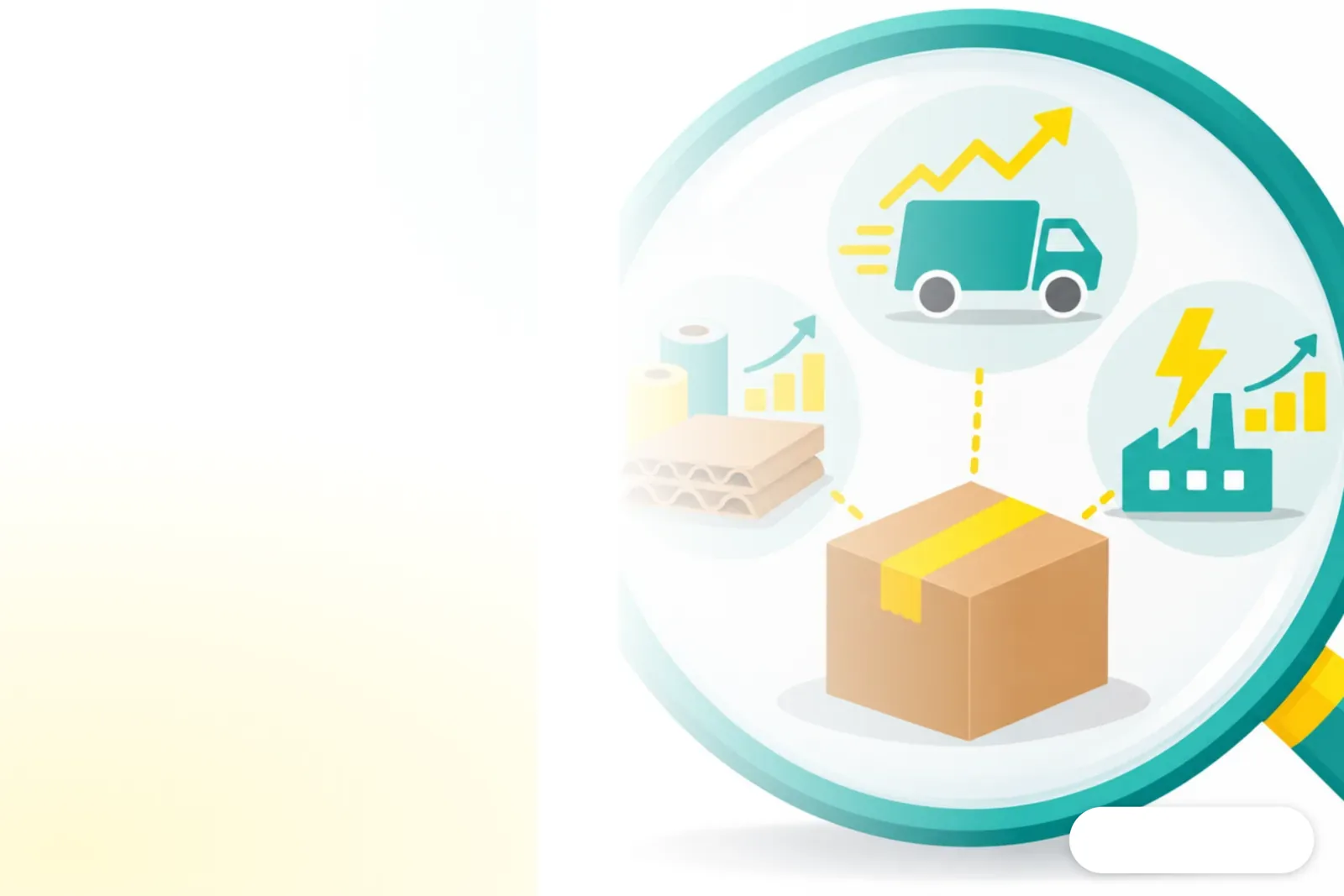
"Inflation" in the packaging supply chain isn't a single number. It comes from separate cost lines for paper, glass, energy, and more. In 2026, print and packaging businesses need to review these costs separately and manage each one accordingly
How hard is cost inflation hitting major packaging companies?
Cost inflation has hit major packaging companies hard enough to show up as a separate line in their forecasts. Smurfit Westrock expects cost inflation to have an impact of around $700 million in 2026 [1]. The company itself was formed after Smurfit Kappa and WestRock announced their merger in 2023 [4]. It ranks among the industry's largest players, with significant bargaining power
If a company of that scale has to publicly acknowledge cost pressures, things are only tighter for smaller printers and converters. Once major players build inflation into their annual forecasts, downstream contracts usually see price adjustments within one or two quarters
Why are paper and glass packaging going up for different reasons?
Paper and glass packaging have different reasons for rising in price because their main cost drivers differ. O-I Glass says higher freight, energy, and trade costs are putting pressure on the company [1]. Glass furnaces need to run at high temperatures for long periods. The finished products are heavy, fragile, and expensive to transport over long distances, so energy and logistics are major costs by nature
Paper packaging, by contrast, is more heavily weighted toward fiber. The quality and price of recovered paper directly affect corrugated base paper production. Smurfit Kappa Beograd's investment in automating waste paper intake inspection [3] shows that fiber quality control is itself a cost area worth investing in
In other words, when a carton maker says, "Base paper prices are up," and a glass maker says, "Freight and energy costs are up," both may be telling the truth. If procurement teams compare them using the same yardstick, they can end up accusing one supplier of raising prices without cause
Can energy risks be locked in?
Energy risks can be partly locked in, provided the supplier is willing to make long-term energy arrangements. German paper manufacturer LEIPA has announced plans to supply its German mills with wind power starting in 2026 [2]. The same industry report also mentioned MM Group investing in a continuous digester and Mondi commissioning a corrugated base paper line [2]. The paper industry is reshaping its cost structure through equipment investments and energy contracts
My read: Suppliers with fixed energy sources may see less price volatility. So when requesting a quote, it's worth asking about more than the unit price. Ask how the supplier buys energy and how long its contracts run. The energy source and contract term can also affect quote stability
Policy also affects energy and trade costs. The German Printing and Media Industries Federation (bvdm) has a formal entry in the German Bundestag's Lobby Register [6], showing that industry associations do speak up at the policy level. Businesses in Taiwan can also use their trade associations to turn the impact of energy rates and trade terms into figures they can bring to the table
How should printers build inflation into quotes and contracts?
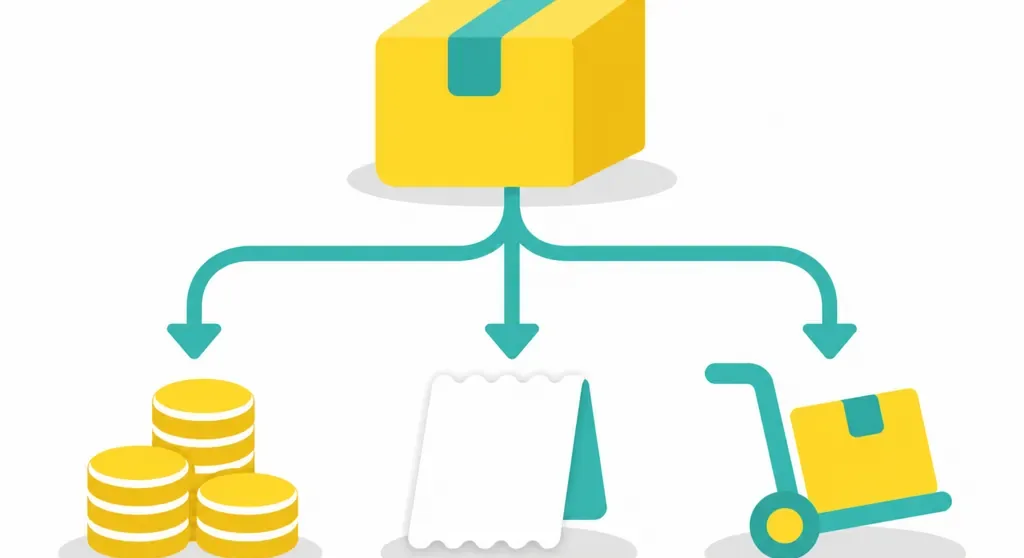
Printers should break quotes into a "three-part cost ledger": materials, energy, and logistics and trade. Track each line separately and set its own adjustment terms. Here's what I recommend:
・Materials: Paper, ink, adhesives, and glass raw materials. Link them to raw material indices or supplier price lists, and trigger an adjustment only when prices move beyond a set threshold
・Energy: Electricity and gas. Link them to published rates or energy contracts. This is especially useful for energy-intensive processes and glass packaging
・Logistics and trade: Freight, tariffs, and customs fees. Link them to actual shipping documents and policy announcements so one-off charges don't get folded into a long-term unit price
Once the costs are split out, customers can check changes in energy and materials separately instead of facing one total increase that's hard to verify
A cost breakdown can also help brands rethink specifications. Research using the Kano model to analyze packaging materials found that consumers respond differently to different packaging attributes [5]. When costs rise, specifications can be adjusted based on those responses instead of cutting everything across the board
Next step and where this applies: At your next contract renewal, at least separate energy and logistics from the material unit price. For a small, one-off order with a short lead time, the effort of splitting costs may outweigh the benefit. A fixed quote with a validity period is often more practical

Key takeaways
・Smurfit Westrock expects cost inflation to have an impact of around $700 million in 2026, showing that major companies have added inflation to their annual forecasts
・O-I Glass points to pressure from freight, energy, and trade costs, showing that packaging costs can't be tracked by raw material prices alone
・Paper packaging is more exposed to fiber costs, while glass packaging is more exposed to energy and logistics. Use different yardsticks when comparing their quotes
・Break quotes into three cost lines for materials, energy, and logistics and trade, each with its own adjustment terms. This makes costs easier to discuss and verify
・Long-term energy arrangements may make supplier quotes more stable, so ask about them when requesting a quote
Further questions
Print manufacturers can build a cost breakdown model that makes the source of each cost change clear in their quotes. Designers can use Kano attribute categories to help brands decide which specifications can change under cost pressure. AI and SaaS tools can connect raw material indices, energy rates, and freight data, update cost ledgers, and flag contract adjustments. Questions remain: Do smaller manufacturers have enough cost data to break things down? Will customers accept index-linked clauses? And how can policy-driven costs such as trade fees be forecast without resorting to guesswork?
References
[2] PKV Sustainability Report for 2024 Published / MM Group Invests in Continuous Digester / LEIPA to Supply German Mills with Wind Power from 2026 / Mondi Commissions Corrugated Base Paper Line / Gmund Papier Wins German Sustainability Award 2026 / Mondi Wins Nine WorldStar Awards for Packaging Solutions / CHT Earns Gold in EcoVadis Sustainability Rating / ANDRITZ Supplies Rotary Kiln Plant for New Pulp Mill in China / Smurfit Westrock Starts Up New Digital Printing Press / Tetra Pak® Invests in Its Own Pilot Plant. Wochenblatt für Papierfabrikation. DOI: 10.51202/0043-7131-2026-1-007
[3] Smurfit Kappa Beograd d.o.o., Belgrade, Serbia, Juričić T. (2024). AUTOMATIZATON OF INPUT CONTROL OF WASTE PAPER IN SMURFIT KAPPA BEOGRAD COMPANY. Proceedings / XXV International Symposium on Cellulose, Paper, Packaging and Graphics. DOI: 10.46793/cpag24.129j
[4] Smurfit Kappa & WestRock Announce Merger / Ferag Acquires dereOida / In Brief / Swisslog Names Jens Schmale as New CEO / Markus Wirth Becomes New Chromos Board President / Leadership Change at Migros Industrie / Simalfa Expands in the Asian Market / Nussbaum Wins World Aluminium Aerosol Can Award 2023 / Bobst's Digital Inspection Table for Läser AG / Aluflexpack Invests in Its Croatian Plant in Drniš / Pacovis Opens New German Location in Metzingen / In Brief. PACKaktuell. DOI: 10.51202/1664-6533-2023-7-044
[5] Acta Graphica/Hrčak: Study on Consumer Satisfaction with Packaging Materials Using the Kano Model. Acta Graphica/Hrčak
[6] German Bundestag Lobby Register: Official bvdm Lobby Registration. German Bundestag Lobby Register
FAQ
- How severe is cost inflation in the packaging industry in 2026?
- Smurfit Westrock expects cost inflation to have an impact of around $700 million in 2026. O-I Glass has also said that freight, energy, and trade costs are putting pressure on the company, showing that both paper and glass packaging are affected
- Why are cartons and glass bottles going up for different reasons?
- Paper packaging is more exposed to fiber materials such as recovered paper, while glass packaging depends heavily on furnace energy and the transport of heavy goods. That's why the reasons for price increases differ, and quotes shouldn't be compared using the same standard
- How can printers build inflation costs into their quotes?
- Break quotes into three cost lines for materials, energy, and logistics and trade. Link each to an index or actual documentation, and set an adjustment threshold. Customers can then see where increases come from, and contract adjustments have a clearer basis
- How can energy cost fluctuations be reduced?
- Some paper manufacturers have reduced volatility through long-term energy contracts. For example, LEIPA is bringing wind power to its German mills starting in 2026. When requesting quotes, procurement teams can also ask about the supplier's energy sources and contract terms
- Are cost breakdowns suitable for every order?
- Not necessarily. Breaking down costs for a small, one-off order with a short lead time can take more work than it's worth. A fixed quote with a validity period is usually more practical. Cost breakdowns work best for long-term, high-volume, or energy-intensive products
Related articles

The Print × AI weekly
The print and AI know-how designers, brands and enterprises can use before they commit — one email, every week
MINDS Free Tools
AI background removal, a LINE sticker maker, spine & imposition calculators — all free, right in your browser, no upload.
MINDS Group
Need actual printing or gifting services?
From premium printing to online ordering and festive gifts — the MINDS Group sister brands take it from here.