
Overview
Say you run a label converting business, and a new order just came in: forty SKUs for the same brand, only a few thousand labels per design, with hot foil stamping and spot UV, all due next week. Changeovers on a traditional flexo press take forever. With all-digital printing, you worry that the white ink won't provide enough opacity and that finishing won't keep up. Hybrid label printing aims to solve that bind. Durst's latest growth figure makes the question more concrete: why is hybrid label printing becoming a growth focus for equipment makers, and what does it mean for prepress?
How Much Has Durst's Hybrid Label Printing Grown?
According to Durst, sales of its hybrid label printing systems tripled over the past 12 months [1]
The news was announced in late October 2026. Durst attributed the growth to demand for "fully integrated platforms" [1]. The figure calls for some restraint in how we read it
・This is a company-reported figure. The report does not disclose unit sales or a revenue baseline [1]. Tripling is not hard if you start from a small base
・It signals a direction, not market size. It shows that Durst is selling in this category, but it does not tell us how much of the overall label market has gone digital
My read: the number itself tells us little. What's worth watching is how Durst explains the growth and where it goes next
Why Are Label Converters Starting to Buy Hybrid Lines?
The core reason is that shorter runs, faster turnaround times, and greater SKU complexity are all on the rise. A single process is getting harder to make both efficient and cost-effective
Durst points to four pressures: shorter runs, faster turnaround times, more complex SKU mixes, and more efficient use of production resources [1]. None of these pressures is new on its own. What's changed is that they are showing up together
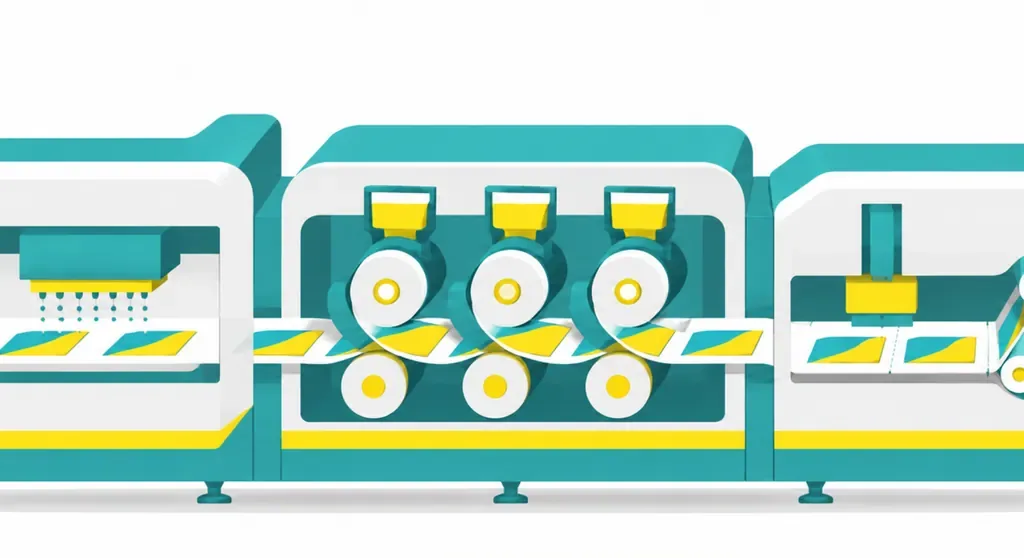
A hybrid platform combines a high-speed inkjet engine with inline flexo and finishing on one production line [1]. In practice, the work is usually split like this:
・inkjet handles variable content and graphics across multiple SKUs, without the need for plates
・flexo handles large areas of spot color, white ink underprinting, and varnishing, where traditional processes are a better fit
・inline finishing means die-cutting and hot foil stamping don't need another offline pass
The value is not in any single machine. It comes from fewer changeovers and less handling. For a label converter, this setup can eliminate one handoff
Is Durst Selling a Press or a Complete Production System?
Durst says clearly that it sells a complete production ecosystem, not just a press
Thomas Macina, Durst's global sales director for labels and flexible packaging, says customers are "not just investing in a press, but in a complete production ecosystem" [1]. Durst's Digital Label Factory concept bundles workflow software, color management, quality control, integrated inline flexo and finishing, and service support. The company says this reduces the complexity of coordinating multiple suppliers and disconnected systems [1]
The acquisition of MPS Printing follows the same logic. The report says the deal adds more flexo expertise to Durst and expands its hybrid line options [1]. CEO Christoph Gamper says the goal is "not to duplicate existing solutions," but to offer the right technology, level of automation, and production concept for each customer [1]
The longer timeline makes the strategy clearer. Durst reorganized its Label & Flexible business unit back in 2021 [2]. My observation: from that reorganization to the acquisition of MPS, Durst spent several years building up its weaker flexo capabilities
Where Does a Hybrid Line Have the Biggest Impact on Prepress?
The biggest impact is that prepress staff must decide within the same file which elements will run on inkjet and which on flexo, then make sure the two processes produce matching color
In a traditional workflow, flexo and digital are separate routes, each with its own file requirements. A hybrid line ties them together, so mistakes can multiply across both. I use what I call the "three prepress gates for hybrid labels" to check this kind of job. It's an analytical framework, not an industry standard:
・Separation gate: Spot color, white ink, varnish, and hot foil stamping areas need to be clearly marked in the PDF as separate spot channels or layers. Otherwise, the RIP won't know which unit should handle them
・Color gate: The inkjet CMYK plus extended color gamut and the flexo spot colors need to be calibrated under the same color management system. Durst lists color management as one of its platform's core capabilities [1], which points to where the pain lies
・File gate: The print-ready PDF needs consistent preflight rules. Ghent Workgroup (GWG) has long published technical specifications and preflight settings for print PDFs [3][5], which can serve as a starting point for building internal checks [4]
Design is affected too. When a job suddenly grows to forty SKUs, the modularity of the templates and the definition of variable data fields directly determine whether prepress can be automated, instead of imposing each version by hand
What to Do Next
If you're evaluating a hybrid line, my advice is to review your order mix before you talk equipment
・Start by calculating your SKU count, average run length, and number of changeovers over the past year. A hybrid line is easier to justify when short runs and multi-SKU jobs make up a large share of your work
・Document the three prepress gates and try them on your current equipment first. Don't wait until the new press arrives to build the workflow
・When you talk to equipment vendors, ask how their workflow and color management will connect to your existing MIS and RIP. Don't ask only about print speed
Where it may not fit: If you mainly run long jobs with few SKUs, or print large solid areas for flexible packaging, traditional flexo may still have a lower unit cost. The integration value of a hybrid line can be outweighed by the high investment, so run the numbers again for your own operation
Key Takeaways
・Durst reports that sales of its hybrid label printing systems tripled in 12 months, but it has not disclosed a baseline. Treat this as a directional signal, not a measure of market size
・Demand is being driven by four pressures arriving together: shorter runs, faster turnaround times, SKU complexity, and the need to use resources more efficiently
・Durst's strategy is to sell an integrated production ecosystem. Its acquisition of MPS, which adds flexo expertise, extends that strategy
・Hybrid lines magnify errors in separations, color, and file specifications. Prepress needs to set up checks before production
・The decision to invest should start with the order mix. Traditional flexo may still be more cost-effective for plants with long runs and few SKUs
Further Thoughts
For print manufacturers, hybrid lines shift competition away from print speed and resolution and toward integration and handoff costs. Equipment makers will increasingly compete on software and service, not printheads. For designers, fragmented SKU mixes will push teams toward modular templates and standardized variable data. Whether a design file can be imposed automatically will become part of delivery quality. For AI adoption, prepress is the most practical place to start: automatically identify spot colors and finishing layers, catch separation errors during preflight, and recommend inkjet or flexo based on the order mix. These tasks have clear rules and available data. For SaaS vendors, one-stop platforms like Durst's will squeeze the space for third-party workflow products, while leaving room for integration across equipment brands and production sites. Questions remain: there is little public data on actual utilization and unit costs for hybrid lines; no public specification sets color tolerances between inkjet and flexo specifically for hybrid production; and converters need to work out how to manage the risk of relying on a single supplier after equipment makers consolidate
References
[1] Rapid Growth at Durst: Hybrid Label Printing Becomes a Growth Focus
[2] Durst Restructures Its Label & Flexible Segment. PACKaktuell. DOI: 10.51202/1664-6533-2021-4-020-4
[3] Ghent Workgroup: GWG Technical Specifications Home. Ghent Workgroup
[4] Ghent Workgroup: Official GWG Home. Ghent Workgroup
[5] Ghent Workgroup: Overview of GWG Specifications. Ghent Workgroup
FAQ
- What is hybrid label printing?
- Hybrid label printing combines a digital inkjet engine with inline flexo and finishing on one production line. Inkjet handles variable content and graphics across multiple SKUs, while flexo handles spot colors, white ink, and varnishing. The setup reduces changeovers and offline processing
- How much did Durst's hybrid label printing sales grow?
- Durst says sales of its hybrid label printing systems tripled over the past 12 months. This is a company-reported figure, and Durst has not disclosed unit sales or a revenue baseline
- Why did Durst acquire MPS?
- According to the report, acquiring MPS Printing gave Durst more flexo expertise and expanded its options for hybrid label lines. That fits Durst's strategy of promoting an integrated Digital Label Factory
- What does a hybrid label line require from prepress files?
- Prepress needs to clearly separate the elements that will run on inkjet and flexo in the PDF, including spot colors, white ink, varnish, and hot foil stamping layers. Both processes also need to be calibrated under the same color management system. Ghent Workgroup's PDF technical specifications can help inform preflight standards
- Which label converters are a good fit for a hybrid line?
- Converters dealing with short runs, many SKUs, and tight deadlines are the most likely to benefit from a hybrid line. For plants focused on long runs and few SKUs, traditional flexo may still have a lower unit cost
Related articles


The Print × AI weekly
The print and AI know-how designers, brands and enterprises can use before they commit — one email, every week
MINDS Free Tools
Imposition calculator and preflight file check — free prepress tools, right in your browser.
MINDS Group
Need actual printing or gifting services?
From premium printing to online ordering and festive gifts — the MINDS Group sister brands take it from here.