
What Problem Does a Hybrid Press Actually Solve?
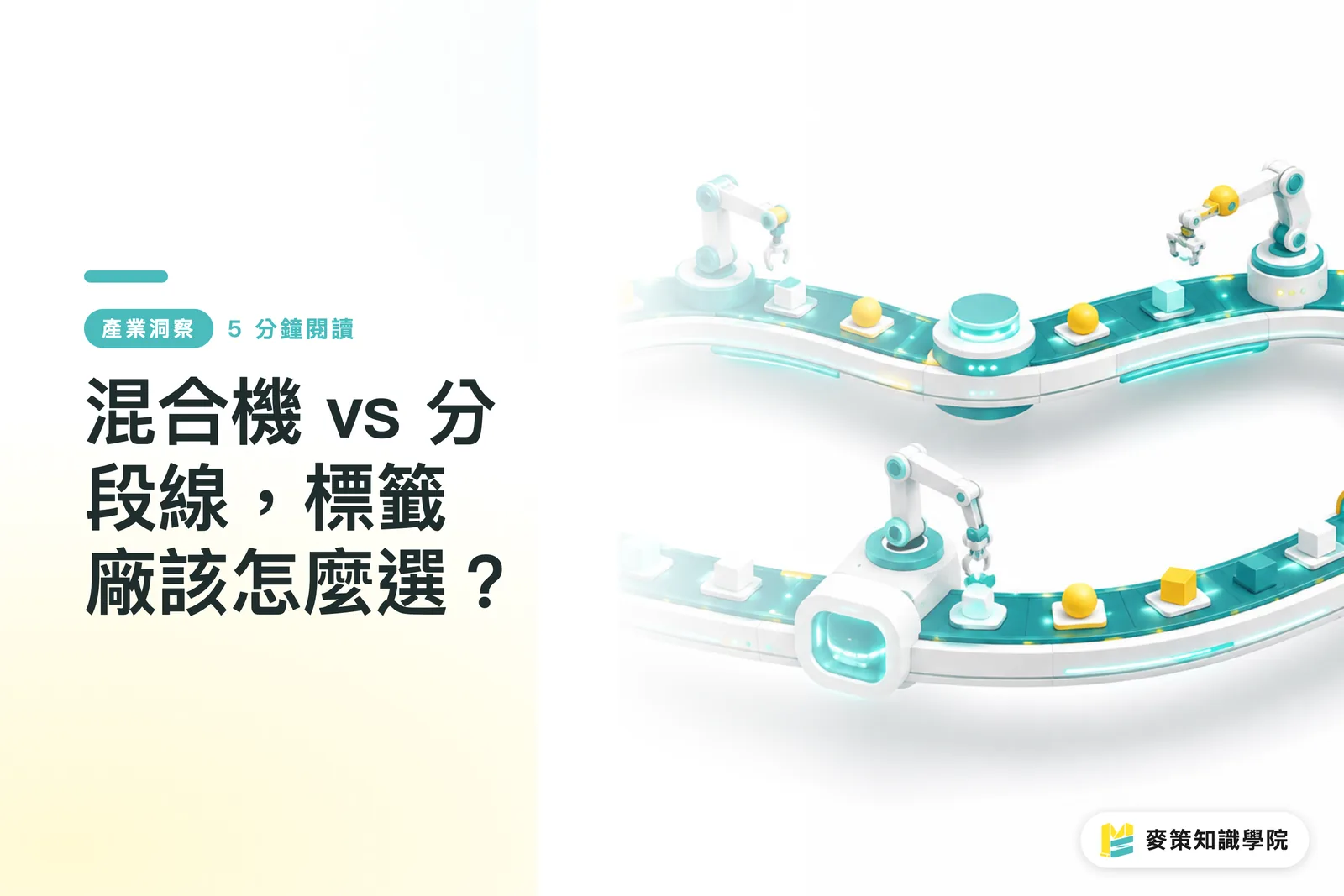
A hybrid press is not about placing a digital press and a flexo press in the same plant. It is about welding two processes into a single line, completing printing and finishing in a single pass
French label converter Stic Image installed Mark Andy's Digital Series HD at their Lyon facility this year, serving as a prime example. The machine mounts a UV inkjet engine on a flexo platform with five flexo stations before and after it, completing varnishing, cold foiling, and lamination in one pass. Company head Cyrille Roze put it bluntly: 60% of their workforce was tied up in offline finishing. The hybrid press absorbed most of that labor, turning into a much more productive tool
That is the real value proposition of a hybrid press. It is not about printing prettier. It is about eliminating the transport and handoff of moving printed rolls to another machine for finishing

Why Are Label Converters Seriously Considering Hybrid Presses Now?
Because order structures have genuinely changed. Short runs, high variety, and tighter lead times are the most noticeable shifts in recent customer interactions, especially as brands increasingly order a dozen versions at once to test market reactions
There is a detail in the Stic Image case worth noting. Jobs originally run on flexo presses had shrinking run lengths to the point where they no longer made business sense. They moved the entire batch to the hybrid press, freeing up flexo capacity for long runs. This is the exact fork in the road facing many small and medium label converters. On the same quote, do you stubbornly squeeze margins on short-run flexo, or do you admit that certain jobs simply belong on digital?
The French market is also polarizing. At the top are consolidated giants winning on volume, while at the bottom are small label shops that cannot afford new equipment and are slowly disappearing. The niche in the middle is the real stage for hybrid presses
Buying a Hybrid Press vs. Building Separate Lines: What Is the Difference?
In practice, these are two entirely different paths. The trade-offs are asymmetrical, not a simple case of pros and cons on each side
・Hybrid press (inline): Printing plus varnishing, cold foiling, laminating, and die-cutting all done in one go. Job changeovers rely on digital settings, and labor is focused on operating the press. Upfront capital investment is high, but per-unit labor costs drop significantly
・Separate lines (digital press plus standalone finishing equipment): Initial investment can be phased and controlled, but every process involves transport, handoffs, and waiting. Labor gets swallowed up between steps. The more versions and the smaller the runs, the more apparent the hidden costs of separate lines become
Stic Image chose a platform that switches between hybrid, pure digital, and pure flexo modes, essentially purchasing flexibility rather than a single function. This offers valuable reference for small and medium converters in Taiwan. If your order profile is still in flux, investing in equipment that toggles between three modes carries far lower risk than betting on a single-purpose production line
What Numbers Should Small and Medium Taiwanese Converters Crunch First?
First ask yourself one question: What percentage of your workforce is currently in finishing? If it is over 30%, the return on investment for a hybrid press will show up faster than you think
Here is the recommended evaluation sequence:
1. Audit existing finishing labor and outsourcing costs to calculate the real share of offline finishing in your total costs
2. Review average run sizes over the past six months. If short-run flexo jobs have become routine, the marginal cost of separate lines is eating into your margins
3. Check the machine's mode-switching flexibility. Can it switch freely between hybrid, pure digital, and pure flexo, or are you buying a machine that can only do one thing?
4. Confirm local after-sales support with the distributor. Hybrid presses are complex, and lacking local technical support means buying an orphaned machine
Stic Image made finishing labor share their core decision variable. Taiwanese converters can adopt this exact mindset, which reflects actual profitability far better than simply looking at print speed or color count
Why Brands Should Also Care What Equipment Their Printers Use
Because equipment selection directly dictates whether a brand can pull off multi-version, short-run marketing campaigns without enduring slow, expensive proofing cycles
Brands increasingly demand regional packaging, holiday editions, and co-branded collaborations. For printers still running pure flexo offline setups, every new version means an expensive press restart. Partnering with a printer that has already invested in a hybrid line offloads the hidden costs of version changeovers onto their equipment, rather than forcing your procurement team to absorb painful lead times and high minimum order quantities
This is why upstream equipment investments directly impact whether downstream brands can execute agile packaging strategies. When choosing a print partner, it pays to ask directly: Is your production line hybrid or separate?

Key Takeaways
A hybrid press does not just save print time. It cuts the transport and handoff costs of finishing
If finishing accounts for over 30% of your labor, the ROI on a hybrid press appears much faster than expected
The trade-off between separate lines and a hybrid press is asymmetrical. As run lengths shrink and version counts rise, the hidden costs of separate lines mount quickly
A platform capable of toggling between hybrid, pure digital, and pure flexo is far more resilient than single-purpose machinery
Brands planning multi-version marketing campaigns should also examine the production setups of their print partners
Further Thoughts
For printers weighing equipment upgrades, do not rush to compare print speeds or color gamuts. Calculate your finishing labor percentage first, because that is the defining variable for a hybrid press payback period. For brands, the next time you talk with print suppliers, ask outright whether their lines are hybrid or separate. That single answer dictates whether you can roll out multi-version packaging affordably. If you want to run the numbers on this investment or evaluate whether your packaging print partner is ready for an upgrade, feel free to connect with the Mai Strategy Knowledge Academy consulting team. If your brand needs high-end commercial printing with short-run, high-mix flexibility, take a look at the production capacity at MINDS
Further Reading
FAQ
- What is the difference between a hybrid press and a standard digital press?
- A hybrid press integrates a digital inkjet engine and flexo print stations on the same production line, completing printing along with finishing like varnishing, cold foiling, and lamination in a single pass. Standard digital presses typically handle only the printing, requiring finishing steps to be moved to separate machines or outsourced
- Is the barrier to entry high for label converters investing in a hybrid press?
- Upfront equipment costs for a hybrid press are significantly higher than for standalone digital or flexo presses. However, it brings labor-heavy offline finishing inline. If finishing makes up a large share of your labor force, labor cost savings will offset the investment gap over the medium to long term
- What kind of label converter is best suited for a hybrid press?
- Converters whose orders are dominated by short runs, high variety, tight deadlines, and complex designs with five or more colors are ideal candidates. This is particularly true for converters where short flexo runs are no longer profitable due to small batch sizes, since a hybrid press can bring those jobs back into profit
- Why should brands care whether their print partners have hybrid lines?
- Printers with hybrid lines can handle multi-version, short-run packaging needs at much lower costs. When brands want regional editions or limited holiday packaging, minimum order quantities and turnarounds are substantially more favorable than what converters with offline lines can offer
Related articles
The Print × AI weekly
The print and AI know-how designers, brands and enterprises can use before they commit — one email, every week
MINDS Free Tools
AI background removal, a LINE sticker maker, spine & imposition calculators — all free, right in your browser, no upload.
MINDS Group
Need actual printing or gifting services?
From premium printing to online ordering and festive gifts — the MINDS Group sister brands take it from here.