
Overview
Picture a scenario you will likely face soon. A beverage client drops a new spec on your desk, saying they are switching to resealable cans and asking if the body artwork needs adjustments. You open the existing layout file and realize the upper safety margin is tight, while the barcode runs straight into the new lid profile. This is not hypothetical. Canovation and Canpack have announced a partnership to scale resealable can manufacturing, aiming for mainstream market entry in 2026-2027 [1]. For can plants, the clock on this spec transition is already ticking
What Actually Changes with Resealable Aluminum Cans?
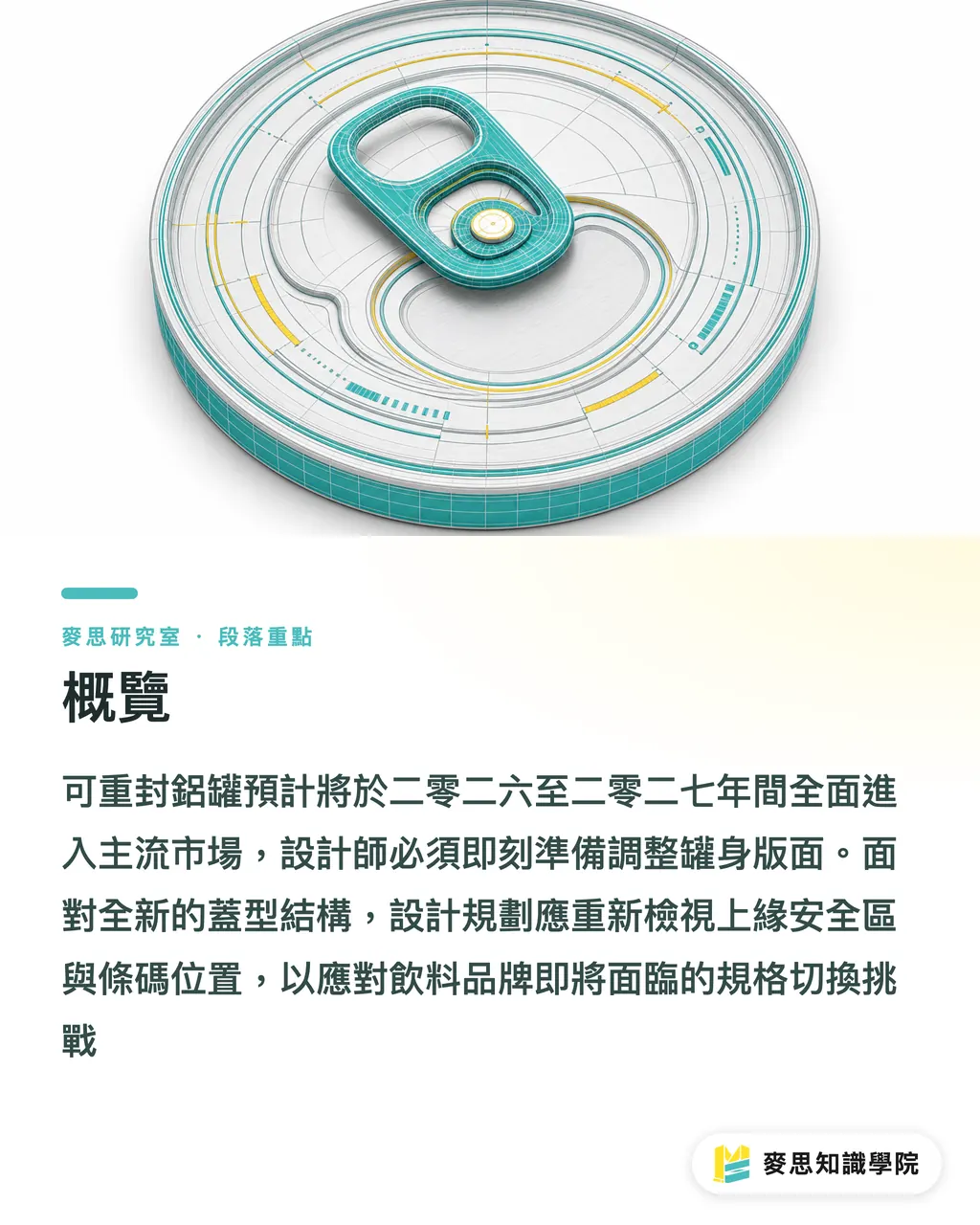
Bottom line first: this is not just a new lid, but a redesign of the entire can end geometry
Traditional two-piece cans are single-use pull tabs that cannot be closed once opened. A resealable mechanism builds a reclosable seal directly into that metal top, shifting the end dimensions [1]. On the materials side, the industry is moving toward a single-alloy approach, using the same aluminum alloy for both the can body and the resealable end so the container stays mono-material and skips sorting during recycling [2]. That helps ESG scorecards, but on the factory floor, it means seaming parameters, lid profiles, and top print clearances must all be realigned
In short, you cannot treat this like switching lid suppliers. It is a fundamental redefine of can end specifications, and printing is the downstream process caught in the ripple effect
Why This Impacts Can Body Printing and Barcodes
When the lid structure changes, the familiar safety zone along the upper rim gets squeezed
Unlike flat sheet printing, beverage can printing must conform to forming and seaming requirements. There is already a dead zone near the rim where critical graphics cannot sit. When the resealable design alters lid dimensions, this safety zone shrinks further, directly affecting barcode placement rules [1]. Barcodes cannot simply be shifted anywhere. They must satisfy strict requirements around scan angles, quiet zones, and curved surface distortion compensation. Squeezing the safety zone pushes barcodes into a much tighter printable area
Here is the key takeaway: the real headache is not redesigning the layout, but managing clients running both old and new cans at the same time. During the transition, you will handle two parallel layout standards, doubling the hours spent on proofing, sampling, and barcode verification. Plants without a dual-version workflow are the most likely to drop the ball here
Why Brands Want This Feature Now
In short, resealability is a tangible differentiator on store shelves, and differentiation is expensive right now
Resealability solves real consumer headaches like unfinished drinks, portability, and spills. Consumer sentiment surveys show positive reception for resealable features, driving up brand demand for packaging differentiation [1]. In a crowded category like beverages, a functional selling point that fits on the front panel and stars in social video is more than convenience, it is pure marketing fuel. Major players like PepsiCo build brand launches around social virality [3], and visible, touchable packaging innovations are the exact type of shareable change social feeds love
For print shops, this means brands will not treat resealability as a silent feature. They will want to highlight and shout about it right on the can. The front panel will need new callout blocks for resealability, right when safety zones are shrinking and print space is at a premium. You are not just offering printing, you are providing design services that pack more selling points into tighter spaces
What Taiwan Can Plants Should Review Today
Do not wait for clients to drop new specs on you before thinking this through. That is the classic setup for getting blindsided by a spec change [1]
I recommend a three-tiered checklist. First, equipment compatibility: can your current seaming, printing plates, and curing lines handle the can end specs for the new lid profile? This is the hardest and most expensive part, so check with your supply chain first. Second, design service flexibility: build internal templates with reduced safety zones and repositioned barcodes now, so you have demos ready when clients ask instead of scrambling on the spot. Third, process management: establish standard operating procedures for proofing and barcode verification across parallel old and new can runs
The most practical first step costs almost nothing. Take an existing layout from a core client, create a test version with the upper safety zone trimmed by a few millimeters and the barcode lowered, and run a scan verification test. This simple drill shows you exactly where your gaps are and gives you a concrete talking point for client pitches. Doing your homework before specs are finalized is always cheaper than chasing changes later
Key Takeaways
Resealable aluminum cans are projected to hit mainstream markets in 2026-2027, and the timeline pressure for spec updates has already begun [1]
This redesign alters overall can end geometry, with the industry shifting toward single-alloy builds for recycling rather than just swapping lids [1][2]
Lid profile changes compress the upper safety zone and reshape barcode placement rules, requiring dual-version management during the transition [1]
Resealability serves as a shelf differentiator that brands will want printed and promoted front and center, intensifying layout competition [1][3]
The smartest first step is to take a core client layout, build a mockup with reduced safety margins, and test barcode scan viability
Further Considerations
For print manufacturing, the core issue is not layout skill, but equipment compatibility and dual-version management. Setting up transition workflows before specs are locked is key to capturing major brand conversions. For design teams, value is shifting from simple graphics to fitting functional selling points into compressed safety zones, which is a billable specialty. For AI and SaaS, clear opportunities exist in automated safety zone detection, curved barcode distortion compensation, and dual-version diff checking to solve doubled proofing workloads. The remaining challenge is fragmented standards across brand lid designs. Can printers need workflows that ingest new specs quickly and output compliant artwork automatically, rather than starting from scratch for every client
References
[2] Zabaleta D., Hayes C., Grajewski J. (2026). Single-Alloy Resealable Beverage Can. Proceedings of the 2026 REMADE® Circular Economy Technology Summit & Conference. DOI: 10.65569/zbqy5799
[3] Social media impact on a brand launch at PepsiCo. Cases in Strategic Marketing. DOI: 10.1093/hebz/9780198943396.003.0007
FAQ
- When will resealable aluminum cans become widespread?
- According to the Canovation and Canpack announcement, resealable aluminum cans are expected to hit mainstream markets in 2026-2027 as mass production ramps up [1]
- Does the resealable mechanism affect can body printing?
- Yes. Changing the lid structure shrinks the printable safety zone near the top rim and alters barcode placement rules, requiring layout reconfigurations [1]
- Why do resealable aluminum cans use a single alloy?
- Using the same aluminum alloy for both the can body and the resealable end keeps the container mono-material, removing the need for disassembly during recycling and supporting circular economy and ESG goals [2]
- What preparations should Taiwan beverage can printers make first?
- Printers should check equipment compatibility, prepare layout templates reflecting reduced safety margins and repositioned barcodes, and establish dual-track proofing and barcode verification processes for old and new can runs to avoid last-minute surprises [1]
References
- 可重封鋁罐正式商業化:Canovation × Canpack 合作對飲料罐設計與印刷規格的影響 · packaginginsights.com
- Single-Alloy Resealable Beverage Can · doi.org
- Social media impact on a brand launch at PepsiCo · doi.org
- Can electromagnetic augmentation reduce space launch costs? · doi.org
- TR3 TIME-RELEASE LAUNCH IN RELATION TO GENERIC LAUNCH: CASES · doi.org
- Can you help us to launch Distributed Usage Logging? · doi.org
Related articles


The Print × AI weekly
The print and AI know-how designers, brands and enterprises can use before they commit — one email, every week
MINDS Free Tools
AI background removal, a LINE sticker maker, spine & imposition calculators — all free, right in your browser, no upload.
MINDS Group
Need actual printing or gifting services?
From premium printing to online ordering and festive gifts — the MINDS Group sister brands take it from here.