

What exactly is Eska Leaf made of?
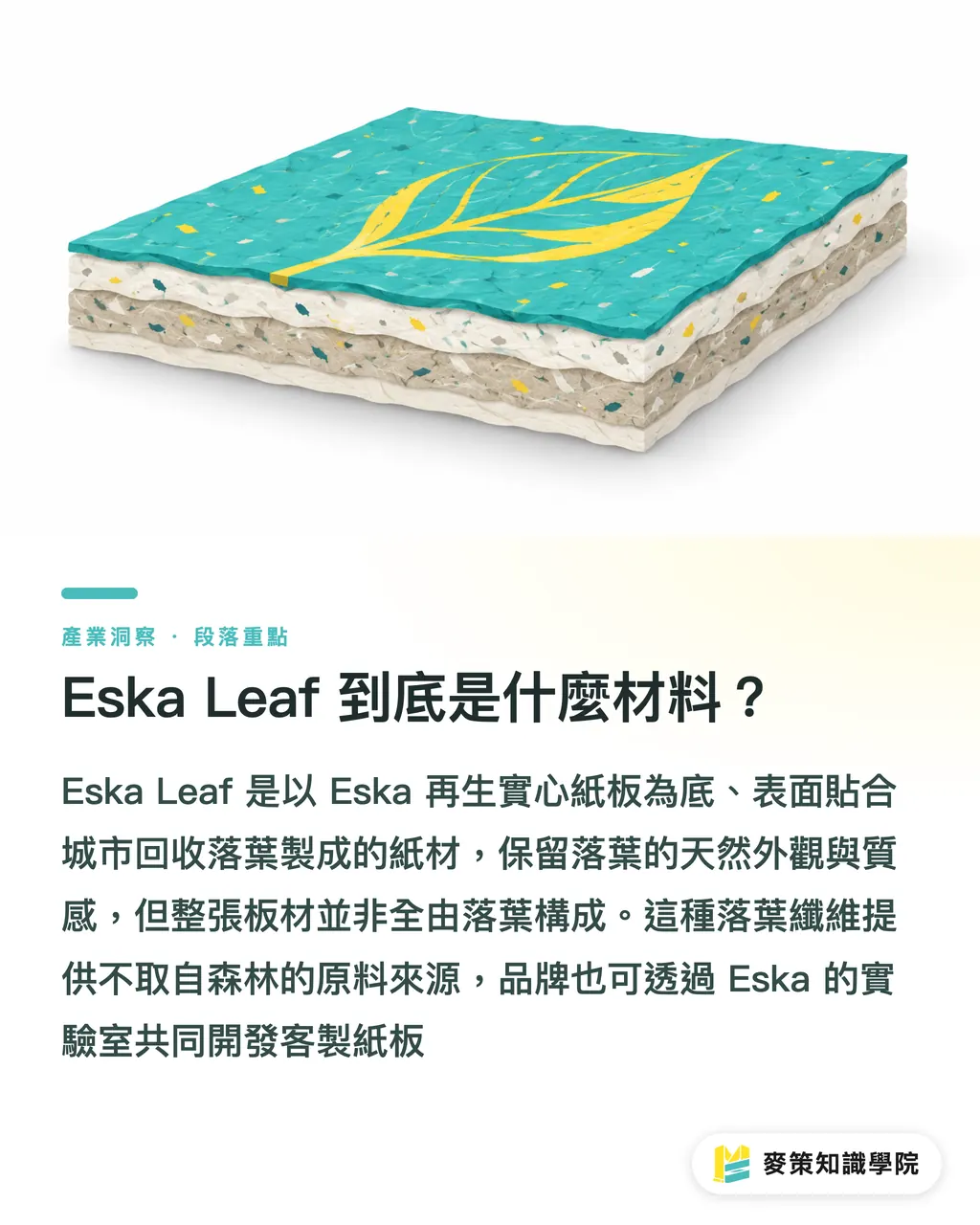
Eska Leaf is a recycled solidboard with a layer of leaf paper made from fallen leaves laminated onto its surface. Eska, part of RDM Group, and materials engineering company Releaf unveiled the range at Luxe Pack Monaco, held from September 28 to 30, 2026
Leaf-fiber paper is made from leaves collected from city streets. It offers a fiber source that doesn't come from forests, helping reduce the packaging industry's pressure on them
The structure matters. The base is still Eska recycled paperboard, with leaf paper laminated onto the surface to retain the natural look and feel of the material. So it's a composite structure, not paperboard made entirely from leaves. Releaf co-founder Valentyn Frechka says cities collect and discard millions of tonnes of fallen leaves every autumn. That's where the raw material comes from
Eska also has a lab dedicated to developing custom paperboard, where brands and converters can work together on materials made for their needs
Why might brands be interested?
Because it turns sustainability from a number in a report into something consumers can feel in their hands
A 2026 survey by Perspectus Global, commissioned jointly with RDM Group and covered in ThePackagingPortal's report, found that more than half of European respondents associate packaging and recycling with sustainability. 80% said that visibly using recycled paperboard could make a brand look more responsible
There are two caveats with these figures: the survey was commissioned by a paperboard supplier, and its respondents were European consumers. I'd take them with a grain of salt as a guide to the Taiwan market
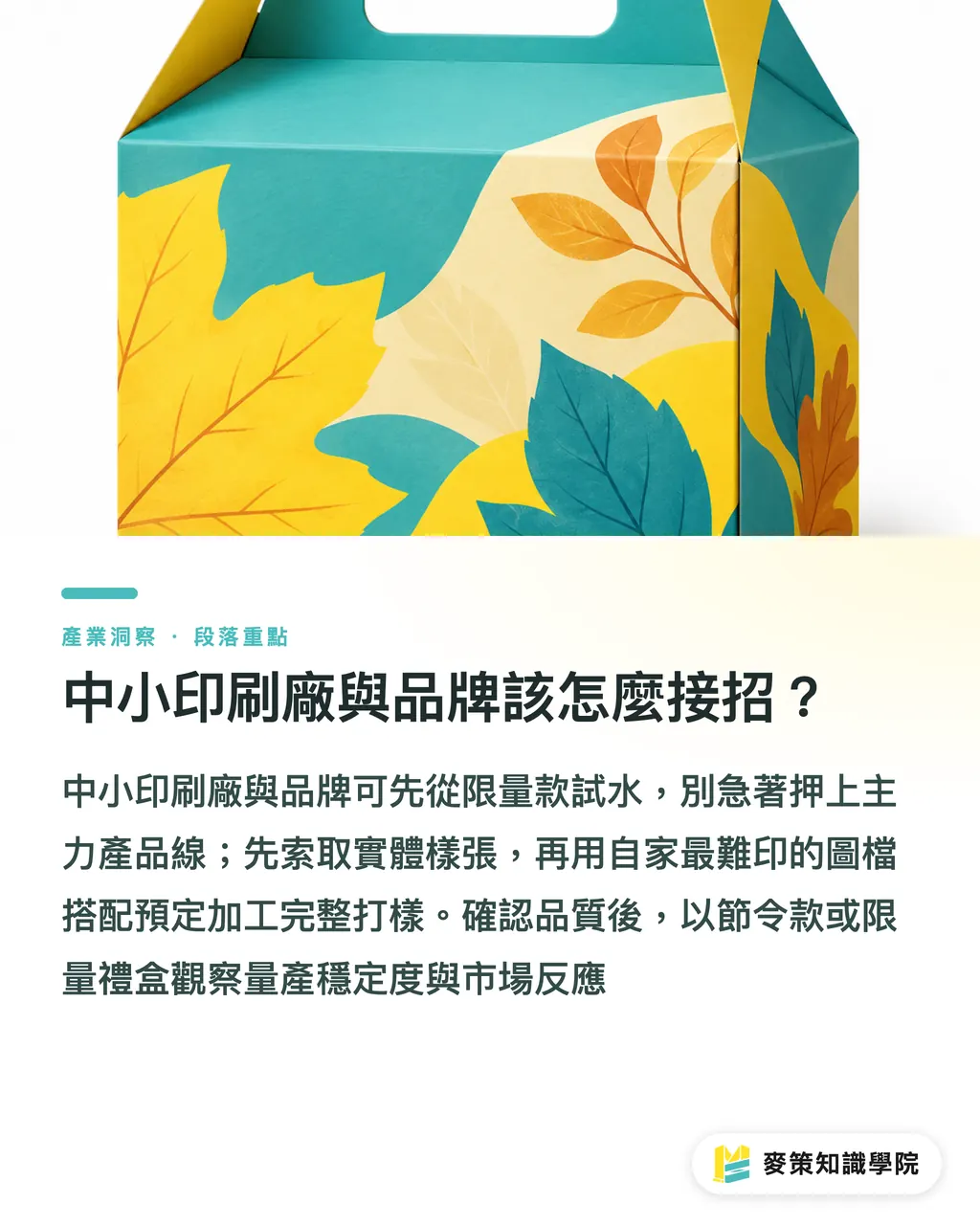
The complaint I hear most often from clients is that products look dull and gray after switching to recycled paper. If the material itself has a story, a texture, and an autumn feel, that drawback could become a selling point. Seasonal gift boxes and limited editions are the most natural place to start
What three questions should brands ask first?
Before adopting it, ask about the surface, finishing, and supply. I call these the "Mai Strategy Three Questions for New Fiber Materials." The original report also points out that a new fiber source means surface properties, strength, and printability all need to be checked again
・① Surface: The leaf layer keeps its natural texture. How well will brand colors, gradients, and fine text reproduce on it? You'll need to judge from a sample of the actual design. A color chart won't tell you
・② Finishing: Test whether foil stamping, embossing and debossing, spot varnish, and folding and gluing hold up on this composite structure. Will the folds crack? It needs to be tested
・③ Supply: Natural texture can mean variation from batch to batch. Brands need to confirm the specification range, minimum order quantity, and lead time
The original report gives no price or minimum order quantity, and doesn't say whether it's available in Taiwan. For now, the only way to answer the third question is to ask the supplier directly
Don't rush to sign
How should smaller printers and brands respond?
Test the waters with a limited-edition project. Don't bet your core product line on it from the start. Here's one way to proceed:
1. Ask the supplier for physical samples and specifications, including details on the paperboard structure and surface material
2. Use your toughest-to-print artwork, along with the finishing you expect to use, for a full round of sampling
3. If it passes, start with a seasonal product or limited-edition gift box. Watch how well it holds up in production and how the market responds
When I look at a new material, I have a habit: touch the sample first, then look at the slides. A presentation can't show you how the paper feels or how a fold springs back
Eska's custom lab is open to brands and converters. If there's an opportunity, smaller Taiwanese printers should ask about collaborating on samples. To run an initial round of local testing, brands can discuss sampling requirements with a high-end commercial printer that handles fully customized work, such as MINDS. Brands that want to turn these three questions into their own purchasing checklist can also work with the Mai Strategy Knowledge Academy consulting team
Key takeaways
・The leaf layer is laminated onto recycled paperboard. Evaluate the whole composite structure before adopting it
・The European consumer survey was commissioned by the supplier. Validate the findings in Taiwan instead of assuming they apply
・Answer the three questions about color, finishing, and supply with physical samples. Don't rely on a presentation
・The original report says nothing about price, minimum order quantity, or where the material is available. Ask the supplier directly
・Seasonal gift boxes and limited editions are the lowest-risk ways to test a new fiber material
A few things to think about
My advice: start before next autumn's selling season, instead of waiting until the material is fully proven. This month, brands can do two things: pick a project planned for next autumn as a pilot, and add the three questions about surface, finishing, and supply to their purchasing brief. Printers can prepare their toughest test file, with large areas of solid color, fine text, and the finishing they use most often. Then they'll be ready to run tests as soon as a supplier has samples. Designers should check with the print team early on which visual elements to avoid or enlarge on a naturally textured surface. Most of the risk with new fiber materials comes from nobody asking all the questions up front
Further reading
FAQ
- What is Eska Leaf paperboard made from?
- Eska Leaf is Eska recycled solidboard with Releaf leaf paper made from fallen leaves laminated onto the surface. It keeps the material's natural look and feel, and the leaves are collected from the streets of major cities
- Can leaf-fiber paper replace virgin wood pulp?
- The original report only says it can reduce pressure on forests. It doesn't claim to replace virgin wood pulp. The base of Eska Leaf is still recycled paperboard, with leaves used only in the surface layer
- What should brands check before adopting leaf-based paperboard?
- Check three things: color reproduction on the actual design, how well finishing such as foil stamping and embossing holds up, and the specifications, minimum order quantity, and lead time. The first two need to be verified with physical samples
- Can you buy Eska Leaf in Taiwan?
- The original report doesn't specify where it's available, its price, or its minimum order quantity. Taiwanese brands and printers will need to ask Eska or RDM Group directly
Related articles

The Print × AI weekly
The print and AI know-how designers, brands and enterprises can use before they commit — one email, every week
MINDS Free Tools
AI background removal, a LINE sticker maker, spine & imposition calculators — all free, right in your browser, no upload.
MINDS Group
Need actual printing or gifting services?
From premium printing to online ordering and festive gifts — the MINDS Group sister brands take it from here.