
Overview
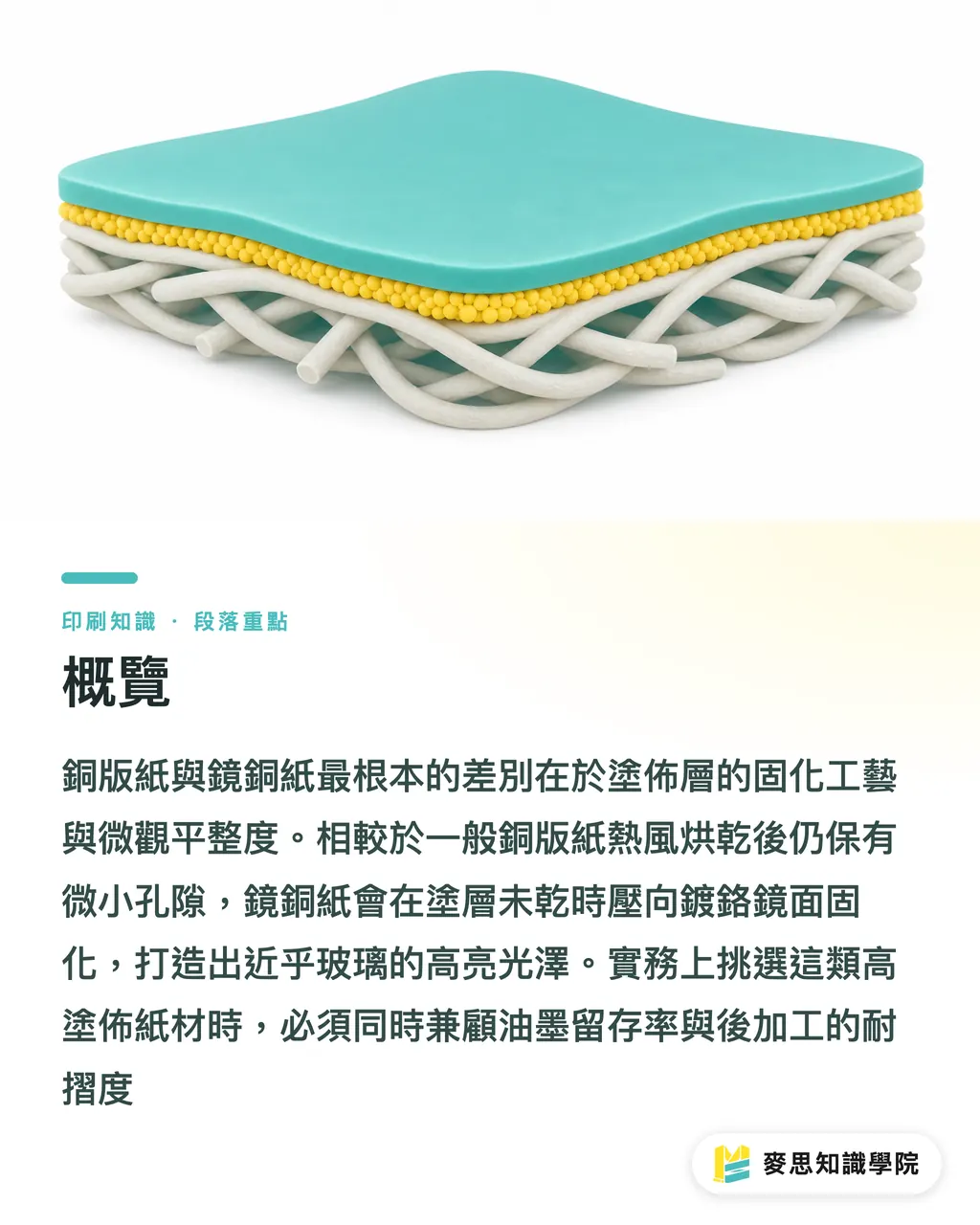
The fundamental difference between standard coated paper and cast coated paper lies in their coating curing process and microscopic smoothness. Standard coated paper uses blade coating followed by hot-air drying, leaving micropores in the kaolin clay coating. Cast coated paper, by contrast, presses the wet coating against an ultra-smooth chromium-plated drying cylinder to cure into a mirror-like finish almost like glass. In our practical client work at MINDS Printing, choosing these heavily coated stocks requires weighing ink pigment retention on the coating surface against fold resistance during post-press processing
Paper coating layer: A microporous structure composed of kaolin clay and binders that fills gaps between paper fibers to control ink absorption and increase specular reflection
How Do Uncoated, Coated, and Cast Coated Microstructures Compare?
Looking at paper micro-cross-sections, coating weight directly dictates how light reflects and how dense ink pigments remain after drying
・Uncoated paper (woodfree paper): Lacks a mineral coating layer, leaving paper fibers completely exposed. Deep capillary ink penetration and heavy spreading cause high diffuse reflection, making printed photos look dull and grayish
・Lightweight coated paper (LWC): Carries about 5 to 10 grams of coating per side, filling only part of the fiber gaps. It balances a warm tactile feel with basic color saturation, perfect for magazine inner pages and text-heavy publications
・Two-sided coated paper (Coated Paper): Features 15 to 20 grams of blade coating per side. Ink pigments stay locked on the coating surface as they dry, yielding high specular reflection and an ideal balance of color saturation and contrast
・Cast coated paper (Cast Coated): Uses a cast-coating process where the wet layer cures directly against a heated mirror cylinder. The resulting surface is extremely smooth with ultra-high reflectivity, often seen on luxury packaging boxes and premium labels
Why Does Heavy Coated Stock Crack and Show White Fiber When Folded?
The coating layer is essentially an inorganic mineral film made of kaolin clay and binders. It is hard, but lacks tensile elasticity
When heavier stock (like 200g/m² or higher coated or cast coated paper) undergoes a 180-degree fold, outer fibers and coating bear massive tensile stress
Because the mineral coating's tensile strength falls far short of the inner wood fibers, the coating snaps under brittle failure, exposing the white base fiber beneath and leaving ugly cracks
This defect stands out sharply on full-bleed dark printing, like solid black or navy book covers and packaging boxes
Don't panic just yet
This can easily be prevented through proper mechanical techniques
How Press Production Prevents Finishing Cracks with Pre-Creasing
Getting clean folded edges on thick coated stock comes down to relieving localized stress concentration at the bend line. In production workflows at MINDS Printing, we rely on a three-stage quality check process to safeguard post-press finishing:
・1. Evaluate basis weight and coating thickness: When paper basis weight exceeds 150g/m² or uses heavy cast coating, never feed it straight into a folding machine
・2. Pre-apply creasing (Creasing): Use steel rules to press grooves into the fold lines, generating controlled micro-delamination inside the fibers to release tension ahead of time
・3. Align with paper grain direction: Crease lines should run parallel to paper grain whenever possible, ensuring fibers hold together when bent
It's that simple
Adding a single creasing step before folding solves over 90% of coating cracking issues
How to Choose Coated vs. Cast Coated Paper for Labels and Packaging
Never pick paper based solely on unit price. Start with the end application and work backward to the physical properties needed
・Standard commercial flyers and catalogs: 100 to 150g two-sided coated paper offers vibrant color rendition and excellent cost efficiency
・Luxury packaging labels and premium folding cartons: If maximum visual punch and high-gloss texture are required, cast coated sticker paper is the top pick. Pair it with varnish or spot UV to command a higher product premium
・Large-area dark folded leaflets and jackets: If using heavy coated paper over 200g, include creasing in your finishing budget. Otherwise, cracked white edges will ruin the entire run

Key Takeaways
・Cast coated paper cures against a mirror-finish cylinder, yielding surface reflectivity and smoothness far exceeding blade-coated paper
・Uncoated paper absorbs ink deep into capillary pores, creating diffuse reflection that grays out images, whereas coated paper holds pigments on top for high saturation
・Crease cracking on heavy stock stems from the rigid kaolin clay coating, which lacks tensile elasticity and snaps under a 180-degree fold
・When folding paper over 150g/m², always apply pre-creasing to release fiber stress before bending
・For large dark print runs, align crease lines with paper grain to prevent edge cracking and white fiber exposure
Further Considerations
Moving from traditional print manufacturing into AI tools and SaaS digital workflows makes standardized paper physics parameters an essential first step
When graphic designers select paper on e-commerce or web-to-print portals, a system that automatically prompts for pre-creasing during front-end preview based on coating weight and paper thickness can drastically reduce press rejections and customer returns
For the MINDS team, turning ink absorption, coating hardness, and post-press limits into algorithmic rules doesn't just help clients make exact cost-versus-quality decisions. It is the backbone of digitizing deep print expertise and driving online order efficiency
Further Reading
FAQ
- Why do photos printed on woodfree uncoated paper look dull and grayish?
- Because woodfree paper lacks a mineral coating, capillary pores between paper fibers soak up heavy amounts of ink pigment. This increases light scattering after drying, preventing high-saturation specular reflection
- How do coated and cast coated papers compare in price and texture for label applications?
- Two-sided coated paper is budget-friendly with vibrant color output, making it the top value pick for labels. Cast coated paper undergoes chromium mirror cylinder polishing for extreme surface gloss, making it ideal for luxury packaging and high-end labels
- At what paper thickness should coated paper be pre-creased before folding?
- For coated or cast coated paper with a basis weight above 150g/m², pre-creasing is recommended before folding or packaging assembly. Steel rules relieve tension across paper fibers and kaolin coating, preventing edge cracking
- What is the structural difference between pre-creasing and direct folding?
- Direct folding subjects heavy coating layers to extreme tensile stress, causing brittle fractures. Pre-creasing creates controlled micro-delamination at the fold line, offering buffer space for fibers to keep the coating layer intact
Related articles





The Print × AI weekly
The print and AI know-how designers, brands and enterprises can use before they commit — one email, every week
MINDS Free Tools
Spine width and imposition calculators — skip the manual math, free in your browser.
MINDS Group
Need actual printing or gifting services?
From premium printing to online ordering and festive gifts — the MINDS Group sister brands take it from here.