
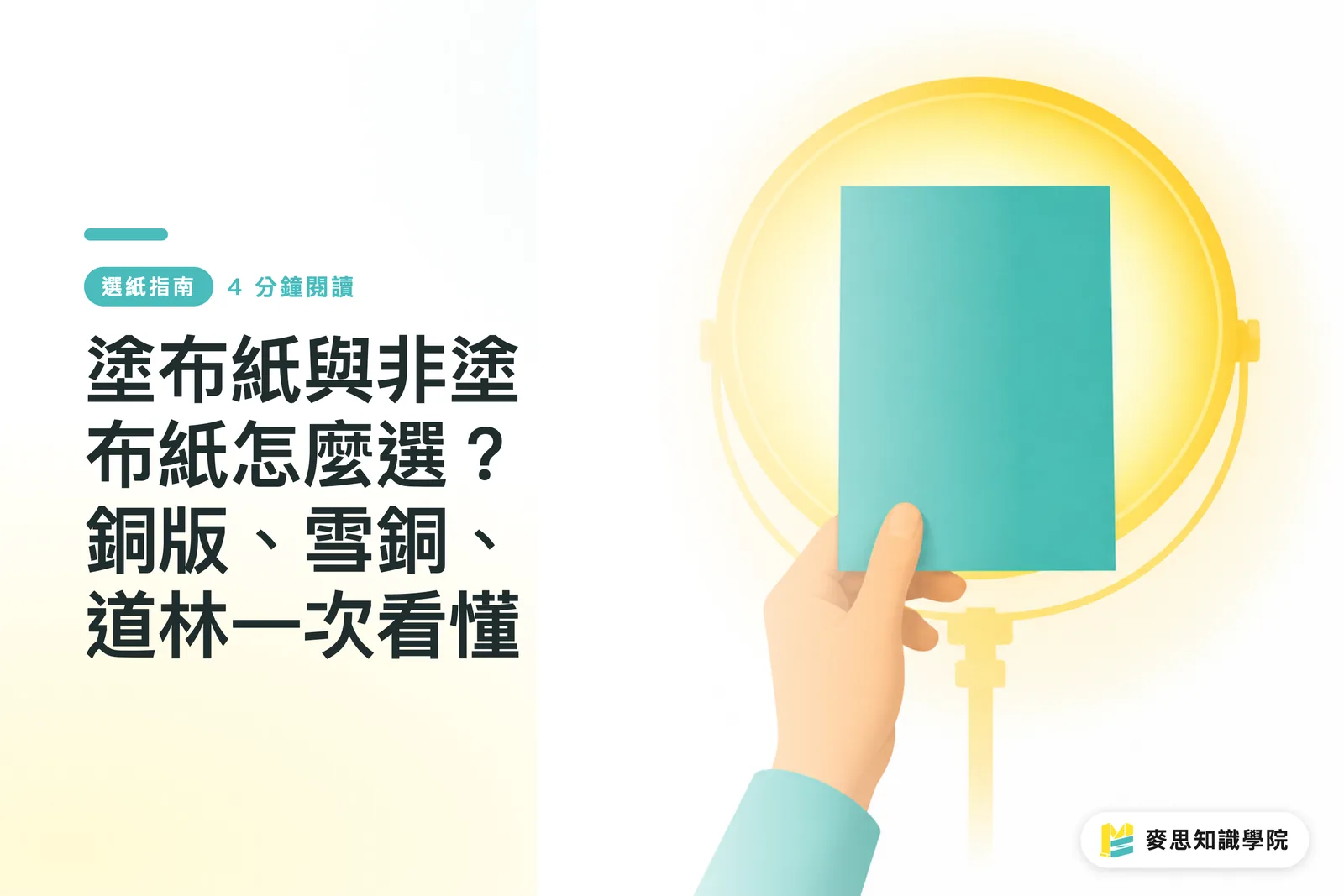
Why Photos Always Look 'Gray' on Uncoated Paper
When many designers first enter the industry, they often complain that photo books printed on woodfree paper lack vibrancy and even look a bit 'gray'
Behind this phenomenon lies the physical mechanism of the paper's ink absorption
Uncoated papers like woodfree or bond paper lack a surface coating, retaining the capillaries of the pulp fibers
When ink is applied, as much as 20% to 30% of it is immediately absorbed by the paper fibers and penetrates the interior
Because less pigment remains on the surface, light reflectance drops, naturally reducing color saturation. Edge dots also tend to spread slightly, making the image look less sharp
If you have a Pantone formula guide on hand, compare the same color number between the U (Uncoated) and C (Coated) books; you will notice that the colors in the U book are significantly duller and shift towards a pinkish/muted tone
This is why I often tell clients: if your catalog is packed with high-resolution product photos, please choose coated paper and don't sacrifice product details for a temporary 'artsy' feel
What's the Difference Between Gloss Art and Matte Art Paper?
Once you've decided on coated paper for its superior color reproduction, the next choice is usually between Gloss Art and Matte Art
Both have a surface coating that keeps most of the ink on the surface, resulting in excellent color vibrancy
The difference lies in the surface treatment of the coating, which directly determines the visual effect of gloss versus matte
・Gloss Art Paper: The surface is calendered to provide high gloss and obvious reflection, making it ideal for showcasing metallic effects, jewelry, or vibrant food photography
・Matte Art Paper (Silk/Matte): Uses a powder-finish coating, presenting a soft, matte, glare-free texture that is easy on the eyes and exudes a subtle, premium feel
Looking at sticker printing in the market today, Gloss Art stickers are the dominant choice for product labels due to their excellent color rendering and cost-effectiveness
However, for luxury brand catalogs or art books, I usually recommend Matte Art paper to avoid large-area reflections interfering with the reading experience
The characteristic of Matte Art paper is that the printed areas retain a subtle sheen, while the unprinted whitespace remains matte, this contrast adds depth to the visuals
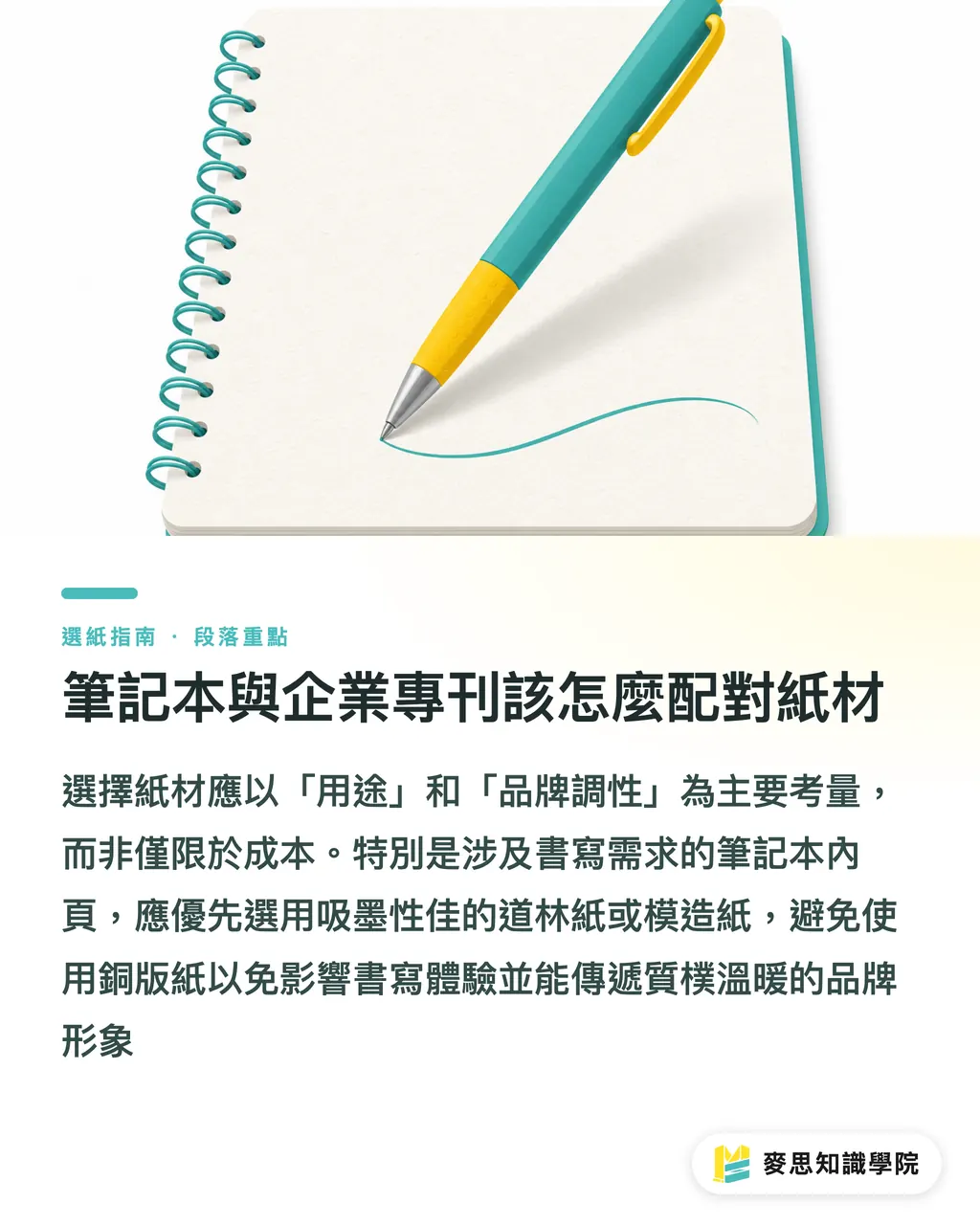
How to Match Paper for Notebooks and Corporate Publications
When selecting paper, never just look at the cost per unit; you must work backward from the 'application' and 'brand identity'
If you use slick Gloss Art paper for a notebook, users will definitely get frustrated because water-based pens won't dry for a long time
Therefore, for any material requiring writing, such as notebook inner pages, reply cards, or envelopes, Woodfree or bond paper is always the top choice
The rustic tactile feel of this uncoated paper also conveys a brand image that is warm, eco-friendly, and humanistic
In practice, here are three classic pairings you can refer to:
・Product Catalogs & Commercial DM: Gloss Art paper; high brightness and chroma precisely present product details and colors
・Book Interiors & Notebooks: Woodfree paper; glare-free and excellent ink absorption, making long-term reading less fatiguing and writing easier
・Corporate Business Cards & Invitations: Depends on brand tone; choose Matte Art for a high-tech look, or textured uncoated paper for a cultural/creative vibe
Recently, many clients want to introduce recycled paper to support ESG sustainable packaging
I always remind them that recycled paper is mostly uncoated, which is not only highly absorbent but also has a base color that will 'eat' some of the ink's vibrancy
Before printing, you must redo color management and proofing; you cannot simply apply the same file settings used for Gloss Art paper
Key Takeaways
・Coated Paper (Gloss/Matte Art) offers vivid colors and sharp dots, making it the top choice for photos and detailed images
・Uncoated Paper (Woodfree/Bond) has high ink absorption, resulting in lower color saturation but a rustic feel, making it perfect for writing
・Gloss Art paper has strong reflections suitable for bright products; Matte Art paper is glare-free, suitable for premium catalogs
・The logic for paper selection should be worked backward from the end-use and brand feel; never focus solely on price while ignoring physical properties
Reflective Thoughts
For designers and print buyers, understanding the physical limitations of paper is far more practical than rote-memorizing manufacturer model numbers
Having handled so many print jobs at MINDS, many so-called 'printing errors' were actually caused by a mismatch between initial file settings and paper characteristics
If future printing SaaS tools could automatically issue a warning about potential drying issues for high-ink-density areas when a client selects uncoated paper during file upload, it could significantly reduce waste from reprinting
This represents a highly valuable service node in the digital transformation of the printing industry
FAQ
- Is Gloss Art paper the only option for printing photos?
- If you require color saturation and sharpness, coated Gloss or Matte Art paper is the best solution. Only consider uncoated paper if you are intentionally pursuing a Japanese 'airy' aesthetic or a faded, vintage look
- Why does freshly printed woodfree paper easily smear onto the next page?
- Because uncoated paper is highly absorbent. If the design file contains large areas of dark solid blocks, the ink drying time increases significantly, leading to set-off smearing during cutting or binding
- Is there a price difference between Matte Art and Gloss Art paper?
- At the same grammage, there is little difference in base cost across most paper mills. When choosing, you should prioritize the desired level of gloss and reading comfort for your design
- What should I choose for premium business cards?
- Tech or finance companies often choose Matte Art paper combined with spot UV coating to convey professionalism and sleekness; cultural, creative, or service industries prefer uncoated materials like Woodfree or watercolor paper to emphasize a handcrafted, personal touch
Related articles
The Print × AI weekly
The print and AI know-how designers, brands and enterprises can use before they commit — one email, every week
MINDS Free Tools
Spine width and imposition calculators — skip the manual math, free in your browser.
MINDS Group
Need actual printing or gifting services?
From premium printing to online ordering and festive gifts — the MINDS Group sister brands take it from here.