
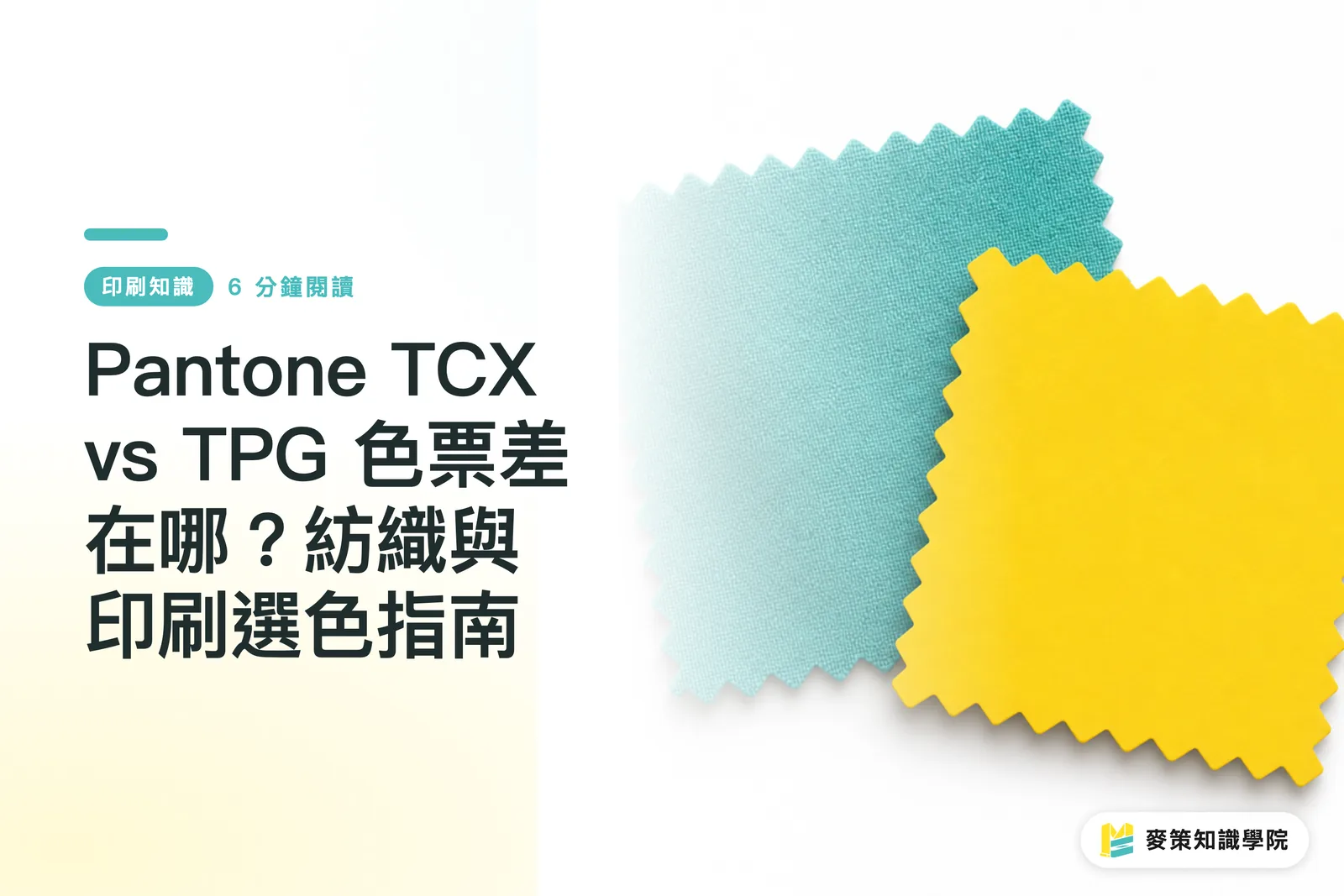
What Is the Difference Between TCX and TPG? Why You Cannot Mix Them Up
Many designers freeze the first time they flip through a Pantone book: why are there two versions of the same color number, differing by only a letter or two?
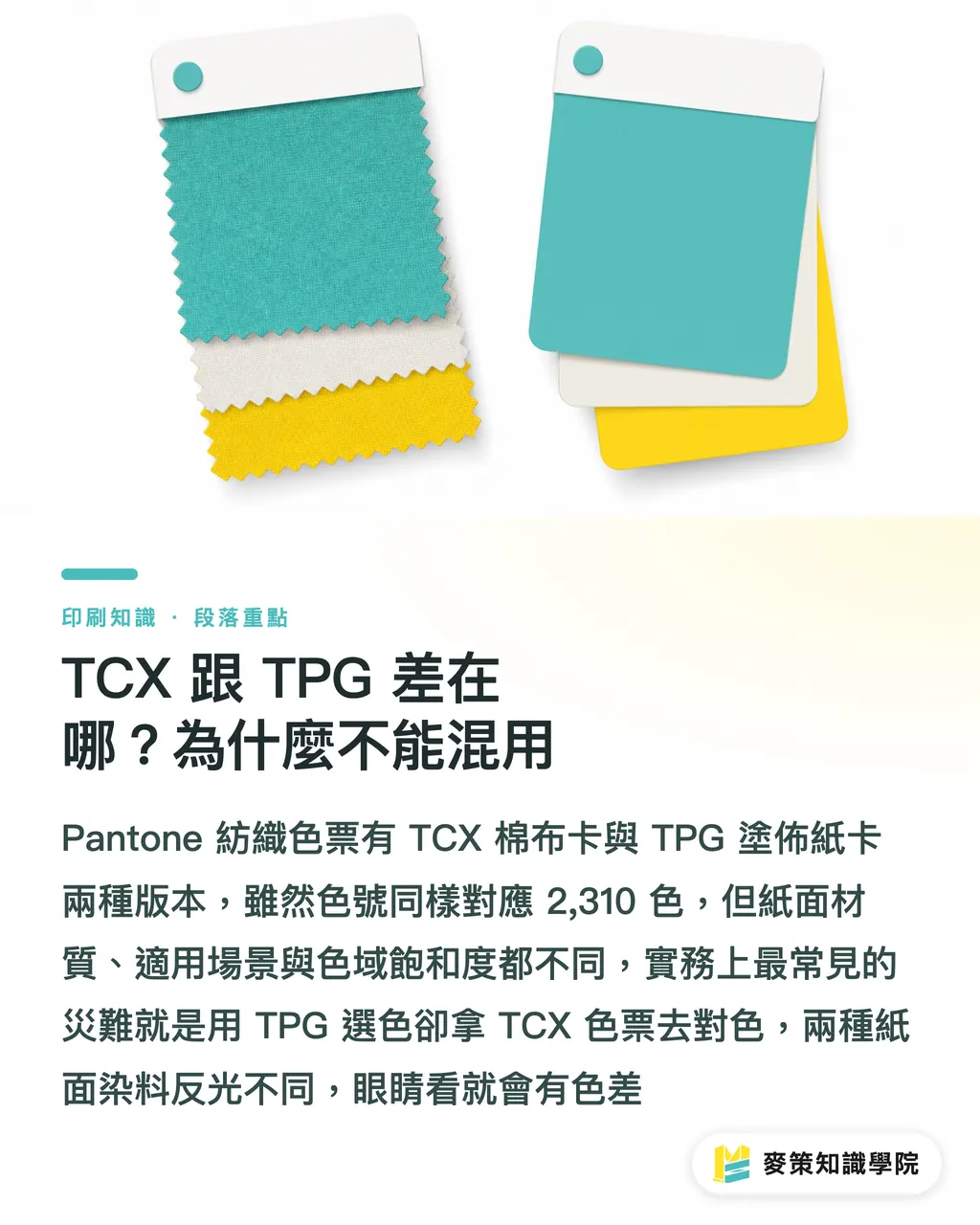
TCX stands for Textile Cotton eXtended. Its substrate is 100% cotton fabric, and every swatch is an actual fabric sample. TPG stands for Textile Paper Green. Printed on coated paper cards, it is the paper-based version of the Pantone Fashion, Home + Interiors system (TPX was its predecessor, using the same logic but a different paper substrate)
The key differences come down to three areas:
・Substrate material: TCX is cotton fabric, while TPG is coated paper card
・Use cases: TCX is for textiles, apparel, and home decor. TPG is for printing, coatings, plastics, and packaging mockups
・Gamut coverage: TCX covers 2,310 colors. TPG corresponds to the same 2,310 color numbers, but its gamut coordinates were recalibrated to remove lead and chromium pigments used in TPX. It meets environmental standards, though saturation dropped slightly
The most common disaster in the field happens when a designer picks a TPG color on screen, but the textile factory proofs it against a TCX swatch. Even with identical numbers, the different substrates and dye reflections create visible color shifts. When the baseline does not match, endless arguments follow
Does the Same Color Code Look Identical in TCX and TPG?
The short answer: they look similar to the eye, but measure differently on instruments
After 2010, Pantone upgraded TPX to TPG. On paper, they share the same color logic, but the substrate switched to coated paper card and the pigment formulation was reworked to remove lead and chromium. This did not matter much to textile users who already match against TCX, but it had a real impact on print and coatings
The impact shows up on two levels:
・Gamut saturation: TPG sacrifices a bit of vibrancy to comply with environmental regulations like EU REACH
・Cross-media matching: When measuring the same color number in TPG and TCX under D65 lighting, ΔE typically sits between 2 and 4. The human eye can spot the difference, but it is not wildly off
For textile brands, this means if a project spans packaging, paper bags, woven labels, and hangtags, you must lock in a single baseline from day one: use TCX for fabric and TPG for paper. Otherwise, your factories will run two separate colors
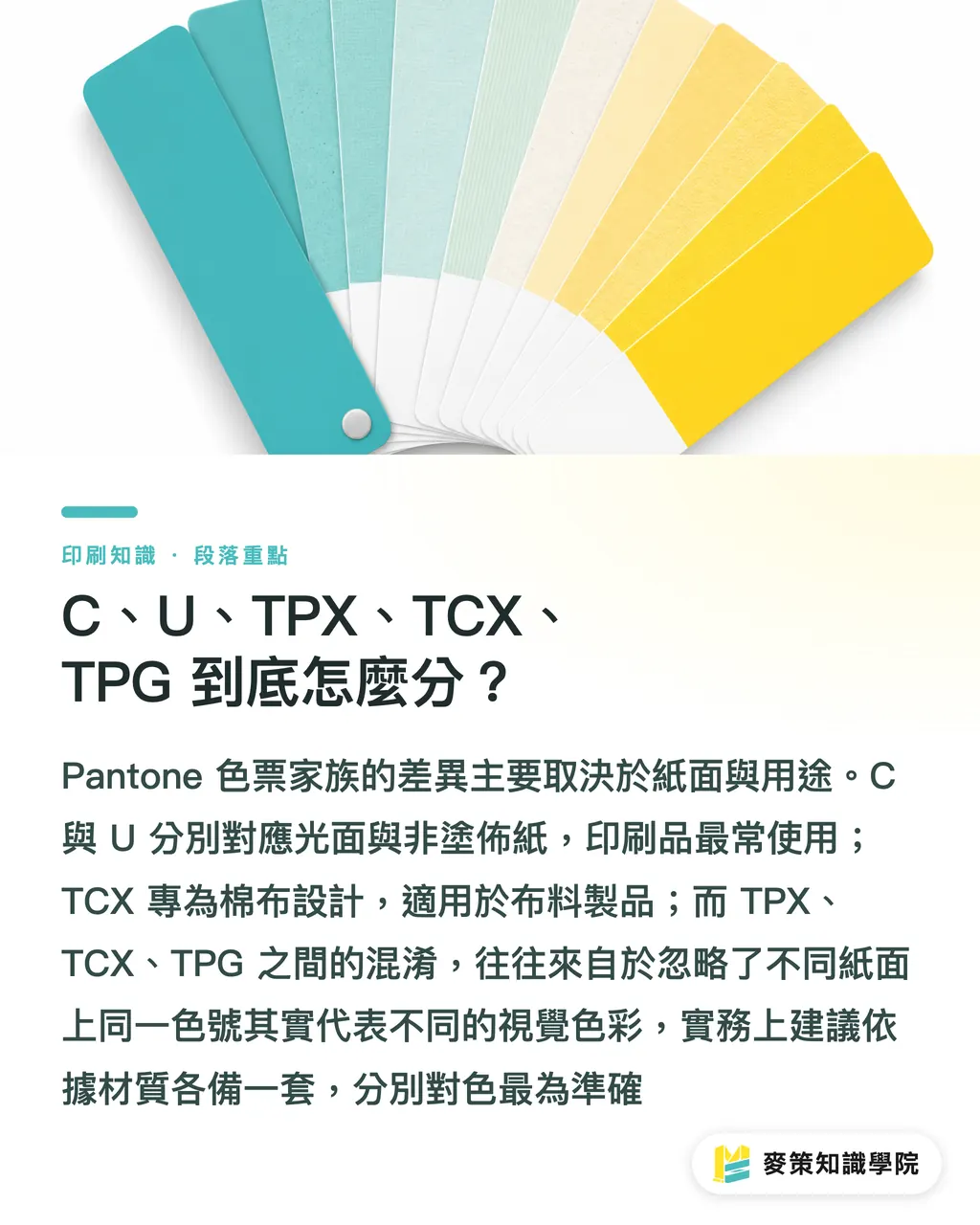
How Do You Tell C, U, TPX, TCX, and TPG Apart?
The Pantone swatch lineup can make your head spin, but the logic is straightforward: the letters indicate substrate, use case, and color management intent
・C (Coated): Gloss coated paper, standard for print shops, with the highest color saturation
・U (Uncoated): Uncoated paper with a textured, matte feel and deeper, muted tones, common for business cards and book covers
・TPX (the version before TPG): Coated paper card with 2,310 colors, now replaced by TPG
・TCX: Cotton fabric card with 2,310 colors, dedicated to textiles
・TPG: Coated paper card with 2,310 colors, widely used for printing and coatings
In practice, choose your swatch based on the medium:
・For print items (paper boxes, posters, books): Use C or U
・For fabrics (clothing, cushions, curtains): Use TCX
・For mixed materials (paper hangtags, fabric labels, hybrid packaging): Keep one set of each and match them separately
In other words, there is no one-size-fits-all swatch book. The confusion starts when people assume the same number on different substrates produces the exact same color
What Is the Correct Workflow for Textile and Print Color Selection?
Here is a clean three-step workflow that beginners can follow directly:
・Confirm the product material: Always use TCX for fabrics, and use TPG or C/U for paper items
・Include the full swatch code on purchase orders: Do not just write 'Pantone Red.' Specify the complete code, such as 'Pantone 18-1664 TCX.'
・Align your viewing light source: D65 standard lighting is the industry norm. Both textiles and print must be evaluated under D65, or color temperature shifts will blow up your ΔE values
Extra tip: TCX and TPG use distinct code suffixes (such as 18-1664 TCX vs. 18-1664 TPG). Put the full code on job tickets before sending files to production, and set up your design files with spot colors mapped to the right Pantone book so the printer's RIP software interprets them correctly
If the Output Is Slightly Off, Can You Just Substitute with a CMYK Match?
I have heard this question hundreds of times on the press floor, and my answer is direct: you can, but you have to live with the color shift
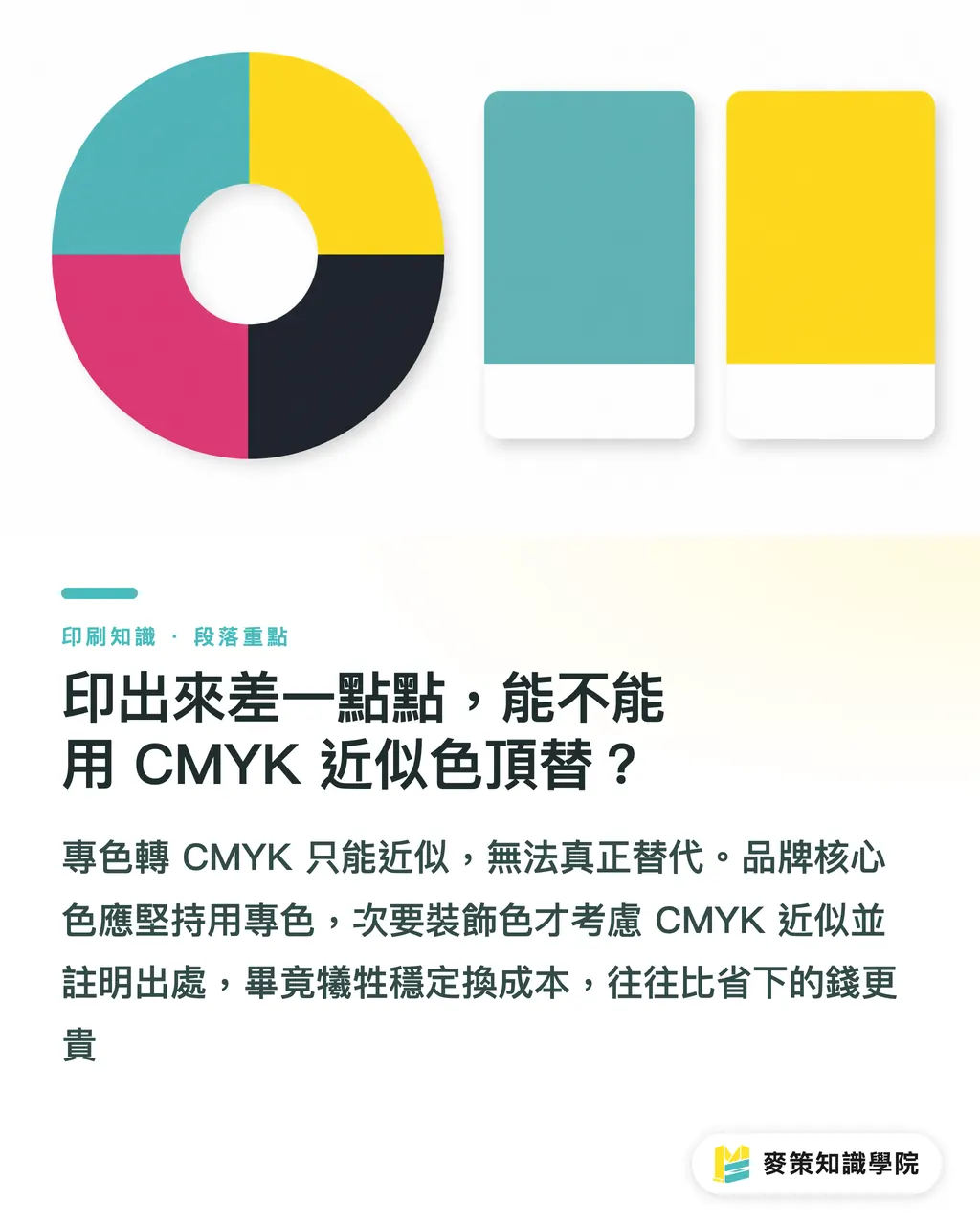
Converting spot colors to CMYK means mapping an entire color gamut into a narrower one, which forces out-of-gamut colors to snap to the nearest boundary. Official Pantone tools like PantoneLIVE and Color Bridge offer CMYK simulation values, but those numbers are approximations, not guarantees of an exact match
Here are three practical rules of thumb:
・Core brand colors (logos and key brand marks): Stick with spot color printing. The extra cost of a dedicated spot ink unit is well worth it
・Secondary decorative elements (backgrounds, patterns, illustrations): You can use CMYK simulations, noting the reference values in your file documentation
・Cross-media rollouts (fabric + packaging + labels): Establish the primary swatch system first, then work out the CMYK approximations from there
Many clients bring in brand assets asking if four-color process is good enough. My standard answer is yes, but only if you accept that the printed piece will differ slightly from the digital file. Spot colors exist for consistency. Trading consistency for cost usually leads to color disputes that cost far more than the ink you saved
Key Takeaways
・TCX is cotton and TPG is coated paper. Different substrates are the main reason colors do not match
・Under D65 lighting, the same color number in TCX and TPG has a ΔE of roughly 2 to 4, which is visible to the naked eye
・Use TCX for textiles and TPG for paper. Keep both sets on hand for cross-media projects
・Always write full codes like Pantone 18-1664 TCX on purchase orders instead of just color names
・Insist on spot colors for core brand assets, and only consider CMYK approximations for secondary elements
Further Thoughts
Cross-media branding projects are increasing, especially among small and midsize businesses in Taiwan where apparel, packaging, and paper goods launch all at once. Looking at my client work over the years, mismatched swatch baselines cause far more color disputes than ink costs or wrong paper choices. Make sure to define the color swatch system during the kickoff meeting: TCX for fabrics, TPG for paper goods, and C for coated paper. Keep these three tracks clear, and proofing and production will run smoothly. For teams tackling an end-to-end brand rollout for the first time, the Mai Strategy Knowledge Academy consulting team can help unify swatch standards from sampling to mass production, cutting out endless back-and-forth matching. To get structured updates on color matching and spot color management, subscribe to the Mai Strategy Knowledge Academy newsletter
Further Reading
FAQ
- Can I take a Pantone TCX swatch to a print shop for color matching?
- Not recommended. TCX is a cotton swatch. Dye on fabric reflects light differently than ink on paper. Print shops use TPG or C/U as their matching baseline, so using TCX will lead to color shifts
- What is the difference between TPX and TPG? Can I still use old swatches?
- TPX is the older version of TPG. They share the same color system, but the pigment formulas differ. TPG removed lead and chromium compounds to meet environmental regulations, making it the current standard. Well-preserved TPX books can still work for quick checks, but new designs should use TPG directly
- TPG only has 2,310 colors. What should I do if that is not enough?
- TPG is part of the Fashion, Home + Interiors system, and 2,310 colors cover most brand palette needs. If you need neon, metallic, or specialized print shades, switch to Pantone C (Coated) or specialty guides like Pantone Metallics
- Should design files be set to Spot Color or CMYK?
- Use Spot Color so the RIP software maps directly to the Pantone code. Setting it to CMYK causes software to convert the values to process inks immediately, bypassing spot color formulation and causing color shifts on press
- Will on-screen Pantone colors always look different from the printed result?
- Yes. Screens emit RGB light, while paper reflects CMYK ink, creating fundamentally different physics. Screens are only for design reference. Final color approval must always rely on physical swatch books under standard lighting
Related articles


The Print × AI weekly
The print and AI know-how designers, brands and enterprises can use before they commit — one email, every week
Tool Library
RGB↔CMYK conversion, ΔE color difference and brand color print analysis — free color management tools, computed right in your browser.
MINDS Group
Need actual printing or gifting services?
From premium printing to online ordering and festive gifts — the MINDS Group sister brands take it from here.