
There Are Three Ways to Make a Sample, but Most People Only Know One
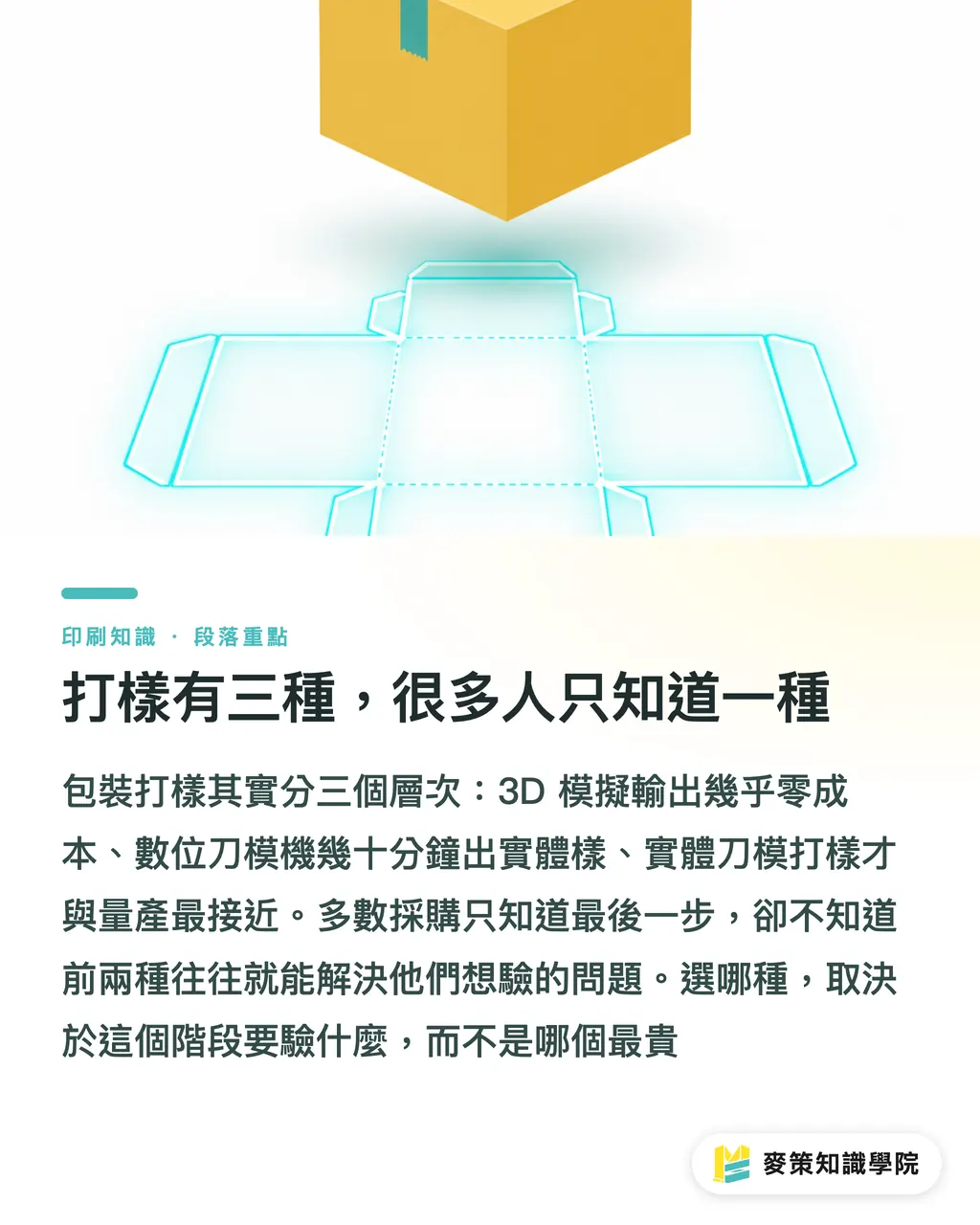
Packaging sampling comes in three main forms, each tackling different issues with very different costs and tolerances. The trouble is, most buyers think sampling only means one thing: building a die and stamping out a physical box. That's not wrong, but it's only the final step of the three
・3D digital simulations: Using software like ArtiosCAD or Illustrator to fold flat dielines into 3D previews. You can rotate them to inspect exterior artwork or export visuals for client approval, all with near-zero extra cost per run
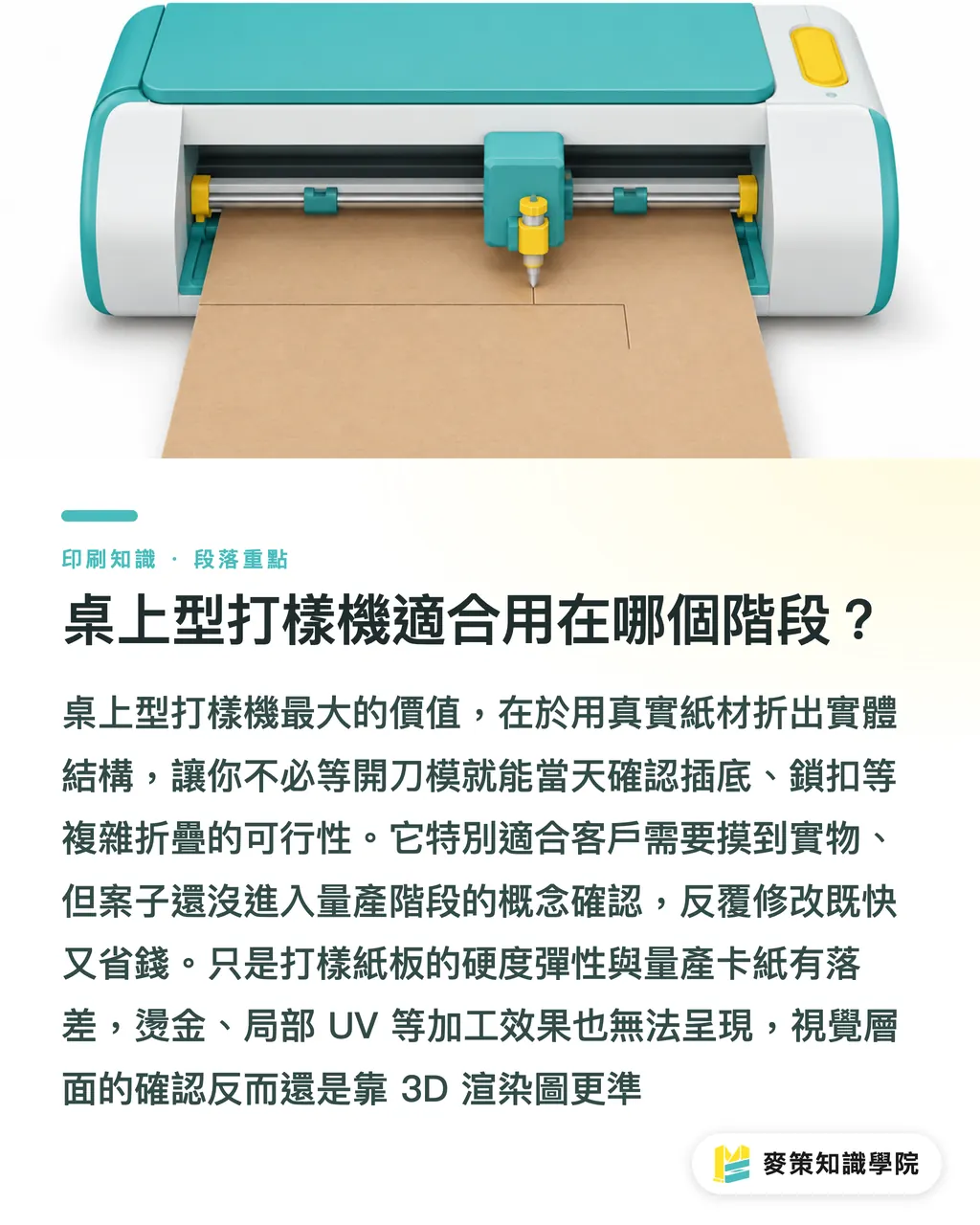
・Digital cutting tables: Also called digital sample cutters (such as Zünd or ESKO Kongsberg machines). A cutting head scores and trims sample stock directly, producing a tangible structural sample in under an hour
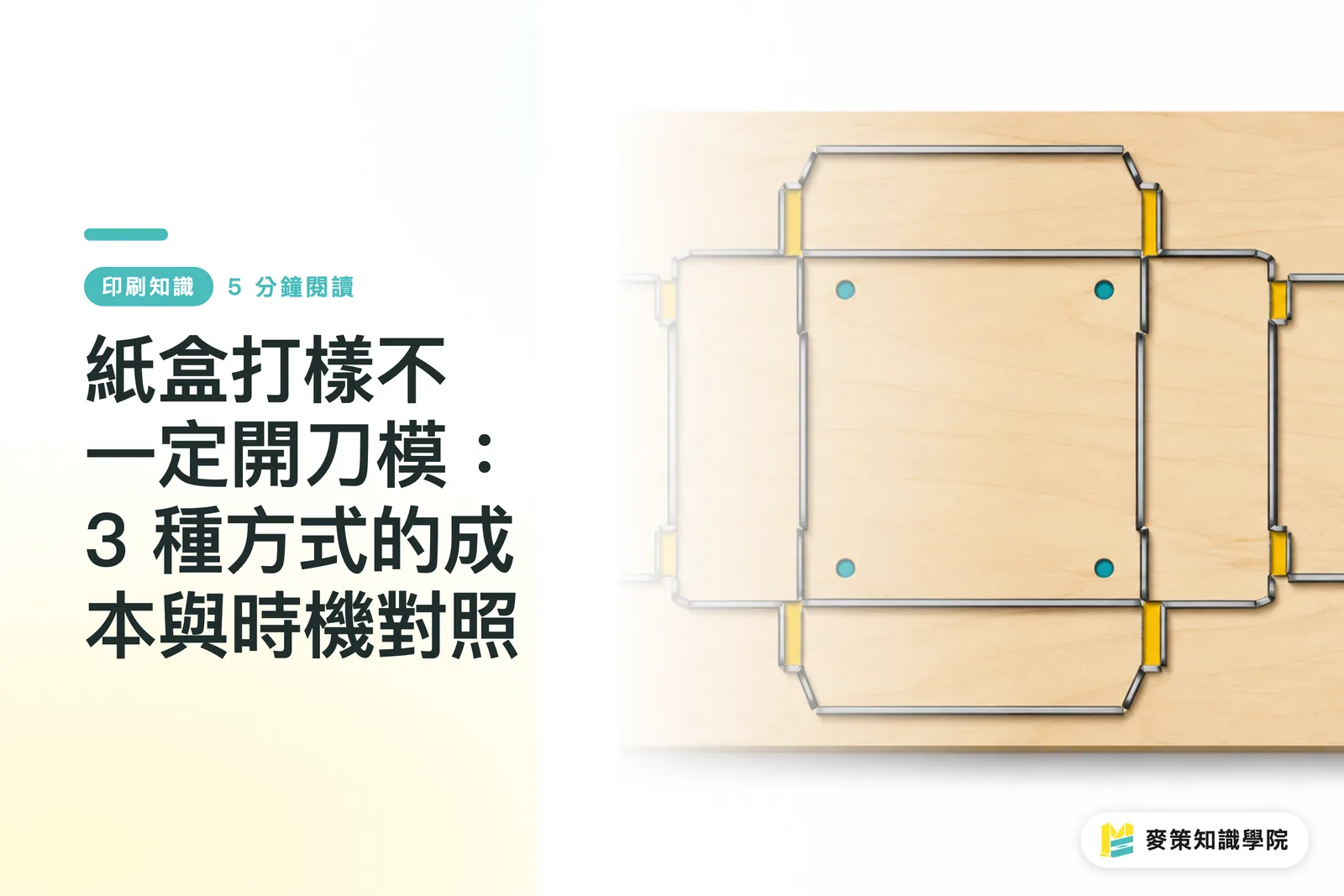
・Physical steel-rule dies: Building a wooden die board, running production cardstock on a die-cutting press, and producing a finished box virtually identical to mass production. Depending on complexity, costs range from several thousand to over ten thousand NTD
Which one to choose comes down to what you need to verify at that exact moment. It isn't just about what costs more
What 3D Previews Can and Cannot Verify
The biggest advantage of 3D previews is speed and zero extra cost. A designer tweaks a dieline and sees the 3D result right away without waiting on physical production. For brainstorming, initial client pitches, and comparing design concepts, 3D is all you need
Yet it has a fundamental flaw: you cannot recreate the physical behavior of paper on a screen
・Paper has caliper thickness. When folded, that thickness builds up along the creases. The final box dimensions end up slightly larger than flat dieline calculations suggest. On tight interlocking tabs, that tiny gap can wreck assembly
・If score lines on mounted or laminated boards aren't deep enough, the lid will spring back open. A 3D render will never show that
・Whether snap-lock bottoms hold firm and glue flaps line up cleanly can only be tested once you actually fold the box
Don't rush it. The screen answers one specific question: does the overall look work? Whether it folds and stays shut is a completely different story
When Should You Use a Digital Sample Cutter?
Digital cutting tables fill the exact blind spots of 3D previews. Using real stock and genuine folds, they let you test structural feasibility before mass production. They are ideal for custom box shapes with tuck bottoms, locking tabs, or unusual folds, or when a client demands a physical sample before you are ready to invest in production tooling
Pros:
・Fast turnaround: You can hold a structural mock-up the same day or next day, and rerun it immediately if you make changes
・No waiting on die tooling: This saves significant time and money for projects going through multiple structural revisions
Cons:
・Sample stock rarely matches production board exactly. Differences in stiffness and grain mean the folding feel won't perfectly reflect the final product
・Finishing effects like foil stamping and spot UV cannot be applied. For visual sign-off, a 3D rendering actually communicates design intent better than a plain plotter sample
When Is a Physical Cutting Die Non-Negotiable?
Physical die sampling costs a few thousand NTD for standard box types and can top ten thousand for custom shapes or multi-piece dies, plus paper stock and press time. It looks like a steep line item, but it is the closest you can get to real mass production. In these four scenarios, don't try to cut corners:
・First-time custom structures: Non-standard angles, polygon lids, or custom die-cut handles. If a cut shifts even slightly, parts will jam or pull apart during assembly. Only a physical die reproduces real crease depth and die-cutting precision
・High-volume production runs: For runs in the tens of thousands or more, catching a structural flaw after mass production starts costs far more than tooling. The math is simple
・Packaging with post-press finishes: Mounting, foil stamping, and spot UV alter paper stretch and board thickness. You need samples made with identical production stock and finishes to verify that paper doesn't bubble or glue seams don't pop after folding
・Branded gift boxes: Color registration, foil placement, and the exact snap of magnetic closures against the rigid box are pure guesswork on a screen. Only a physical sample reveals the truth
Tooling is a fixed cost: the larger the run, the lower the cost per unit. Rework is a variable cost: the bigger the run, the heavier the loss if something fails. That equation holds true for almost any packaging decision
MINDS clarifies the sampling method and paper stock right at the quoting stage to prevent alignment or structural disputes later. If you have an upcoming packaging project and aren't sure which sampling route makes sense, reach out to us first
Questions Packaging Buyers Must Ask Before Ordering Samples
Many buyers simply ask, 'How much does a sample cost?' Only after receiving quotes do they realize different vendors mean completely different things. One might quote a plotter mock-up, while another quotes a full steel-rule die. When acceptance standards aren't aligned, disputes follow quickly
Ask these five questions upfront when requesting a quote:
1. Which sampling method is being quoted (3D render, digital cutting table, or physical die)?
2. Will the sample use the exact paper stock planned for production?
3. Are post-press finishes like foil stamping and spot UV included, or quoted separately?
4. Can the tooling fee be credited toward mass production, or amortized into unit pricing?
5. If the dieline changes after sampling, how are revision fees calculated?
For new vendors or brand-new packaging structures, insist on a written sample sign-off sheet detailing the sampling method and inspection scope. It is far safer than verbal promises

Key Takeaways
・3D previews confirm visual direction, but they cannot show folding tactile feel or glue seams, and cannot replace structural testing
・Digital cutting tables work well for structural engineering tests, but they cannot replicate post-press finishes and cannot replace physical dies for final production approval
・Never skip a physical die when launching a new custom structure, running post-press finishes, or producing large volumes
・Die tooling is a fixed cost while rework is a variable cost. The larger the run, the more a physical die pays for itself
・Ask directly about the sampling method, paper match, and included finishes during RFQs so you have a solid basis for final sign-off
Final Thoughts
The most valuable habit buyers can build is making 'which sampling method is this?' a standard question on every RFQ, right alongside lead time and pricing. Without clarity on that, quotes from different vendors cannot be compared fairly. For designers, separate the three stages clearly: use 3D for concept approvals, digital sample cutters for structural verification, and physical dies for production sign-off. Never let the vague word 'sample' blur these three distinct levels of verification. If you still have questions about packaging structures or sample methods for your project, the Mai Strategy Knowledge Academy consulting team offers packaging sourcing consultations and is always ready to talk through the details
FAQ
- Can a 3D preview replace a physical box sample?
- It depends on what you need to check. For confirming visual direction and communicating with clients, 3D works well. To verify whether the folding structure makes sense and whether glue flaps line up, you need a digital sample cutter or a physical die. A 3D render cannot show how paper physically behaves
- What is the difference between a digital cutter sample and a physical die sample?
- A digital cutting table uses plotter blades. It turns around fast and works great for structural engineering tests. However, the sample stock rarely matches the production board, the folding feel differs, and finishes like foil or spot UV cannot be applied. A physical die stamps out the exact production paper on a real press, giving you the closest match to the final finished product
- When is building a physical cutting die mandatory for box samples?
- You should always build a physical die in four situations: brand-new custom box shapes, large production volumes (tens of thousands of units or more), boxes with post-press finishes like mounting or foil stamping, and branded gift sets requiring precise registration and tight tolerances
- How can buyers ensure the quoted sampling method meets their needs?
- Ask directly during the RFQ stage: Which sampling method will be used? Does the sample paper match production stock? Are post-press finishes included? If it is your first time working with a supplier, request a written sample sign-off form that clearly defines the scope of verification
- Can die tooling costs be credited toward mass production?
- That depends on supplier policy, so ask upfront. Some vendors amortize die costs across mass production unit pricing, while others invoice it separately. If you don't clarify this in advance, quotes between different suppliers cannot be compared at all
Related articles


The Print × AI weekly
The print and AI know-how designers, brands and enterprises can use before they commit — one email, every week
MINDS Free Tools
Spine width and imposition calculators — skip the manual math, free in your browser.
MINDS Group
Need actual printing or gifting services?
From premium printing to online ordering and festive gifts — the MINDS Group sister brands take it from here.