
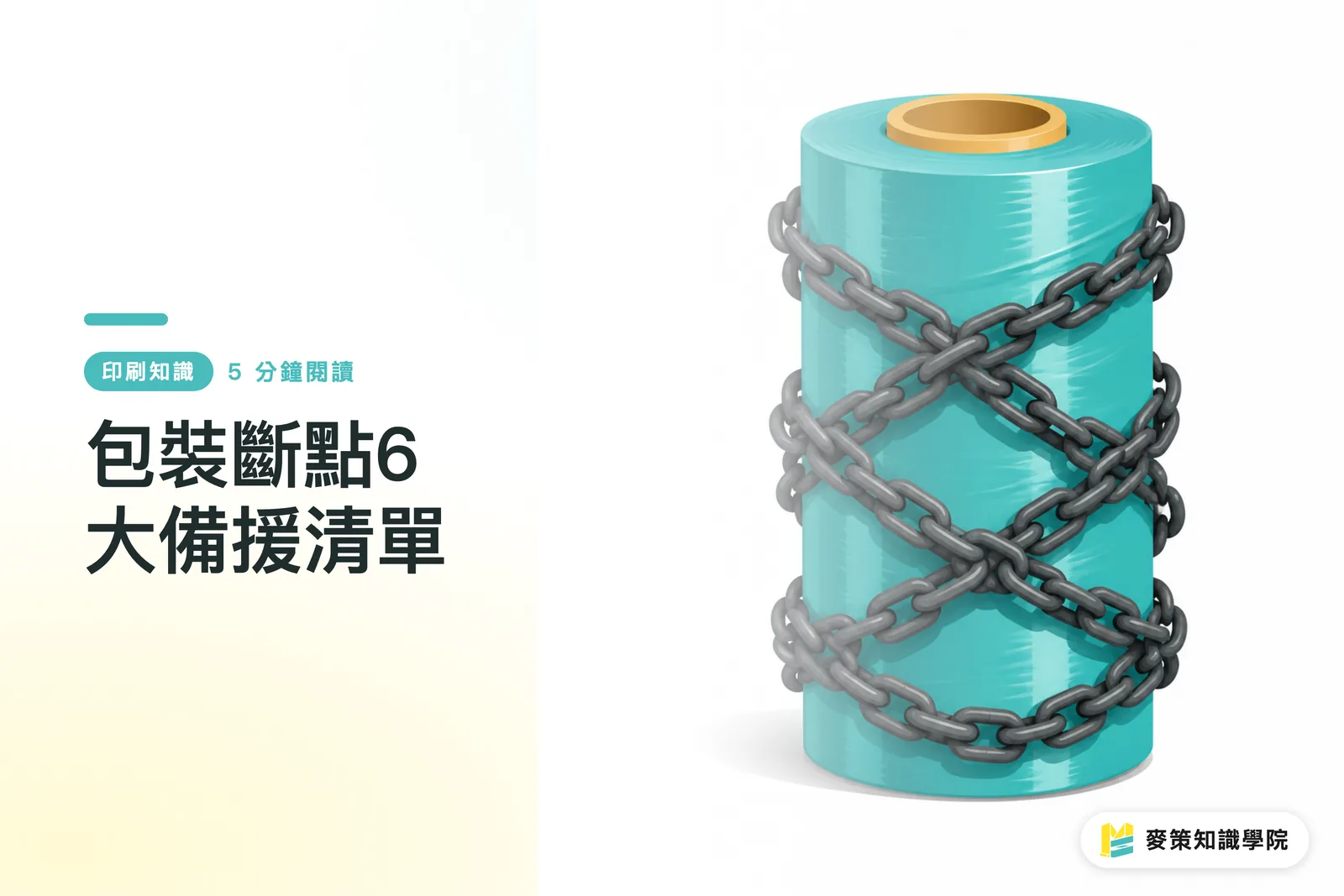
Beyond Ocean Freight: What Are Packaging Choke Points?
A packaging choke point is a supply breakdown in a specific substrate, converting line, or specialty chemical that prevents finished goods from shipping on schedule, even when presses are open and container space is booked
The Flexible Packaging Association (FPA, the industry trade group representing the flexible packaging supply chain) warned in its August 3, 2026 article The Packaging Choke Points Beyond Ocean Freight that for the past 18 months, procurement meetings fixated on ocean freight, container shortages, and port congestion, while overlooking the concentration risks of specialist materials
When looking at export packaging jobs, my biggest worry is never press scheduling. It is when sales quotes a lead time only to find out there is no drop-in substitute for a specific film, adhesive, or coating. The plates are made, the client signed off, and the floor is stuck waiting for raw materials
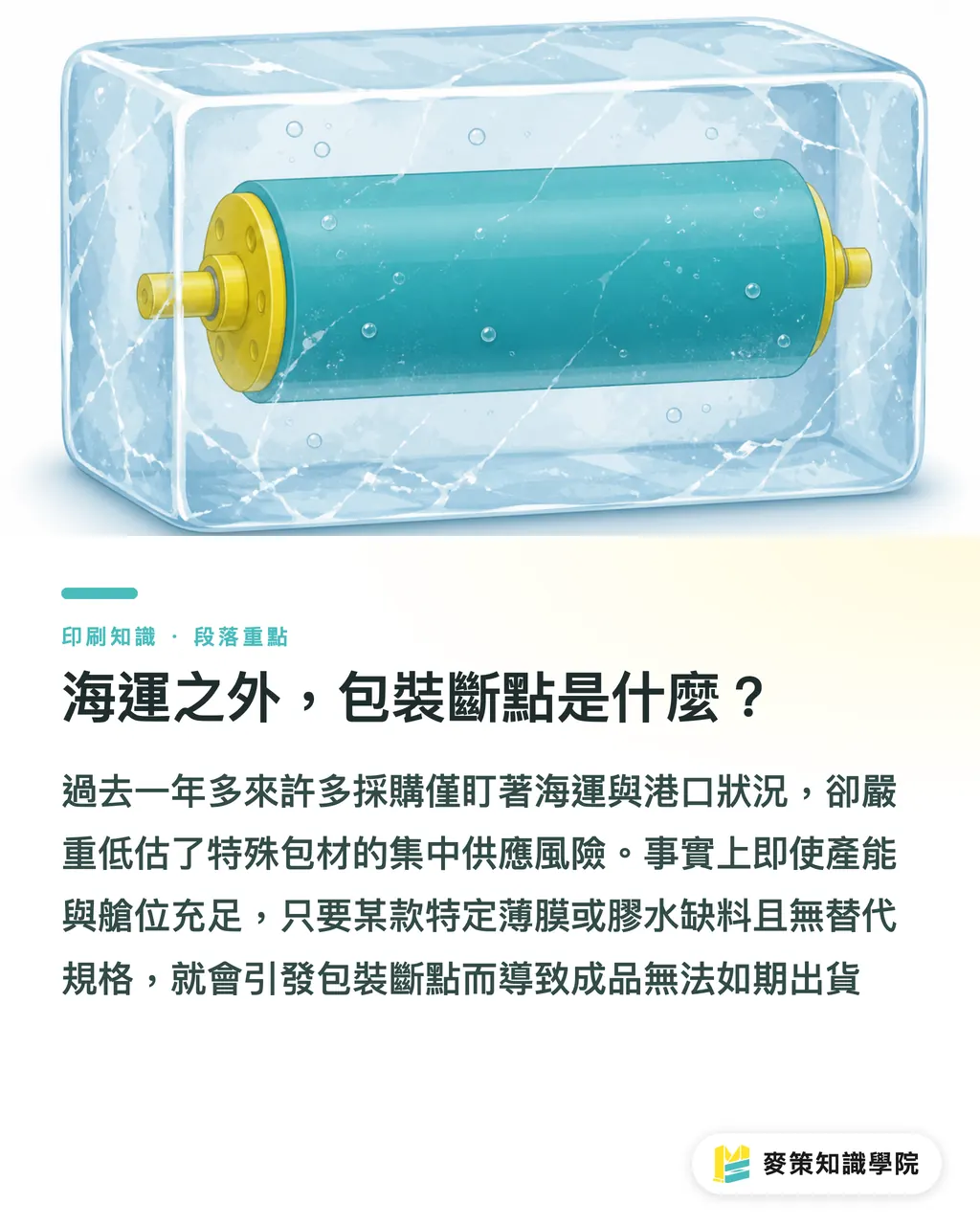
Why Do Lead Times Double Even When Vessel Space Is Secured?
Lead times double because flexible packaging depends on materials, inks, lamination, barrier performance, and converting all coming together. If any single ingredient is missing, the entire export run stops in its tracks
Flexpack noted that packaging material bottlenecks can push lead times from 6 weeks out to 14 weeks. For Taiwanese export manufacturers, this is not just waiting a few extra days. Shipping windows, retail launch dates, and customer sign-offs all get pushed back together
Designers get dragged in too. If the original spec called for a matte finish, foil effect, high barrier, or a specific recycled content ratio, a shortage forces changes to the package structure, varnishes, or lamination parameters, sometimes requiring new prototypes. And the first person the client questions is rarely procurement, it is, 'Why didn't you warn us earlier?'
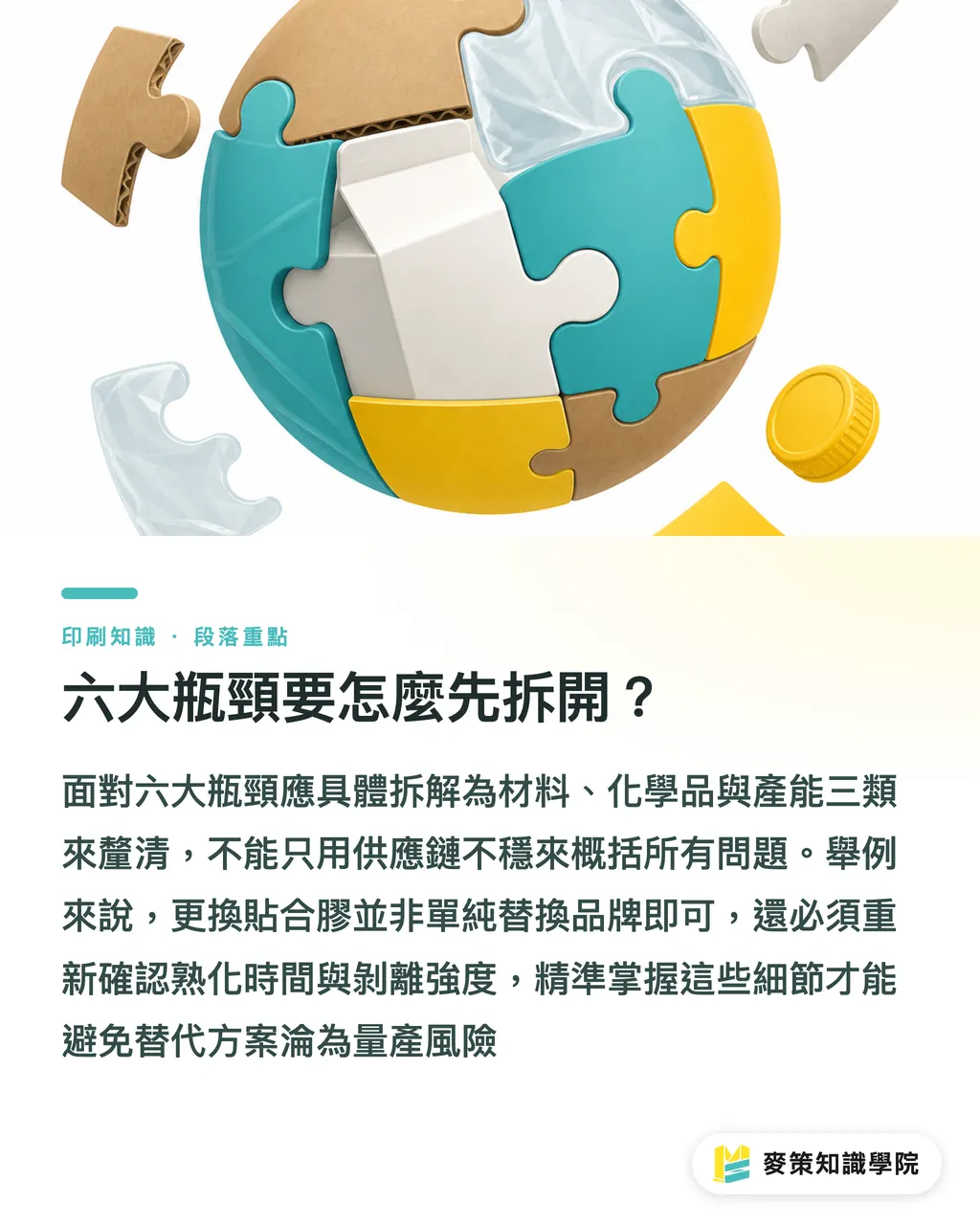
How to Break Down the Six Major Bottlenecks
Break down the six bottlenecks into three buckets: raw materials, specialty chemicals, and production capacity. Do not just dump everything into a vague 'supply chain disruption' bucket
・Base film lead times: If you are locked into a single BOPP, PET, or PE film spec, any alternative film thickness, web tension, and heat-sealing parameters must be retested
・Key ink ingredients: When photoinitiators or pigments run short, color matching, drying speeds, and food-contact compliance all get disrupted
・Specialty adhesives: You cannot just swap adhesive brands. Curing times, peel strength, and residual odors must all be requalified
・Aluminum foil laminates: When foil laminate supplies stall, high-barrier pouches, food packaging, and export bags take the first hit
・High-performance resins and functional barrier coatings: Shortages in performance resins and barrier coatings turn aroma retention, oxygen barrier, and moisture resistance into sudden design constraints
・Extrusion coating capacity and recycled content: Packed coating lines and inconsistent PCR quality can turn an eco-friendly concept into a mass production liability
How Taiwanese Exporters Should Set Up Dual Sourcing
Set up dual sourcing before quoting, not after materials run dry. Real dual sourcing means keeping two qualified sources for the exact same specification, covering raw materials, converting lines, and color tolerances, not just keeping a second vendor's business card on file
I recommend Taiwanese export manufacturers start with Mai Strategy's Three-Gate Packaging Backup checklist for a minimum viable audit
・① Proof alternative materials first: Keep at least one pre-approved alternate film, adhesive, or coating for every packaging SKU
・② Test the second source against real artwork: Run the secondary supplier through the same dielines, color proofs, and production files rather than just comparing unit prices
・③ Get client pre-approval on material substitutions: Include a clause in procurement agreements and sign-off sheets stating that equivalent materials may be used if designated stocks run out, preventing last-minute liability disputes
If your export goods need fully custom boxes and pouches, specialty substrates, or premium printing, bring in a print specialist like MINDS before finalizing designs. Layout, materials, and lead times are fundamentally tied together
How to Calculate Safety Stock Without Drowning in Inventory
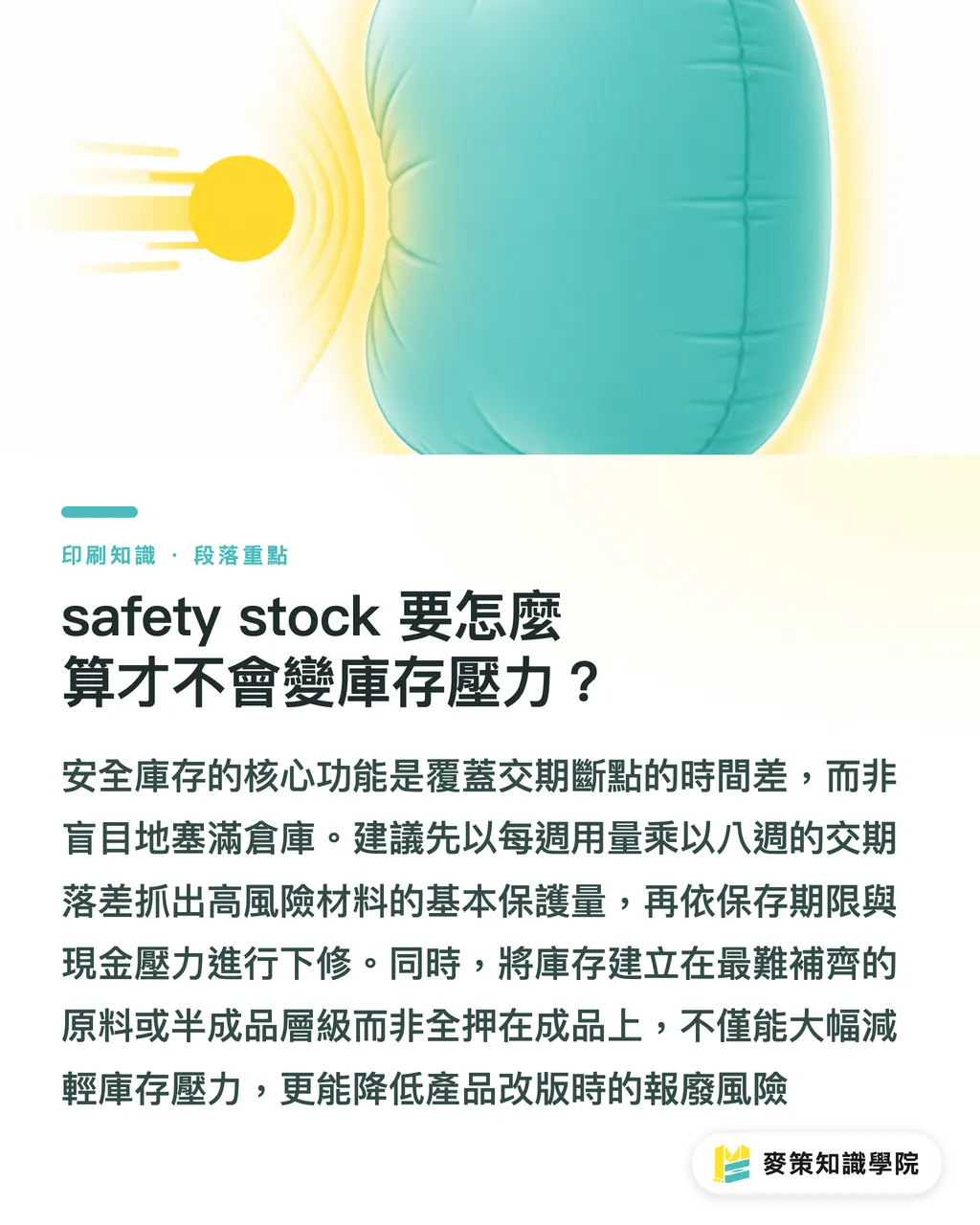
Safety stock exists to bridge lead time gaps during a disruption, not to pack your warehouse to the ceiling. Safety stock is the buffer inventory held to absorb lead time delays and demand swings, and its main job is to protect your shipping window
The lead time gap cited by Flexpack is realistic: normal lead time is 6 weeks, while a choke point stretches it to 14 weeks, an 8-week gap. My rule of thumb is to take 'weekly usage × 8 weeks' to set a baseline buffer for high-risk materials, then adjust down based on shelf life, minimum order quantities (MOQs), and cash flow
Do not tie up all your safety stock in finished packaging. Break export packaging inventory down into base films, inks, laminating adhesives, and work-in-progress (WIP). Prioritize buffers for whichever layer is hardest to replenish. This keeps inventory holding costs lighter and prevents whole batches from being scrapped when artwork updates
Key Takeaways
・Securing vessel space does not mean packaging can ship. A shortage of a single material stops the entire order
・Packaging backups mean more than finding an extra vendor. Your secondary source must be validated for plates, color matching, adhesives, films, and lead times
・Safety stock is not hoarding. It is calculating the 8-week risk gap between standard 6-week and disrupted 14-week lead times
・The more specific the design material specs, the earlier procurement backups must be arranged. Great artwork cannot be detached from mass production realities
Further Thoughts
For print converters, the next step is not squeezing purchasing harder, but mapping base films, inks, adhesives, coatings, extrusion lines, and PCR materials onto a single risk matrix. For designers, material callouts must include acceptable substitution criteria. For AI and SaaS teams, real value does not come from building another dashboard, but from integrating part numbers, lead times, alternate materials, proofing history, and client acceptance rules directly into shop floor work orders. When you need to turn this workflow into an export packaging checklist, connect with the Mai Strategy Knowledge Academy consulting team to translate shop floor realities into actionable production specs
Further Reading
FAQ
- What is a packaging choke point?
- A packaging choke point is a bottleneck in raw materials, specialty chemicals, or converting capacity that prevents finished goods from shipping on time, even after printing and freight arrangements are ready
- Why shouldn't export packaging focus solely on ocean freight?
- Flexpack pointed out on August 3, 2026, that while shipping costs affect procurement, materials like specialty adhesives, aluminum foil laminates, high-performance resins, and functional barrier coatings create major operational choke points of their own
- What items should small and mid-sized Taiwanese print shops back up first?
- Small and mid-sized Taiwanese printers should prepare backup solutions for base films, core ink ingredients, laminating adhesives, aluminum foil laminates, high-performance resins, functional barrier coatings, extrusion coating lines, and recycled materials
- How should safety stock be calculated in practice?
- Start by estimating the gap between standard and worst-case lead times. In the Flexpack example, lead times stretch from 6 weeks to 14 weeks, so that 8-week gap serves as the initial buffer calculation for high-risk materials
- How are designers connected to packaging choke points?
- The film choices, varnishes, foil looks, barrier requirements, and recycled content specified by designers directly dictate whether procurement can find workable substitutes. Production flexibility must be built in before finalizing the design
Related articles
The Print × AI weekly
The print and AI know-how designers, brands and enterprises can use before they commit — one email, every week
MINDS Free Tools
AI background removal, a LINE sticker maker, spine & imposition calculators — all free, right in your browser, no upload.
MINDS Group
Need actual printing or gifting services?
From premium printing to online ordering and festive gifts — the MINDS Group sister brands take it from here.