

Overview
To understand where packaging carbon footprint comes from, start with the five-cell map that MINDS (MS, mid-to-high-end fully custom commercial printing) commonly uses: 'material, process, transport, loss, disposal', where materials come from, how production steps work, how logistics run, where waste happens, and how end-of-life is handled
I've seen plenty of projects where the first question is whether they can go carbon-neutral, and they skip the most basic spec audit in the process. The first step in packaging carbon reduction isn't buying offsets, and it isn't swapping in a new marketing tagline. It's laying out paper materials, printing, processing, forming, transport, and waste one by one. Only when the map is clear do you know where to cut
What Is Packaging Carbon Footprint?
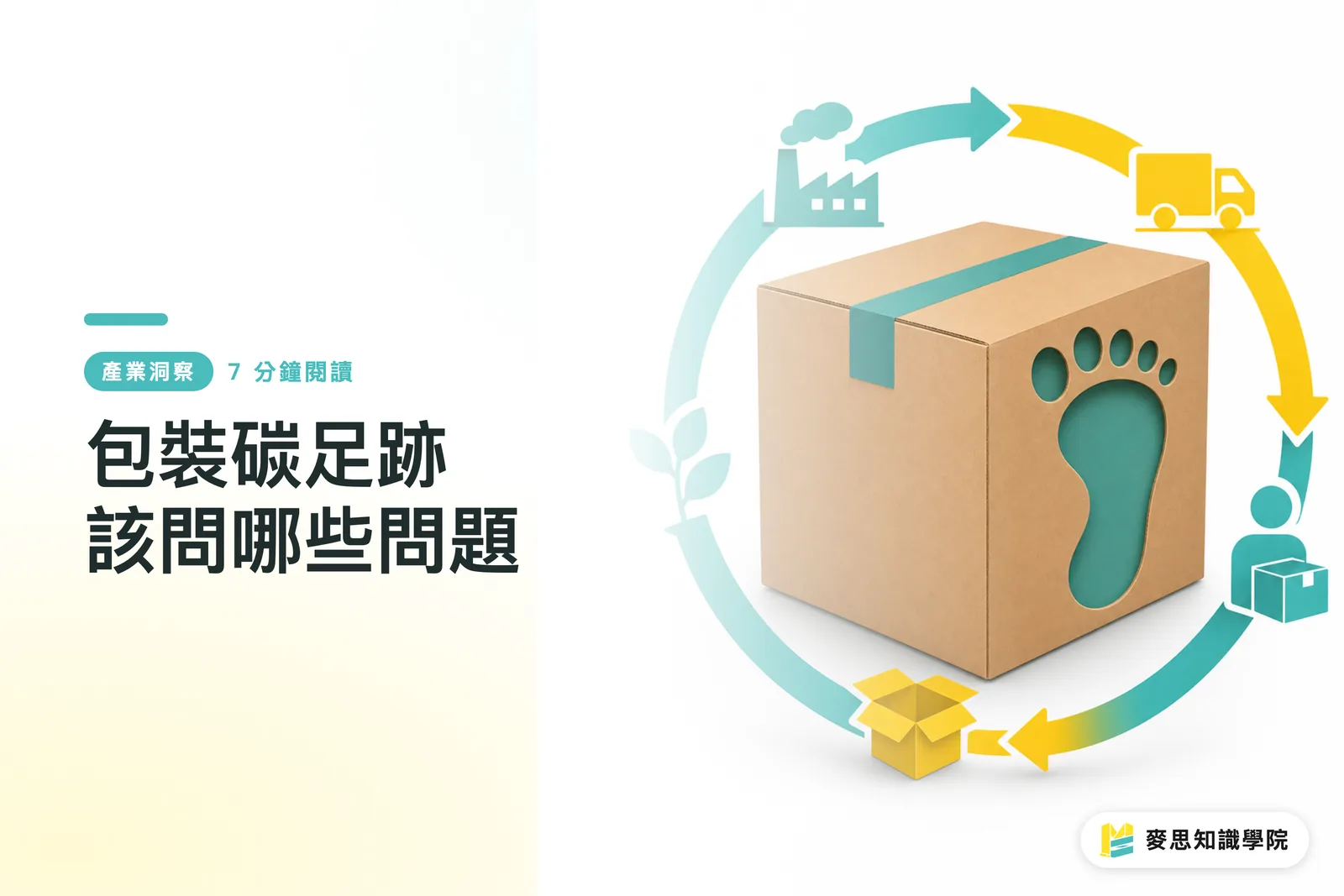
Packaging carbon footprint refers to the greenhouse gas emissions generated across a package's lifecycle, from raw material sourcing and production to transport, distribution, and end-of-life handling, expressed in CO2e. ISO 14067 is the commonly referenced standard for product carbon footprints; at its core, it's about defining scope, inventorying activities, converting to emissions, and keeping the records
In a print packaging context, paper boxes, shopping bags, and labels touch at least six stages:
・Paper material production: base paper, white cardboard, coated paper, kraft paper, and label substrates each carry their own sourcing and manufacturing emissions
・Transport and distribution: paper coming into the plant, semi-finished goods sent out for subcontracting, finished products delivered to clients, every move adds another stretch of emissions
・Printing process: machine startup, ink mixing, test prints, press wash, drying, and power consumption all accumulate on the product
・Surface finishing: varnishing, matte lamination, gloss lamination, hot stamping, spot UV, and embossing all add materials and steps
・Assembly and forming: die-cutting, box gluing, rope threading, label application, and hand assembly all involve electricity, adhesives, and manual processes
・Waste and scrap: startup makeready sheets, trim offcuts, defects, and reprints caused by client revisions are the emissions most often underestimated
A practical rule of thumb: if a package goes through five stages, printing, lamination, hot stamping, die-cutting, and box gluing, its carbon footprint can't be measured by paper weight alone. More steps mean a longer supply chain and a harder inventory to close
Where Do Carbon Emissions Come From in Paper Boxes, Shopping Bags, and Labels?
For paper boxes, the biggest carbon culprit is usually material and structure. A seemingly ordinary color box can contain paper, ink, laminate film, hot stamping foil, adhesive, and a die-cutting mold. The thicker the paper, the larger the size, the more wasteful the unfolded blank area, the bigger the impact on the materials side
For shopping bags, the carbon footprint goes beyond paper, you also need to look at handles and reinforcement. A paper bag with cotton cord, PP cord, metal eyelets, and a bottom insert ends up with a wider mix of materials than most paper boxes. The more mixed the materials, the harder the recycling, and the messier the end-of-life
For labels, the issue is composite structure. One sticker looks small, but it can carry three layers: face material, adhesive, and release liner. Add cold foil, lamination, or spot UV, and the processing density per unit area climbs. Small doesn't mean low-carbon
I recommend clients look at the three types separately:
・Paper boxes: start with the unfolded dimensions, paper weight, whether lamination is applied, and how many rounds of sampling and revision are involved
・Shopping bags: start with paper weight, handle material, reinforcement structure, and whether hand-threading is required
・Labels: start with face material, adhesive type, release liner, and whether waterproofing or special surface effects are needed
When MINDS helps clients spec out mid-to-high-end custom packaging, the first questions are always about use case and distribution channel, not whether to go full-coverage effects. A skincare paper box sitting on a shelf for 30 days and a shopping bag used once at an event should never be run through the same carbon reduction playbook
Why Audit the Specs Before Talking About Carbon Reduction?
The worst thing you can do in packaging carbon reduction is claim low-carbon before you've measured anything. It looks good on the client side, but once it hits the supply chain it turns into a mess of chasing documentation, proof, and consistency
I use the 'MINDS (MS) Packaging Carbon Audit 5 Questions' to get the basics on the table first:
・① What are the primary materials: e.g., 350gsm white board, 250gsm kraft paper, PP synthetic paper labels
・② How many production steps are involved: e.g., four-color printing, matte lamination, hot stamping, die-cutting, and box gluing, five steps total
・③ How many times will it move: e.g., paper mill to print shop, print shop to finishing vendor, back to plant, finished goods to client, four legs
・④ Where does waste occur: e.g., startup makeready, trim offcuts, die-cutting rejects, gluing defects
・⑤ How is it eventually disposed of: e.g., standard recycling, hard to recycle due to lamination, hard to disassemble due to mixed materials, straight to landfill
These five questions look plain, but they beat a vague low-carbon declaration every time. The places where real change is possible are almost always buried in spec decisions
A common example: a client originally wanted their gift box mounted on thick board, with matte lamination and hot stamping. If the product's unit price isn't high and it's meant for a short-term promotion, my first suggestion is to switch to a single-layer thick paper stock and keep one brand focal point. One fewer material layer, one fewer finishing step, one fewer outsourced leg, that makes a real dent in both cost and carbon
What Can Designers and Buyers Do to Lower Packaging Carbon Footprint?
Carbon reduction isn't about making the design look cheap, and it isn't about telling clients to skip every finishing option. Good packaging carbon reduction is about re-prioritizing across brand feel, protection, cost, and emissions
Here are six things designers and buyers can act on immediately:
・Start with size: shave a little off each dimension of the outer box, and the unfolded blank area shrinks, paper usage and shipping volume follow
・Try lighter paper: dropping from 400gsm to 350gsm doesn't necessarily affect function, but you'll need to sample for stiffness and compression resistance
・Cut the combined finishing: if solid ink areas can carry the texture, don't layer lamination, hot stamping, and spot UV across every panel
・Avoid over-mixing materials: the more paper, plastic, and metal components you combine, the harder the recycling
・Consolidate production flow: finishing steps that can be done within one supply chain are easier to track and maintain quality than jobs shipped out multiple times
・Control revision rounds: one wrong die template, one last-minute paper switch, one large-scale reprint, each one directly multiplies waste
If a company has an established packaging lineup, start with the top 20 items, don't pull every SKU in from day one. For SMEs doing ESG, the biggest risk is starting with too wide a scope and ending up with a spreadsheet nobody can maintain
When the Mai Strategy Knowledge Academy consulting team reviews packaging projects, the spec sheet is always the starting point for carbon reduction. Paper type, dimensions, quantities, finishing, lead time, delivery locations, all written out. Without that, any carbon accounting is just navigating with a blank map

Key Takeaways
・Packaging carbon footprint doesn't start at the press, it starts with material and spec decisions
・For paper boxes, look at structure; for shopping bags, look at material mix; for labels, look at composite layers, there's no one-size answer across all three
・Claiming low-carbon without an audit is a risk for the brand, the designer, and the print shop alike
・One fewer finishing step, one fewer handoff, one fewer reprint, that usually does more for carbon than a well-worded tagline
・For SMEs, auditing the top 20 regular items is more realistic than chasing full carbon neutrality from day one
Further Thinking
Packaging carbon footprint is becoming a shared language that designers, buyers, print shops, and SaaS teams all need to speak. For the print manufacturing side, the next step is turning paper data, process records, waste figures, and logistics information into traceable spec logs. For designers, the next step is folding dimensions, paper weight, and finishing count into the proposal stage. For AI and SaaS teams, the actually useful tool isn't generating sustainability copy, it's connecting quotes, work orders, material lists, and supply chain data so every packaging decision leaves a trail. Carbon reduction starts with what you can see. Old-fashioned idea. It works
FAQ
- Where does packaging carbon footprint mainly come from?
- Packaging carbon footprint mainly comes from paper material production, transport, the printing process, surface finishing, assembly and forming, and waste and disposal handling. Paper boxes, shopping bags, and labels each need to be looked at separately, because the material structure and processing methods differ
- Where should you start when reducing a paper box's carbon footprint?
- Start with size, paper weight, and number of finishing steps. Shrinking the unfolded dimensions, cutting unnecessary lamination or hot stamping, and reducing reprint waste will almost always do more than swapping in a low-carbon claim
- Why isn't a paper shopping bag necessarily lower-carbon than a plastic bag?
- A shopping bag that uses thick paper, cotton cord, PP cord, metal eyelets, and a bottom reinforcement ends up with a wider material mix, which raises both processing complexity and recycling difficulty. Judging a bag's carbon footprint requires looking at the full spec, not just whether it's made of paper
- Labels are tiny, do they really need to be included in carbon footprint accounting?
- Labels are small, but a typical structure has three layers: face material, adhesive, and release liner. Add cold foil, lamination, or spot UV, and the processing density per unit area goes up. They're worth including in any packaging carbon audit
- How should SMEs get started on packaging carbon reduction?
- Start by auditing your top 20 regular items, gathering material, dimension, quantity, finishing, waste, and delivery information for each. Build the spec data first, then decide whether to reduce volume, switch materials, cut finishing steps, or adjust the supply chain
Related articles



The Print × AI weekly
The print and AI know-how designers, brands and enterprises can use before they commit — one email, every week
MINDS Free Tools
AI background removal, a LINE sticker maker, spine & imposition calculators — all free, right in your browser, no upload.
MINDS Group
Need actual printing or gifting services?
From premium printing to online ordering and festive gifts — the MINDS Group sister brands take it from here.