
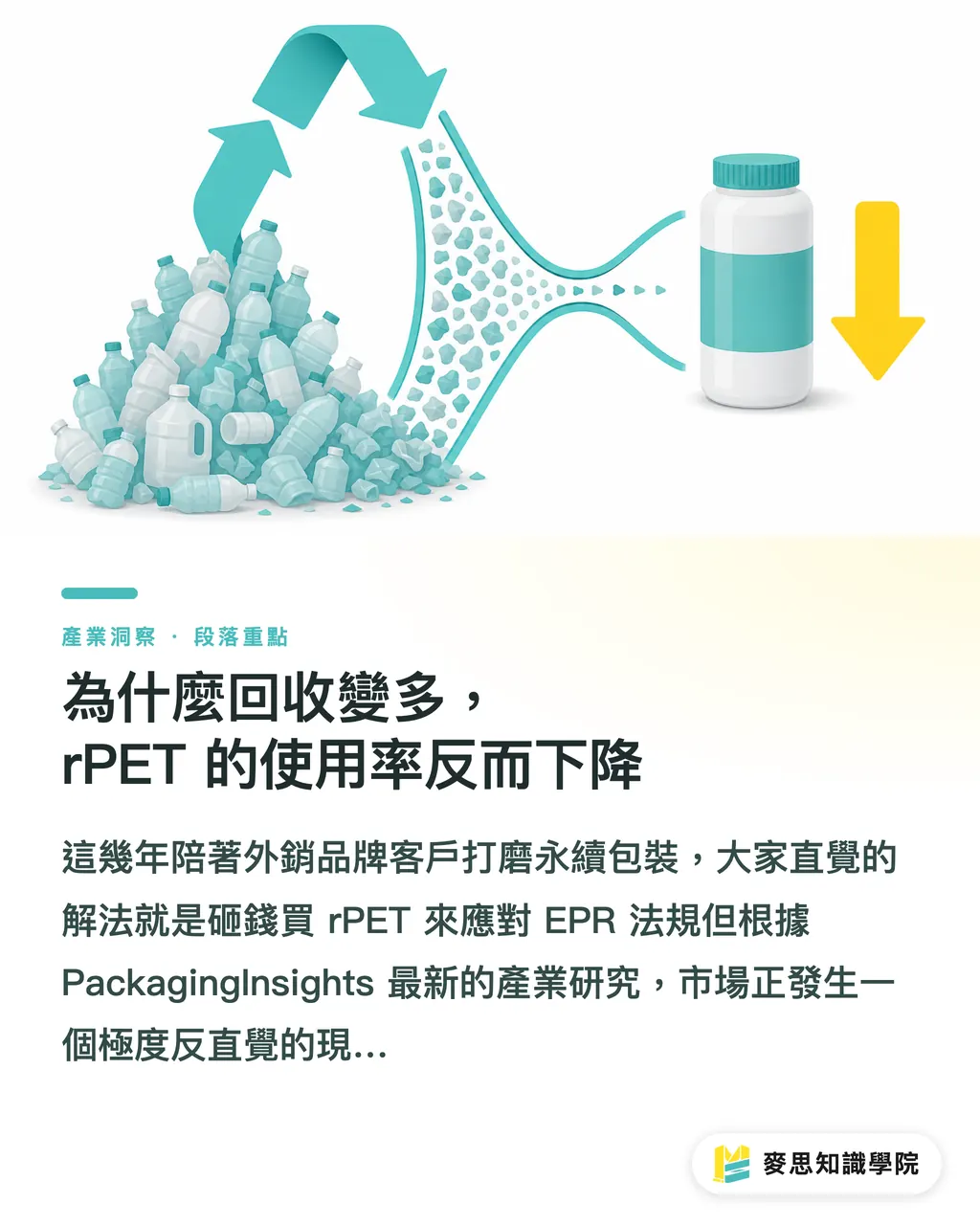
Why Is rPET Usage Falling Even as Recycling Volumes Rise?
Over the past few years, as I have worked with export-oriented brand clients on sustainable packaging, the instinctive solution has often been to spend more on rPET to respond to EPR regulations
But according to the latest industry research from PackagingInsights, the market is seeing a deeply counterintuitive trend: collection volumes for recycled PET thermoforms are clearly rising, yet actual rPET usage is declining
That data point punctures the rosy assumption that more recycling automatically means more circularity
When back-end sorting technology and cost structures cannot consistently deliver high-quality, contaminant-free rPET, brands are naturally unwilling to sacrifice packaging clarity and protection simply for environmental credentials on paper. The result is a serious gap between material supply and market demand
Returning to Practical Design: The Breakthrough Path for BOPP Films and Reusable Cups
Rather than fighting with recycled materials that suffer from unstable yields, many sharp material suppliers have started shifting toward "easy-to-recycle mono-materials" and "closed-loop systems."
The information revealed this time shows that PureCycle and Innovia Films have successfully tested BOPP films with strong recycling value
This approach addresses one of flexible packaging's hardest plastic-reduction challenges at the source, allowing functional films to enter existing recycling systems without relying on specialized industrial infrastructure
Japan's Toyo Seikan, meanwhile, has demonstrated a different model with reusable cups developed for a local sports league
Instead of obsessing over material substitution for a single-use package, the company built a dedicated collection and washing line for a specific venue, turning packaging from a disposable consumable into a controllable asset
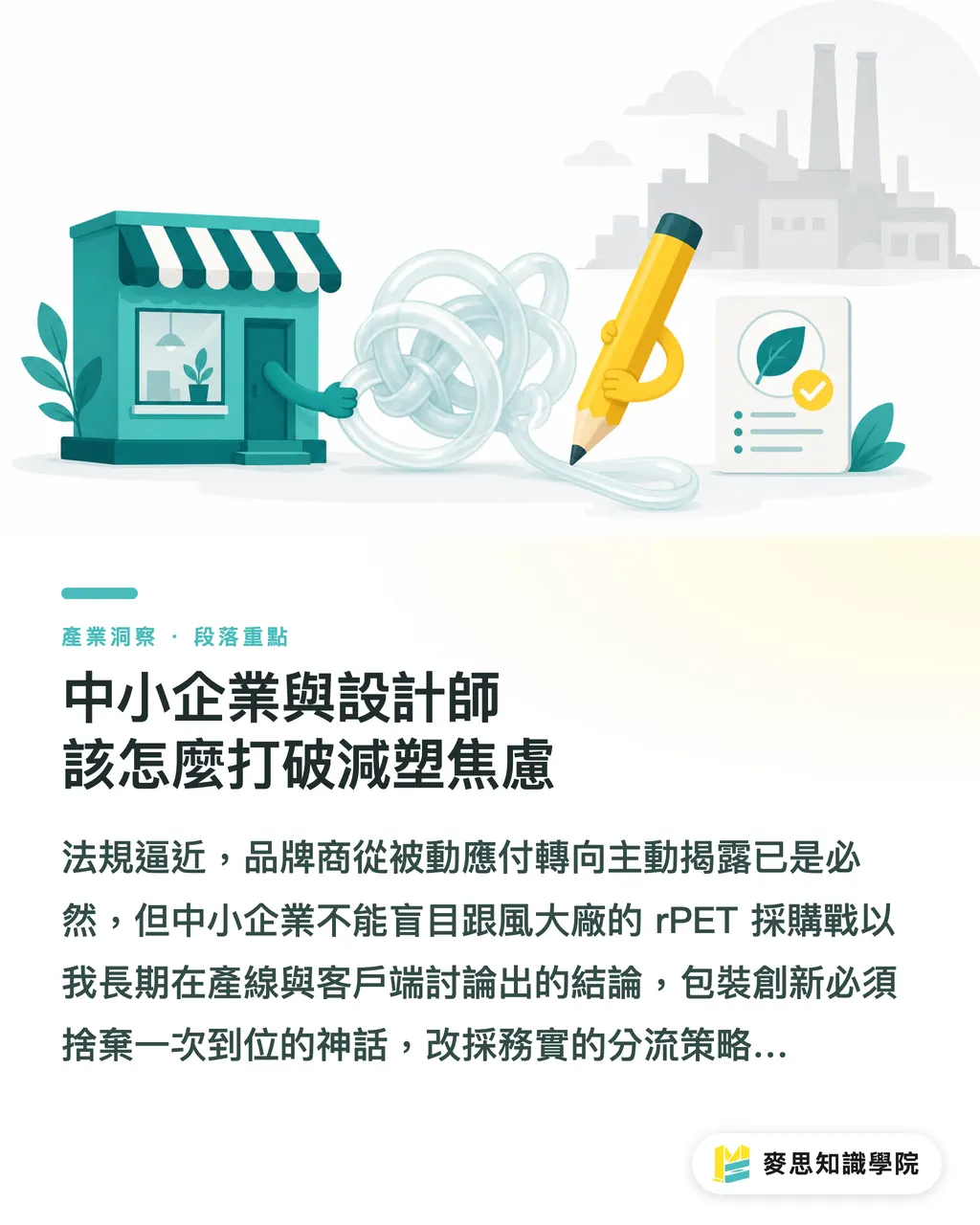
How SMEs and Designers Can Break Free from Plastic-Reduction Anxiety
As regulations close in, brands will inevitably move from passive compliance to active disclosure. But SMEs should not blindly follow large manufacturers into an rPET procurement arms race
Based on my long-running discussions with production teams and clients, packaging innovation needs to let go of the myth of a one-step perfect solution and adopt a more practical segmentation strategy
If you are planning next season's product packaging, focus on the following execution priorities:
・Simplify materials at the source: audit all existing composite packaging and shift wherever possible to mono-material structures such as all-PP, sharply reducing the difficulty of back-end sorting
・Align with local infrastructure: do not let a maze of environmental certifications dictate your choices. Packaging design must match the recycling infrastructure that actually exists in your target export market
・Introduce closed-loop models in specific settings: for B2B operations or closed events, assess reusable circular packaging models similar to Toyo Seikan's approach
Key Takeaways
・The widening gap between rising PET thermoform recycling volumes and falling rPET demand proves that simply buying recycled materials can no longer solve compliance pressure
・The BOPP film tested by PureCycle shows that mono-material functional packaging can be a practical solution that balances cost and environmental performance
・Sustainable packaging design should not blindly trust laboratory data. It must align with the real recycling infrastructure and regulations in the product's export market
Further Reflections
Sustainable transformation has never been just a game of material substitution. It is a systems engineering challenge that spans production lines and regulations
For Taiwanese SME printers and brand clients, instead of spending heavily to compete for scarce high-quality rPET, it is more valuable to revisit the product life cycle
Starting with mono-material design, and combining it with MINDS Printing's structural prepress assessment and integrated services, brands can make "easy to sort and easy to recycle" a non-negotiable metric from the earliest design stage. That is the most resilient commercial strategy for responding to international regulations
Further Reading
FAQ
- Why is the industry becoming more cautious about rPET?
- Although PET recycling volumes are increasing, sorting technology limitations and high purification costs make the supply of high-quality rPET unstable, reducing brands' actual willingness to purchase it
- If flexible packaging does not fully switch to rPET, what sustainable options are available?
- Mono-material design is currently the mainstream solution. For example, the recyclable BOPP film developed by PureCycle can enter existing recycling systems while maintaining barrier performance
- How should Taiwanese SME brands exporting overseas respond to the EU's new packaging rules?
- The first priority is to phase out composite materials that are difficult to separate and shift toward mono-material design, ensuring that packaging has practical recyclability when it enters the local market
References
- 不再盲目追求 rPET:材料創新與回收鏈的現實平衡 · packaginginsights.com
Related articles
The Print × AI weekly
The print and AI know-how designers, brands and enterprises can use before they commit — one email, every week
MINDS Free Tools
AI background removal, a LINE sticker maker, spine & imposition calculators — all free, right in your browser, no upload.
MINDS Group
Need actual printing or gifting services?
From premium printing to online ordering and festive gifts — the MINDS Group sister brands take it from here.