
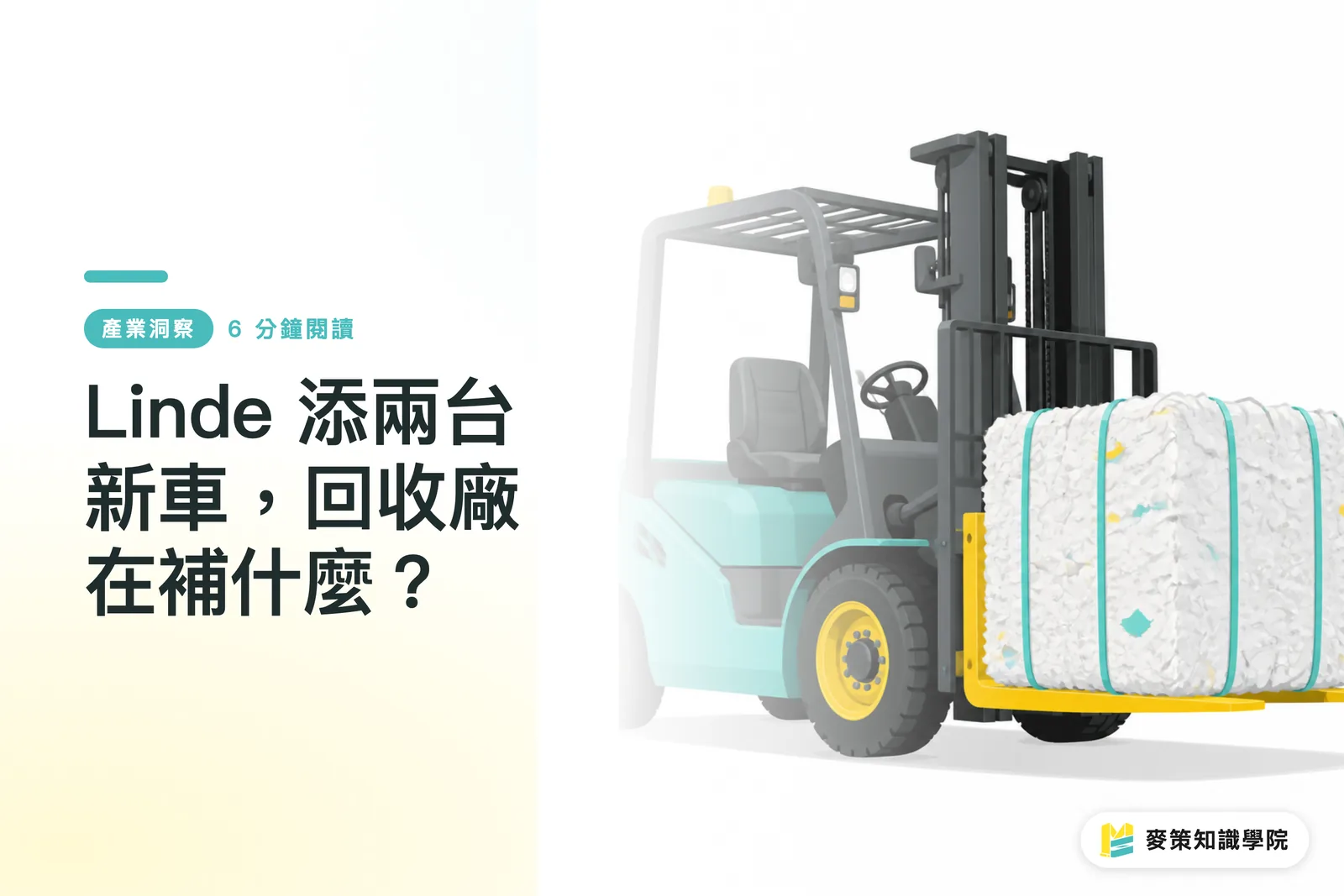
What Did Linde Actually Deliver This Time?
Linde supplied two brand-new fork/clamp trucks, not industrial gas systems as some might assume. As industry outlet ThePackagingPortal reported on August 18, 2026, in Two New Linde Units for Recycling UK, Recycling UK added two German-built Linde vehicles to the fleet at its Papersort UK plant in Oswestry. Neil Clarke, Managing Director of Recycling UK, confirmed the news in a social media post. When MINDS (MS, mid-to-high-end fully customized commercial printing) evaluates reports like this, we log it as an equipment update, not a guarantee of supply
A fork/clamp truck is a material handling vehicle that switches between forks and clamps, lifting or clamping paper bales and recovered materials depending on their shape. For Mai Strategy's three-step print verification, this is a supply chain checkpoint, not a gas spec
That is why I steer away from interpreting this as a "gas equipment race." The original source never claimed these vehicles were gas machinery. The accurate takeaway is that a UK recycling facility is simply upgrading its vehicle fleet and internal logistics capacity

Why Do Recycling Plants Upgrade Handling Equipment First?
Recycling facilities usually invest in handling equipment first because material inflow, outflow, and workstation handoffs dictate actual throughput. No matter how fast the main machinery runs, if paper bales get stuck in holding areas, the production line still waits on feedstock. When MINDS (MS) looks at capacity, we first ask how materials move in and out
Recycling UK released no output figures this time, only confirming that two new vehicles joined their existing fork/clamp truck fleet. The only confirmed fact is improved handling capacity, which should not be exaggerated into a specific output jump. Looking at print and recycling supply chains, I split equipment investments into two layers. The first layer is core machinery, and the second is handling, temporary staging, and changeover. The second layer rarely shows up in corporate sustainability slide decks, but it directly affects whether materials reach the next stage on time
The first gate of Mai Strategy's three-step print verification asks two distinct questions: "Can the plant process it?" and "Can I actually get this batch?" A photo of new machinery shows equipment upgrades in progress, but it does not serve as a supplier's binding commitment on specs, volume, or delivery timelines
Do Two New Trucks Prove Recycled Material Prices Will Drop?
Two new trucks do not prove recycled material prices will fall. They only confirm that Recycling UK continued expanding its equipment in August 2026. The source provides no data on output, recycled feedstock pricing, quality metrics, or lead times, so MINDS (MS) will not read this news as "supply has stabilized."
Equipment investments serve as an early upstream signal, but prices only show up when materials actually trade and ship. In my procurement experience, brands often lump "recyclable" and "reliably purchasable" into the same bucket. In reality, feed sources, sorting quality, shipping distances, and substitute materials together determine the true cost. When MINDS takes on recycled paper projects, we log these conditions in inquiry and proofing records from the start, giving any design adjustment a solid foundation
Two Linde trucks shipped from Germany to the UK provide evidence of ongoing investment in European recycling infrastructure, but they are not a price predictor for Taiwanese brands. Keeping this distinction clear prevents buyers from prematurely overhauling material strategies over a single piece of news
How Should Brands Factor This Signal into Procurement?
To act on this signal, brands should turn procurement questions into three verifiable criteria. Mai Strategy's three-step print verification applies directly to recycled material and print projects
・① Source and specifications: Require suppliers to clearly define feedstock sources, material condition, and application limits. Two new Linde trucks cannot replace precise specs
・② Proofing and tolerances: Test target recycled materials to verify color, surface texture, and post-press finishing. Identify backup materials early so discrepancies do not surface during mass production
・③ Lead times and contingency plans: Include availability dates, minimum order requirements, and fallback options directly in purchase orders. What brands need to buy is reliable delivery
If your brand has integrated ESG into sustainability roadmaps but hasn't communicated concrete material requirements to the pressroom, scheduling a review with MINDS covering material selection, proofing, and production planning is far more practical than waiting for recycled material prices to drop on their own
Which Questions Should Printers Clarify First?
Printers must first clarify whether equipment changes at a recycling plant translate into workable lead times and quality standards for their own pressrooms. Neil Clarke, Managing Director of Recycling UK, confirmed the arrival of two new Linde trucks in Oswestry in a social media post. This is a named, traceable equipment milestone, but not a delivery guarantee for Taiwanese supply chains. Mai Strategy's three-step print verification keeps these two realities separate
・1. First confirm the material specs, delivery dates, and backup stocks your supplier can actually deliver today, without projecting one UK plant's upgrade into a global supply shift
・2. Run proofs with actual material samples and record differences in print color, finishing, and package presentation, giving brand teams full visibility into tradeoffs
・3. Factor lead time risks, minimum order quantities (MOQs), and secondary sources into evaluations so projects move forward even if prices stay flat
When teams need to turn industry news into actionable procurement decision matrices, the Mai Strategy Knowledge Academy Consulting Team helps translate supply chain developments into clear working parameters for design, purchasing, and production teams
Key Takeaways
・Equipment expansions improve internal operational pacing first and do not automatically translate to lower recycled material prices
・To determine whether recycled materials are viable, procurement must verify source, quality, and lead time rather than relying solely on recyclability labels
・Brand communication must turn equipment news into verifiable material specifications
・Mai Strategy's three-step print verification breaks recyclability into three checks: source, proofing, and delivery
Further Considerations
Print manufacturers can consolidate recycled material specifications, proofing results, and delivery commitments into a single procurement record. Design teams can leave room for backup substrates and color adjustments. AI implementations let automated tools handle spec comparisons and anomaly flags while humans verify physical proofs and supplier commitments. SaaS platforms (software delivered via subscription) can track materials, suppliers, quotes, lead times, and proofing results on a single project card. This August 2026 Linde update belongs in the market signals column, not the price forecast column
Further Reading
・Two New Linde Units for Recycling UK (August 18, 2026)
FAQ
- Were the two new Linde units industrial gas systems?
- The source describes two brand-new fork/clamp trucks delivered from Germany to the Papersort UK facility in Oswestry, UK, which cannot be interpreted as gas equipment
- Do the two new trucks mean recycled material prices will drop?
- No direct conclusion can be drawn. The report only confirms that Recycling UK expanded its fork/clamp truck fleet, providing no data on prices, output, quality, or lead times
- How should brands approach buying recycled materials?
- Apply Mai Strategy's three-step print verification to confirm sources and specs, test physical proofs and tolerances, and lock in lead times and backup options before writing them into purchase orders
- Which question should Taiwanese printers start with?
- Start by asking suppliers what material specs and delivery dates they can commit to right now, then run proofs with physical samples. Equipment investments at a single UK facility cannot substitute for local procurement guarantees in Taiwan
Related articles



The Print × AI weekly
The print and AI know-how designers, brands and enterprises can use before they commit — one email, every week
MINDS Free Tools
AI background removal, a LINE sticker maker, spine & imposition calculators — all free, right in your browser, no upload.
MINDS Group
Need actual printing or gifting services?
From premium printing to online ordering and festive gifts — the MINDS Group sister brands take it from here.