

Overview
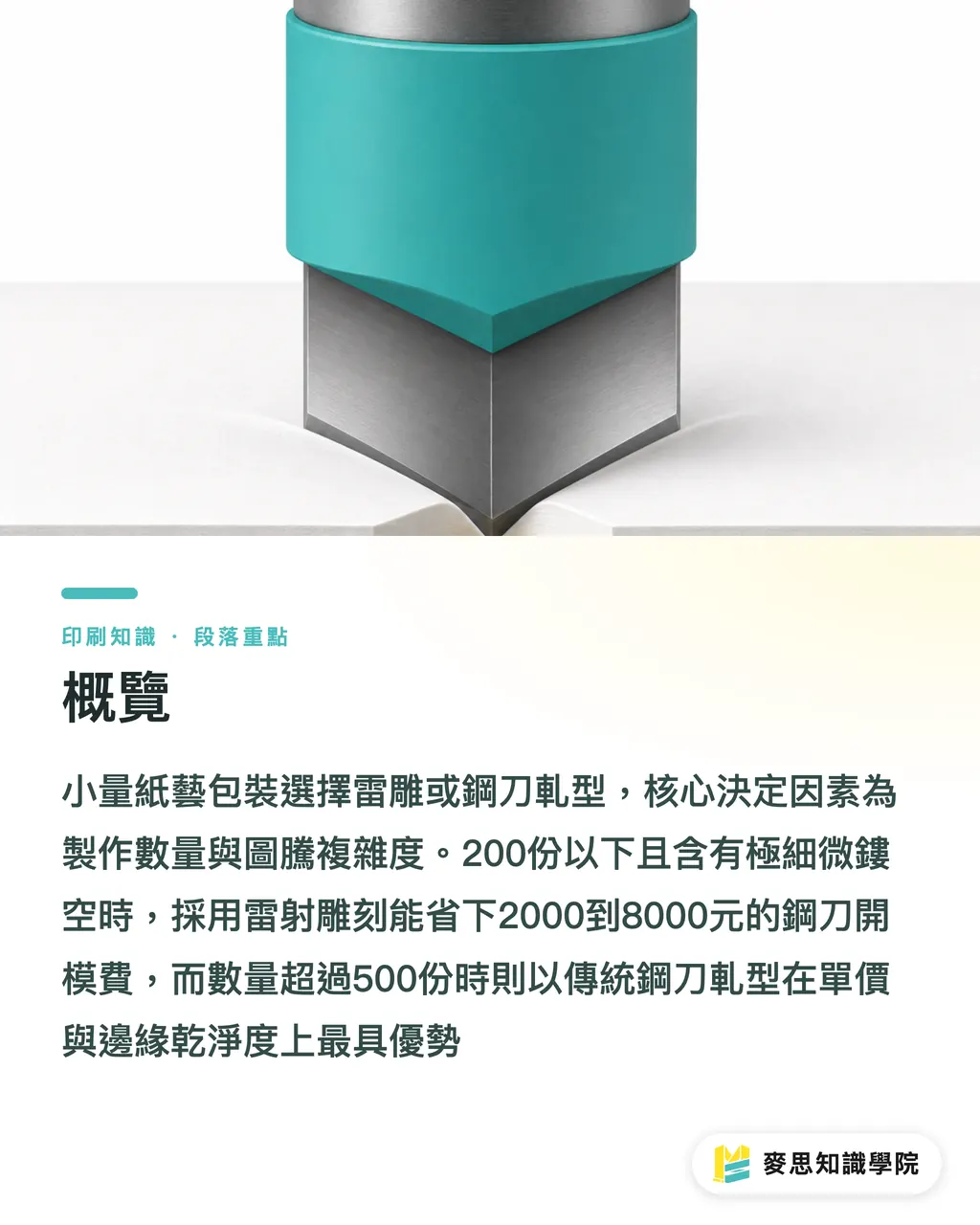
For small-batch paper art packaging, the choice between laser cutting and steel-rule die cutting comes down to quantity and pattern complexity. Under 200 pieces with very fine cutouts, laser cutting can save the NT$2,000 to NT$8,000 steel-rule die setup cost, but you have to accept carbonized edges and burn marks. Once the quantity exceeds 500 pieces, traditional steel-rule die cutting has a clear advantage in unit cost and clean edges. You can refer to the production-floor evaluation framework from MINDS when choosing the right process
Laser Cutting is a digital process that uses a high-energy focused laser beam to hit the paper and burn through the fibers at instant high heat, creating custom shapes. Traditional Die Cutting requires a wooden steel-rule die made from the dieline first, then uses the high tonnage pressure of a press to punch the paper into shape
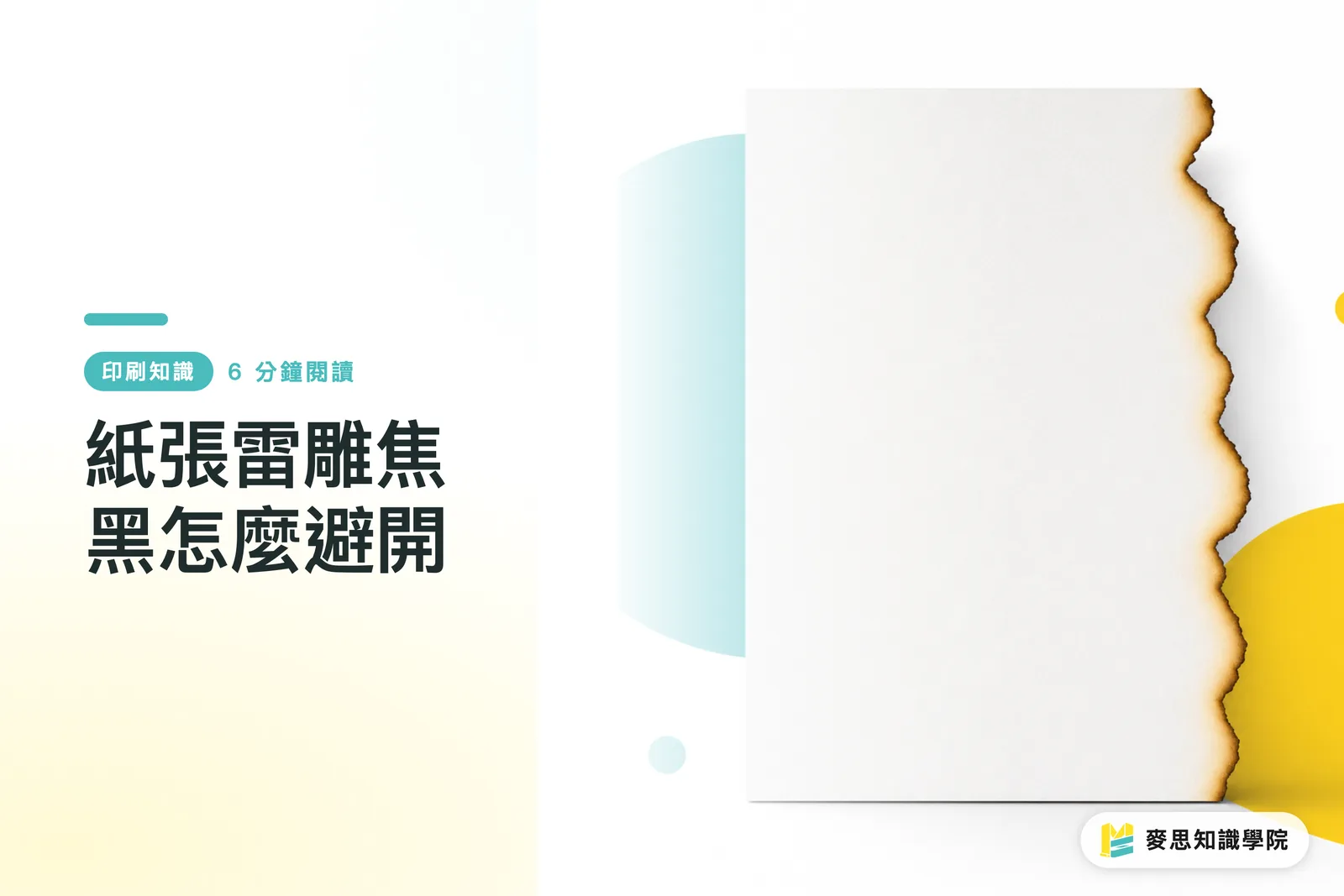
Why do laser-cut paper edges always turn black or smoky yellow?
Many designers create beautiful cutout patterns on screen, then receive laser-cut samples and find a ring of yellow-brown smoke marks around the edges, sometimes with a strong burnt smell
The answer is harsh
Laser cutting does not cut by shearing. It burns through material at high heat
When a focused beam at several hundred degrees hits paper, lignin and cellulose go through intense pyrolysis within milliseconds
The surface fibers turn into carbonized particles that cling to the cut edge, creating a blackened rim
If the organic smoke produced by pyrolysis is not pulled away instantly by the extraction system, it condenses on the paper surface on both sides of the cut and forms a diffuse yellow-brown smoke stain
Paper material directly determines how bad the scorching gets
From more than ten years of working around production lines, I have seen the most obvious burn marks on high-lignin virgin wood pulp paper and uncoated recycled paper
Specialty papers with heavy coating or plastic composite layers can even develop melted beads along the edge and an oily look after high-temperature melting
By contrast, heavyweight cotton paper with long fibers, or high-quality acid-free paper, leaves less pyrolysis residue and can shrink the smoky yellow area by more than 60%
The first line of defense against scorching is machine parameters and assist gas
If the air-assist flow is set too low, smoke lingers on the paper surface
If the airflow is too strong, it blows carbonized particles into uncut areas
Before the dieline file goes into production, cold-laminating a high-tack, low-adhesion masking film (Masking Tape) onto both sides of the paper, then peeling it off after cutting, can block more than 90% of surface smoke stains
Where is the cost crossover between steel-rule die cutting and laser cutting?
When ordering small batches of refined packaging, buyers most often get stuck on whether to pay for a die
The initial fixed cost of steel-rule die cutting is the cost of making the steel-rule die
Take a standard box around one tai in size with basic tuck flaps as an example. A traditional wooden steel-rule die usually costs around NT$1,500 to NT$3,500 to make
For dense linework, half-cut crease lines, or complex patterns with tiny cutouts, etched steel dies or Japanese dies can rise to NT$5,000 to NT$10,000
Die-cutting machine make-ready time and blade-setting consumables are also fixed costs
Laser cutting does not require a physical die. Upload the file and it can cut directly, so setup cost is close to zero
But laser cutting is vector-style processing where a single beam follows a path, so processing time is proportional to the total path length of the pattern
When the pattern is extremely complex, laser cutting one sheet can take 2 to 3 minutes
Machine time for beam movement adds up fast
That is enough to shift the math
For a custom gift box made with 350g C1S board, the golden crossover point on a production cost curve usually falls between 200 and 300 sheets
When the production quantity is under 100 pieces, laser cutting wins on total cost because it avoids the die cost
When the quantity reaches 500 pieces or more, steel-rule die cutting can punch 2,000 to 4,000 sheets per hour, pulling the processing cost per sheet down to just a few NT dollars
At that point, total cost for steel-rule die cutting is far lower than laser cutting, with zero risk of burnt edges

How can designers avoid burnt-edge traps through paper choice and artwork preparation?
If you want paper art packaging to feel premium, artwork files and paper choice have to be planned with the production process in mind from the design stage
For paper selection, start with papers that have high natural cotton fiber content, acid-free coating, and a solid hand feel
Dark paper, such as deep navy or black cotton paper, naturally hides smoke stains and is the best partner for laser-cut cutout designs
If you must use light-colored paper or white card, avoid recycled composite paper with high oil content and thermal paper
Artwork line rules are the key to avoiding black, muddy edges
The laser beam itself has about 0.1mm to 0.2mm spot diameter (Kerf)
When setting line spacing, the paper bridge between two cut holes must never be narrower than 0.8mm
If the paper bridge is too narrow, heat from the laser beam overlaps, burns straight through the fibers in the middle, and causes broken lines or large local blackened areas
Keep at least a 0.2mm micro-radius on inside corners so the beam does not dwell too long on sharp points and over-carbonize the paper
Hold on before rushing in
For luxury projects with very high quality requirements, an anti-smoke protective coating can be applied before laser cutting
Or you can turn the burn mark into part of the design language during artwork preparation
For example, on vintage-style or earth-tone packaging, the dark brown smoky edge can strengthen the handmade feel
If you are not sure whether a pattern is suitable for steel-rule punching or laser ablation, consult the Mai Strategy Knowledge Academy consulting team for professional file preflight and proofing advice
Production Ordering Strategy for Small-Batch Custom Packaging
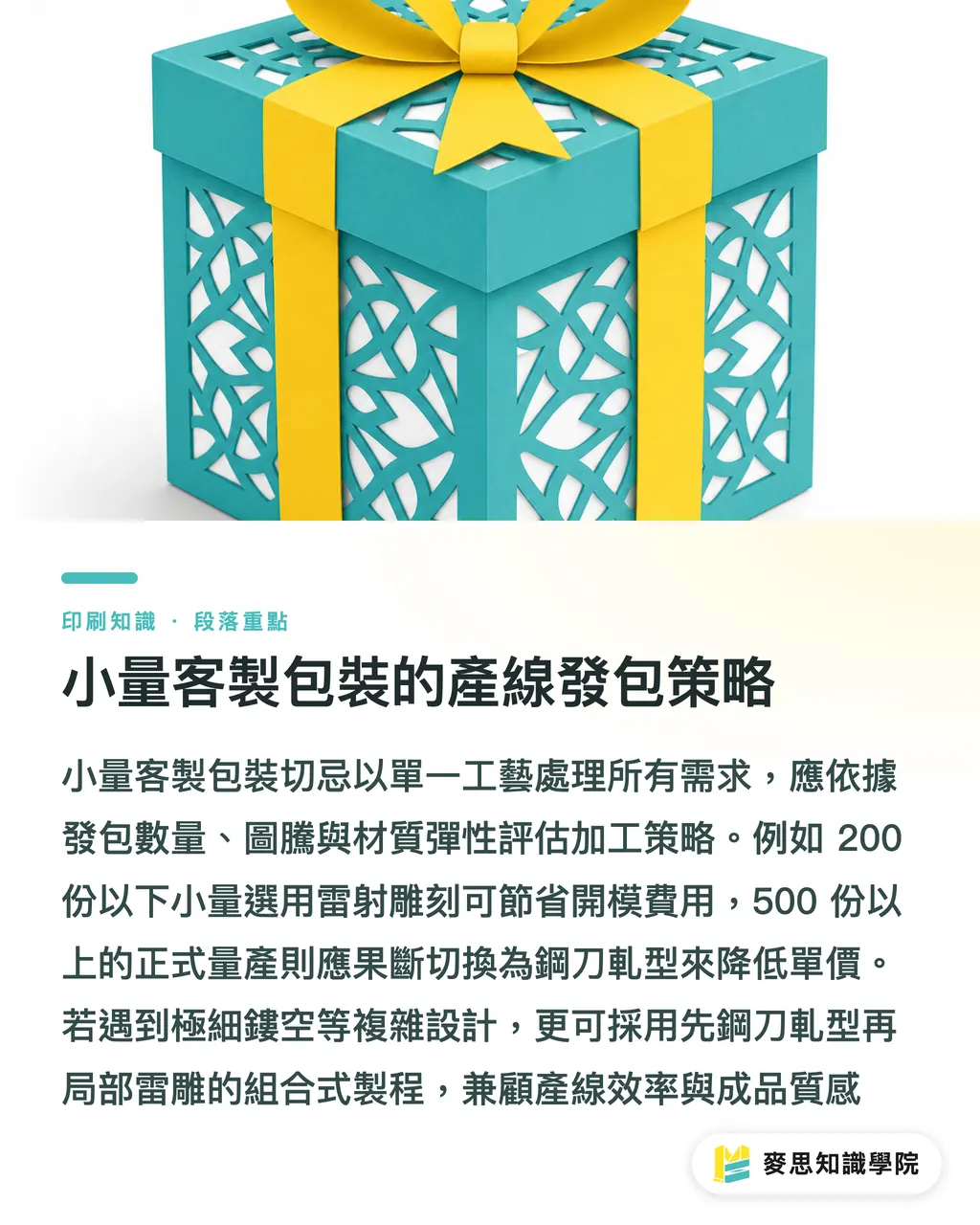
When ordering from a production line, never treat every packaging need with a single-process-fits-all mindset
When handling projects at different quantities, we recommend the "MINDS (MS, mid-to-high-end fully custom commercial printing) three-step cutting assessment method":
・1. Estimate quantity: under 200 pieces, choose laser cutting to save die cost. Over 500 pieces, switch to steel-rule die cutting to lower unit cost
・2. Check the pattern: choose laser cutting for micron-level detail. Choose steel-rule punching for large structural areas and fold lines
・3. Test the material: dark cotton paper can go straight to laser cutting. Light-colored card must include a masking film peel-off process
For brand test sales, VIP limited-edition gift boxes, or sample displays (1 to 50 pieces), digital printing paired with laser cutting is the fastest shipping path
At this stage, the focus is fast validation of market response and structural logic. Minor edge burn marks can be controlled by choosing dark paper or adding protective masking film
When the project enters formal mass production (500 pieces or more), switch decisively to steel-rule die cutting
If the design includes extremely fine cutouts that a steel-rule die cannot punch, such as dense holes under 1mm, use a combined process
First use traditional steel-rule die cutting for the overall box structure and crease lines, then send the local complex pattern into the laser cutter for secondary processing
This sharply reduces laser machine path time while keeping the high efficiency and clean cut edges of steel-rule forming
Before placing an order, buyers must ask the print shop for an actual laser-cut proof using the same paper
Different brands of laser cutters and extraction motors vary greatly in power, and proofing can help you block 90% of production disputes in advance
Key Takeaways
・Under 200 pieces with complex patterns, laser cutting is the first choice and can save thousands of NT dollars in steel-rule die setup cost
・For mass production above 500 pieces, switch to steel-rule die cutting. Output is much higher and edges have no burn marks
・The main cause of blackening in laser cutting is high-temperature ablation of paper fibers and smoke condensation. Low-adhesion masking film and high-airflow extraction can reduce the risk
・When preparing laser-cut artwork, spacing between adjacent cut lines should be greater than 0.8mm to prevent heat overlap from burning through the paper bridge
・A combined process, steel-rule die cutting for the box shape first and laser cutting for local details afterward, can balance production efficiency with refined texture
Further Thinking
Custom-shape cutting for paper art packaging is moving from traditional physical punching toward digital and automated production
For graphic designers and packaging buyers, understanding the different physical limits of laser cutting and steel-rule die cutting helps you predict production cost and yield more accurately during the proposal stage
For the SaaS and AI prepress automation tool ecosystem, if CAD dieline preflight can automatically calculate laser path time, flag overly narrow line spacing, and estimate the crossover point for switching to steel-rule die cutting, it can greatly reduce communication cost and proofing waste between print shops and design teams
Further Reading
FAQ
- Why do laser-cut paper edges always turn smoky yellow or even smell burnt?
- Laser cutting uses a high-temperature beam to instantly ablate paper fibers. During the process, lignin pyrolysis creates carbonized particles and organic smoke. If that smoke condenses on the paper surface, it forms yellow-brown smoke marks and a burnt smell
- What quantity is the cost crossover between paper laser cutting and traditional steel-rule die cutting?
- The golden crossover usually falls between 200 and 300 pieces. Under 100 pieces, laser cutting is usually the best value because it saves die cost. Above 500 pieces, the punching speed and low unit cost of steel-rule die cutting gain a clear advantage
- What methods can prevent blackening during paper laser cutting?
- You can cold-apply a high-tack, low-adhesion masking film to the paper surface to block smoke, choose long-fiber heavyweight cotton paper or acid-free paper, and make sure cut-line spacing in the artwork is greater than 0.8mm
- When should a combined process using steel-rule die cutting and laser cutting be used?
- When the packaging quantity is larger and the design includes both large box structures and micron-level fine cutouts, first use steel-rule die cutting for the box outline and crease lines, then use laser cutting for local details. This gives the best balance of efficiency and quality
Related articles


The Print × AI weekly
The print and AI know-how designers, brands and enterprises can use before they commit — one email, every week
MINDS Free Tools
Spine width and imposition calculators — skip the manual math, free in your browser.
MINDS Group
Need actual printing or gifting services?
From premium printing to online ordering and festive gifts — the MINDS Group sister brands take it from here.