
Why should spirits anti-counterfeiting bring the cap into the design process?
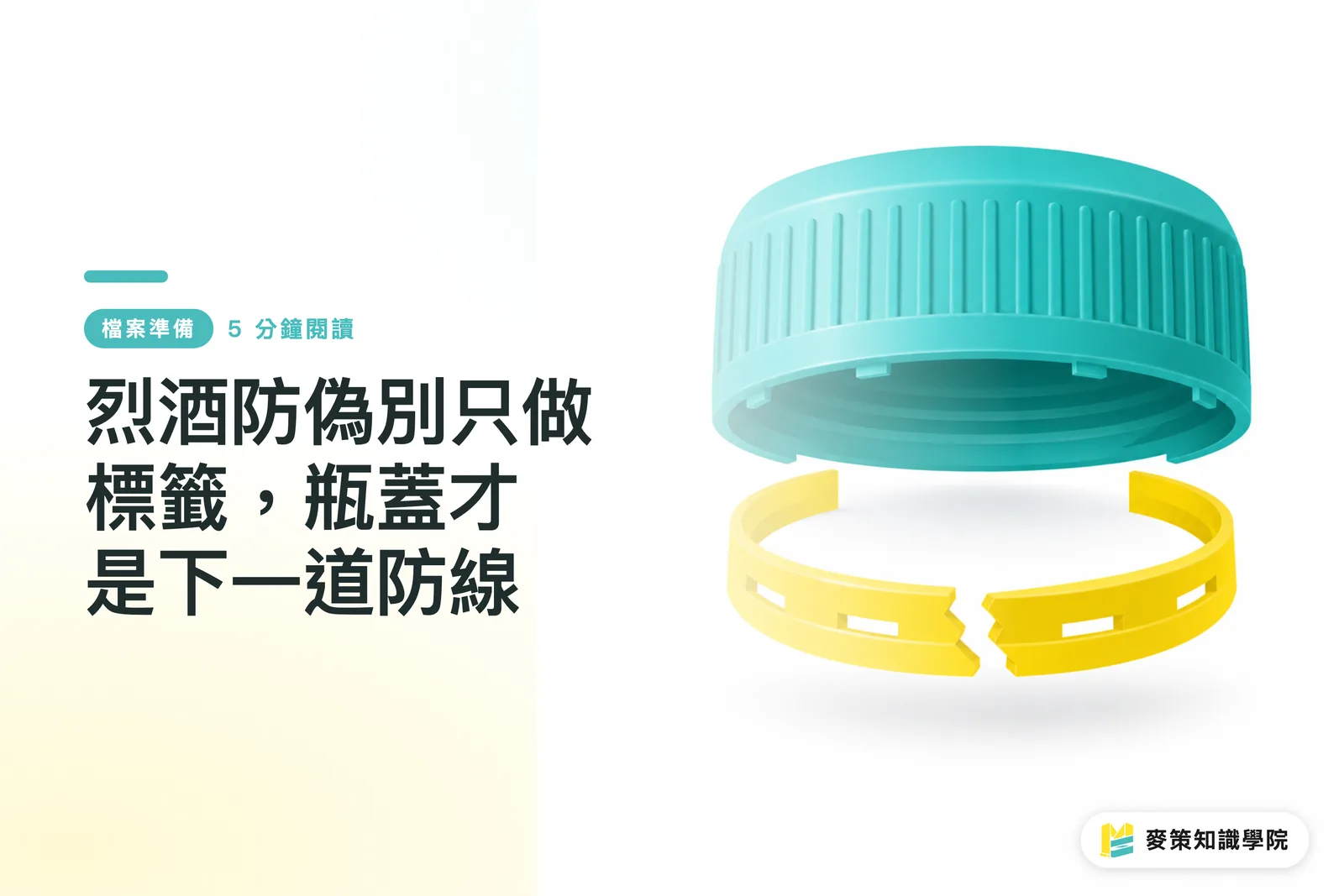
Spirits anti-counterfeiting needs to include the cap because the label covers the bottle's surface, while the closure is what tells you whether the product has ever been opened. Guala Closures, a supplier of cap and closure solutions, has upgraded its tamper-evident cap technology for the spirits market, extending the anti-counterfeiting conversation from label printing to the physical structure of the closure
Tamper-evident means that when a closure is opened or damaged, the packaging leaves an identifiable trace, allowing consumers and retailers to make an initial judgment about whether the seal has been tampered with
A common mistake I see in packaging projects is pushing all anti-counterfeiting into inks, background patterns, and spot effects, while leaving the cap for another supplier to handle at the very end. The printer delivers a polished label, but the brand actually needs a reliable way to tell whether the bottle has been opened. Without a shared closure specification, the two sides will naturally struggle to align
This shift is also documented in Guala Closures Upgrades Anti-Counterfeit Caps: The Next Line of Defense Against Counterfeit Spirits Is the Closure, where the focus of anti-counterfeiting has already expanded from flat labels to three-dimensional closures
How do tamper-evident caps work, and what does the design team need to deliver?
Tamper-evident caps work by leaving an identifiable trace at the closure when the package is opened. When handing off files, designers need to organize the label, cap, and post-opening condition together so all three can be checked against one another
The only thing we can confirm at this stage is that Guala Closures has upgraded this technology. Its public information does not specify the snap fit, breakaway ring, liner, or material specifications. Designers cannot fill in those details from imagination. The actual structure has to come from the supplier's drawings and samples
・1. Cap structure drawing: Ask the supplier to mark the visible area, opening direction, and location of the tamper evidence. Do not place key brand elements in areas that have not yet been confirmed
・2. Label die line and application direction: Make sure the front of the cap, the bottle's primary visual, and the trace left at the closure can be checked against one another. This prevents the three from drifting out of alignment after revisions
・3. Version numbers and approval records: Keep the label file, cap file, supplier specifications, and sample status in the same handoff record
If all you have is a bottle mockup (a three-dimensional visual), it is fine to establish the visual direction first. Formal final artwork should wait until the cap specifications can be checked. Otherwise, the logo, mandatory legal text, or tamper-evident break area may end up in the same spot
What should designers do before handoff so the label and cap do not go their separate ways?
Before handing off files, designers should check the structure, artwork, and actual opening result in that order. I call this "Mai Strategy's Three-Gate Print Handoff Check"
・1. Structure gate: Get the latest cap die line, visible area, and opening direction, then confirm where the closure is designed to break. Mark any area the supplier has not confirmed as pending
・2. Artwork gate: Use the same version number for the label and cap. Check whether the logo, mandatory legal text, and barcode (if any) are in readable, visible positions. Handle bleed and registration according to the die-line specifications
・3. Physical sample gate: As soon as you get a sample, physically open it once and check whether the tamper evidence is clear. If no sample is available, at minimum keep the supplier's structural diagram and written confirmation
The second gate is the easiest to miss during revisions. Moving the bottle's primary visual downward may make the composition feel more balanced, but it can also change the alignment between the label and closure. At that point, recheck the die line, application direction, and opening trace. Do not make that check only on screen
If a brand wants the printer to help organize the files and handoff for a custom package, MINDS can serve as a collaborative partner for mid- to high-end fully custom commercial printing. The cap supplier's specifications still need to be included in the proposal
How should printers and brand clients respond now?
The first step for printers and brand clients is to turn the anti-counterfeiting requirement into a handoff specification shared across suppliers. A quote should not list only label printing and surface effects
Small and mid-sized printers do not need to become cap manufacturers first. They should start by getting three questions answered when taking on the job
・Who supplies the cap, and who confirms the closure structure and the trace left after opening?
・Who checks the label and cap for alignment, and who has final approval after revisions?
・Before mass production, are you reviewing an on-screen proof, a digital proof, or a physical cap sample?
If brand procurement asks only, "Is anti-counterfeiting included?", suppliers can easily quote their own separate pieces, and in the end no one is responsible for the closure state consumers actually see. I put the suppliers, files, version numbers, approvers, and sample status into one responsibility matrix. That matrix is more useful than adding another vague field for anti-counterfeiting effects
What can AI and SaaS take over, and what still requires people?
AI and SaaS (cloud software services) can take over file and version management. People still need to judge the closure structure and the trace left after opening
・Suitable for rules-based checks: version numbers, missing files, whether the die line is attached, and approver and date fields
・Must be checked by people: whether the post-opening trace is clear, whether brand recognition has been damaged, and whether the supplier sample matches the approved version
For the next spirits packaging project, I would first build a "Label + Cap Responsibility Matrix" and run one complete project before deciding which fields are worth moving into SaaS. Let the tools manage versions first, and let the team own the judgment. Do not reverse that order

Key takeaways
・The label gets the product seen. The cap leaves evidence when the bottle is opened
・The first file in an anti-counterfeiting design workflow should include the closure structure and the boundaries of responsibility
・The die line, version number, and opening trace should be checked on the same handoff checklist
・AI can check whether the files are complete. It cannot open the bottle and judge the trace for you
Further thought
The printing and manufacturing side should put cap specifications into the intake form. The design side should get the die line and opening method before producing final artwork. The brand side should record final approval authority in the handoff record. AI and SaaS can start by handling version numbers, missing files, and the approval workflow. The next project does not need a wholesale system change. Run a "Label + Cap Responsibility Matrix" once, then keep the fields that actually caused errors after mass production
Further reading
FAQ
- How is a tamper-evident cap different from a standard anti-counterfeiting label?
- A tamper-evident cap puts an identifiable post-opening trace in the closure structure. An anti-counterfeiting label relies mainly on printing and visual information. Spirits brands should include both in the same packaging anti-counterfeiting plan
- Can a designer start the artwork without the cap die line?
- You can start with the visual direction, but you should not move into formal final artwork. Without a cap structure drawing, visible area, and tamper-evident break area, copy and the logo may land on the opening trace
- Does a small printer need to manufacture tamper-evident caps in-house?
- No. The printer should first connect the cap supplier's specifications, label artwork, and proof approval, and clearly assign each party's responsibilities in the quote and handoff
- Can AI or SaaS automatically inspect anti-counterfeiting packaging?
- AI and SaaS are suited to checking version numbers, missing files, and specification fields. Whether the closure leaves a clear trace still requires the designer, brand, and supplier to inspect the structure or the physical sample
Related articles

The Print × AI weekly
The print and AI know-how designers, brands and enterprises can use before they commit — one email, every week
MINDS Free Tools
Imposition calculator and preflight file check — free prepress tools, right in your browser.
MINDS Group
Need actual printing or gifting services?
From premium printing to online ordering and festive gifts — the MINDS Group sister brands take it from here.