
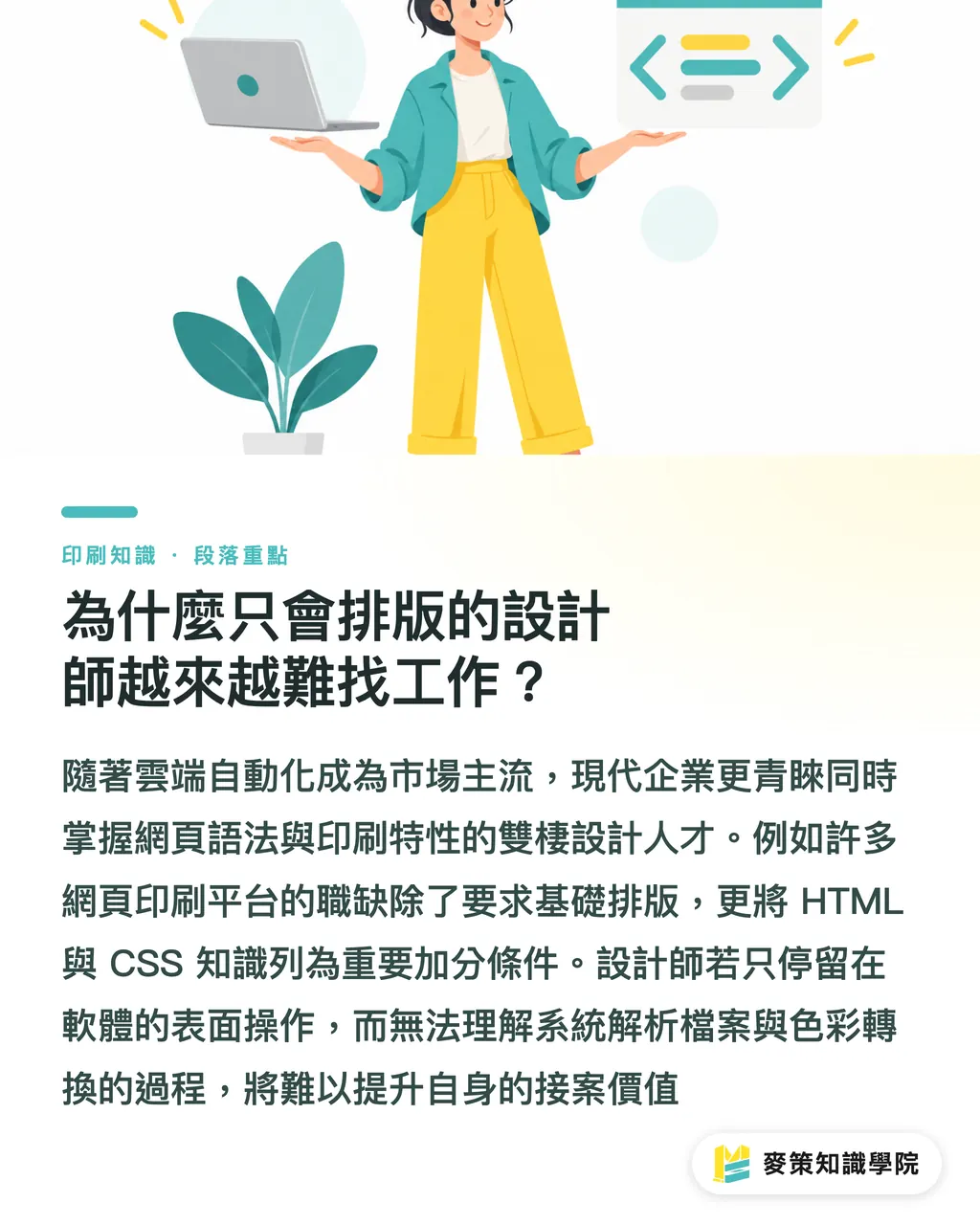
Why Is It Getting Harder for Layout-Only Designers to Find Work?
Cloud-based automation dominates incoming orders now, and companies need hybrid talent who grasp both web code and the physical realities of print
Job listings posted by PrintIndustry.news in September 2026 show a French company specializing in corporate Web-to-Print platforms urgently hiring a full-time graphic designer
Beyond baseline requirements like DTP (Desktop Publishing) and PDF generation, the listing specifically notes that knowledge of HTML and CSS is a big plus
This highlights a very real shift in the industry
Design is no longer just drawing graphics and tossing them over the fence to print production. You need to understand how the platform processes your layers once the file is uploaded
Reviewing color theory case studies lately, I see many designers pick RGB palettes on their screens without realizing what kind of disaster unfolds when automated systems convert those web hex codes into CMYK
If you only know surface-level Illustrator moves, pushing your freelance rates up is going to be tough
If your design team wants to establish a standardized handoff process, consult the Mai Strategy Knowledge Academy consulting team to bridge the gap between prepress and digital workflows
What Kind of Press Operators Are High-End Packaging Plants Looking For?
They do not want button pushers. They want caretakers who understand mechanical principles, can handle front-line troubleshooting, and grasp compliance standards
A recent opening for an offset press assistant comes from a French pharmaceutical packaging firm with 85 employees and €21 million in annual revenue
Offset presses, which transfer images through ink and water repulsion for high-volume runs, cost millions of dollars
This packaging plant clearly requires candidates to have a strong interest in industrial mechanics. The role spans machine setup, paper feeding, and basic equipment maintenance
From my years watching production lines, regulations in Europe and North America around extended producer responsibility and packaging pollutants have tightened dramatically
Pharmaceutical and cosmetic packaging yields the highest margins, but leaves zero room for error. Everything from ink thickness to non-toxic standards is strictly regulated
Factories are bringing physical AI and robotics to the front of the line, but keeping an eye on how paper behaves physically still requires human eyes
Plant managers would rather pay top dollar for technicians with mechanical sense to watch the machines than hire cheap novices who cannot adapt
Technicians who can work alongside automated machinery are a rare find on the production floor right now
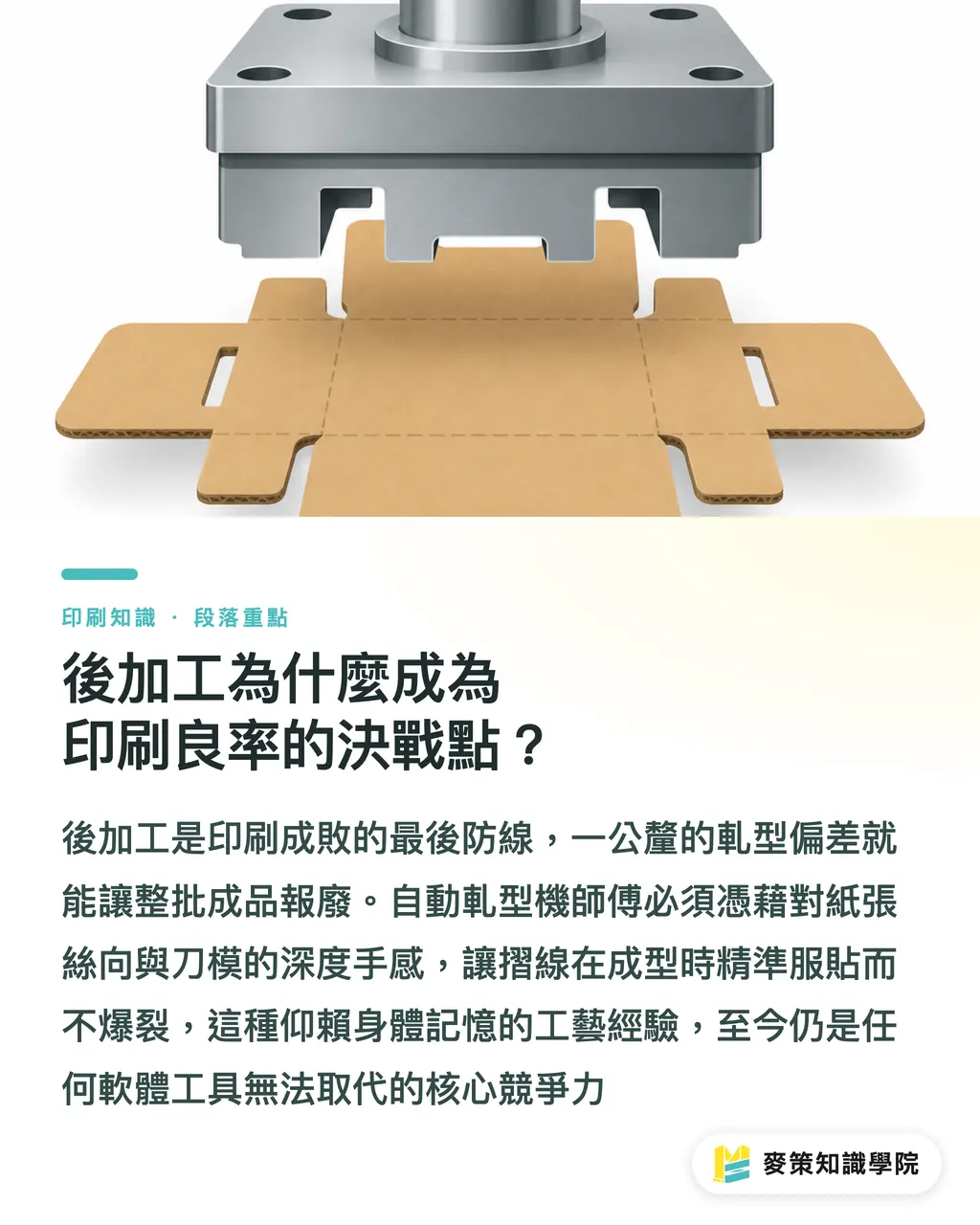
Why Has Post-Press Finishing Become the Deciding Factor for Print Yield?
Because even on a beautifully printed sheet of paperboard, a die-cut off by just one millimeter scraps the entire run
The third key opening in this batch is an automatic die-cutting machine operator at a solid board packaging plant
Die-cutting, which uses steel rule dies to press and slice paper into shaped contours, is the backbone of structural packaging
This role strictly demands over two years of operating experience, along with deep familiarity with die-cutting and folder-gluer workflows
I often tell young designers not to just stare at 3D mockups on their screens. Solid board converting relies heavily on the seasoned judgment of machine masters
The operator must know how paper grain aligns with the die so crease lines do not crack open during folding
Even with so many DIY screen printing setups and desktop finishing tools around, commercial-grade paperboard conversion still leans on tactile feel and practical know-how that software simply cannot replicate
Specialized post-press roles like this continue to hold serious bargaining power when it comes to pay
Key Takeaways
・Cross-disciplinary skills give designers a fresh bargaining chip, and prepress staff who understand HTML syntax can command better rates
・High-end packaging plants desperately need technicians who grasp mechanical principles, and those who can handle basic maintenance bring the greatest value
・Hands-on die-cutting experience cannot be easily replaced by digital tools, serving as the frontline defense for print yield
Food for Thought
Looking at these overseas hiring trends, the print industry is not dying. It is becoming deeply specialized
Margins on low-barrier template printing keep shrinking, but the two extremes, premium physical packaging and digital platform integration, face severe labor shortages
For professionals in Taiwan, this is a wake-up call: figure out how servers parse graphic files, and walk onto a shop floor at least once to see how paperboard gets creased
Anyone who understands material physics and system logic will have no shortage of great projects over the next five years
Further Reading
FAQ
- What is a Web-to-Print platform, and why should designers care?
- It is an automated ordering system where clients configure, preview, and place print orders online. Designers who understand how these platforms work can keep artwork from throwing errors in automated pipelines, giving them a sharp competitive edge for freelance gigs and full-time roles
- What is the difference between offset printing and digital printing?
- Offset printing requires physical plates. Startup costs are steep, but per-unit costs drop dramatically on large volumes, making it ideal for packaging runs in the thousands. Digital printing skips plate making, making it perfect for short, diverse runs and rush jobs. Even so, high-end pharma and cosmetics packaging still rely on offset as their workhorse
- I am a graphic designer. How can I build up my post-press finishing knowledge?
- The fastest route is visiting a print shop to see machines running in person. Learn the physical limits of die-cutting tools and paper grain direction, and bake those factors into your prepress files. Press operators will thank you for handing over clean, trouble-free files
Related articles

The Print × AI weekly
The print and AI know-how designers, brands and enterprises can use before they commit — one email, every week
MINDS Free Tools
Spine width and imposition calculators — skip the manual math, free in your browser.
MINDS Group
Need actual printing or gifting services?
From premium printing to online ordering and festive gifts — the MINDS Group sister brands take it from here.