

Overview
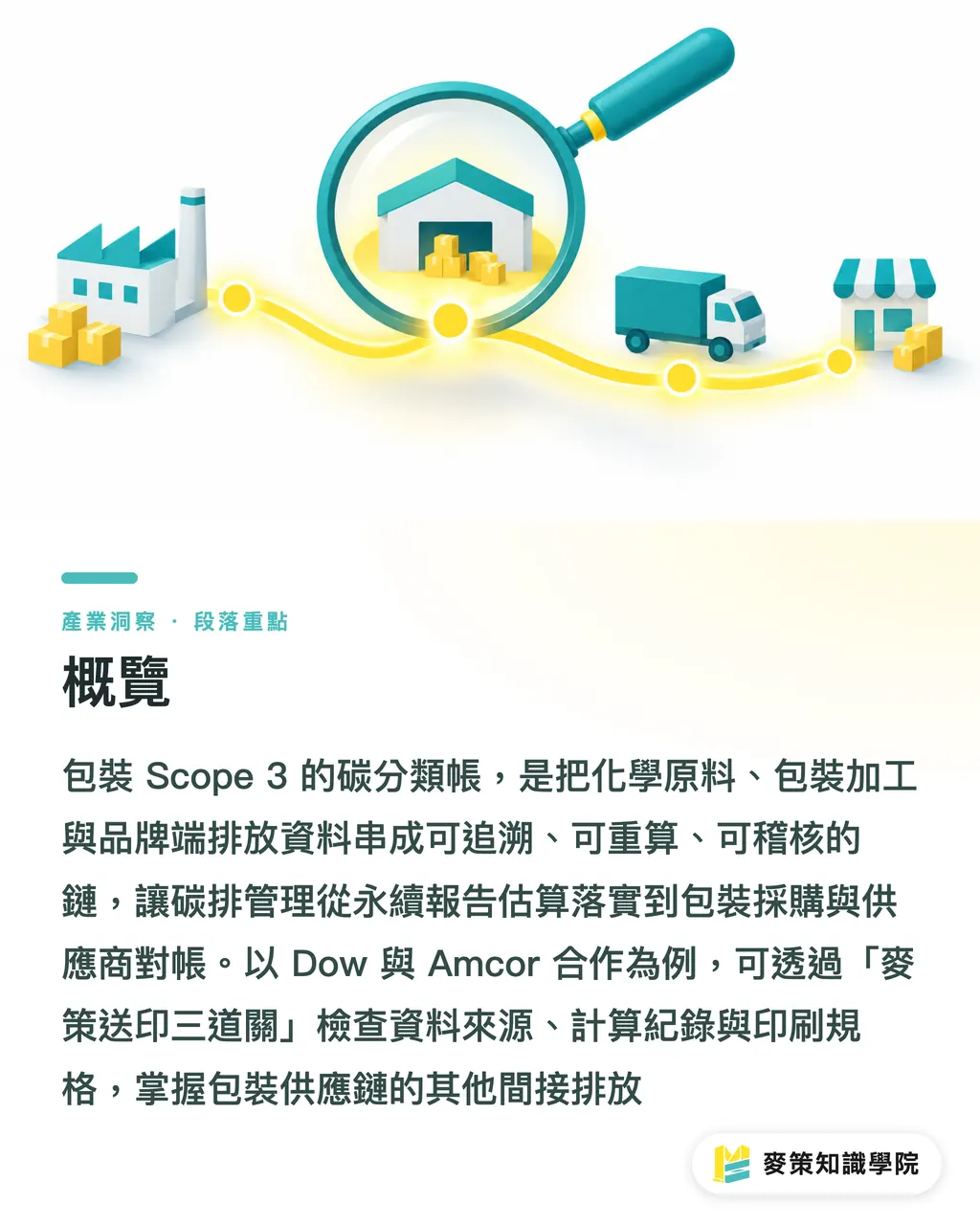
The carbon ledger for packaging Scope 3 is about linking emissions data from chemical raw materials, packaging conversion, and the brand side into a chain that can be traced back. Dow and Amcor's partnership takes this from estimates in sustainability reports to packaging procurement and supplier reconciliation. I break it down through 'Mai Strategy's Three Checks Before Sending to Print': data sources, calculation records, and print specifications
Here, Scope 3 is understood through the GHG Protocol (the Greenhouse Gas Protocol, used to define the boundaries of emissions across a company's value chain) as other indirect emissions in the packaging supply chain
A carbon ledger is a record-keeping method that links each emissions figure from materials, processing, and the supply chain to its source, specification, and calculation basis, so brands can trace, recalculate, and audit packaging Scope 3
What Exactly Does the Carbon Ledger Record?
The carbon ledger records the emissions source, calculation basis, and audit trail for each point in the packaging-material value chain, so Scope 3 is no longer just a single total
Dow (a supplier of chemical raw materials) and Amcor (a packaging manufacturer) announced that they would jointly track packaging Scope 3 with a carbon footprint ledger (a record-keeping method that stores emissions data by source and value-chain node). First-hand information is available in the report on Dow and Amcor tracking packaging Scope 3 with a carbon footprint ledger
The two companies put chemical raw materials, packaging manufacturing, and brand requirements on the same value chain. The difference is not just an extra number in a report. It is whether that number can be traced back to the supplier, the specification, and the calculation boundary
In print procurement, the sticking point I see most often is that material suppliers use one set of data, packaging plants use another, and the brand's report relies on yet another set of assumptions. I think of the carbon ledger as an extended version of a job ticket: the material keeps its source and version, processing keeps its boundary and assumptions, and the finished product is matched back to its specification, weight, and delivered quantity
Why Will This Ledger Change Brand Procurement?
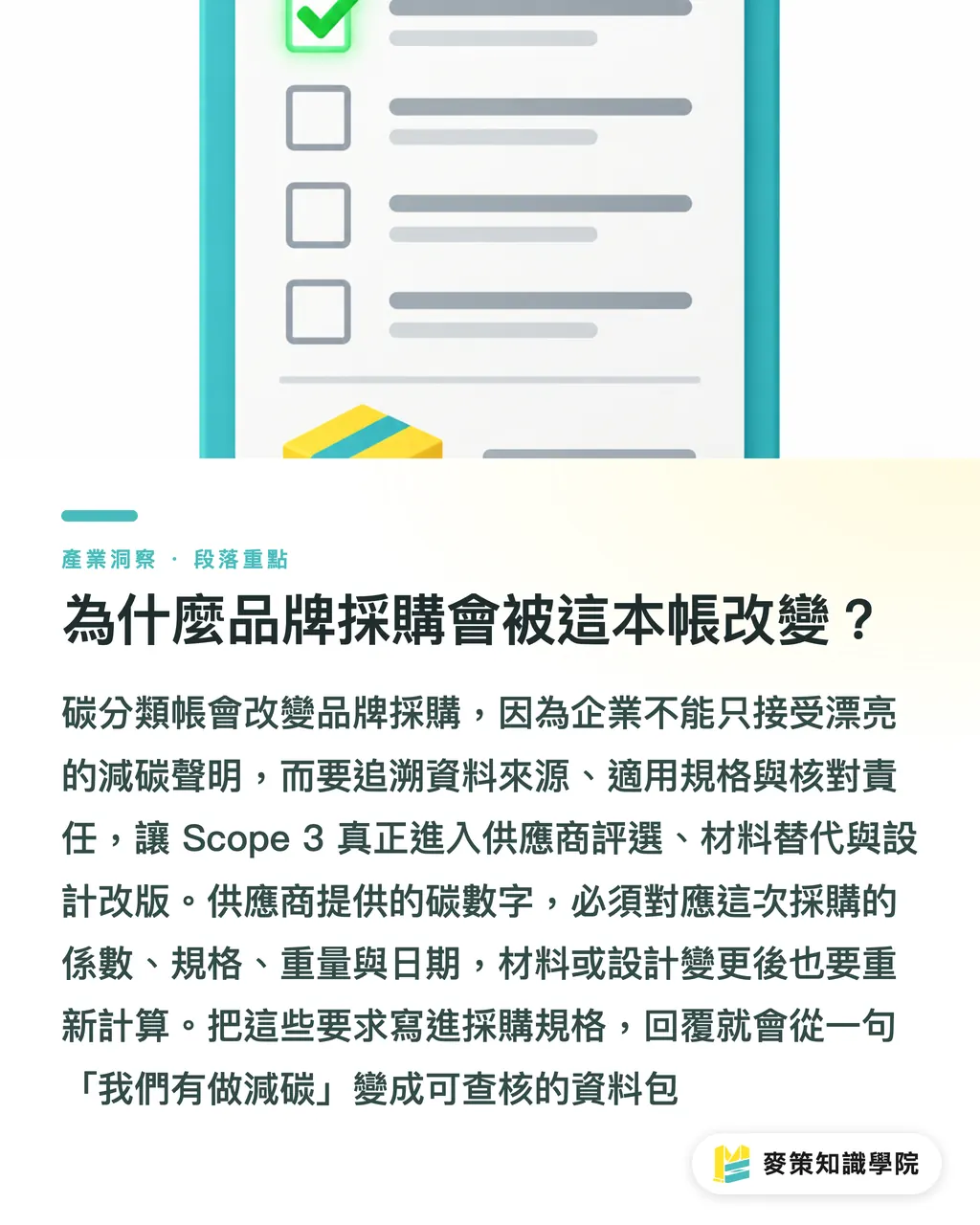
Brand procurement will change because companies now have to account for data sources, applicable specifications, and who is responsible for checking them. They can no longer simply accept a polished carbon-reduction claim
Once Dow and Amcor align data from chemical raw materials, packaging manufacturing, and the brand side, Scope 3 can more easily enter discussions about supplier selection, material substitution, and design revisions
I have been looking at packaging projects for years, and the same snags keep appearing: the material changes but the old data is still being used. A supplier provides a carbon figure without a version. The design changes thickness but the calculation boundary does not change with it
Brands can use three questions to check supplier data:
・Can this carbon figure be traced back to the data source from the material supplier or packaging converter?
・Do the factor, specification, weight, and data date match this procurement cycle?
・After a design revision, material substitution, or supplier change, was the calculation run again?
Once these three questions are written into the procurement specifications, a supplier's response changes from 'We've taken steps to reduce emissions' to a data package that can actually be audited
How Can Taiwan's Small and Midsize Printers Connect to the Carbon Ledger?
A small or midsize printer can start connecting to the carbon ledger by first organizing materials, production, and transport data in a sheet that can be rerun. There is no need to wait for a large platform to be in place
・For materials, record the material name, supplier, specification, unit weight, carbon-data source, and date. For paper, film, ink, and adhesives, do not write only internal nicknames
・For production, record printing, lamination, coating, die-cutting, and outsourced processing. Keep waste, batch, and calculation boundaries. If energy data is unavailable, label it as an estimate. Do not treat a blank as zero
・For transport, record shipment weight, transport legs, and delivery location. Store supplier-provided data separately from assumptions added in-house
The point of these three columns is to give the printer something to answer with when a brand asks, 'How much difference will it make if the specification changes?' rather than forcing someone to search through email attachments at the last minute
For projects at MINDS (MS, mid- to high-end fully customized commercial printing), I use Mai Strategy's Three Checks Before Sending to Print to check the data source, whether the calculation can be rerun, and whether the conclusion can be translated into a print specification. If a brand wants to put this requirement into procurement for mid- to high-end custom printing, it can start with MINDS on a real project and build out the fields
What Can AI and SaaS Do for Brands?
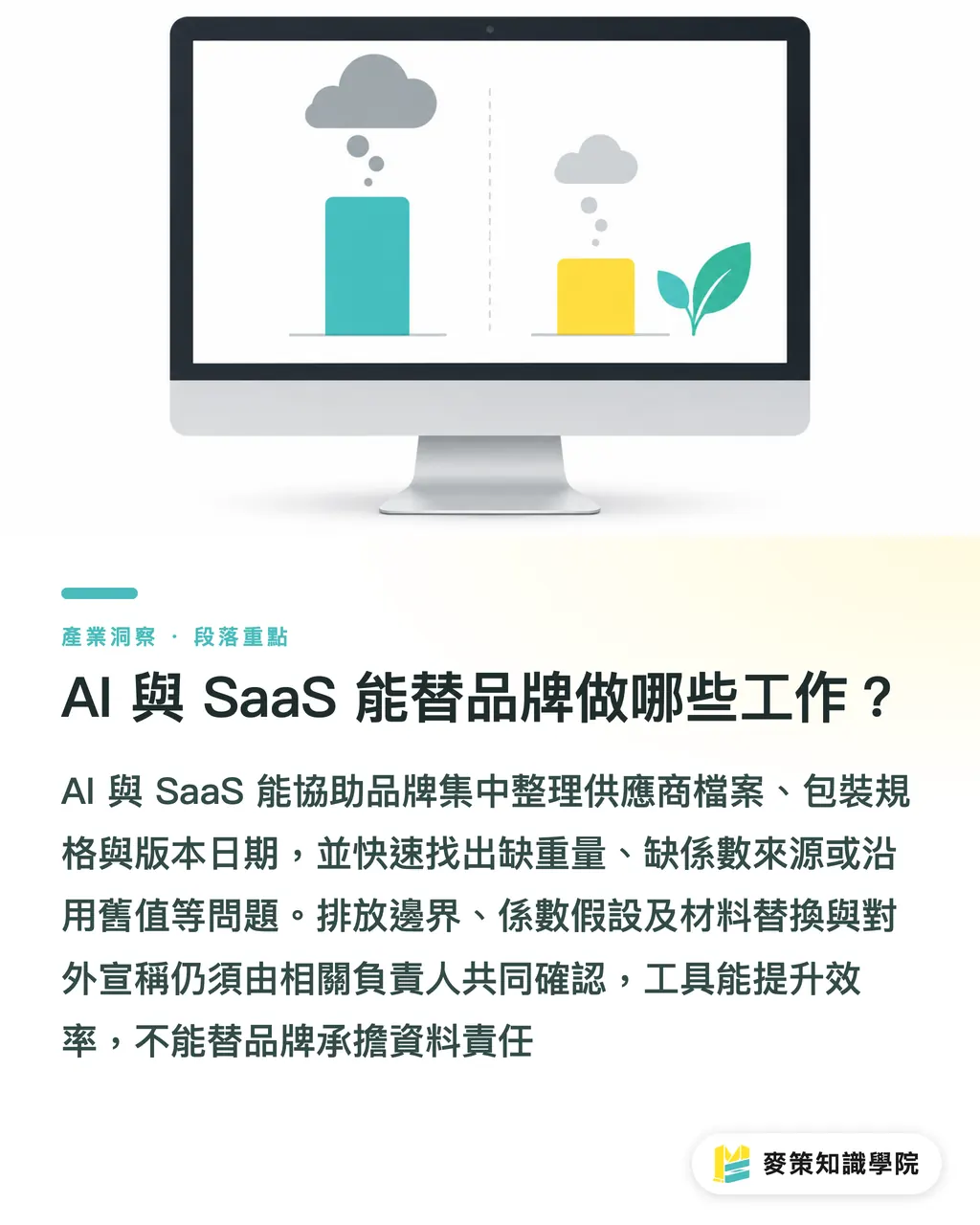
AI (artificial intelligence) and SaaS (software as a service delivered through the cloud) are useful for organizing, comparing, and flagging issues. They cannot fill in carbon evidence that a supplier never provided
A carbon-accounting SaaS can keep supplier files, packaging specifications, and version dates in the same record, which suits brand procurement involving many suppliers and specifications. AI can first flag missing weights, missing emission-factor sources, and cases where an old value is still being used after a specification revision
Human review still needs to stay in three places:
・The brand and supplier jointly confirm the emissions boundary
・The responsible person approves the factor source and estimation assumptions
・Before a material substitution or external claim, procurement, design, and the sustainability contact review it together
The signal Dow and Amcor are sending the industry this time is clear. Aligning data from chemical raw materials through packaging manufacturing will gradually become a standard question brands ask when choosing suppliers. Tools can speed up recordkeeping, but they cannot take responsibility for the data
Key Takeaways
・The value of a carbon ledger is that every emissions figure can be traced back to the material, processing, and specification
・As Dow and Amcor align value-chain data, brands will care more about whether Scope 3 can be audited
・Small and midsize printers need complete materials, production, and transport records before they can seriously discuss material substitution
・AI and SaaS can shorten the time spent comparing records. They cannot vouch for missing source data
Further Thoughts
The printing and manufacturing side should first build a data sheet that can be rerun. The design side should record material, basis weight, and processing changes at the same time. Brand procurement should put the source and update date into supplier specifications. AI can check for missing data, SaaS can manage versions and permissions, and people still need to approve external claims. If a brand wants to put these requirements into an actual print job, it can ask the Mai Strategy Knowledge Academy advisory team to organize the procurement fields, then have the printer verify them. Doing one project in the next procurement cycle will be more useful than waiting for the entire company's data to become perfect
Further Reading
FAQ
- How is a carbon ledger different from a typical Scope 3 estimate
- A typical estimate may retain only the result. A carbon ledger links the material source, calculation basis, specification, and date, so brands can trace, recalculate, and audit packaging emissions
- What impact will Dow and Amcor's partnership have on brands
- The two companies put chemical raw materials, packaging manufacturing, and brand requirements on the same data trail, making it easier for brand procurement teams to ask suppliers for traceable Scope 3 data
- Where should small and midsize printers in Taiwan start
- Start by organizing materials, production, and transport data. Record material sources, processing boundaries, weight, transport legs, and estimation assumptions so every calculation can be rerun
- Can AI calculate packaging emissions directly
- AI can organize data, compare specifications, and flag missing information, but the brand and supplier still need to confirm the emissions boundary and factor source, and review any external claim themselves
Related articles




The Print × AI weekly
The print and AI know-how designers, brands and enterprises can use before they commit — one email, every week
MINDS Free Tools
AI background removal, a LINE sticker maker, spine & imposition calculators — all free, right in your browser, no upload.
MINDS Group
Need actual printing or gifting services?
From premium printing to online ordering and festive gifts — the MINDS Group sister brands take it from here.