
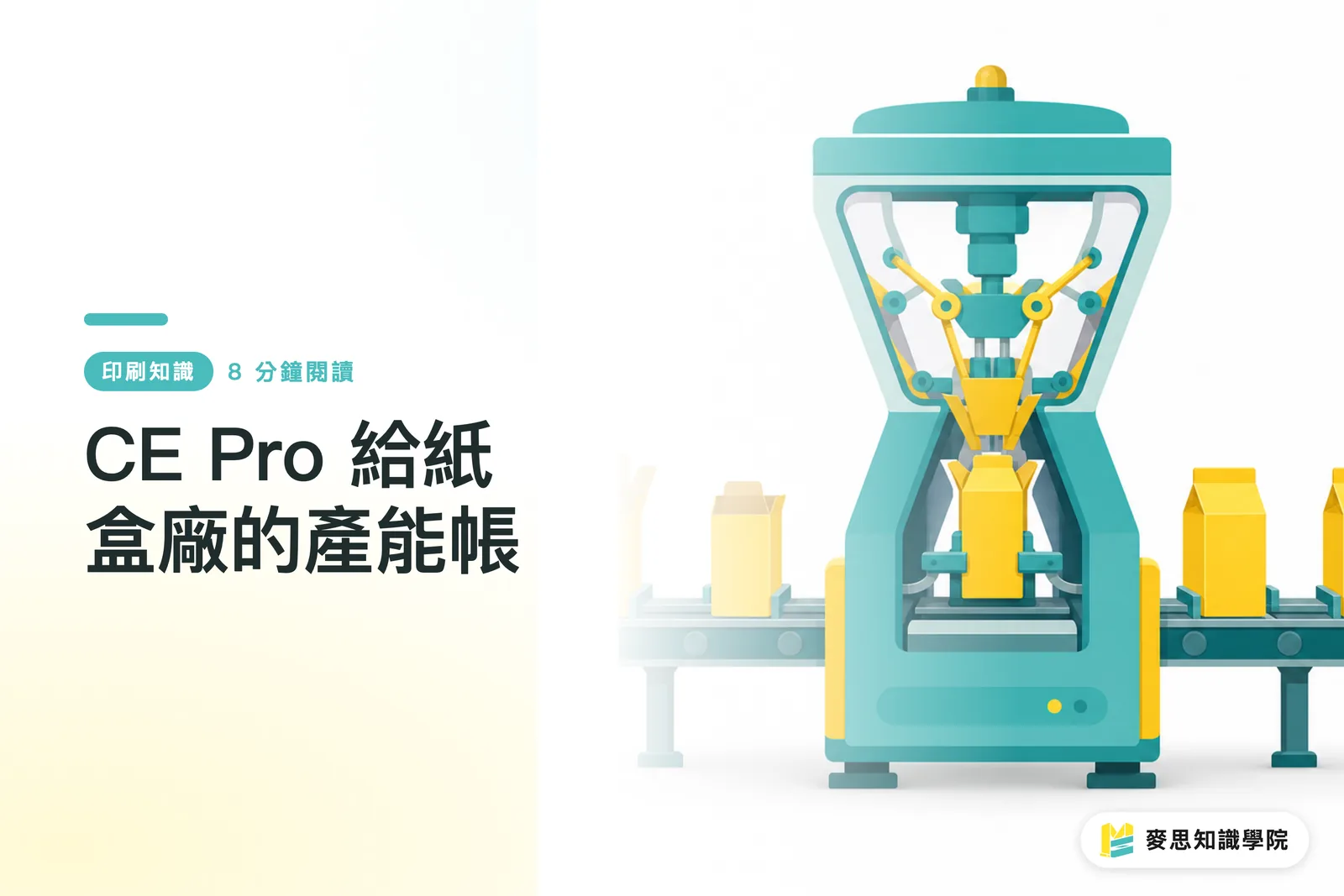
What Happened with the CE Pro Installation?
On July 9, 2026, Heiber + Schröder confirmed that Martens van Wezel Kartonnages installed a new CE Pro conical tray forming machine in Helmond, Netherlands. This equipment is expected to add up to 50 million packages in annual capacity. When MINDS evaluates investments like this, the key issue is not how impressive the machine speed looks on paper, but how it reshapes lead times, seasonal peaks, and order structures for packaging plants
Conical tray forming machine: On plant floors, this refers to conical tray or carton forming equipment. It feeds, positions, folds, forms, and presses pre-die-cut, creased, and pre-glued paperboard into stable 3D packages, commonly used in food service and fresh produce packaging
This installation marks the 5th Heiber + Schröder machine for Martens van Wezel, a number far more telling than any single machine specification
The first machine usually solves an immediate pain point, but the fifth machine proves you are replicating a controlled, repeatable production model
When I inspect plant equipment, I worry most when owners only ask 'how many pieces per minute.' The real trouble in carton forming rarely happens during that single minute. It lies in the setup hour right before, the structure proofing the day before, and the printing consistency from the week before
This CE Pro installation announcement notes that the new line responds to growing demand for sustainable solid board packaging in European food service and fresh produce (AGF) markets. Translated into the reality of Taiwanese small and medium plants, brand clients want short lead times, stable quality, clean-looking packaging, and the capacity to handle sudden promotional spikes
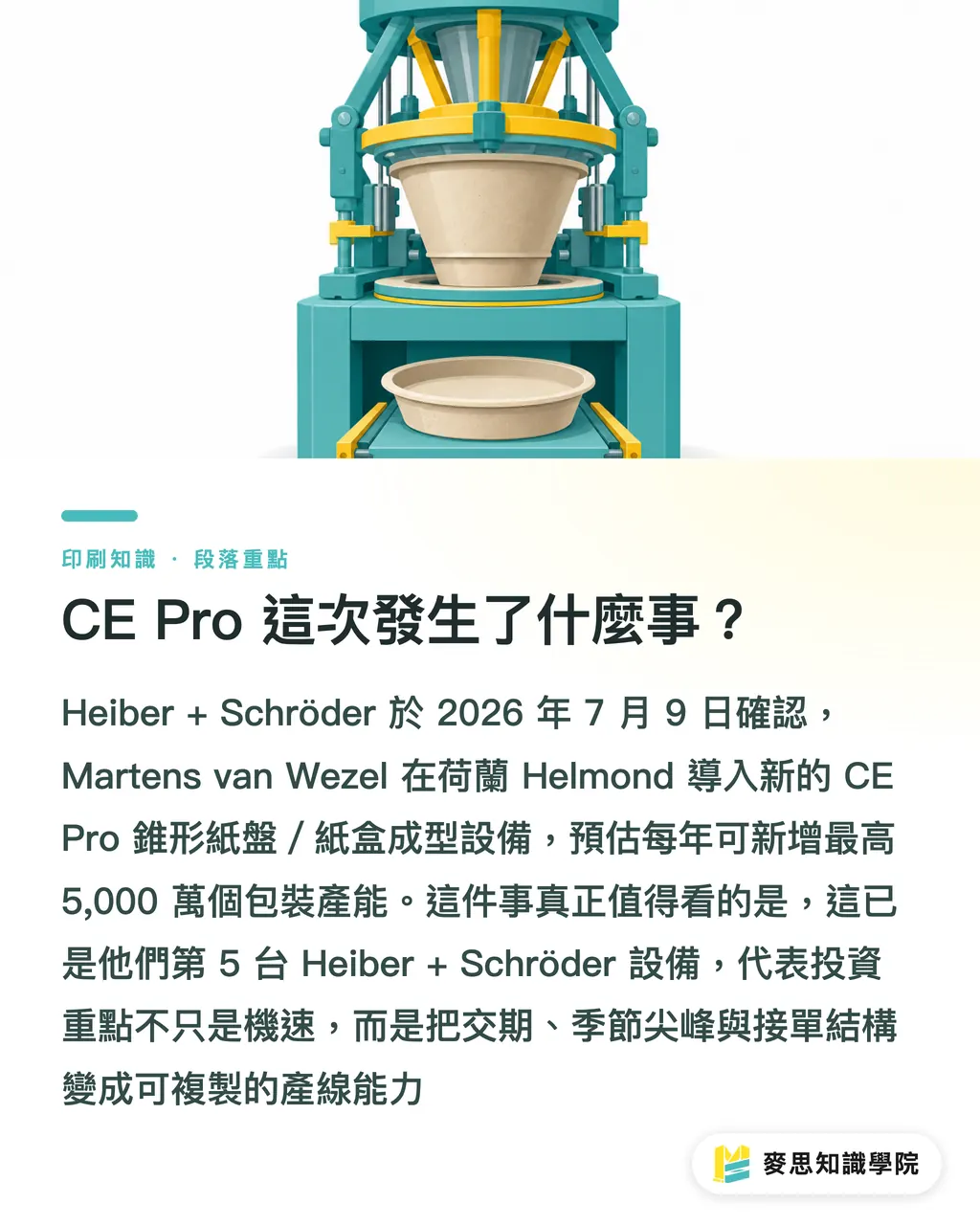
Why Post-Press Automation is More Than Cutting Headcount
The first calculation for carton forming equipment is not labor cost, but where the bottleneck moves
Once high-speed forming equipment like the CE Pro enters the shop floor, five new operational calculations emerge
・Changeover time: Running three different structural layouts today on the same machine vs. running a single long job continuously looks identical on equipment capacity charts, but month-end results differ drastically
・Structural compatibility: Conical packaging looks like a simple tray from the outside, but at high speeds, crease angles, tab locations, glue placement, and paperboard spring-back all magnify into downtime issues
・Yield rate: If adding up to 50 million packages per year comes with high scrap rates, your warehouse and QA teams will implode long before shipments speed up
・Maintenance support: Martens van Wezel installing its fifth machine means supplier service and spare parts delivery keep pace. Otherwise, an extra line just adds another point of failure waiting for repairs
・Upstream print stability: Post-press equipment relies entirely on incoming paperboard. Print registration, coating thickness, and die-cutting creasing determine whether the forming line runs smoothly
Many automation budgets in Taiwanese plants remain stuck in the logic of 'we are short three operators, so let's buy one machine.'
My advice is direct: break down your orders from the past three months into long runs, short runs, rush jobs, and seasonal peaks first. Then decide whether the equipment should boost volume, flexibility, or yield
In high-end custom commercial printing projects, MINDS frequently encounters the same issue: brand clients think finishing design proofs means preparation is complete, while plant managers worry whether post-press processing can handle that specific mix of structure, substrate, and timeline
Translating 50 Million Annual Capacity into Real Shop Floor Math
An annual capacity of up to 50 million packages cannot simply be multiplied by unit price to build a payback schedule
Capacity must first be broken down into four shop floor questions
・Which box structures make up those 50 million units: A single conical tray long run suits high-speed gear well. If you switch among small-batch custom boxes daily, capacity drops off quickly
・Which pre-press or press stage feeds those 50 million units: If printing, foil stamping, coating, or die-cutting lags behind, the forming machine waits for materials instead of generating profit
・Which season absorbs those 50 million units: The report from ThePackagingPortal mentions seasonal peak demands. Peak seasons for fresh produce and food service packaging test your peak absorption capacity, not your average monthly output
・How many stable orders support those 50 million units: High-speed lines suffer when fed fragmented short runs. Setup time burns through profit while operators are constantly rushed to modify job specs
I usually advise plant managers to calculate the 'MINDS Three-Tier Capacity Math' first
・① Order Intake Math: Group 12 months of orders by structure, substrate, lead time, and batch size to verify whether high-speed forming equipment gets enough homogeneous workload
・② Changeover Math: Record actual downtime, adjustments, test runs, and time to steady production for each structural layout instead of relying solely on brochure speeds
・③ Risk Math: Account for upstream printing, die-cutting, glue performance, paperboard spring-back, spare parts, and operator proficiency to estimate actual deliverable capacity

Why Designers and Brand Clients Must Understand Post-Press Processing
Carton forming is not solely the factory's concern. Every time design teams tweak a crease line, an opening, or a paper substrate, machine stability can shift
I have seen many beautiful boxes that look flawless as static prototypes, only to cause endless downtime once placed on an automated forming line
This is not because designers lack professionalism or operators enjoy nitpicking. Graphic design focuses on the visual appeal of a single box, whereas post-press processing deals with thousands of repeated mechanical movements per hour
For conical tray formers like the CE Pro, stable high-speed forming relies on several key conditions:
・Crease lines must allow paperboard to fold naturally in sequence rather than forcing it under machine pressure
・Substrate thickness and stiffness must remain consistent. The advantage of solid board packaging is shape retention and tactile feel, but material batches must still be managed
・Glue zones or locking tabs must offer sufficient tolerance. Food service and fresh produce packaging frequently encounter moisture, cold chain environments, stacking, and manual handling
・Printing and coating must not make crease zones overly rigid. If visual effects compromise forming stability, you will end up paying for it in delayed delivery
If brand clients want scalable food packaging, I recommend involving the Mai Strategy Knowledge Academy consulting team early to review structural design and post-press requirements. Especially when scaling from a few thousand test samples to hundreds of thousands of units, a pretty prototype is merely an entry ticket. Stable mass production defines real delivery capacity
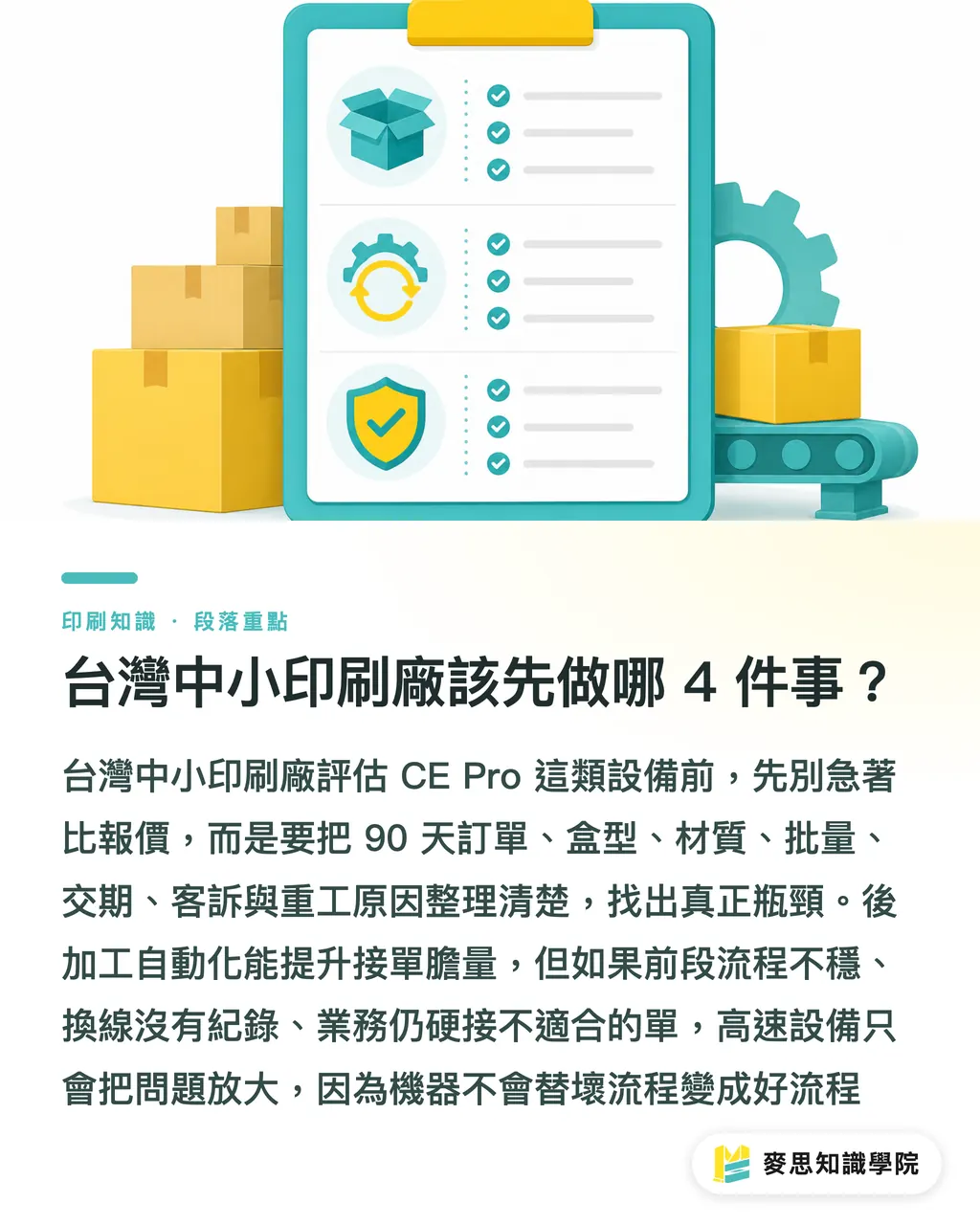
4 Actionable Steps for Taiwanese Small and Medium Printers
When Taiwanese small and medium printers evaluate carton forming equipment like the CE Pro, do not rush to ask for vendor quotes. Gather your shop floor data first so you have clear numbers
・Audit 90 days of orders: List box structures, substrates, batch sizes, lead times, customer complaints, and rework causes to see whether the bottleneck is labor shortage, slow changeover, or unstable upstream quality
・Create a changeover log: Record downtime, test sheets, scrap causes, and steady production speeds every time you change layouts. This sheet reflects actual payback far better than any sales brochure
・Calculate metrics for 3 representative box structures: Pick one long run, one short run, and one peak seasonal order. Estimate capacity, yield, labor hours, and equipment waiting time for each
・Negotiate service with suppliers, not just price: Martens van Wezel reaching its fifth Heiber + Schröder machine indicates long-term service support. Taiwanese plants must clearly inquire about spare parts, training, remote assistance, and onsite repair turnaround times
Post-press automation transforms a plant's confidence in taking on orders
Large peak-season orders you once turned down can now fit into the schedule. Rush jobs that used to rely on veteran operators can run at a standardized cadence. Box structures that designers handed over only to prove unproducible can be flagged before quoting
However, once new equipment arrives, if upstream printing speed fluctuates, die-cutting creasing relies on guesswork, and sales teams accept every order indiscriminately, a high-speed forming line will only magnify these flaws
I have said this on shop floors many times: machines are honest, but they will not fix broken processes for you
Key Takeaways
・Carton forming equipment must be evaluated based on full line capacity, not standalone machine speed
・A plant's fifth machine offers far more reference value than its first, as it demonstrates a proven, repeatable production workflow
・Adding up to 50 million packages in annual capacity must account for changeover delays, waiting times, scrap losses, and maintenance risks
・The earlier design teams grasp post-press constraints, the less you will suffer from delivery delays and yield losses during mass production
・Before buying automated equipment, small and medium plants should audit 90 days of orders and build changeover logs, which is far more useful than asking for price discounts
Further Considerations
For printing manufacturers, cases like the CE Pro remind us that post-press investments must stem from order structure analysis back to machine requirements. For designers, carton structures are not merely die-lines on a PDF, but mechanical engineering conditions repeated at high speeds on forming lines. For AI and SaaS teams, the most valuable pursuit is not vague smart factory slogans, but transforming changeover times, structural parameters, scrap causes, and maintenance logs into searchable, comparable, and actionable shop floor data. For brand clients seeking to balance aesthetics, lead times, and mass production, collaborating early with teams like MINDS, who understand custom printing and post-press coordination, is far more cost-effective than chasing deliveries in the final week
Further Reading
FAQ
- What kind of machine is the CE Pro?
- The CE Pro is a conical tray forming machine manufactured by Heiber + Schröder, used for forming conical trays or folding cartons. According to a report by ThePackagingPortal, the new line installed by Martens van Wezel is estimated to add up to 50 million packages in annual capacity
- Why shouldn't post-press automation rely solely on machine speed?
- Actual carton forming output is affected by changeover times, structural compatibility, yield rates, maintenance support, and upstream printing stability. Rated machine speed only reflects performance under ideal conditions, not the volume a plant can deliver at month-end
- Is high-speed carton forming equipment suitable for small and medium printers in Taiwan?
- Suitability depends on your order structure over the past 90 days to 12 months. If you have clear demand for long runs, recurring box structures, and peak season volume, high-speed forming equipment yields a faster return. If most jobs are small-batch custom short runs, changeover math must be calculated carefully first
- What should brand clients consider when developing paper carton packaging?
- Brand clients must confirm during the design phase whether substrates, crease lines, glue zones, locking tabs, and coating finishes suit automated forming. A pretty prototype does not guarantee stable mass production, especially for food service and fresh produce packaging
- How does MINDS apply its Three-Tier Capacity Math to equipment evaluation?
- MINDS Capacity Math calculates Order Intake Math first, followed by Changeover Math, and finally Risk Math. This three-layered shop floor analysis determines whether new equipment should target speed, flexibility, or yield improvement
Related articles

The Print × AI weekly
The print and AI know-how designers, brands and enterprises can use before they commit — one email, every week
MINDS Free Tools
AI background removal, a LINE sticker maker, spine & imposition calculators — all free, right in your browser, no upload.
MINDS Group
Need actual printing or gifting services?
From premium printing to online ordering and festive gifts — the MINDS Group sister brands take it from here.