
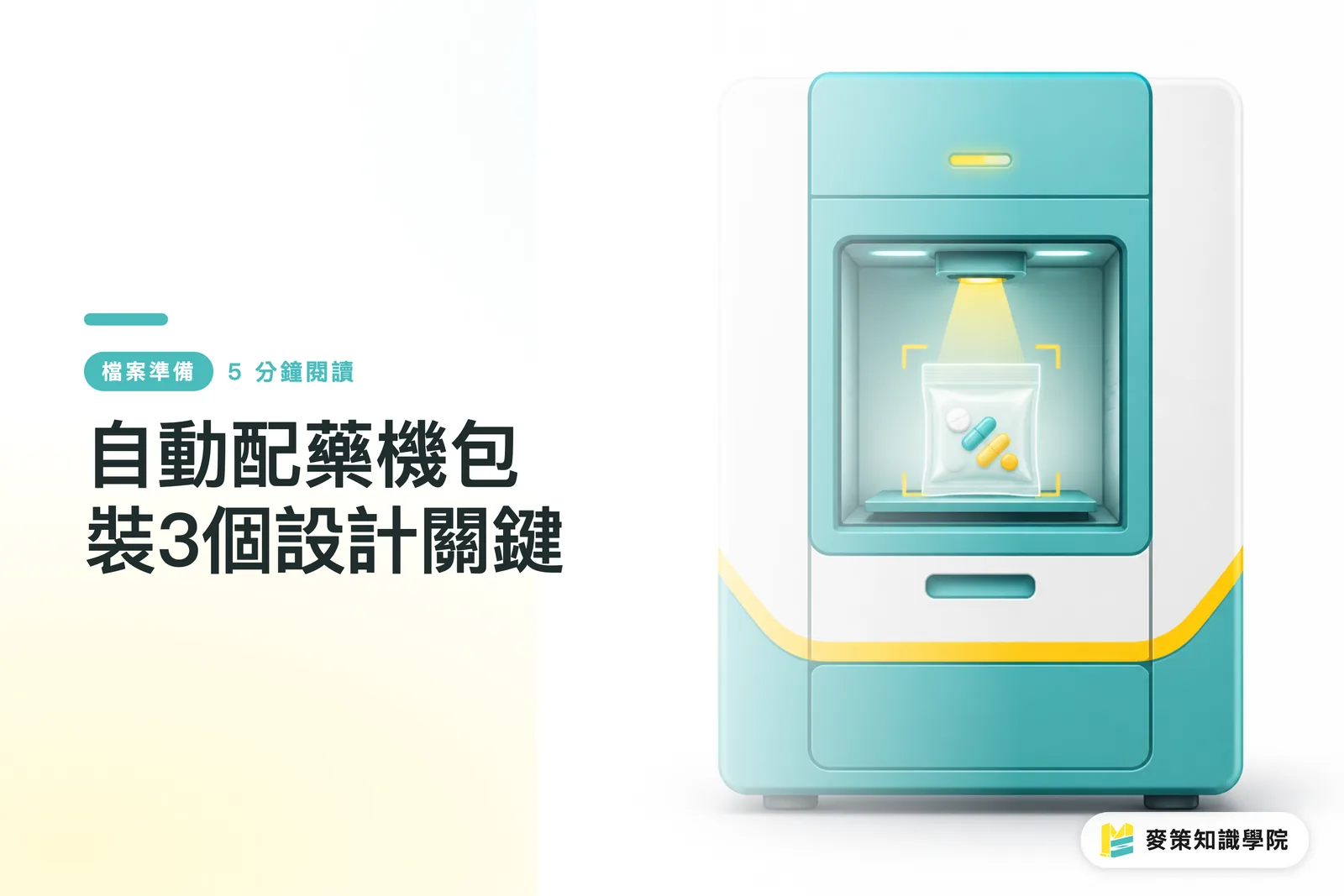
Why Do Automated Dispensing Machines Change Medical Packaging?
Because automated dispensing machines push packaging from the pharmacist's pill bag into machine-readable components inside the equipment
Packaging Digest's automated dispensing machine packaging analysis, citing Grand View Research on August 7, 2026, put the automated dispensing machines market at an estimated $6.2 billion, with an $8.3 billion outlook by 2030, and North America currently leading
Automated dispensing machines are systems that hand drug storage, selection, dispensing, and inventory over to equipment, using barcodes, RFID, and software to cut dispensing errors
When I look at this topic, the first question that jumps to mind is a floor-level one: which packages get rejected when they go into the machine
Once medical packaging enters the machine, font size, white space, barcode placement, reflective materials, lot numbers, and expiry dates all become production-line conditions
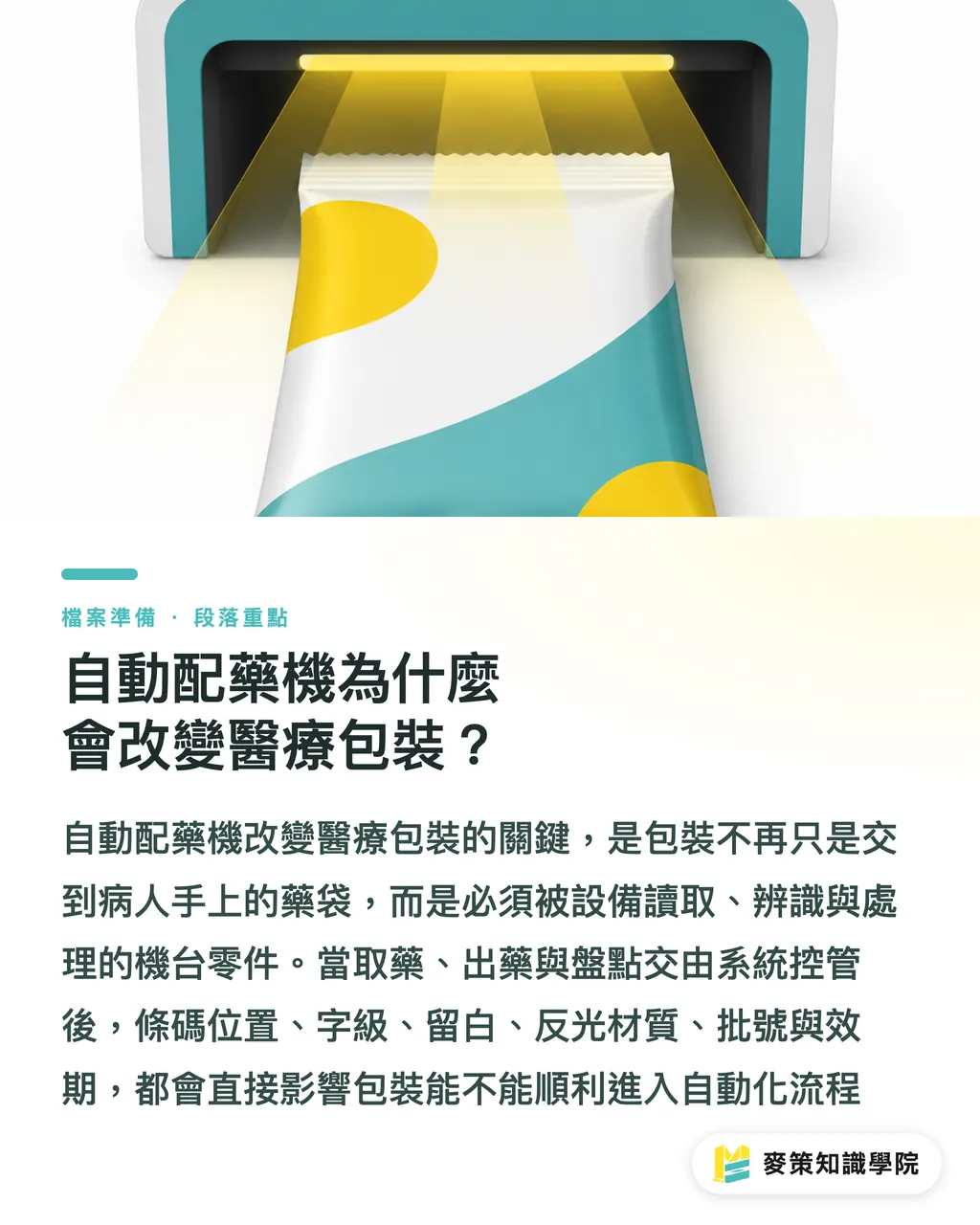
What Three Things Should Designers Check Before Handing Off Files?
Three things designers need to nail first: the readability zone can't be eaten up by the design shape, variable data can't crowd out the safe margins, and color and material can't let controlled substances get mixed up
Barcodes and RFID (Radio Frequency Identification) are the main technologies for equipment tracking, verification, and inventory management; IoT (Internet of Things) lets equipment, sensors, and software feed back inventory and status
Here's how to use the Mai Strategy three-gate print check:
・① Readability gate: keep barcode, QR code, or RFID zones on a separate layer with a quiet zone, don't let trim lines, varnish, or fold lines run through them
・② Variable data gate: variable data means the lot number, expiry date, serial number, and barcode content that may differ on every single pack, always put the longest-sample version in the finished art first
・③ Material gate: matte laminate, gloss laminate, foil, and cold-storage labels all need readability testing, reflective surfaces and low-temp adhesives turn a good-looking file into a floor problem
If a production run involves custom box sleeves, labeling, and variable data, MINDS can help assess artwork risk before you commit
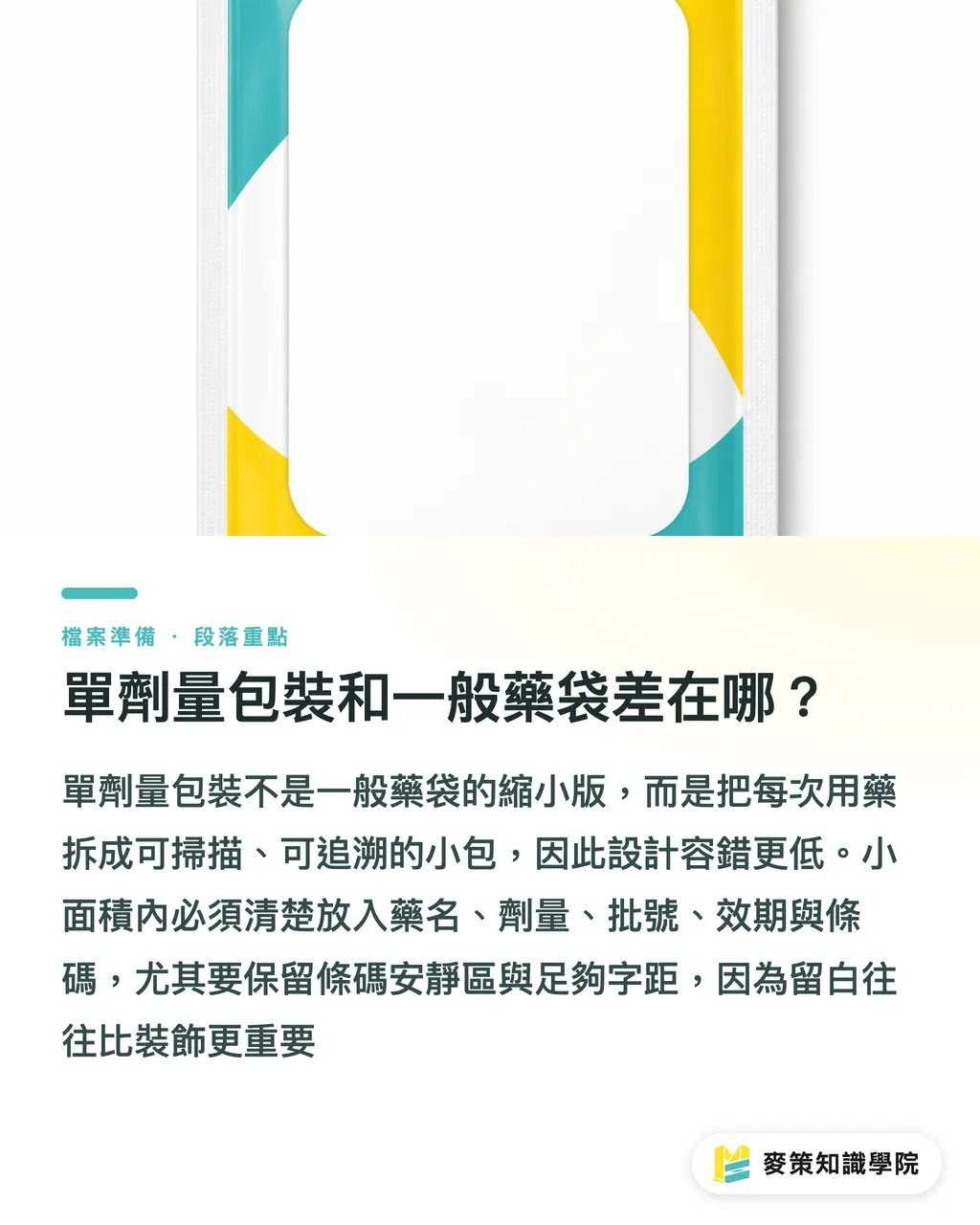
How Does Unit Dose Packaging Differ from a Standard Pill Bag?
Unit dose packaging breaks each administration into a scannable, traceable small pack, the artwork's margin for error is a lot tighter than with a regular pill bag
Packaging Digest, citing Grand View Research, notes that inpatient use is currently the largest segment, while retail pharmacies and dispensaries are expected to be the fastest-growing from 2023 to 2030
Unit dose means packaging each single use or administration individually, the pack itself needs to show the drug name, dosage, lot number, expiry date, and a machine-readable code
・Standard pill bag: primarily read by human eyes, the layout can hold more descriptive text, and errors usually get caught by the pharmacist at the final check
・Unit dose packaging: primarily read by equipment, a small area needs to carry the drug name, dosage, lot number, expiry date, and barcode, white space is worth more than decoration
・Cold-storage or controlled substance packaging: temperature control, access permissions, inventory, and traceability all need to be built into the same label logic, you can't just look at surface material
Hold on a second
Designers shouldn't start by treating a small pack as a scaled-down pill bag, scaling down the artwork usually takes the barcode quiet zone, letter spacing, and lot number field down with it
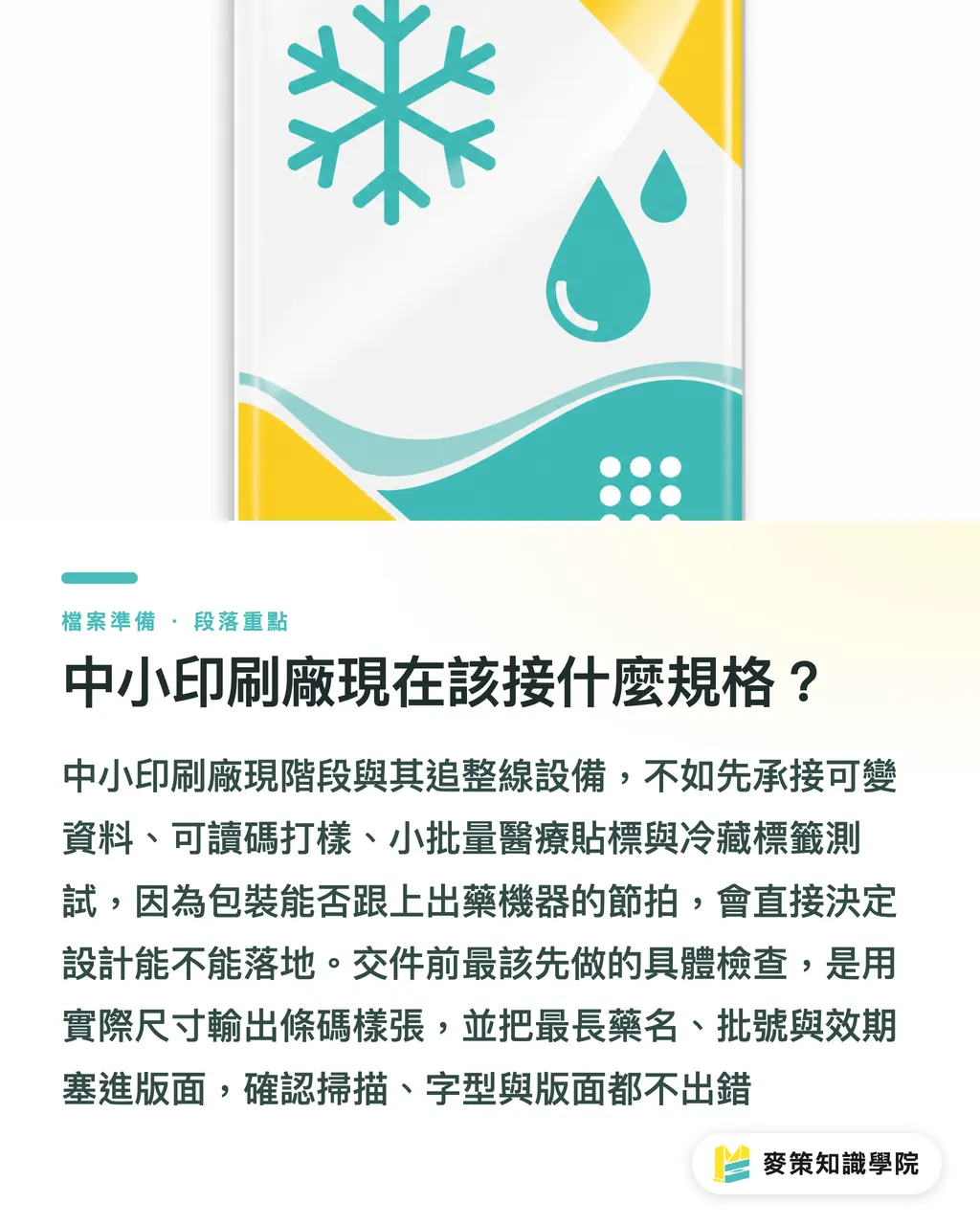
What Specs Should Small and Mid-Size Print Shops Take On Right Now?
For small and mid-size print shops, starting with variable data, readable-code proofing, small-batch medical labeling, and cold-storage label testing is more practical than chasing full-line equipment right off the bat
The source article mentions that JVM MENITH can use robotic arms to automatically swap canisters and hit 120 packs per minute; Zing, used in opioid treatment clinics, handles the preparation, pouring, labeling, sealing, and capping of methadone doses, with more than 1 million doses prepared before 2025
Those numbers make one thing clear: if packaging can't keep up with the machine's pace, the design can be beautiful and it'll still stall at the dispensing end
Before handoff, here's the self-check I'd ask any designer to run:
・Output barcode proofs at actual size, don't judge resolution just from the screen
・Fill variable data fields with the longest drug name, longest lot number, and latest expiry date first, and confirm nothing runs into other elements
・After exporting PDF/X (the ISO-governed print exchange format), reopen and check fonts, black plates, overprint, and transparency
・For cold-storage labels, verify adhesive behavior, surface reflectivity, and scanning distance upfront, low temperature isn't something you test after printing
If it's early-stage layout and paper feel testing, MINDS can help convert the file into a physical sample for discussion; when medical traceability codes and batch control are involved, bring in a consultant and the print side to review together
Key Takeaways
・Pharmacists will only trust the equipment with packaging that the machine can actually read
・In medical packaging artwork, the barcode zone needs more protection than the hero visual
・Unit dose packaging pushes accountability down to every individual pack, the finished artwork needs a matching reduction in tolerance
・For small and mid-size print shops, taking on variable data and readability verification first beats rushing out to buy big equipment
Taking It Further
For the print manufacturing side, the next step isn't buying the biggest machine, it's making readability verification, variable data output, cold-storage labeling, and batch retention samples into standard workflow. For designers, the hero visual can look great, but the barcode quiet zone, drug name hierarchy, lot number field, and material reflectivity need to pass first. For teams bringing in AI or building SaaS tools, the most valuable feature isn't showing off, it's keeping PDF checks, longest-field warnings, scan records, and version approvals in the same workflow so every revision leaves a trail
Further Reading
FAQ
- What's the biggest difference between automated dispensing machine packaging and standard medical packaging?
- Automated dispensing machine packaging has to be readable, traceable, and distinguishable by the equipment first, barcodes, RFID, lot numbers, expiry dates, and material reflectivity all affect the dispensing process
- What should designers watch for first when working on unit dose packaging?
- Designers need to protect the readability zone and variable data fields before touching the brand visual. With limited space on small packs, white space, font size, and the longest lot number are more likely to cause problems than decoration
- Is automated dispensing machine packaging a good fit for small and mid-size print shops?
- Small and mid-size print shops are better off starting with variable data, readability proofing, cold-storage label testing, and small-batch medical labeling. Those capabilities are a better match for where the market is right now than investing in a full production line at once
- Does medical packaging need RFID?
- RFID works well when you need equipment tracking, inventory verification, and contactless reading. If the job only requires single-pack scanning, a barcode or QR code is probably the more practical first step
- Why do refrigerated medications affect the printed artwork?
- Cold-storage medications bring in low-temperature adhesives, surface reflectivity, temperature control labeling, and scanning distance. If the artwork is only checked on screen, the actual label may not scan or stick once applied
Related articles

The Print × AI weekly
The print and AI know-how designers, brands and enterprises can use before they commit — one email, every week
MINDS Free Tools
Imposition calculator and preflight file check — free prepress tools, right in your browser.
MINDS Group
Need actual printing or gifting services?
From premium printing to online ordering and festive gifts — the MINDS Group sister brands take it from here.